
Teddy Bear Magnolia Root Problems: Poor Drainage, Root Rot, Transplant Shock and Buried Root Flare

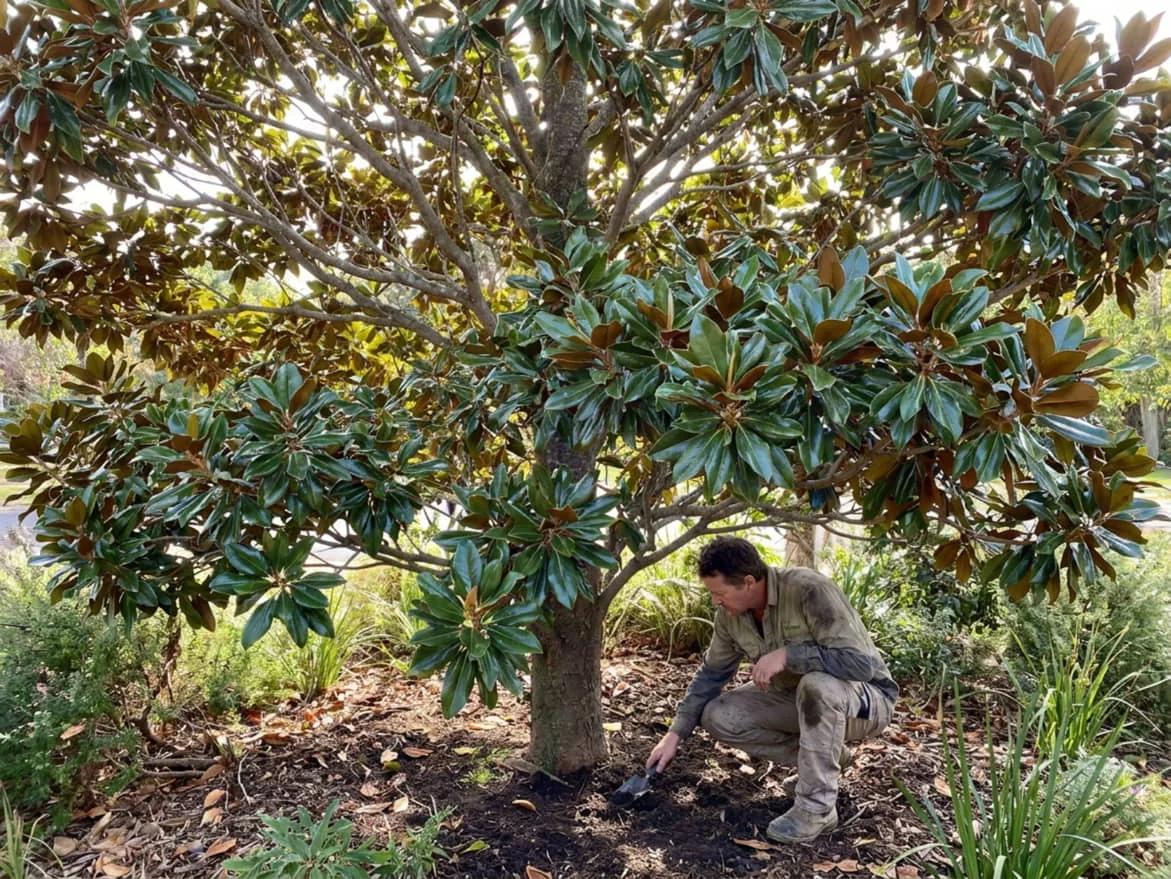
A Teddy Bear Magnolia can look sick in the leaves while the real problem is underground.
Yellow leaves, slow growth, poor flowering, leaf drop and branch dieback are often treated as separate problems. Sometimes they are. But when several symptoms appear together, the roots, planting depth and drainage deserve attention before fertiliser, sprays or pruning.
Root problems are difficult because you cannot diagnose them by colour alone. A wet garden bed can still leave roots unable to function. A newly planted tree can have a dry root ball sitting inside moist surrounding soil. A buried root flare can slowly stress the base of the trunk even when the canopy looked healthy at first.
Quick diagnosis: Check the root zone before treating the canopy. Look at drainage, soil moisture, planting depth, the visible root flare, mulch against the trunk, recent transplanting and any digging, paving or irrigation changes around the tree.
This guide stays below ground. For leaf-surface markings such as algal spot, sooty mould or scorch, use our Teddy Bear Magnolia leaf-spots guide. For dying branches that may involve bark, cankers or physical limb damage, use our Teddy Bear Magnolia branches dying guide.
First Check: Is the Soil Wet, Dry or Uneven?
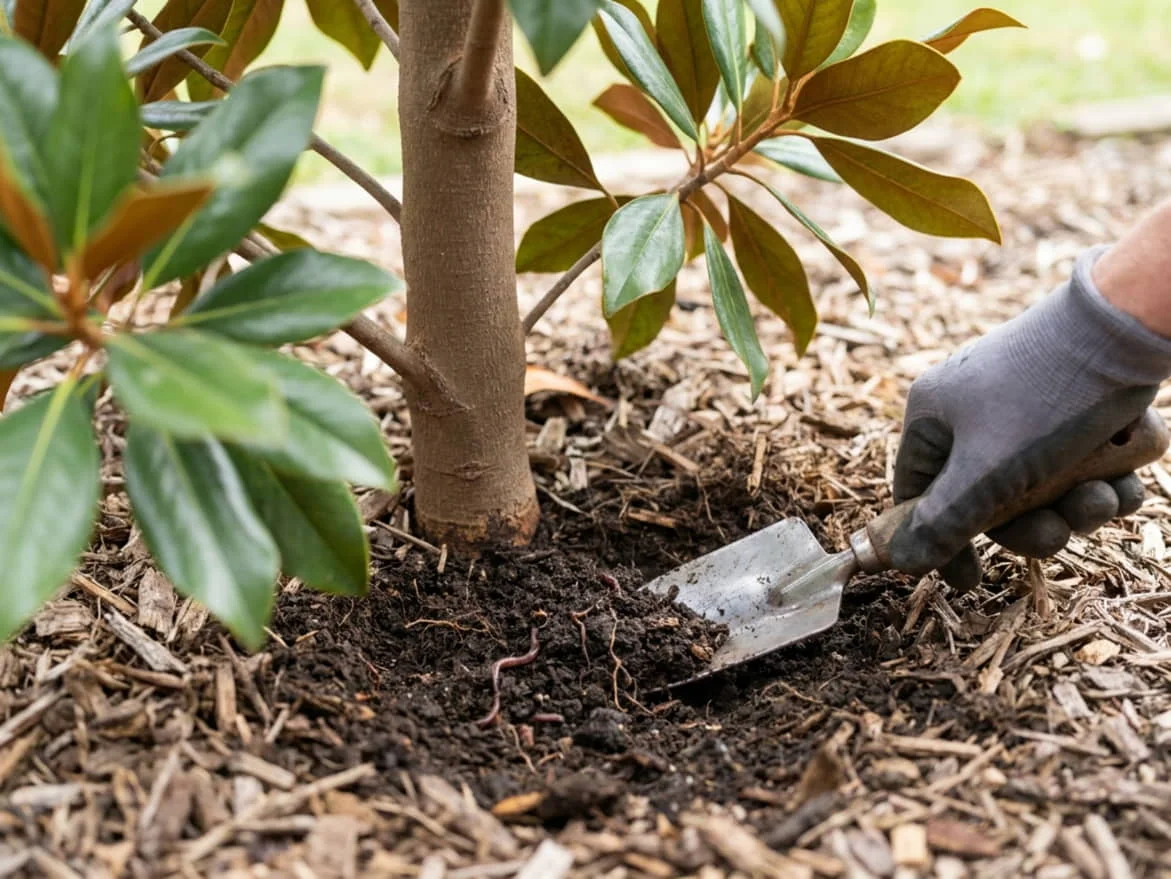
Do not judge moisture from the surface only.
Mulch, clay, sandy fill, potting mix and the original root ball can all hold water differently. A Magnolia can suffer because the original root ball is dry while the surrounding soil is wet, or because the root ball remains saturated while the surface looks acceptable.
Check more than one spot
Inspect:
inside the original root ball
just outside the root ball
beneath mulch
near the trunk
at the outer edge of the canopy
the lowest part of the garden bed
the side near paving, walls or irrigation
the driest exposed side
Use a hand trowel or soil probe where this can be done without damaging roots. The goal is to understand the soil pattern, not to dig up the tree.
What wet soil can do
Roots need oxygen as well as moisture. Soil that stays saturated can reduce oxygen around fine roots. When roots are damaged, the canopy may show wilting, yellowing, leaf drop, weak growth or dieback even though water is present.
That is why “wet” does not always mean “well-watered”.
What dry soil can do
Dry root zones can also cause decline, especially in:
recently planted trees
exposed sites
raised beds
sandy or hydrophobic soil
gardens near paving
windy positions
trees with restricted roots
A Teddy Bear Magnolia with a dry root ball may shed leaves, hold limp foliage or develop dead tips even when the surrounding bed has been irrigated.
Root Problem Diagnostic Table
| What you see | What it may suggest | How to check | Immediate mistake to avoid |
|---|---|---|---|
| Soil remains wet for days after rain | Poor drainage or waterlogging | Check several points in the bed, including below mulch and near the root ball | Do not water again just because the surface dries |
| Root ball is dry while surrounding soil is moist | Root-ball mismatch after planting | Check moisture inside and outside the original root ball | Do not assume the whole bed has the same moisture |
| Trunk enters soil like a pole with no visible flare | Buried root flare or deep planting | Gently check whether the trunk widens at soil level | Do not pile more mulch or soil against the trunk |
| Mulch is touching or mounded against the trunk | Collar moisture and decay risk | Pull mulch back gently and inspect the base | Do not create a mulch volcano |
| Yellow leaves plus sparse canopy across the tree | General root stress | Check drainage, planting depth, root-zone moisture and recent site changes | Do not diagnose nutrient deficiency from colour alone |
| One side declines after trenching or paving | Root severing or compaction | Compare canopy decline with the disturbed root-zone side | Do not fertilise to compensate for damaged roots |
| Recently planted tree declines after looking fine at first | Transplant or establishment stress | Check root-ball moisture, planting depth and trunk stability | Do not follow a fixed watering calendar |
| Mushrooms or white fungal sheets near the base | Possible root or butt decay | Avoid disturbing structural roots and seek assessment | Do not rely on surface sprays |
| Branch dieback plus loose or unstable trunk | Serious root or structural problem | Check for movement at ground level and root decay signs | Do not delay arborist assessment |
Poor Drainage and Waterlogged Soil
Poor drainage is one of the most common below-ground reasons a Magnolia declines.
The canopy symptoms are often vague:
yellowing leaves
dull foliage
slow growth
premature leaf drop
sparse canopy
dead shoot tips
branch dieback
poor flowering
general failure to thrive
Those symptoms do not prove root rot. They only tell you that the roots may not be supplying the canopy properly.
Signs drainage may be poor
Look for:
water pooling after rain
soil staying soft or muddy
a sour or stagnant smell
algae or moss around the root zone
roots sitting in a low point
decline after irrigation changes
decline after paving or soil-level changes
clay that stays wet below the surface
mulch that remains wet against the trunk
Why watering advice can mislead
A fixed watering schedule can make drainage problems worse.
Instead of asking “How often should I water?”, ask:
Is the root ball wet or dry?
Is the surrounding soil wet or dry?
Does the water drain away?
Is the soil wet below the surface?
Did the problem begin after rain, irrigation or drainage changes?
If the soil is already saturated, more water will not help the roots breathe.
Dry Root Ball Inside Wet Soil
A recently planted Teddy Bear Magnolia may have two different soil zones.
The nursery potting mix or root-ball material may dry faster or resist re-wetting, while the surrounding garden soil remains damp. The reverse can also happen: the root ball may hold water while the surrounding soil drains away.
This mismatch is common after planting.
Clues that moisture is uneven
Look for:
a tree that wilts despite irrigation
a root ball that feels dry inside
surrounding soil that feels wet or heavy
water running around the root ball rather than into it
leaves dulling after hot or windy weather
poor growth despite regular watering
decline that began after planting
How to check safely
Check with a narrow trowel or probe:
one point inside the original root ball
one point just outside it
one point at the outer edge of the mulched area
Do not repeatedly dig around the trunk. You are checking moisture pattern, not exposing roots.
If the root ball is dry, water needs to reach that zone. If the surrounding soil is saturated, drainage and planting position may be the larger problem.
Buried Root Flare and Deep Planting
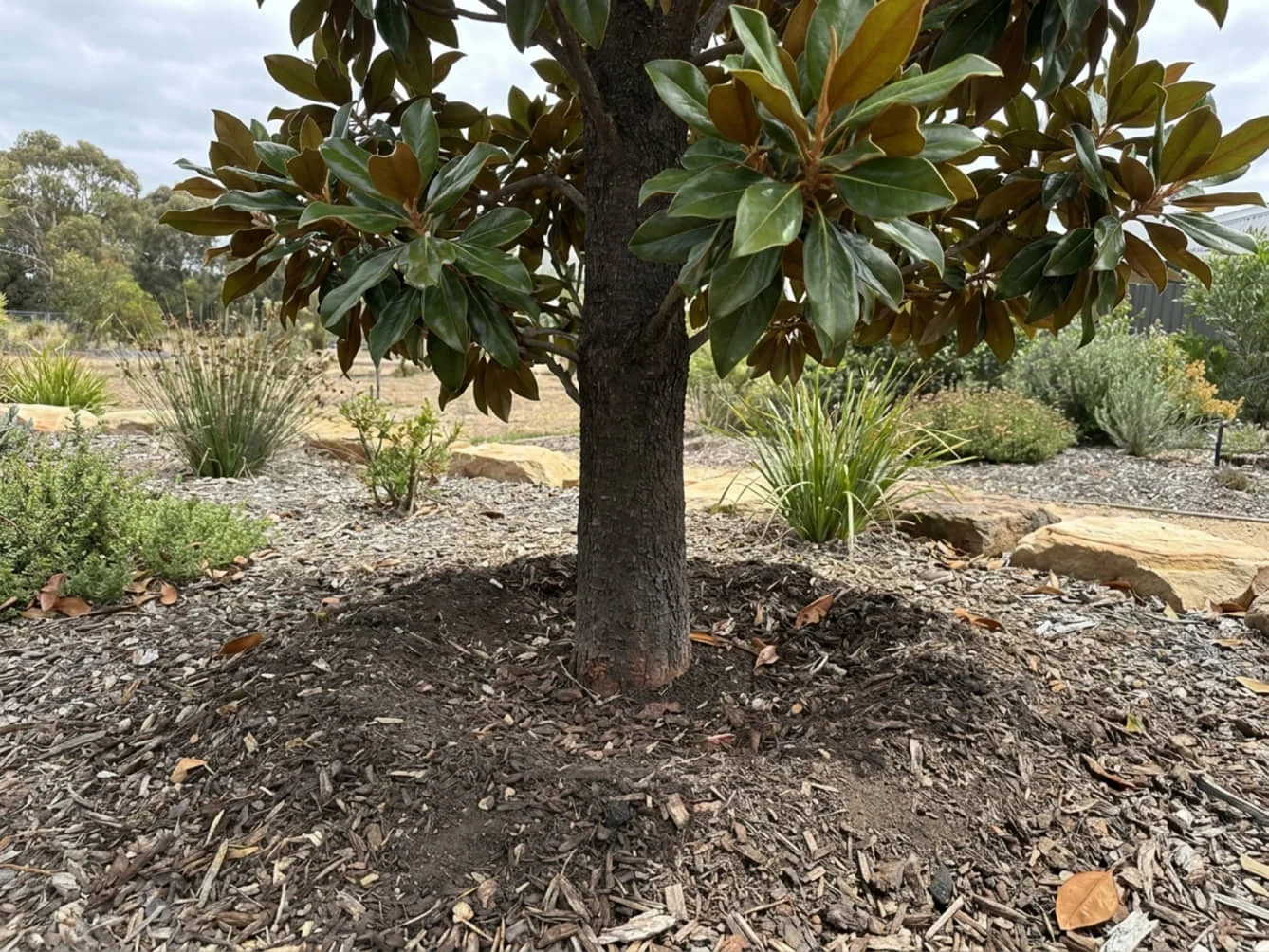
The root flare is the part of the tree base where the trunk begins to widen into the main roots.
On a correctly planted tree, this flare should normally be visible at or near the soil surface. If the trunk goes straight into the soil like a post, the tree may have been planted too deeply or buried later by soil and mulch.
Penn State Extension warns that a buried root collar can contribute to decay and whole-tree failure. (Penn State Extension)
Why a buried flare matters
The lower trunk is not meant to remain constantly damp under soil or mulch.
A buried flare can contribute to:
bark staying wet
decay around the base
poor gas exchange
root collar stress
adventitious or circling roots
long-term decline
instability in severe cases
This is often a slow problem. The tree may look acceptable for a while and decline later.
What to inspect
Check:
whether the trunk widens at ground level
whether mulch touches the trunk
whether soil has been added after planting
whether the tree sits lower than surrounding grade
whether surface roots circle the trunk
whether bark at the base looks soft, cracked or decayed
whether water collects near the trunk
Do not aggressively excavate deep around the base without knowing where the roots are. If the tree is large, unstable or already declining, root-collar excavation should be assessed by someone experienced.
Mulch Against the Trunk
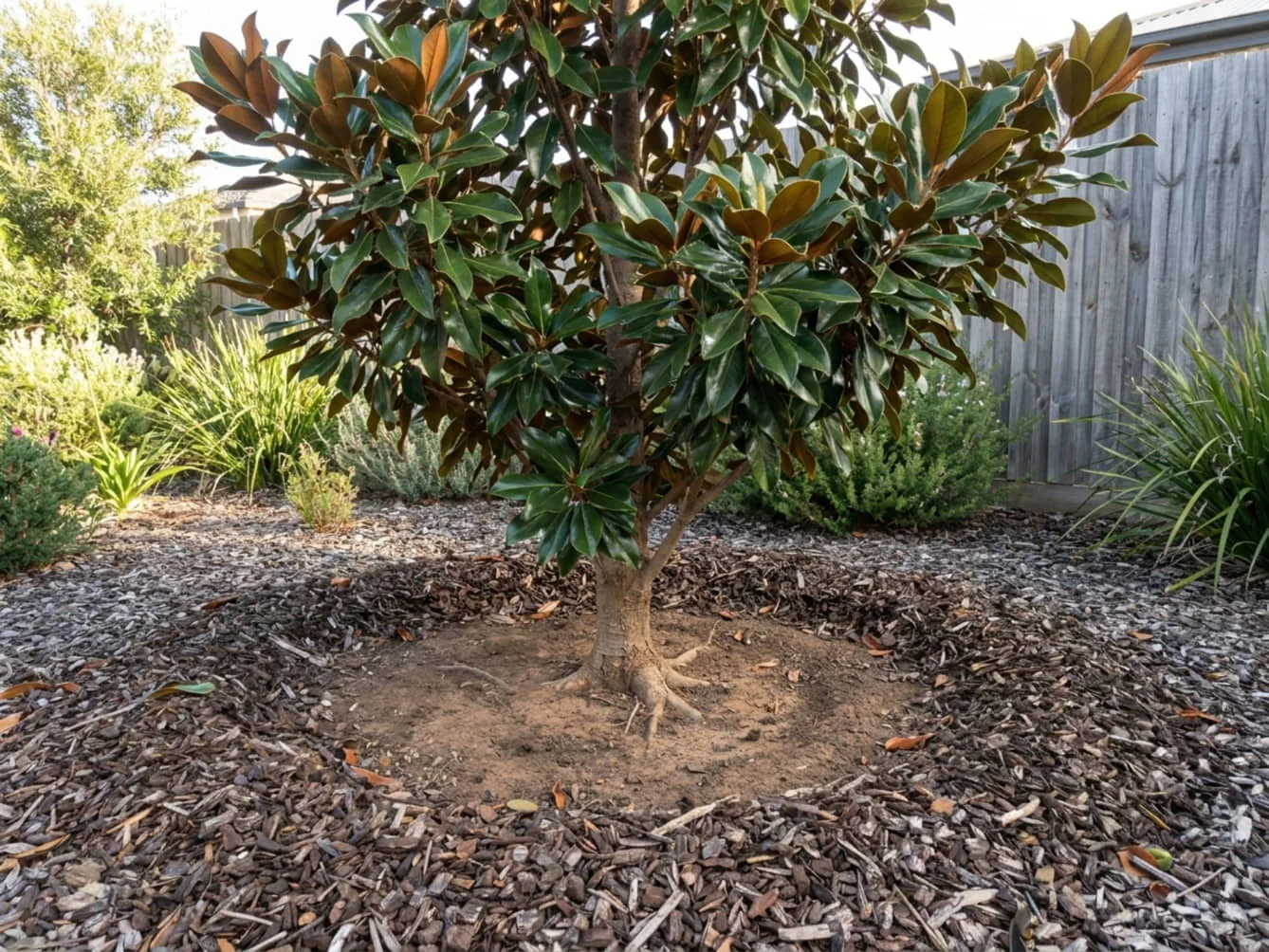
Mulch is useful around Magnolia roots, but not when it is piled against the trunk.
A good mulch layer can:
reduce surface evaporation
moderate soil temperature
protect shallow roots
reduce mower damage
improve soil over time
A mulch mound against the trunk can do the opposite.
Avoid the mulch volcano
A mulch volcano is mulch piled high against the base of the tree.
It can keep the bark damp, hide the root flare and encourage decay or circling roots. Pull mulch back from direct trunk contact so the base can be inspected and the flare can breathe.
Do not remove every bit of mulch from the bed. The problem is mulch against the trunk, not mulch around the wider root zone.
Transplant Shock and Establishment Stress
A newly planted Teddy Bear Magnolia may decline even when it looked good at the nursery.
University of Georgia Extension lists planting too deep, poor drainage, root-ball problems, excessive watering and damage to the stem or root ball connection among common reasons for transplant shock and root stress. (UGA Extension)
Why transplant stress appears later
The tree may initially rely on stored moisture and existing foliage. Stress becomes visible when the reduced or disturbed root system cannot keep up with canopy demand during heat, wind, dry weather or waterlogged conditions.
Symptoms may include:
leaf drop
dull leaves
yellowing
wilting
small new leaves
poor shoot extension
dead tips
delayed flowering
general stalling
What to check first
Check:
whether the tree was planted too deeply
whether the root ball is stable
whether the trunk rocks in the soil
whether the root ball is wet or dry
whether the surrounding soil differs from the root ball
whether roots were circling in the pot
whether the tree was planted into heavy clay or compacted fill
whether mulch touches the trunk
whether nearby paving reflects heat
Do not fertilise simply because the tree is struggling. UGA Extension cautions that fertilising stressed new plants can force growth that roots are not ready to sustain. (UGA Extension)
Root Rot: What You Can and Cannot Diagnose
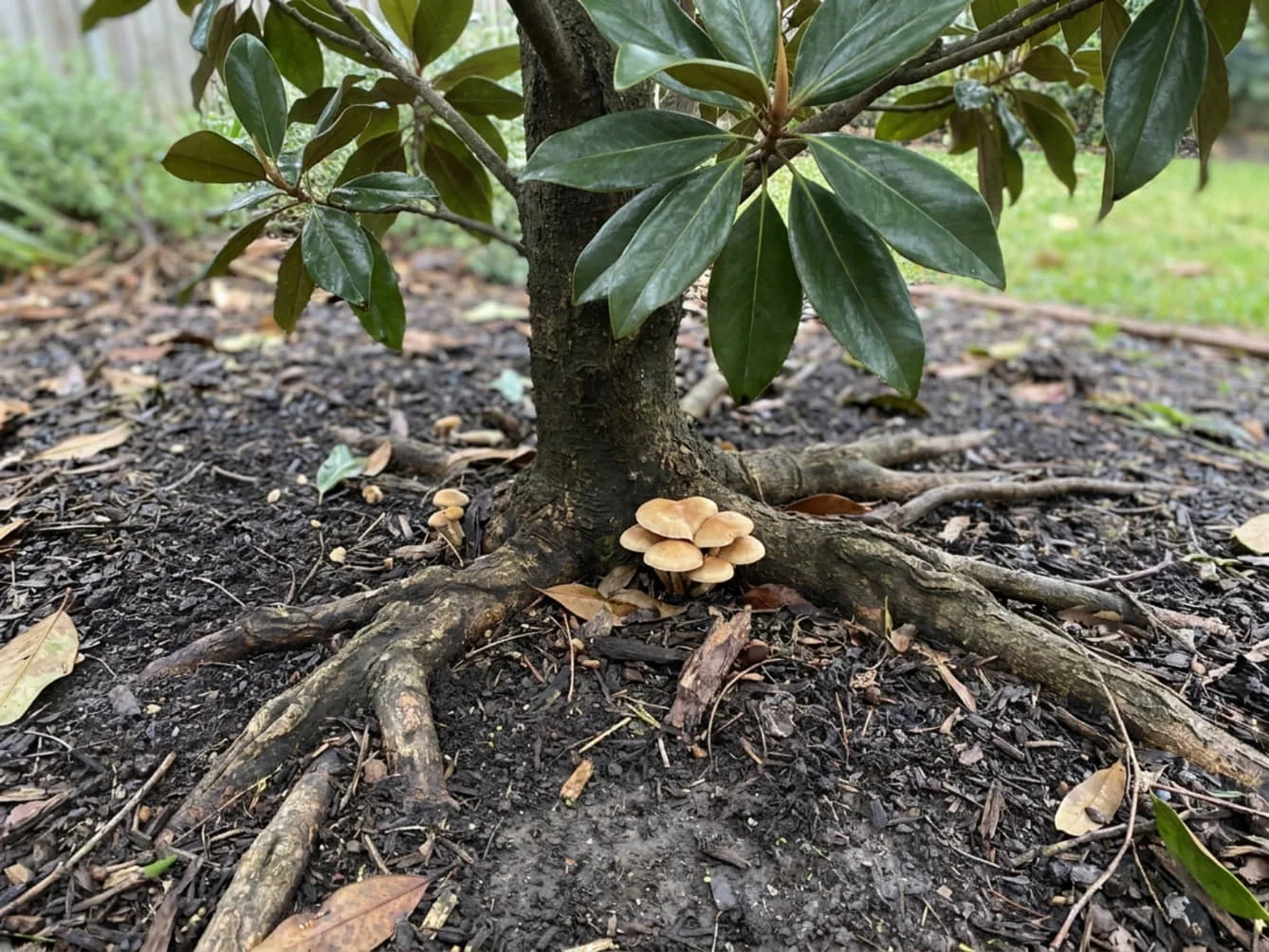
“Root rot” is often used too quickly.
It describes roots that are decaying, but it does not tell you why. Roots may rot because soil remains saturated, because a pathogen is present, because the tree was planted too deeply, or because damaged roots have begun to decay.
The Pacific Northwest Plant Disease Handbook lists Magnolia root and cutting rots and notes above-ground symptoms such as yellowing leaves, slowed shoot growth, premature leaf drop and tree death. (Pacific Northwest Plant Disease Handbook)
Above-ground symptoms overlap
Root rot, drought, waterlogging, transplant stress, deep planting and compaction can all produce similar canopy symptoms.
That is why you should not diagnose a specific root disease from:
yellow leaves alone
one dying branch alone
poor flowering alone
leaf drop alone
damp soil alone
a single photograph of the canopy
Clues that root decay may be involved
Concern increases when you see:
roots that are blackened or soft where safely visible
bark sloughing from small roots
a sour or decayed smell
mushrooms near the base
white fungal sheets under bark
trunk instability
widespread canopy decline
decline that worsens despite corrected watering
a buried or decaying root collar
Do not dig aggressively into structural roots. If root decay or instability is possible, the safer next step is professional assessment.
Armillaria and Other Root Diseases
Armillaria is one possible root-rot group in woody plants, but it should not be used as a casual label for every declining Magnolia.
Queensland Government guidance describes Armillaria root rot as causing non-specific above-ground symptoms such as reduced growth, yellowing, twig dieback and gradual decline. It also notes signs such as white fungal growth beneath bark and mushrooms near infected wood. (Queensland Government)
When Armillaria becomes more plausible
Consider it more seriously when:
decline is progressive
the tree has reduced growth and twig dieback
mushrooms appear around the base or roots
white fan-like fungal growth is present beneath bark
nearby woody plants are also affected
old stumps or infected woody roots are in the area
root or butt decay is visible
These signs still require careful diagnosis. Similar symptoms can arise from waterlogging, planting depth, drought, compaction or other root diseases.
Compaction, Paving and Construction Damage
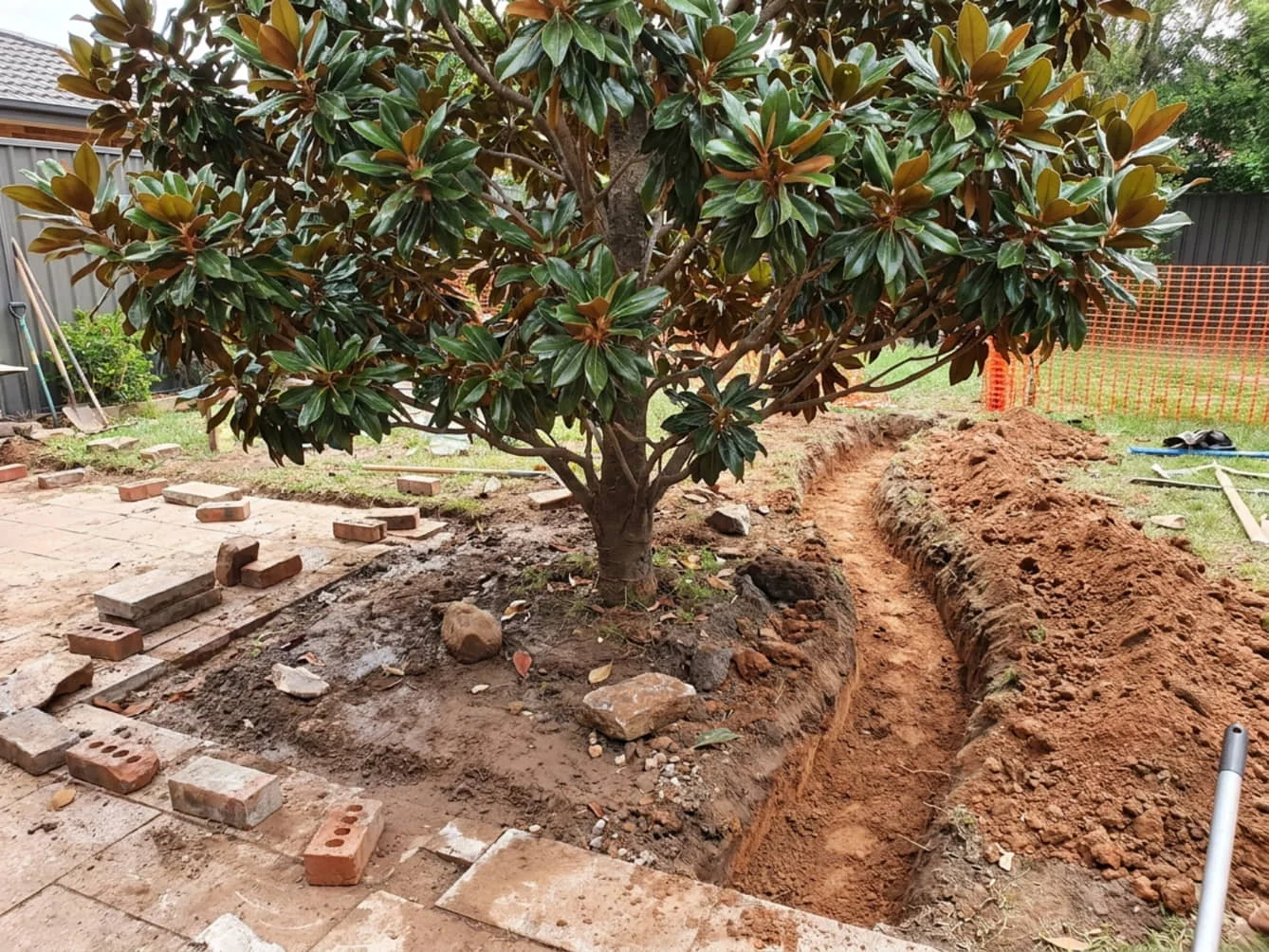
Teddy Bear Magnolia roots need room, oxygen and workable soil.
Paving, trenching, compacted soil and grade changes can reduce root function even when the tree was healthy before the work.
Common root-zone disruptions
Watch for decline after:
driveway or path installation
trenching for pipes or cables
edging work that cut roots
soil compaction from machinery
vehicles parking near the tree
raised garden beds built around the trunk
fill soil added over roots
irrigation changes
drainage changes
concrete or paving close to the trunk
A tree may not decline immediately. Damage to roots can show as canopy thinning, branch dieback or slow loss of vigour later.
One side versus the whole tree
If work occurred on one side of the tree, compare that side of the canopy with the rest.
One-sided decline can indicate local root damage, but the pattern is not always exact. The most important clue is the timing: whether decline began after the root zone was disturbed.
For branch-pattern diagnosis, use our Teddy Bear Magnolia branches dying guide.
Girdling and Circling Roots
Container-grown trees can sometimes develop circling roots.
As roots thicken, they may press against other roots or the trunk base. This can restrict water and nutrient movement over time.
Clues to look for
Possible signs include:
trunk flare not visible
roots circling close to the trunk
one-sided canopy decline
slow thinning over several seasons
poor growth despite reasonable care
tree rocking or lacking stable anchorage
surface roots wrapping around the base
Do not cut large roots casually. Some roots are structural. If a substantial root is pressing against the trunk or the tree is already declining, seek arborist guidance.
What to Do Before Treating
Before using any product or making major changes, record what you can see.
Make a root-zone checklist
Check:
Is the soil wet, dry or uneven?
Is the original root ball different from the surrounding soil?
Is the root flare visible?
Is mulch touching the trunk?
Has soil been added over the root zone?
Has paving, trenching or construction occurred nearby?
Are roots exposed, cut or circling?
Are mushrooms or fungal sheets present?
Is decline one-sided or spread across the canopy?
Has the tree recently been transplanted?
Photograph before disturbing the site
Take photos of:
the whole tree
the root flare
mulch depth
any pooling water
drainage changes
nearby paving or trenches
visible roots
mushrooms or fungal growth
affected branches
healthy comparison growth
These photos help you, an arborist or a nursery adviser understand the pattern before the site is altered.
Australian Pesticide and Fungicide Rule
Do not buy a fungicide because an overseas article names an active ingredient for “root rot”.
Australian chemical use must be product-specific.
Where a chemical treatment is genuinely justified, use only an APVMA-registered product whose current label covers:
the identified disease or pest
ornamental plants or the relevant use site
the intended application method
the plant situation described on the label
The APVMA is Australia’s agricultural and veterinary chemical regulator and provides product and permit databases for checking registered uses. (APVMA)
Do not assume that an ingredient mentioned overseas is legal, suitable or effective for a Teddy Bear Magnolia in an Australian garden.
Many root-zone problems are physical or environmental. A fungicide will not correct deep planting, compacted soil, severed roots, buried bark or waterlogging.
When to Call an Arborist or Plant-Health Service
Seek professional help when:
the trunk moves at ground level
several major branches are declining
mushrooms or white fungal sheets appear near the base
the root flare is buried on a mature tree
decay is visible around the root collar
construction has damaged major roots
the tree is close to a house, fence, path or driveway
the tree is large enough to cause damage if it fails
symptoms worsen after basic moisture and mulch corrections
treatment depends on identifying a pathogen
A laboratory or arborist diagnosis is most valuable when it changes what you will do next.
A Practical Diagnostic Order
1. Look at the whole tree
Is decline one-sided, scattered or spread across the whole canopy?
2. Check the soil surface
Look for pooling water, hard crusting, mulch mounds or exposed roots.
3. Check below the surface
Inspect moisture inside and outside the root ball.
4. Find the root flare
Confirm whether the trunk widens at soil level.
5. Pull mulch back from the trunk
Keep mulch around the root zone, but not pressed against bark.
6. Review planting history
Ask whether the tree was recently planted, shifted, staked, backfilled or planted deeply.
7. Review site changes
Check for paving, trenching, irrigation changes, soil filling or compaction.
8. Look for decay signs
Note mushrooms, soft bark, white fungal growth, unstable roots or decayed root material.
9. Avoid guess treatments
Do not use fertiliser, fungicide or extra water as a substitute for diagnosis.
10. Escalate when structure is involved
Call an arborist when roots, trunk stability or major branches may be compromised.
For broader canopy symptoms, return to our Teddy Bear Magnolia problems and fixes guide. For plant size, spacing and long-term placement, see the Teddy Bear Magnolia size and growth guide.
Frequently Asked Questions
How do I know if my Teddy Bear Magnolia has root problems?
Suspect root problems when several symptoms appear together, such as yellowing leaves, slow growth, poor flowering, leaf drop, sparse canopy or branch dieback. Check soil moisture, drainage, planting depth, the root flare and recent site changes before treating the leaves.
Can poor drainage kill a Teddy Bear Magnolia?
Yes. Persistently saturated soil can reduce oxygen around the roots and damage fine roots. The canopy may wilt, yellow or thin even though the soil is wet.
What does root rot look like on a Magnolia?
Above ground, root rot may resemble other stresses: yellowing, slow growth, premature leaf drop, twig dieback or general decline. More specific warning signs include soft or blackened roots, decay smells, fungal growth, mushrooms near the base or trunk instability.
Should the root flare be visible on Teddy Bear Magnolia?
Yes, the trunk should normally widen into the main roots at or near soil level. If the trunk enters the soil like a straight pole, the tree may be planted too deeply or buried by later soil and mulch.
Is mulch bad for Teddy Bear Magnolia roots?
Mulch is useful when spread around the root zone, but it should not be piled against the trunk. Mulch touching the bark can keep the base damp and hide root-flare or decay problems.
Can transplant shock cause yellow leaves and branch dieback?
Yes. A recently planted Magnolia can decline if its root ball is too wet, too dry, planted too deeply, damaged, unstable or mismatched with the surrounding soil. Heat, wind and poor drainage can make the symptoms worse.
Should I fertilise a Teddy Bear Magnolia with root problems?
Not before diagnosis. Fertiliser will not fix waterlogging, dry root balls, buried root flares, severed roots or root decay. In stressed new plants, fertilising can force growth that the roots are not ready to support.
Can I treat Magnolia root rot with fungicide?
Only where a specific disease has been identified and an APVMA-registered product’s current label covers that disease, the plant situation and the application method. Many root problems are physical or environmental and will not be corrected by fungicide.
Why is one side of my Teddy Bear Magnolia declining?
One-sided decline may follow root damage, trenching, paving, compaction, reflected heat or localised bark and branch issues. Compare the affected side with recent work or changes around the root zone.
When should I call an arborist?
Call an arborist when the tree is unstable, major roots may be damaged, several branches are declining, decay or mushrooms appear near the base, or the tree could damage people, buildings, paths or vehicles if it fails.
Final Thoughts
Root problems are rarely solved by guessing from the leaves.
Start below ground:
check whether the soil is wet, dry or uneven
compare the root ball with the surrounding soil
find the root flare
pull mulch away from the trunk
look for drainage, paving or construction changes
treat root disease only when it has actually been identified
A Teddy Bear Magnolia with root stress may still be recoverable, but the useful fix depends on the cause.
More water, more fertiliser or a random fungicide can make the wrong problem worse.