
Golden Cane Palm Growth Rate in Australia: How Fast Will Yours Grow?

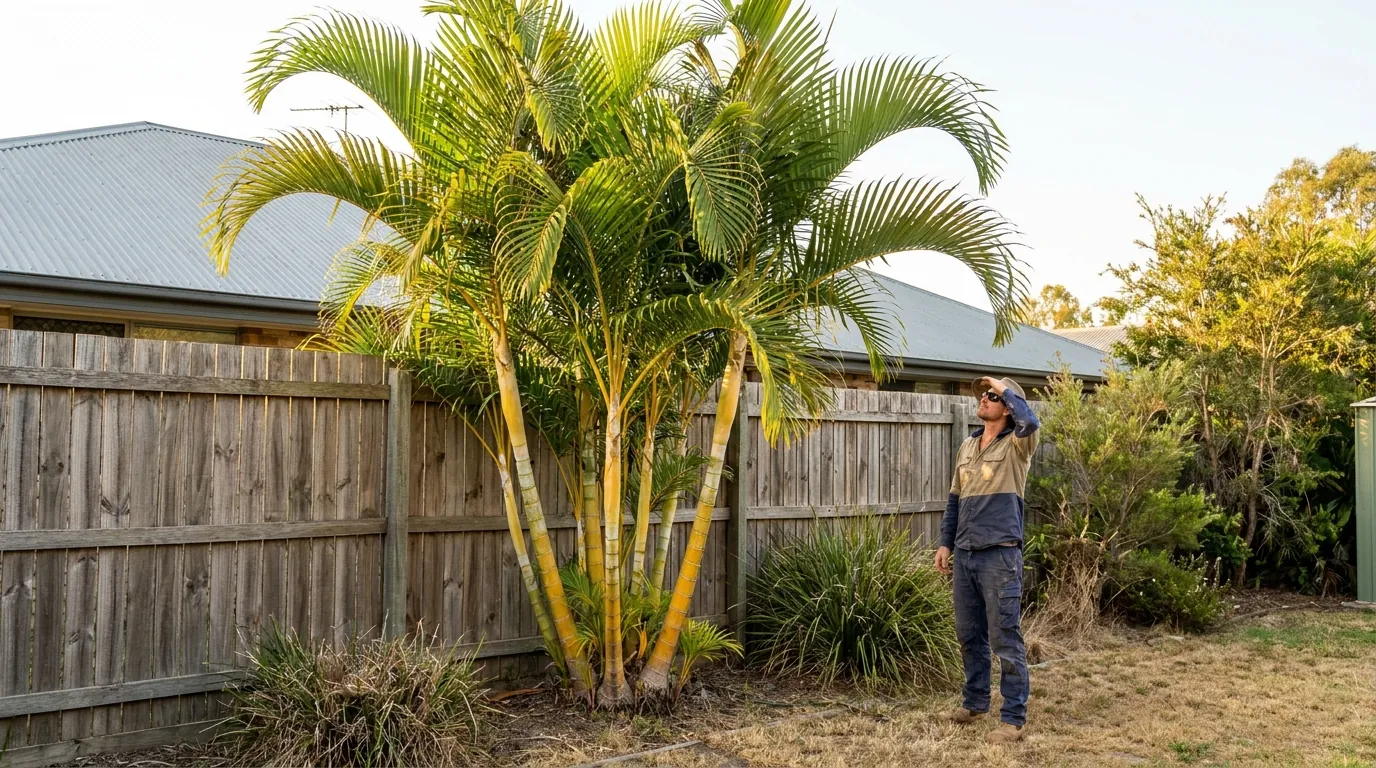
For an established Golden Cane Palm growing outdoors in warm Australian conditions, about 30–60 cm of height a year is a commonly published nursery estimate. Several Australian growers currently use that range, with another publishing 30–50 cm and The Seed Vine giving a slower 15–25 cm estimate.
We use 30–60 cm as the practical planning range because most of the current Australian nursery guidance clusters there. It should be treated as a nursery benchmark rather than four separate measured trials. A palm’s actual annual growth still reflects how many warm growing months it gets, how much light and root space it has, and whether it is still establishing.
On screening jobs, we also watch something the height figure misses: Golden Canes grow outward as well as upward. New canes fill the base, established stems broaden the clump and neighbouring plants gradually overlap. That density often changes the usefulness of a screen before the tallest frond changes dramatically.
If privacy is the goal, measure the gap—not just the palm
Say you have bought Golden Canes about 1.2 m tall and want foliage at roughly 2 m to soften a fence or block a neighbour’s window line. You have about 80 cm of height to gain.
| Growth used for the calculation | Height to gain | Simple height calculation |
|---|---|---|
| 30 cm/year | 80 cm | About 32 months |
| 45 cm/year | 80 cm | About 21 months |
| 60 cm/year | 80 cm | About 16 months |
This is a planning calculation, not a forecast. It assumes the palm immediately grows at the chosen annual rate. A real planting may spend time establishing roots, grow quickly through warm months and then slow sharply through winter. Screening can also take longer than the height calculation because neighbouring clumps still need to widen and overlap.
That distinction matches what we see in installed screens. New basal canes and thicker foliage through the lower half of the planting can improve privacy even when the tallest fronds have added relatively little. Australian nursery guidance also treats screen development as a combination of spacing, height and clump density rather than height alone.
If you are still deciding where the row should go, use our Golden Cane sun, soil and spacing guide before planting.
Where you live changes how much growing season the palm gets
Golden Cane is a tropical palm from Madagascar. Kew currently accepts the botanical name Chrysalidocarpus lutescens, with the familiar Dypsis lutescens treated as a synonym. That tropical origin matters when comparing growth around Australia.
| Australian climate situation | What to expect |
|---|---|
| Tropical and subtropical — Cairns, Darwin, Brisbane and similar warm districts | A long active growing period. Established palms may continue making useful growth for much of the year where warmth, moisture and nutrition remain available. |
| Warm-temperate — Sydney, Perth and similarly mild sites | Strong growth through the warmer months, with noticeably slower progress as temperatures fall. Sheltered coastal and urban gardens can perform better than exposed inland sites. |
| Cooler southern and inland gardens — Melbourne, Adelaide, Canberra and much of Tasmania | Expect a shorter active season and a clearer winter pause. Frost exposure becomes more important than chasing a centimetres-per-year target. |
These are qualitative garden expectations, not city growth-rate guarantees. Even within one city, a sheltered north-facing courtyard and an exposed frost pocket can produce very different results.
On our own work, warm, bright sites tend to build useful clump mass sooner than cooler or heavily shaded positions. In the south, we would judge progress over a full growing season rather than deciding a palm is slow because little happened through winter.
Golden Cane is frost-tender
This is the main climatic limitation missing from many growth-rate discussions.
Australian palm references describe Golden Cane as tropical to subtropical and not very frost tolerant. Nursery Near Me likewise lists it as frost-tender. The RHS is more conservative again: its plant profile treats Dypsis lutescens as a tropical plant for protected conditions and notes that young palms are especially sensitive to cold.
Cold injury usually shows in the foliage first. After a damaging cold spell you may see scorched or browned leaf tips and margins, discoloured patches or whole fronds that deteriorate after the event. General RHS frost guidance also notes that newly planted and young plants tend to be more vulnerable than established specimens.
In frost-prone gardens, position matters. A sheltered site near thermal mass is safer than a low open spot where cold air collects. Young plants and container specimens deserve the most protection when frost is forecast; in genuinely cold districts, a movable container or indoor/protected position is often more realistic than expecting Golden Cane to behave as a carefree outdoor screen.
Do not confuse winter slowdown with failure. A healthy palm in a cool-temperate garden may simply make very little visible progress until warmer conditions return.
Most of the useful growth happens in the warm season
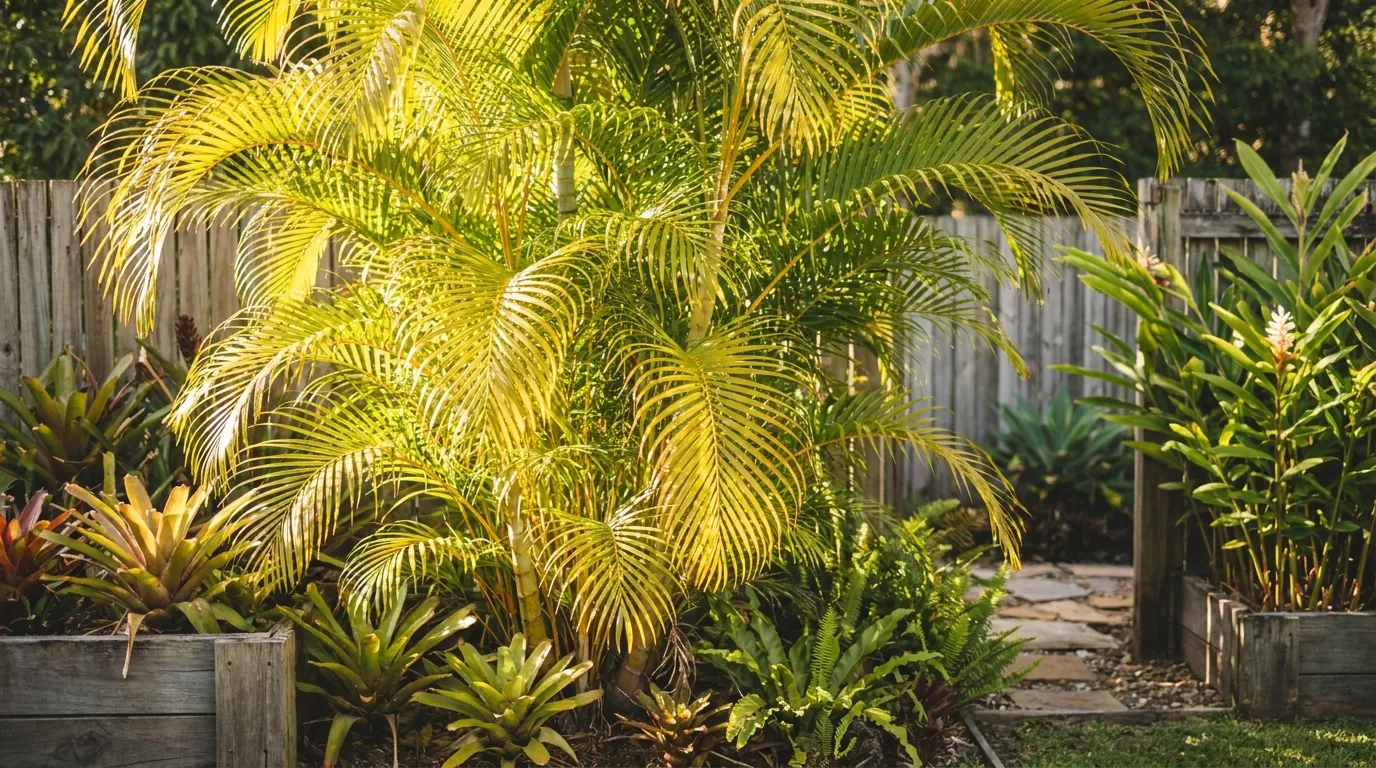
The annual growth number hides the fact that a Golden Cane does not normally add the same amount every month. Warmth and light drive the active season. In tropical districts that season can be long; in southern gardens most useful growth is concentrated from spring through the warmer part of the year.
Bunnings Australia recommends deep watering when conditions are warm and dry and, as a general outdoor rule, fertilising palms through spring, summer and autumn. The RHS similarly distinguishes between active growth and winter rest: water more freely while the palm is growing and much more sparingly in winter under cool protected conditions.
That seasonal rhythm is how we approach growth on jobs as well. Spring is when we want the root zone in good condition before the main flush begins; summer is when moisture stress can stop an otherwise healthy screen from moving; winter is not the time to try to force a cold-slowed palm with heavy feeding.
A normal growth-support routine
You do not need an aggressive feeding programme to get useful growth. The aim is steady moisture through active weather, decent nutrition and a root zone that still drains.
- Spring: Check mulch, drainage and irrigation as growth resumes. Australian nursery guidance commonly recommends a slow-release or palm-specific feed around the start of the active season.
- Summer: Water deeply during hot or dry periods rather than relying on frequent shallow splashes. A second seasonal feed may be useful where the fertiliser label and local conditions support it.
- Autumn: In warm districts growth may continue. In cooler areas, begin easing back as temperatures and growth decline rather than pushing soft late growth.
- Winter: Growth can become very slow in southern Australia. Reduce watering to match the slower use of moisture, particularly in pots and cool sites, and avoid treating winter dormancy-like slowdown as a fertiliser deficiency.
For established landscape palms, the soil should be allowed to breathe between deep waterings rather than being kept permanently saturated. In containers, check moisture more often because the smaller root volume can dry quickly in summer yet stay wet for too long during cool winter weather.
We check light, drainage, root space and watering before reaching for fertiliser when a Golden Cane seems slow. Feeding cannot fix a waterlogged root zone or a palm that has outgrown its container.
Why Australian nurseries publish different growth figures
They are not all describing the same situation. Some listings refer mainly to indoor or container stock; others describe established landscape palms. Climate, nursery production methods, pot size, irrigation and light all change what a grower sees.
The useful pattern is that several current Australian listings repeat roughly the 30–60 cm/year range, with one close to that and a smaller published estimate at the lower end of the market. We therefore use 30–60 cm as a commonly published planning range, not as though multiple retailers constitute independent scientific growth trials.
If your palm is producing healthy new fronds and canes but falls below that range in a cool, shaded or restricted site, the nursery number alone is not evidence of a problem.
A Golden Cane grows in two directions at once
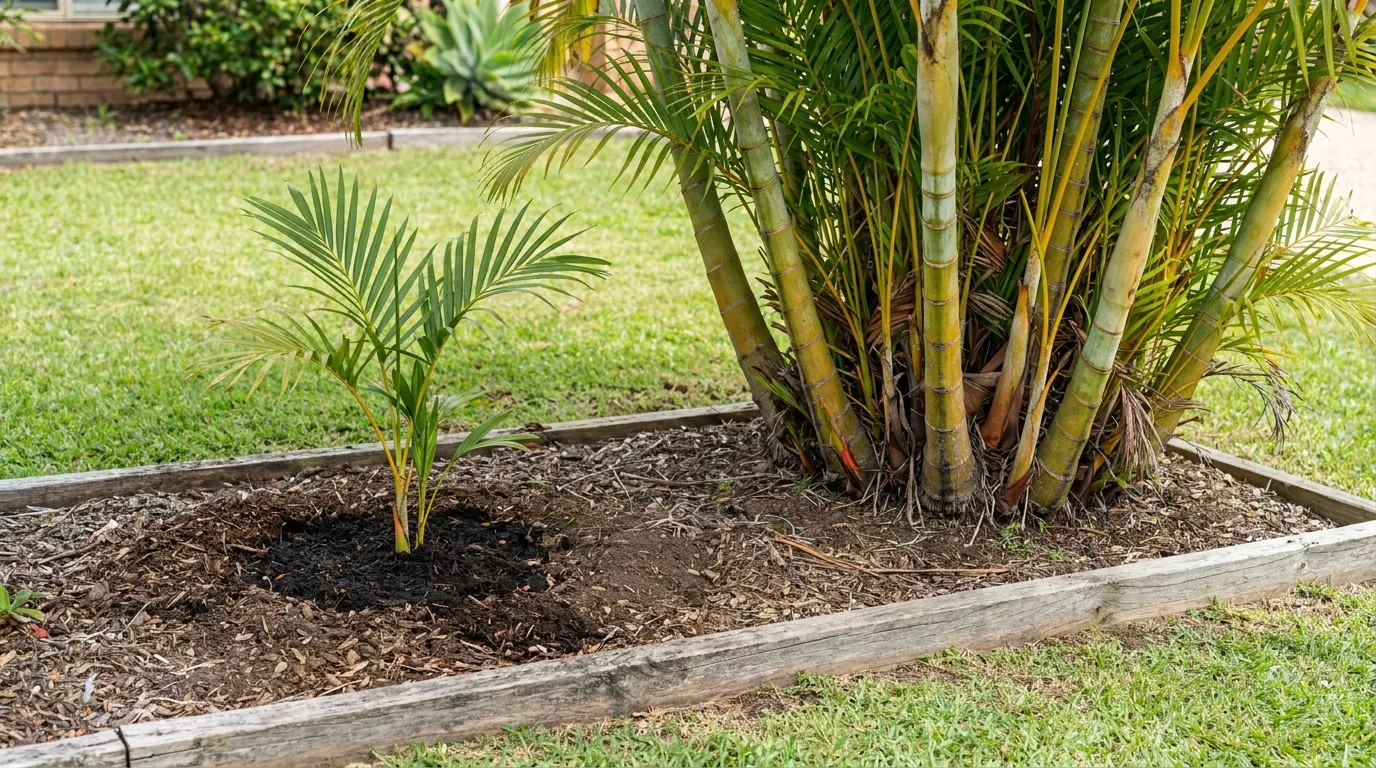
Golden Cane is a clumping palm, so a productive season can involve existing canes becoming taller while fresh shoots emerge from the base and younger canes fill gaps between the older stems.
This is one of the main things we watch when assessing a screen. A palm may add modest top height yet become much harder to see through because the lower and middle part of the clump has thickened. For privacy, that is useful growth.
How tall will it eventually get?
Australian nursery figures are too varied to justify one exact mature-height claim.
| Australian source | Published outdoor height |
|---|---|
| Ladybird Nursery | Often 3–5 m |
| Adelaide Plant Co | 3–6 m |
| Plantmark | 4–10 m mature profile; description says outdoor plants can reach 6–12 m |
| Plants Whitsunday | 14 m |
For suburban planning, we treat Golden Cane as a large, widening, multi-stemmed palm. The lower nursery figures are closer to the garden scale many homeowners encounter; the much larger figures show what the species can potentially do with enough warmth, time and root space.
Width matters just as much. Mature-width figures published by Australian suppliers commonly run into several metres. On jobs, that is the dimension people are most likely to underestimate when they judge a young plant by the width of its nursery pot.
Starting size can save years of waiting
Annual growth rate is only half of the screening decision. The other half is how much plant you buy on day one.
Nursery Direct currently publishes approximate arrival heights for its advanced Golden Cane stock:
| Stock size | Approximate listed arrival height |
|---|---|
| 400 mm / 45 L | About 1.5–2.5 m |
| 100–160 L | About 2.5–3.5 m |
| 200–285 L | About 3–4.5 m |
Those are one seller’s stock measurements, not a universal pot-size standard. They still demonstrate an important landscaping choice: advanced stock buys existing height and canopy; smaller stock lowers the upfront cost but asks you to wait for the garden to fill in.
We see that difference immediately on installations. Where privacy is urgent, starting size often affects the first two years more than arguing over whether a mature palm grows at the top or bottom of a nursery growth range.
Light changes the plant as well as the pace
Golden Canes are grown from bright indoor positions through to sunny outdoor screens, so light advice can look contradictory when those uses are mixed together.
Established landscape palms need useful light to build a strong clump. With more sun the canes usually show stronger yellow-gold colouring; in more shade the foliage tends to look greener. Deep shade can leave a screen visually thinner even when the palms remain alive.
There is one practical exception at planting time: nursery-grown palms may have been produced under shade cloth. We do not move tender shade-grown foliage directly into punishing western sun and expect it to look perfect. Gradual acclimatisation reduces the risk of scorch.
Pots are useful when you want to control the scale
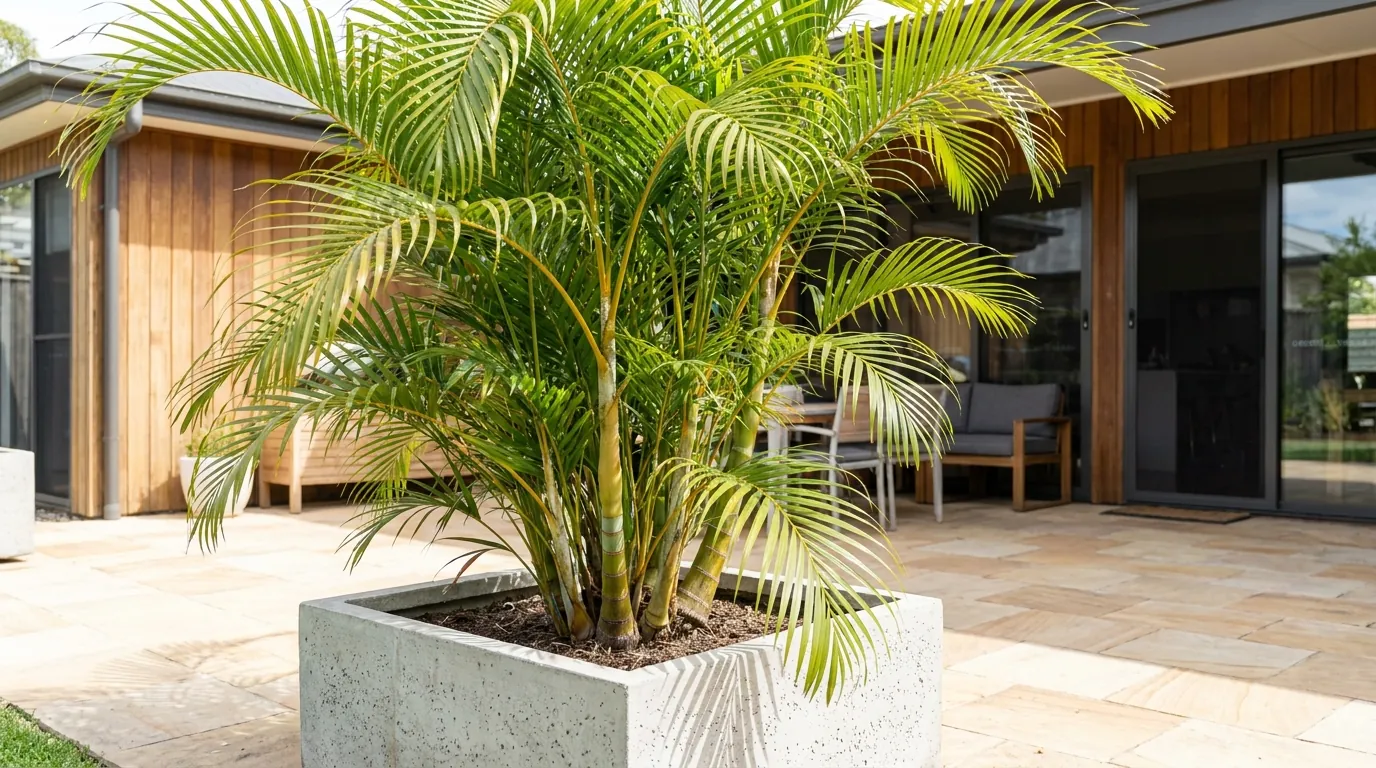
A container fixes the amount of root space available to the plant. In open ground, Golden Cane has far more opportunity to develop into a broad screening clump.
That makes pots useful for patios and courtyards where you want the tropical look without giving the palm several metres of garden. The trade-off is maintenance. We find container palms need closer attention to watering in heat and eventually show root congestion sooner than comparable ground-grown plants.
In winter, the equation reverses: a pot that dried rapidly in January can remain wet for much longer in cool weather. Adjust watering to what the root zone is actually doing rather than keeping the same calendar all year.
Measure your own palm once a year
The most useful growth rate is the one from your garden. Pick a repeatable date—early spring works well—and record the height to the highest naturally held frond, the width of the clump at its broadest point and, for a young screen, the number of main established canes. Take a photograph from the same position as well.
Repeat the check twelve months later. The photo often tells you more than the tape measure because it shows whether the planting has actually become denser.
We like this method because it includes everything a generic growth chart cannot: your microclimate, soil, irrigation, light, spacing and winter conditions.
When slow growth deserves a closer look
Slow growth on its own is not enough to diagnose a sick Golden Cane. We become more interested when the slowdown comes with another symptom: weak or distorted new fronds, persistent abnormal yellowing, dry brown foliage with a parched root zone, prolonged waterlogging, or little healthy new growth during genuinely warm weather.
Cold damage deserves its own context. Browning or scorched foliage appearing after a frost or cold snap is a different diagnosis from a palm gradually yellowing through nutrient stress.
Our Golden Cane Palm problems guide goes through those symptoms separately.
For screening, three measurements still matter most
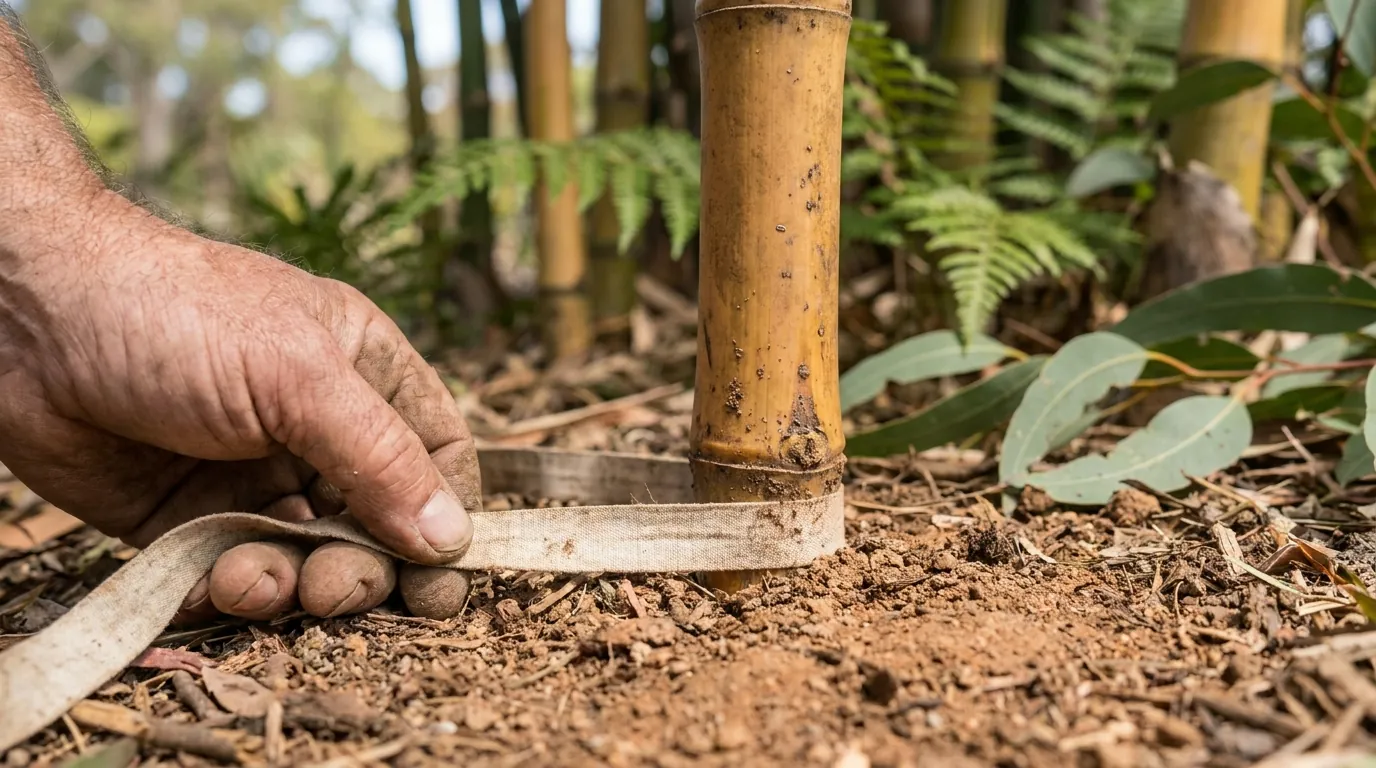
When we plan a Golden Cane screen, we start with starting height, target height and spacing. Then we allow for the clump’s eventual width.
That tells us much more than calling the palm “fast-growing”. A successful Golden Cane screen is not just a row that becomes tall; it is a row whose lower canes, foliage and neighbouring clumps develop enough mass to cover the view.
Frequently asked questions
How fast do Golden Cane Palms grow in Australia?
Australian nursery guidance commonly publishes around 30–60 cm of outdoor height growth per year in favourable conditions. This is a useful planning range rather than a measured guarantee, and growth can be slower in cool, shaded, restricted or newly planted conditions.
How long will a 1.2 m Golden Cane take to reach 2 m?
It needs about 80 cm of additional height. Using the commonly published 30–60 cm annual range gives a simple calculation of roughly 16–32 months. That estimate does not include establishment lag, winter slowdown or the extra time needed for neighbouring clumps to form a dense screen.
Do Golden Cane Palms stop growing in winter?
In tropical areas they may continue growing through much of the year, but growth slows noticeably in cooler southern and inland Australian gardens. In cold conditions it can appear to pause until warmer spring weather returns.
Are Golden Cane Palms frost tolerant?
No. Golden Cane is a frost-tender tropical palm, and young or newly planted specimens are particularly vulnerable. Cold injury can show as scorched, browned or damaged fronds. In frost-prone districts, use a warm sheltered position and protect young or container-grown plants during cold events.
How tall does a Golden Cane Palm get?
Australian nursery estimates vary from roughly 3–5 m in some suburban garden listings to 10 m or more under favourable conditions. For landscape planning, treat it as a large, widening, multi-stemmed palm rather than relying on one exact maximum height.
When should I fertilise a Golden Cane Palm?
The useful feeding period is the active growing season. For outdoor Australian palms, feeding commonly begins in spring and may continue through summer and early autumn according to climate and the fertiliser label. In cooler regions, reduce or stop feeding as winter growth slows rather than trying to force new growth in cold weather.
How can I measure my Golden Cane’s growth accurately?
Measure its height and clump width on the same date each year and photograph it from the same position. For young screens, also record the number of established canes. This captures both vertical growth and the increase in density that matters for privacy planting.


