
Gardenia Problems: Yellow Leaves & Bud Drop (AU)

See also: our full gardenia growing & care guide.
The most common gardenia problems in Australia are yellowing leaves (usually iron or magnesium deficiency, or cold, wet soil), bud drop (caused by stress — sudden changes in water, temperature or position), and a lack of flowers. Gardenias are beautiful but fussy: they want warmth, acidic soil, steady moisture and good feeding, and they react to stress by yellowing and dropping buds. Almost every problem traces back to one of those needs not being met.
The good news is that a yellowing, sulking gardenia is rarely dying — it is complaining. Read the specific symptom and the fix is usually a straightforward correction to soil, feeding, watering or position.
Quick symptom guide
| What you see | Likely cause |
|---|---|
| Yellow leaves, green veins | Iron deficiency (often high pH) |
| Yellowing older leaves, green edges pattern | Magnesium deficiency |
| General yellowing in cold, wet soil | Cold / waterlogging |
| Buds forming then dropping off | Stress — water, temp or position change |
| Few or no buds | Too little sun, poor feeding, cold |
| Sticky leaves, black coating | Sap-sucking pests + sooty mould |
Problem 1: Yellow leaves
Yellowing leaves are the classic gardenia complaint, and there are a few distinct causes worth telling apart.
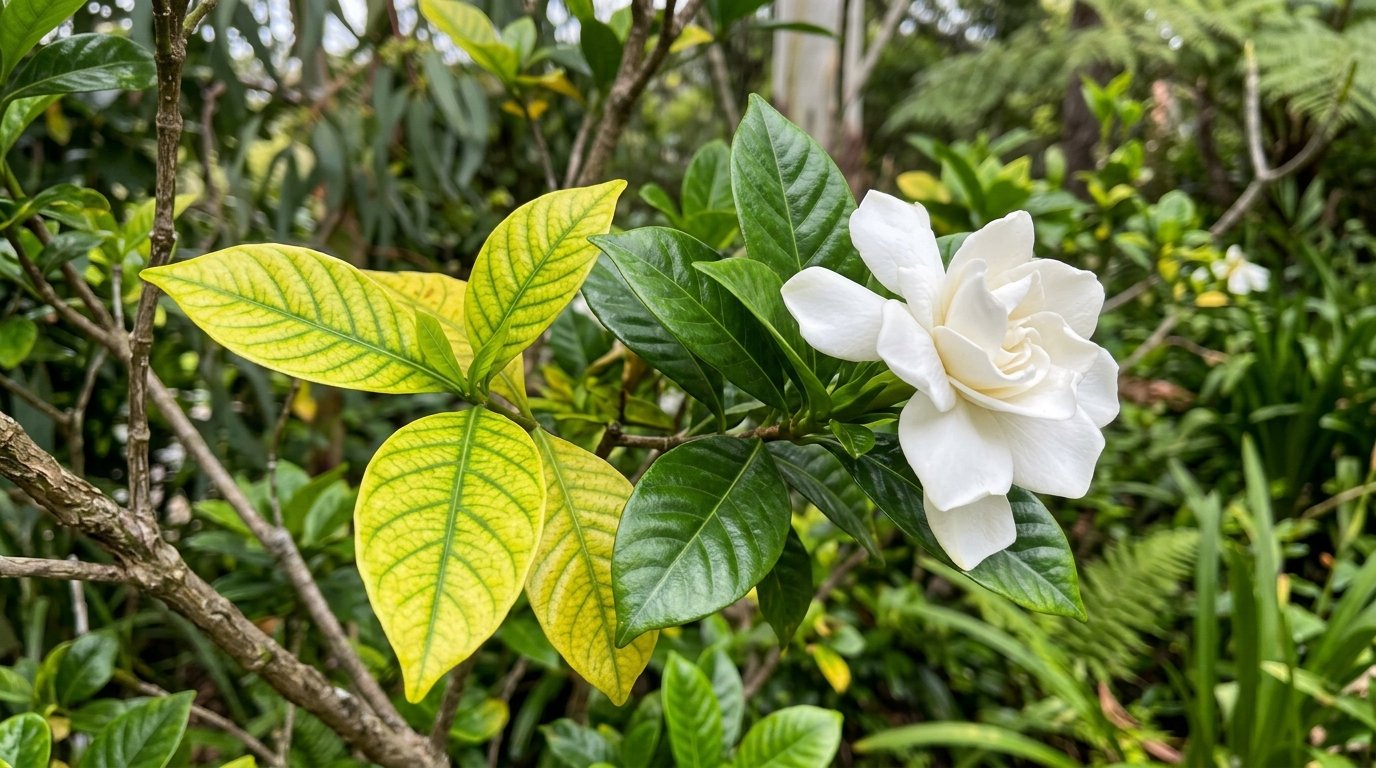
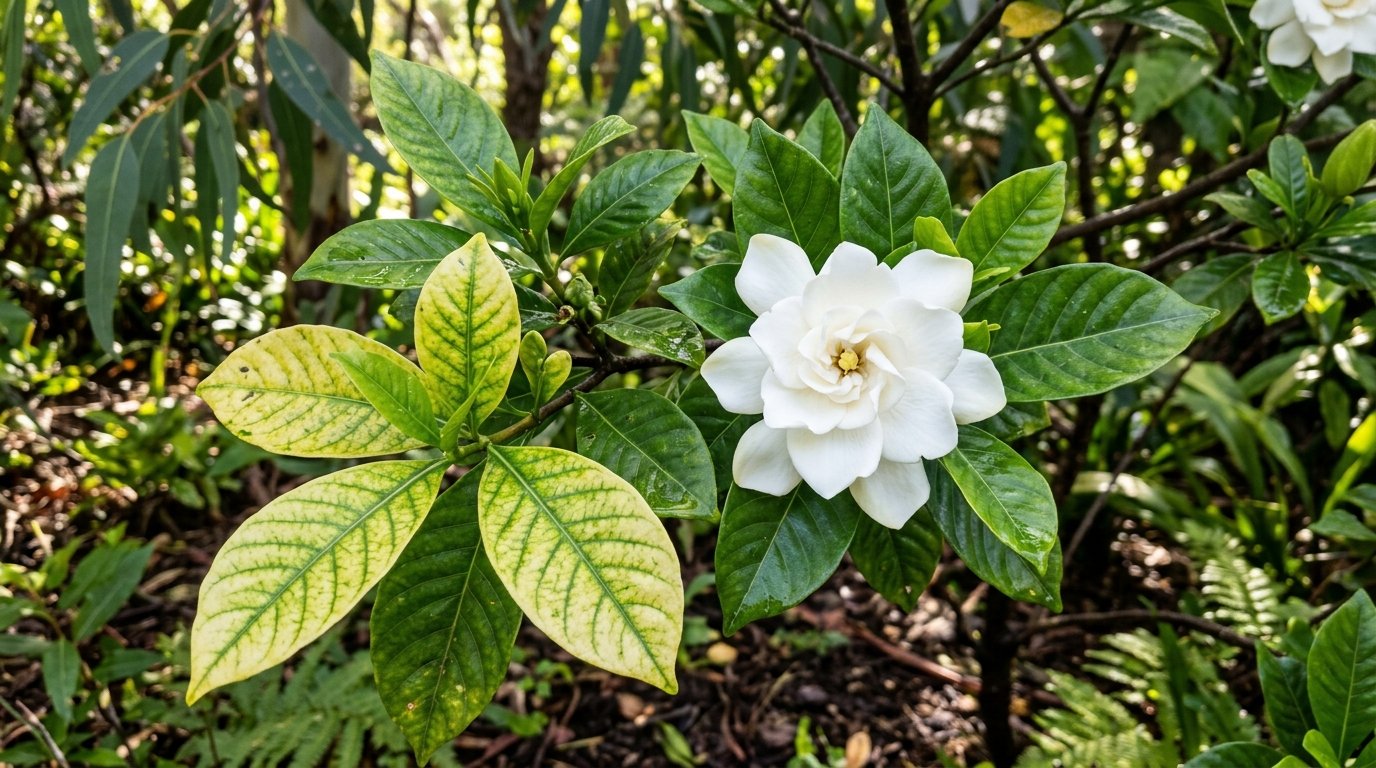
Iron deficiency shows as yellowing leaves with green veins, usually on the newer growth. It is often caused by soil that is not acidic enough (too high a pH), which locks up iron even when it is present.
Magnesium deficiency tends to yellow older leaves in a distinctive pattern, often leaving a green wedge or edges.
Cold and wet soil causes general yellowing in winter, because cold roots cannot take up nutrients well.
Gardenias are acid-loving plants, so keeping the soil acidic and feeding with a fertiliser formulated for acid-loving plants addresses most nutrient-related yellowing.
Why soil pH matters so much
Gardenias need acidic soil to absorb iron and other nutrients. In neutral or alkaline soil, iron becomes unavailable and the leaves yellow even though iron is in the ground.
This is why simply adding more fertiliser often does not fix a yellow gardenia — if the pH is wrong, the plant still cannot access the nutrients. Using products designed for acid-loving plants, and avoiding lime near gardenias, keeps the soil in the right range.
Problem 2: Bud drop
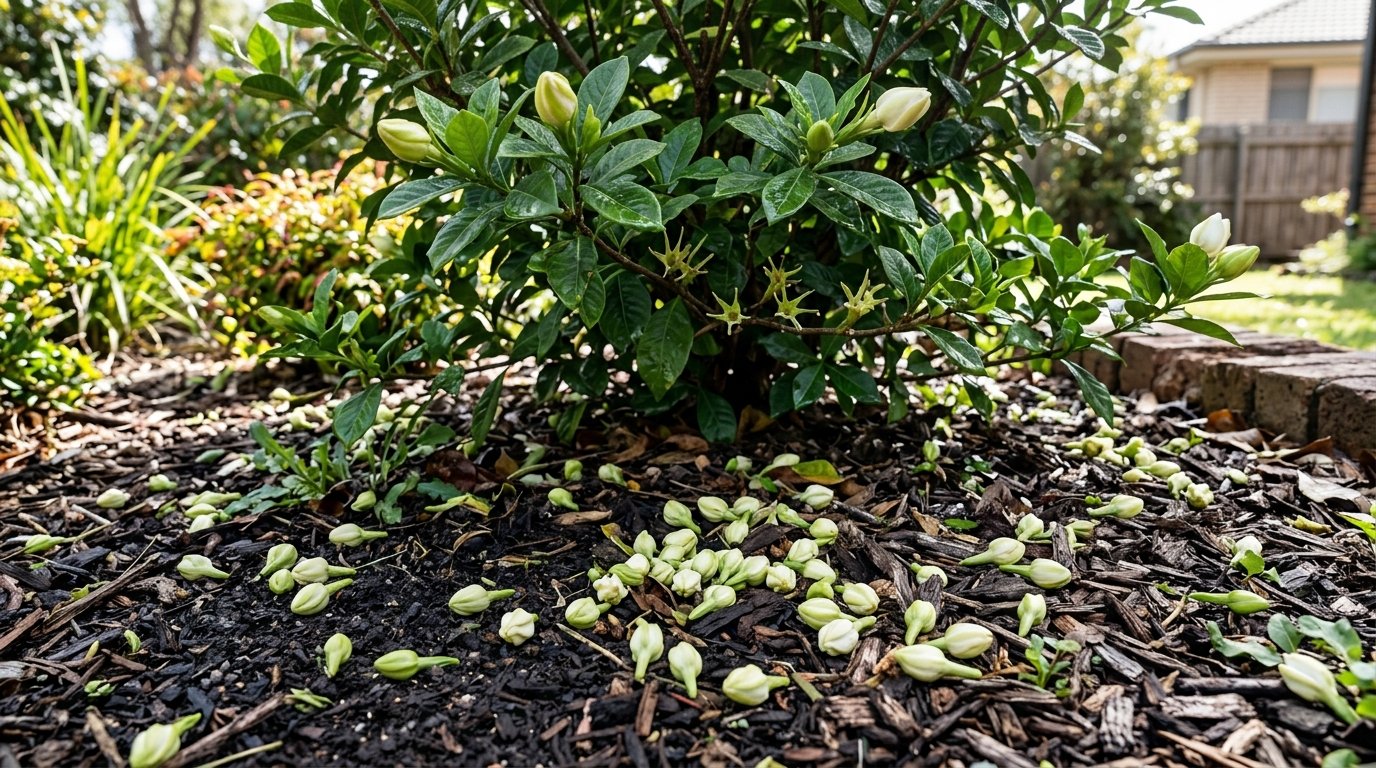
Few things frustrate gardeners more than a gardenia that forms plump buds and then drops them before they open.
Bud drop is almost always a stress response to a sudden change, such as:
- inconsistent watering — letting it dry out then flooding it;
- sudden temperature swings or cold snaps;
- being moved to a new position or brought indoors;
- low humidity, especially indoors near heating;
- drafts.
The fix is stability: consistent moisture, a stable warm position, and avoiding moving the plant once it has set buds.
Problem 3: Not flowering
A gardenia that will not flower usually needs more warmth, more light or better feeding.
- Gardenias flower best in a warm, bright position with some direct sun;
- too much shade reduces flowering;
- cold conditions delay or prevent buds;
- poor feeding, or the wrong fertiliser, limits blooms.
Give it warmth, good light and appropriate feeding through the growing season, and be patient — gardenias reward stable, consistent care.
Problem 4: Pests and sooty mould
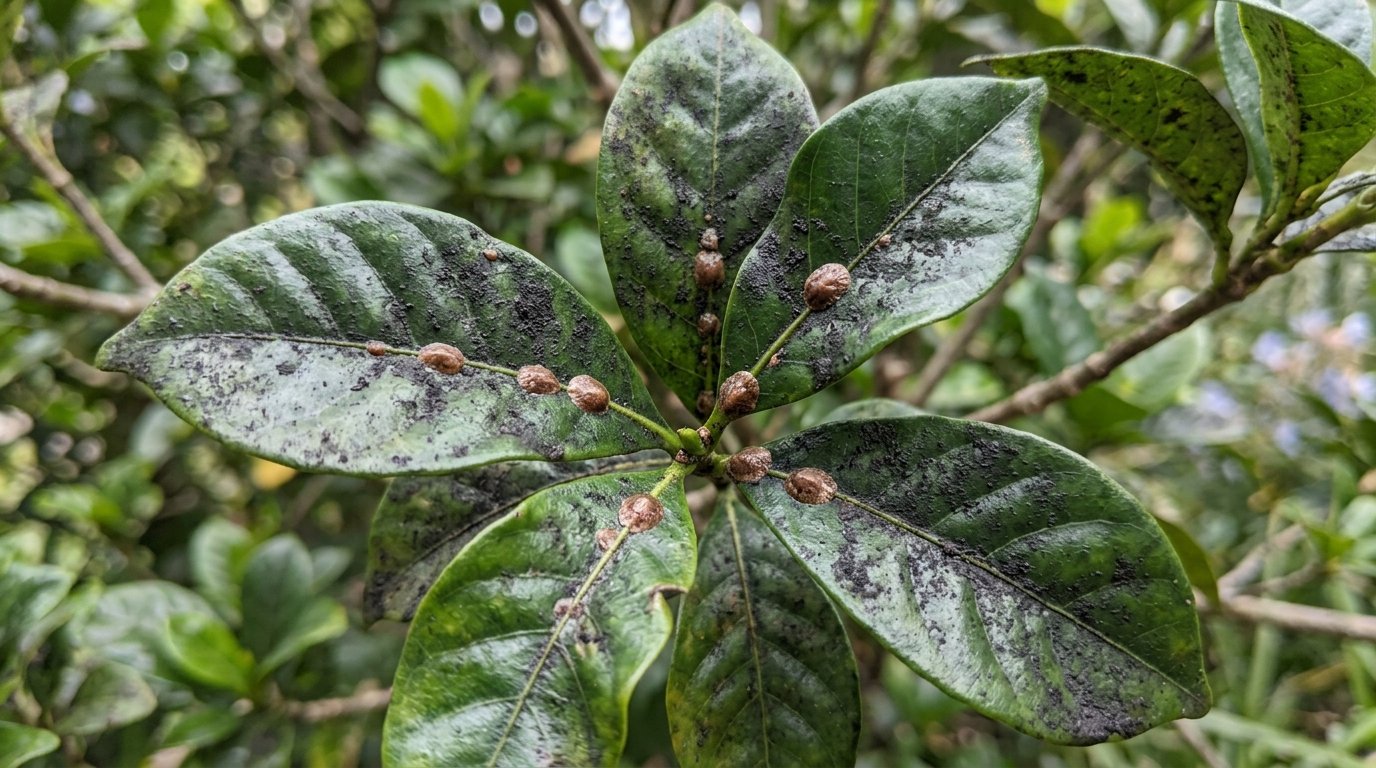
Sticky leaves and a black sooty coating indicate sap-sucking pests such as scale, aphids or mealybugs, whose honeydew feeds the sooty mould.
The black mould is harmless in itself but signals a pest problem. Controlling the pests and improving the plant’s vigour clears the mould over time.
Watering: consistency is everything
Gardenias want steady, even moisture — not drought, not waterlogging.
- Let the surface dry slightly, then water thoroughly;
- never let the plant swing between bone-dry and flooded, which triggers bud drop and yellowing;
- ensure good drainage — cold, waterlogged roots cause yellowing;
- mulch helps keep soil moisture and temperature stable.
A soil moisture check helps you keep watering consistent rather than guessing.
Position and warmth
Gardenias are warmth-lovers. They perform best in a warm, sheltered, bright spot with morning sun and protection from cold winds and frost.
In cooler areas, a warm microclimate or a pot that can be sheltered in winter makes a big difference. Cold is behind much winter yellowing and poor flowering.
Most gardenia problems are care, not disease
Genuine gardenia diseases are less common than care-related problems. The vast majority of yellow leaves and dropped buds trace back to soil pH, feeding, watering consistency, warmth or position.
The danger is misreading the symptom — feeding a plant that actually has a pH problem, or moving a stressed plant and triggering more bud drop. Getting the diagnosis right is most of the cure.
Not sure why your gardenia is struggling? Get it diagnosed
Iron deficiency, magnesium deficiency, cold-wet yellowing and pest damage can look similar, and the wrong fix wastes time while the plant declines. If your gardenia is yellowing or dropping buds and you are not sure why, Garden Green’s plant disease diagnosis service can pinpoint the cause from your description and photos and tell you exactly how to fix it. Send us your gardenia problem for a clear answer.
Keep it warm, acidic, fed and consistent
To keep a gardenia healthy and flowering:
- keep the soil acidic and feed with an acid-loving-plant fertiliser;
- water consistently — never dry-then-flood;
- ensure good drainage so roots are not cold and waterlogged;
- give it a warm, bright, sheltered position;
- avoid moving it once buds have set;
- manage sap-sucking pests early.
Gardenias are fussy but not difficult once their needs are met. A yellowing, bud-dropping gardenia is almost always asking for a correction to soil, water, warmth or feeding — not a lost cause.
Frequently asked questions
Why are my gardenia leaves turning yellow?
The usual causes are iron deficiency (yellow leaves with green veins, often from soil that is not acidic enough), magnesium deficiency (yellowing older leaves in a distinctive pattern), or cold, wet soil in winter. Gardenias are acid-loving, so keeping the soil acidic and feeding with an acid-plant fertiliser addresses most nutrient-related yellowing. Correct the pH, not just the fertiliser.
Why is my gardenia dropping its buds?
Bud drop is almost always a stress response to a sudden change — inconsistent watering, temperature swings, being moved or brought indoors, low humidity near heating, or drafts. The fix is stability: keep moisture consistent, maintain a warm stable position, and avoid moving the plant once it has set buds. Gardenias reward steady, unchanging care.
Why won’t my gardenia flower?
A gardenia that will not flower usually needs more warmth, more light or better feeding. They flower best in a warm, bright position with some direct sun; too much shade and cold conditions reduce or delay buds, and poor or wrong feeding limits blooms. Give it warmth, good light and appropriate feeding through the growing season and be patient.
Why does adding fertiliser not fix my yellow gardenia?
Because the problem is often soil pH, not a lack of nutrients. Gardenias need acidic soil to absorb iron, and in neutral or alkaline soil the iron becomes unavailable even when present, so the leaves yellow regardless of how much fertiliser you add. Use products for acid-loving plants and avoid lime near gardenias to keep the soil in the right range.
How often should I water a gardenia?
Aim for steady, even moisture. Let the surface dry slightly, then water thoroughly, and never let the plant swing between bone-dry and flooded, which triggers bud drop and yellowing. Ensure good drainage, because cold, waterlogged roots also cause yellowing, and mulch to keep soil moisture and temperature stable. Consistency matters more than frequency.
What causes sticky leaves and black coating on a gardenia?
Sticky leaves and a black sooty coating indicate sap-sucking pests such as scale, aphids or mealybugs. Their honeydew feeds sooty mould, which is harmless in itself but signals a pest problem. Control the pests and improve the plant’s overall vigour, and the sooty mould will clear over time.
Are gardenias hard to grow in Australia?
Gardenias are rewarding but fussy. They want warmth, acidic soil, consistent moisture and good feeding, and they react to stress by yellowing and dropping buds. They are not difficult once those needs are met, but they are unforgiving of neglect and sudden change. Most problems are care-related rather than genuine disease.
Why is my gardenia yellow in winter?
Winter yellowing is often caused by cold, wet soil, because cold roots cannot take up nutrients well, and gardenias are warmth-loving plants that slow down in the cold. Ensure good drainage so roots are not waterlogged, protect the plant from cold and frost, and avoid overwatering in winter. Warmth and better drainage usually improve winter colour.


