
Ficus Hillii Hedge Problems Australia: Causes & Fixes

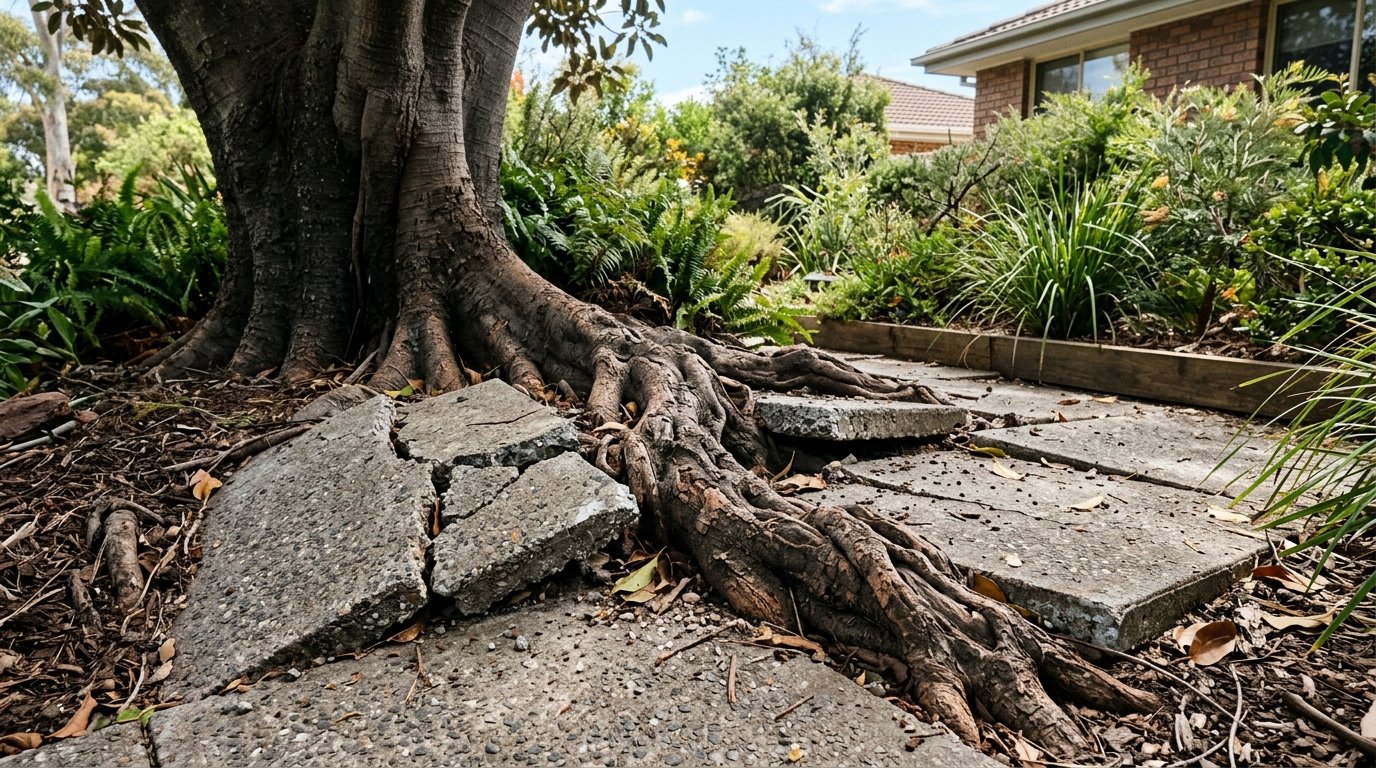
If a Ficus Hillii hedge is dropping leaves, browning, curling or becoming difficult to control, start with two questions: are the roots too close to infrastructure, and has the plant recently been stressed by a change in water, light, temperature or pruning? Hill’s Weeping Fig is vigorous enough to recover from heavy pruning and temporary leaf loss, but that same vigour is why its root system can become a serious long-term issue beside paving, drains, walls, pools and confined suburban spaces.
The accepted botanical name is Ficus microcarpa var. hillii. Kew’s Plants of the World Online treats the variety as native from the Lesser Sunda Islands through New Guinea and Queensland to New Caledonia, while the broader species Ficus microcarpa spans tropical and subtropical Asia into the western Pacific. In Australian landscaping it is commonly sold as Ficus Hillii, Hill’s Weeping Fig or ‘Flash’ and used as a fast, tall privacy hedge. It is therefore more accurate to treat it as a tropical Australasian fig with a Queensland native occurrence, rather than calling it a broadly Australian native screening shrub.
That distinction matters less in day-to-day hedge care than the plant’s biology: Ficus Hillii is fundamentally a substantial tree with a powerful root system, vigorous canopy and strong capacity to reshoot after pruning. Those traits make it excellent for tall screening in the right position and troublesome in the wrong one.
Which Ficus Hillii hedge problem is it?
| What you can see | Likely cause | What to check first |
|---|---|---|
| Paving lifting, drains affected or roots appearing around structures | Large vigorous root system conflicting with infrastructure | Assess distance from pipes, paving, walls, pools and footings with a qualified arborist where risk is significant |
| Sudden leaf drop after planting, pruning or weather change | Stress response | Check recent changes in water, light, temperature and root disturbance |
| Leaves folded or rolled with reddish-brown scarring | Ficus/Cuban laurel thrips | Open damaged leaves and inspect for dark adult thrips and pale nymphs |
| Sticky leaves with black coating | Scale, mealybug or whitefly with sooty mould | Inspect stems and leaf undersides for sap-sucking insects |
| General yellowing with wet soil | Overwatering, poor drainage or root stress | Check soil moisture and drainage before feeding or watering again |
| Yellow new leaves with greener veins | Possible iron chlorosis / nutrient-availability issue | Check root health and soil pH |
| Brown crispy margins or tips | Dry roots, heat, drying wind or damaged roots | Check the root zone before adding more water |
| Blackened or browned new growth after cold weather | Frost injury | Wait until further cold risk passes before hard corrective pruning |
| Dense upper hedge but thin or bare lower growth | Self-shading and poor formative pruning | Check light reaching the base and overall hedge shape |
| Open or uneven hedge despite fast growth | Insufficient tip pruning, excess spacing or light imbalance | Review early pruning and planting layout |
Ficus Hillii is forgiving above ground because it can reshoot vigorously. Root-location mistakes are much less forgiving, which is why we put infrastructure risk at the top of the diagnosis rather than treating it as an afterthought.
Aggressive roots are the biggest long-term Ficus Hillii problem
Ficus species are well known for extensive, vigorous surface and structural roots. City of Sydney urban-forest material specifically documents Ficus microcarpa var. hillii with extensive buttress roots and notes conflicts with footpaths, walls, parking areas and below-ground drainage infrastructure.
The same City of Sydney study says fig roots can travel many metres beyond the trunk and that substantial roots may occur far from mature trees. Inner West Council has also recorded removal of a Hill’s Weeping Fig where its root system was affecting adjacent private property and the conflict could not be resolved without compromising the tree.
That does not mean every Ficus hedge will automatically destroy a building. Root damage depends on distance, soil, available moisture, construction type and the condition of the infrastructure. But planting a potentially large fig immediately beside pipes, paving, pool structures or footings creates a risk that is avoidable at design stage.
What Ficus Hillii roots can interfere with
In constrained urban sites, problems can include:
- lifting or distorting paving;
- displacing edging and paths;
- entering already damaged or leaking drainage and sewer infrastructure;
- conflicting with stormwater lines;
- pressing against retaining walls;
- creating difficult excavation zones beside foundations;
- lifting shallow hardscape where roots expand close to the surface;
- complicating pool and boundary construction.
Roots generally exploit existing weaknesses and favourable moisture rather than behaving like drills through sound concrete. Even so, the combination of a large tree and tight suburban infrastructure makes prevention much cheaper than later root management.
How far should Ficus Hillii be from structures?
There is no single safe distance that works for every property, and we would not invent one.
Plantmark lists ordinary Ficus Hillii as a tree capable of reaching roughly 10–25 m high and 4–10 m wide if not maintained. Speciality Trees lists the commonly planted ‘Flash’ selection at about 10 m high × 3 m wide when untrimmed.
Those dimensions alone tell us it should not be treated like a compact border shrub.
Where major drains, pools, retaining walls or building footings are close to the proposed hedge, have the planting position assessed before installation rather than assuming regular clipping of the canopy will also keep the roots small.
Canopy pruning controls foliage. It does not convert the root biology of a large fig into that of a dwarf shrub.
Do root barriers solve the problem?
Root barriers can be useful where correctly specified and installed, but they are not a magic shield.
A barrier has to be deep enough, continuous enough and positioned appropriately for the site. Poorly designed barriers can simply redirect roots around or beneath them.
They can also create another issue if they confine too much of the root system on one side of a large hedge.
For an established Ficus already interacting with important infrastructure, root cutting should not be treated as casual garden maintenance. Large structural roots affect tree stability. A qualified arborist should assess major root pruning before excavation or cutting.
Sometimes Ficus Hillii is simply the wrong hedge
This is the uncomfortable but useful answer.
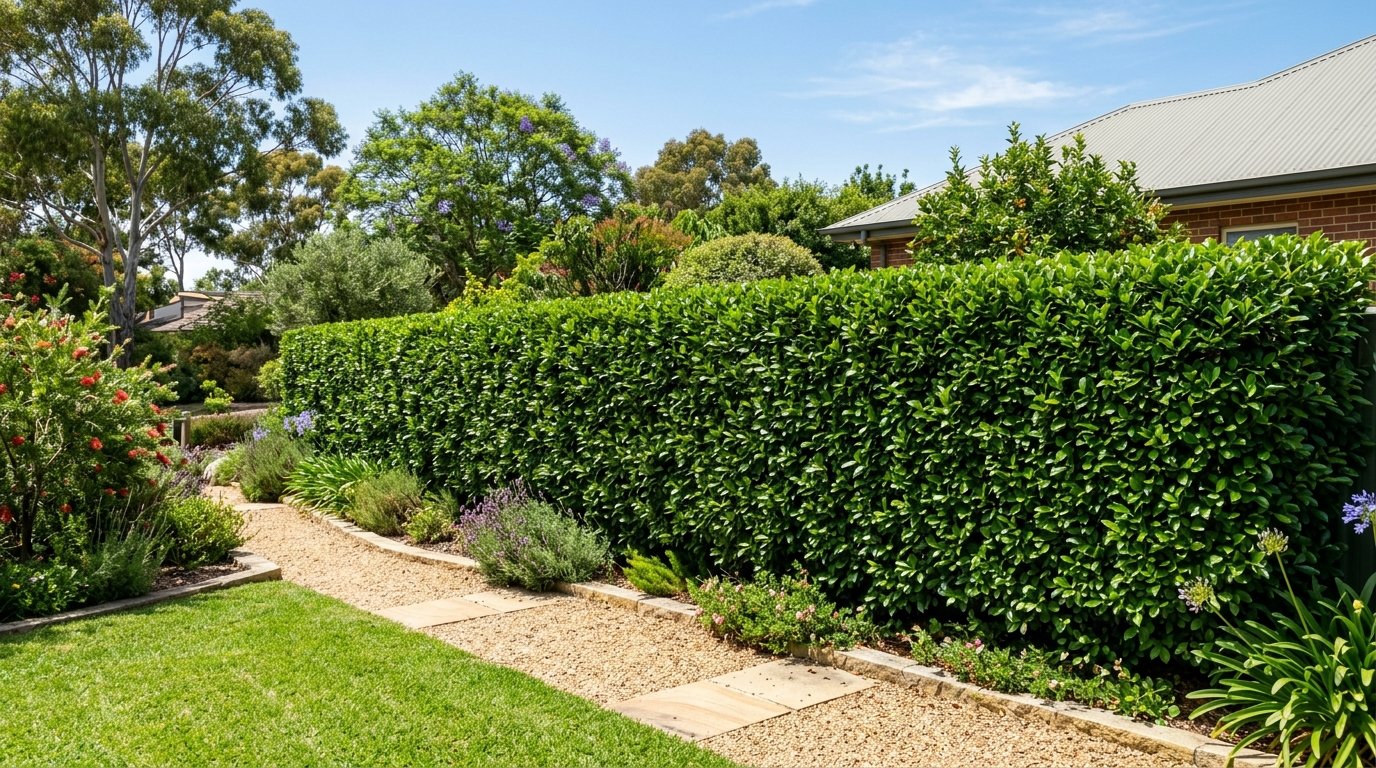
Ficus Hillii works extremely well where there is enough soil volume and room for a substantial, regularly clipped screen. It is much less convincing where a narrow planting strip sits immediately between a house, pool, sewer line and neighbour’s paving.
Repeated canopy pruning can hold the foliage to hedge dimensions while the underlying plant continues behaving biologically like a large tree.
If the root risk is unacceptable, a more compact screening plant can be the better choice. For an Australian native alternative, our Lilly Pilly hedge guide compares cultivars that are more naturally suited to different screening heights.
Leaf drop is often a stress response, not a death sentence
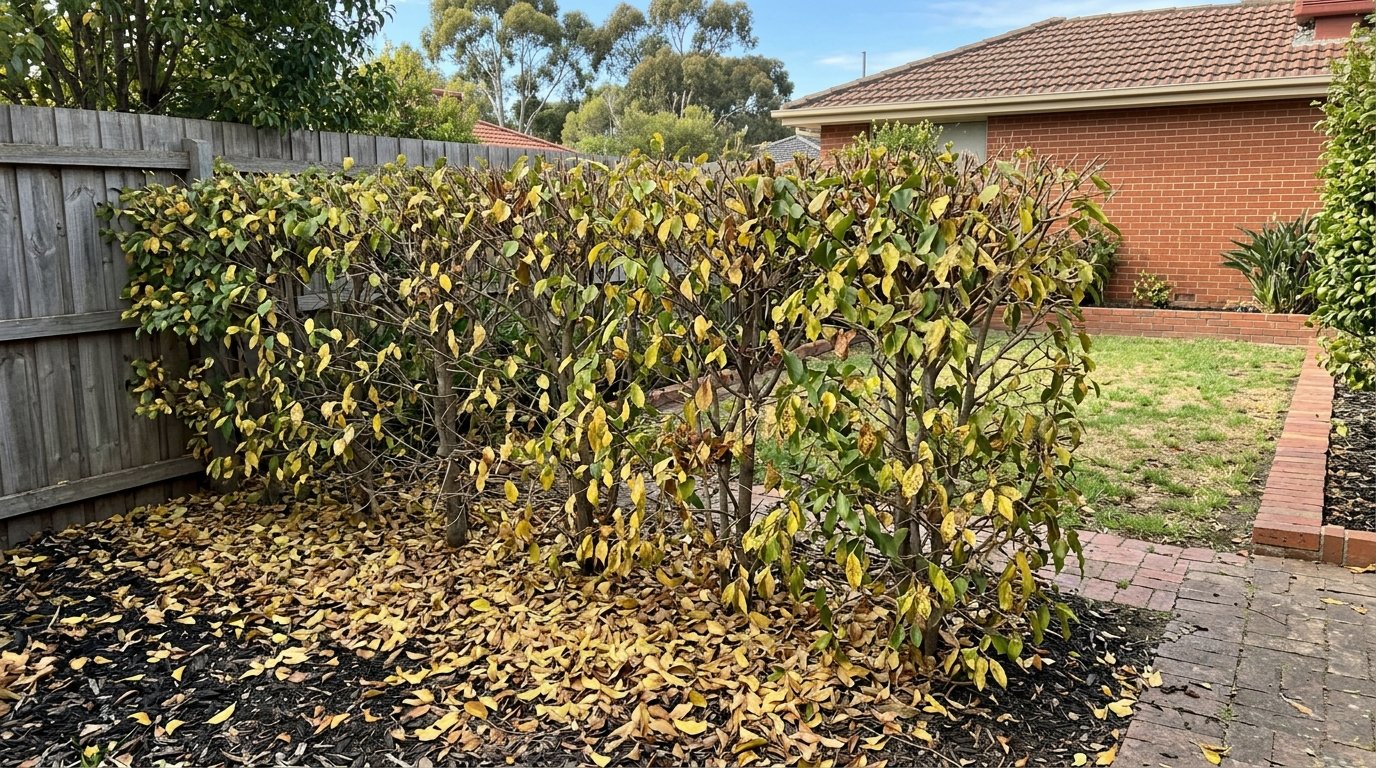
Ficus are famous for shedding leaves after environmental change.
Common triggers include:
- transplanting;
- root disturbance;
- a sudden change in irrigation;
- moving from shade into stronger sun;
- hard pruning;
- a sudden cold snap;
- prolonged dry conditions;
- waterlogging.
The useful question is: what changed immediately before the leaves fell?
If the branches remain flexible and green beneath the bark and the root system is healthy, a stressed Ficus can often replace its foliage vigorously once conditions stabilise.
Plantmark and Speciality Trees both describe Ficus Hillii as highly adaptable and well suited to clipping, which matches what we see in landscape maintenance: this is one of the more forgiving hedge plants when the underlying roots are sound.
Leaf drop after transplanting
A newly planted Ficus loses part of the root-to-canopy balance it had in the nursery.
Leaf drop after planting can therefore occur even where the plant ultimately establishes well.
Check:
- that the original root ball is actually getting wet;
- that surrounding soil is not permanently saturated;
- that the plant was not planted dramatically deeper than it grew in the pot;
- that the root ball has not dried internally while surrounding mulch looks moist;
- that wind exposure has not increased sharply.
A healthy stressed plant and a plant suffering root rot can both lose leaves, so moisture below the surface is more useful than guessing from the canopy.
Ficus thrips: folded leaves with reddish scarring
Ficus microcarpa is a recognised host of Cuban laurel thrips, Gynaikothrips ficorum.
University integrated-pest-management guidance describes the damage very clearly: adults feed on fresh Ficus leaves, causing them to fold or curl along the midrib. The folded leaf becomes a protected gall containing adults, pale young thrips and eggs.
Damaged tissue often develops dark brown, reddish or purplish scarring.
That differs from ordinary drought damage, where the leaf edge usually becomes dry or crisp rather than folding into a characteristic gall.
How to check for Ficus thrips
Open one of the newly folded leaves rather than diagnosing from the outside.
Inside you may find:
- dark brown to black narrow adult thrips;
- pale yellow or whitish young stages;
- dark speckling or scarring;
- feeding concentrated inside the folded leaf.
Heavy populations can slow new growth and contribute to premature leaf drop, but the damage is often primarily cosmetic on an otherwise healthy established hedge.
Where distorted new growth is widespread, remove badly affected tips where practical and confirm the pest before using any insecticide. Follow the current Australian product label for ornamental Ficus and the target pest.
Thrips versus other rolled-leaf pests
Not every curled Ficus leaf is Cuban laurel thrips.
Ficus leaf-rolling psyllids and gall-forming insects can produce superficially similar symptoms on Ficus microcarpa. University pest guidance distinguishes Cuban laurel thrips by its characteristic folded leaf and dark reddish-purple scarring.
The practical lesson is simple: open the damaged leaf and look at what is actually inside.
Scale, mealybug and black sooty mould
Figs can carry substantial populations of sap-sucking pests, especially on sheltered dense hedges.
Scale is common enough that we actively check for it when foliage becomes sticky or black.
Look for:
- small raised brown, white or grey bumps on stems and leaves;
- sticky honeydew;
- ants moving through the hedge;
- black sooty mould growing over the leaf surface.
Mealybugs can produce a similar honeydew problem but have a more obvious white cottony appearance.
Whiteflies may also occur, particularly in warm protected foliage.
The black mould is usually secondary. Treat the sap-sucking pest producing the honeydew rather than assuming the soot-like coating is the primary disease.
Yellow leaves: water, roots or nutrition?
Ficus Hillii grows rapidly when conditions suit it and has a substantial demand for water and nutrients while establishing and actively growing.
But yellow foliage should not automatically trigger more irrigation or fertiliser.
Check the root zone first.
| Yellowing pattern | What it may suggest |
|---|---|
| Yellow leaves plus persistently wet soil | Overwatering, poor drainage or root stress |
| Yellowing after severe drying | Water deficit and stress-related leaf drop |
| Pale new growth with greener veins | Possible iron-availability problem |
| General pale growth with healthy roots | Nutrition may need review |
| Yellowing after transplant or root disturbance | Temporary stress response is possible |
Plantmark recommends well-drained soil for Hill’s Weeping Fig, while Speciality Trees notes that ‘Flash’ is highly adaptable and can handle a range of conditions. Adaptability does not mean a hedge benefits from permanently stagnant roots.
Root rot and wet feet
Ficus Hillii can tolerate wetter conditions better than many drought-oriented hedges, but prolonged saturation still deprives roots of oxygen and can favour root-rot organisms.
Root stress becomes more likely where:
- yellowing continues while the soil stays wet;
- the hedge wilts despite plentiful irrigation;
- individual branches begin dying;
- a low section of the row declines first;
- the problem worsens after prolonged rain;
- roots are dark, soft or unhealthy.
Do not diagnose a specific organism such as Phytophthora solely from leaf symptoms.
First establish whether the physical drainage problem can be corrected.
Brown crispy tips: check the roots before watering
Brown leaf margins can result from genuinely dry soil, hot wind or intense heat.
They can also appear where damaged roots are unable to supply enough water to the canopy.
That means a wet plant can look drought-stressed.
Before adding water:
- move mulch aside;
- check moisture through the actual root zone;
- compare a damaged section with a healthy section;
- check irrigation coverage;
- look for stagnant water as well as dry soil.
If the soil is dry, restore consistent watering. If it is saturated, investigate drainage instead.
Frost can trigger leaf drop and tip burn
Ficus Hillii performs best in warm and mild climates and is less tolerant of hard frost than many temperate hedge species.
Young plants and soft new growth are especially vulnerable.
After a cold event you may see:
- browned or blackened shoot tips;
- sudden leaf drop;
- damage strongest on exposed upper foliage;
- older inner stems surviving beneath the damaged canopy.
Because Ficus Hillii is capable of vigorous reshooting, frost damage is not automatically fatal.
Wait until the extent of injury is clear before cutting everything back, particularly where further frost is likely.
Ficus Hillii handles hard pruning better than many hedges
This is one of its genuine advantages.
Unlike Westringia or old Japanese Box, where cutting deep into leafless wood can leave stubborn bare areas, Ficus Hillii generally responds strongly to pruning when healthy.
Plantmark describes it as readily pruned to shape, and Speciality Trees promotes ‘Flash’ specifically for tight formal hedging and repeated clipping.
That means an oversized but otherwise healthy hedge can often be reduced and rebuilt more successfully than many slower, less vigorous shrubs.
The caveat is that repeated hard pruning does nothing to solve an inappropriate root location.
You can reduce the foliage every year and still have a substantial Ficus root system beneath the ground.
Why a Ficus hedge becomes bare at the base
Fast growth can actually make lower thinning worse if the hedge is allowed to become top-heavy.
A wide dense upper canopy shades the lower branches. Over time the base becomes increasingly open.
Another common cause is allowing young plants to race upward without enough formative tip pruning.
On our hedge work, we prefer to:
- build branching while the plants are young;
- keep the lower hedge slightly broader than the top;
- avoid allowing a dense overhanging cap to block light;
- reduce dominant vertical shoots so side branches develop.
For routine size, spacing and maintenance rather than troubleshooting, see our Ficus Hillii privacy hedge and care guide.
Why the hedge grows fast but will not thicken
Fast vertical growth is not the same as hedge density.
A Ficus Hillii screen can remain open where:
- young plants were never tip-pruned;
- spacing is too wide for the intended screen;
- one side receives much less light;
- the roots are stressed;
- the hedge is repeatedly cut only across the top rather than shaped through the sides.
Because the species reshoots readily, formative pruning is usually highly effective.
Encourage side branching before the plants reach their final height rather than waiting for a row of tall narrow trees and trying to thicken them afterwards.
Sunburn after hard pruning
Dense Ficus foliage creates its own shade.
When a hedge is cut hard during hot weather, inner leaves and stems that developed in shade can suddenly be exposed to strong sun.
This can produce brown scorch on the newly exposed hedge face.
The pattern is usually strongest where direct or reflected sun hits the fresh cut rather than distributed randomly throughout the canopy.
Where possible, avoid combining severe canopy reduction with extreme heat and dry root conditions.
Too much shade can also thin Ficus Hillii
Plantmark and Speciality Trees both list full sun to part shade for Ficus Hillii.
It can tolerate shade reasonably well, but a deep narrow corridor between buildings may still produce uneven growth.
You may see:
- longer internodes;
- shoots leaning toward the available light;
- less dense lower foliage;
- one face of the hedge substantially thicker than the other.
If one side receives almost no light, fertiliser will not make the growth pattern symmetrical.
When should Ficus Hillii be replaced or re-sited?
Most above-ground Ficus Hillii problems are recoverable. Root-location problems are the exception.
Replacement becomes worth considering where:
- the hedge is planted immediately beside critical underground services;
- surface roots are repeatedly damaging paving;
- major roots are creating an ongoing conflict with walls, drains or hardscape;
- the planting strip is too narrow for a large vigorous fig;
- controlling the tree requires constant severe pruning;
- a qualified arborist concludes root management cannot be carried out safely without destabilising the plants.
Once a mature Ficus is established beside infrastructure, fixing the original siting decision can be much harder than treating leaf problems.
Where a tall evergreen screen is still wanted but root risk needs to be reduced, a correctly chosen Lilly Pilly cultivar may be a more appropriate option. Our Australian Lilly Pilly hedge guide compares different screening sizes and cultivars.
Our diagnosis order for a struggling Ficus Hillii hedge
When a Ficus Hillii hedge develops problems, we work through the evidence in this order:
- Check the planting position. Before worrying about leaves, confirm that a large-rooted Ficus is not creating a structural or infrastructure problem.
- Ask what changed before leaf drop. Transplanting, pruning, watering, cold and light changes are common triggers.
- Inspect curled new leaves. Folded leaves with reddish or purplish scarring strongly suggest Ficus thrips.
- Look for sticky foliage. Scale, mealybug and whitefly can produce honeydew and sooty mould.
- Check the root zone. Establish whether the soil is dry, appropriately moist or persistently saturated.
- Review the yellowing pattern. Root stress and nutrient-availability problems need different corrections.
- Consider recent weather. Frost, heat and drying wind can trigger sudden leaf loss or scorch.
- Review pruning and light. A thin lower hedge is often self-shading or poor formative pruning rather than disease.
- Only then decide whether the answer is irrigation, drainage, pest control, recovery pruning, arboricultural root management or replacement.
Ficus Hillii is unusually forgiving when the problem is in the canopy because healthy plants usually reshoot strongly. It is much less forgiving when the original problem is that a potentially large fig has been planted too close to important infrastructure.
If the symptoms do not clearly match these patterns, the hedge continues declining after obvious irrigation and pest issues are corrected, or you need help separating thrips, root stress and environmental leaf drop, Garden Green’s plant and flower disease diagnosis service can help identify the likely cause and practical next step. You can also contact Garden Green with the details of what you are seeing.
Frequently asked questions
Are Ficus Hillii roots invasive?
Ficus Hillii develops a large, vigorous root system that can conflict with paving, drainage and other infrastructure when planted too close. Australian council urban-forest material documents extensive surface and buttress roots on mature Ficus microcarpa var. hillii. Site large Ficus hedges with enough room and obtain arboricultural advice before cutting major established roots.
Why is my Ficus Hillii hedge suddenly dropping leaves?
Ficus often sheds leaves after stress or environmental change. Common triggers include transplanting, root disturbance, altered watering, hard pruning, sudden changes in light and cold weather. Check what changed immediately before the leaf drop and confirm the root zone is healthy before assuming the plant is dying.
What causes curled leaves on Ficus Hillii?
Ficus microcarpa is a recognised host of Cuban laurel thrips, Gynaikothrips ficorum. Feeding causes new leaves to fold or curl along the midrib, often with reddish, brown or purple scarring. Open affected leaves and inspect inside for dark adult thrips and pale young stages before treating.
Why does my Ficus hedge have black sticky leaves?
Sticky foliage with a black coating usually points toward a sap-sucking pest such as scale, mealybug or whitefly. These insects produce honeydew, and sooty mould grows on that sugary residue. Identify and control the pest producing the honeydew rather than treating the black mould as the primary problem.
Why are my Ficus Hillii leaves turning yellow?
Yellow foliage can result from waterlogging, dry-root stress, transplant shock, nutrition problems or reduced nutrient availability. If the soil remains wet, investigate drainage first. If new leaves are pale with greener veins, soil pH and iron availability may also be worth checking.
Can Ficus Hillii recover after hard pruning?
Usually yes, provided the plant is healthy and the roots are sound. Plantmark and Speciality Trees both describe Ficus Hillii as highly responsive to clipping, and vigorous regrowth is one of the reasons it is widely used for formal screening. This makes recovery pruning more forgiving than with hedges such as old Japanese Box or Westringia.
Why is my Ficus Hillii hedge bare at the bottom?
The lower hedge is commonly being shaded by dense upper growth or was not tip-pruned enough while young. Keep the hedge slightly broader at the base than the top and encourage side branching early. Ficus Hillii reshoots readily, so healthy sparse hedges can often be rebuilt with appropriate pruning.
Should I replace Ficus Hillii if it is planted near a house or pipes?
Not automatically, but the risk should be assessed rather than ignored. Ficus Hillii is capable of becoming a large tree with extensive roots. Where established roots are already conflicting with important pipes, paving, walls, pools or structural areas, a qualified arborist can assess whether management is practical or whether replacement with a more compact screening plant is the safer long-term option.


