
Best Soil & Potting Mix for Calathea (Australia)

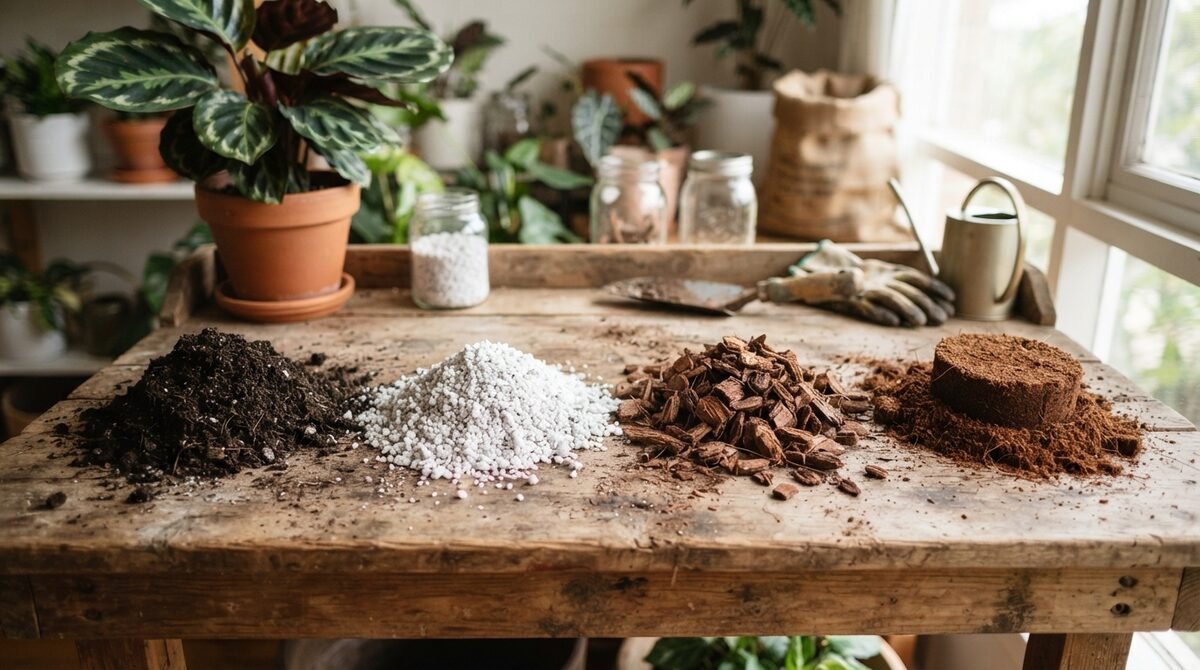
Quick answer: Calathea wants an airy, free-draining mix that still holds a little moisture — never a heavy, waterlogged one. Start with a quality premium indoor potting mix and lighten it with perlite for drainage, plus a little coco coir or fine bark for structure and moisture balance. Pot into a container with drainage holes, sized only one step up, and refresh the mix every one to two years.
Getting the mix right quietly prevents half the problems people blame on watering. The wrong mix either stays soggy and suffocates the roots, or dries out and compacts so the plant can never be watered evenly. The right mix makes consistent moisture — which is what Calathea wants — easy to achieve.
What Calathea roots actually need
Calathea likes consistently lightly moist conditions, but its roots still need air. That means the mix has to do two jobs at once:
- hold enough moisture that it does not dry out completely between waterings;
- drain freely enough that water never pools around the roots.
A heavy, dense mix fails the second job; a very light, bark-only mix fails the first. The goal is a balanced, airy blend.
A simple Calathea mix that works in Australia
You do not need an exotic recipe. A reliable approach is to take a good-quality premium indoor potting mix as the base and improve its structure:
| Component | What it does |
|---|---|
| Premium indoor potting mix | The base — holds moisture and nutrients |
| Perlite | Opens the mix, improves drainage and aeration |
| Coco coir (a little) | Holds even moisture and resists compaction |
| Fine orchid bark (optional) | Adds structure and air pockets for roots |
Proportions, not a strict recipe: a common approach is a generous base of premium indoor mix with a good handful or two of perlite mixed through, and some coir or fine bark for structure. Adjust toward more perlite if your mix stays wet, or more coir if it dries too fast. The feel you want is light, crumbly and free-draining.
Pot choice and drainage
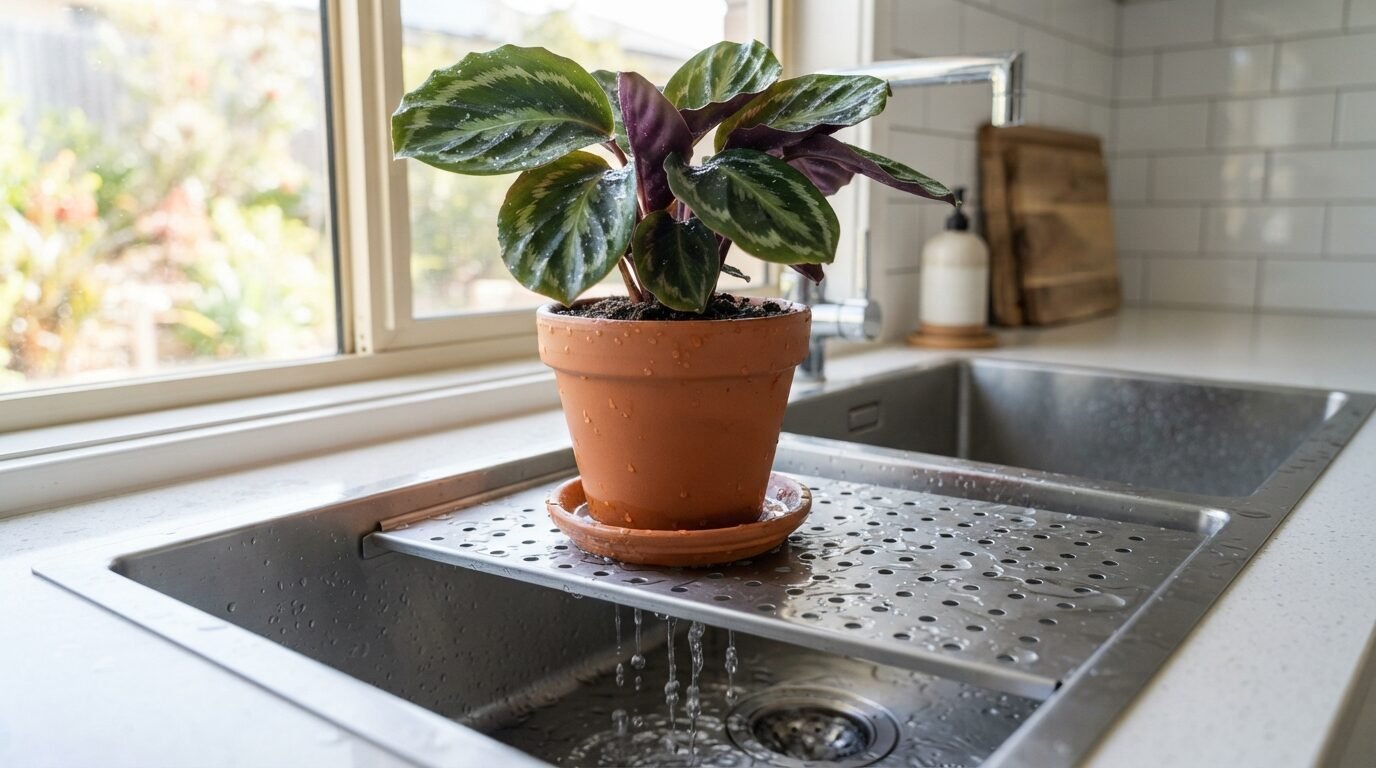
The mix and the pot work together. Even a perfect blend will stay soggy in a pot with no drainage.
- always use a pot with drainage holes;
- move up only one size when repotting — an oversized pot holds too much wet mix;
- if you like a decorative cover pot, keep the plant in an inner nursery pot and never let it sit in collected water.
Avoid: decorative pots with no drainage used as the growing pot. They are the most common hidden cause of constantly wet mix and root rot. See our watering guide for the moisture balance that free-draining mix makes possible.
When and how to repot
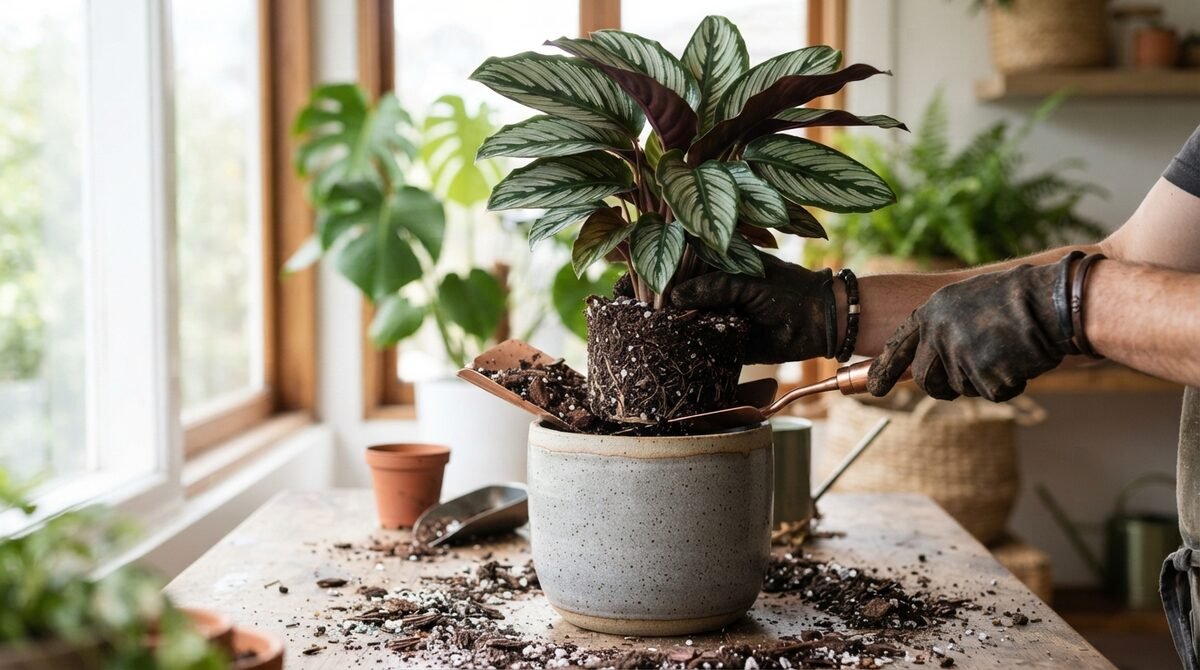
Repot every one to two years, or when the plant becomes rootbound — roots circling the pot, emerging from drainage holes, or the mix drying unusually fast. Spring to early summer is the best time, when the plant recovers quickly. Repotting also refreshes the mix and clears accumulated fertiliser and mineral salts that can cause brown leaf edges.
REPOTTING STEPS
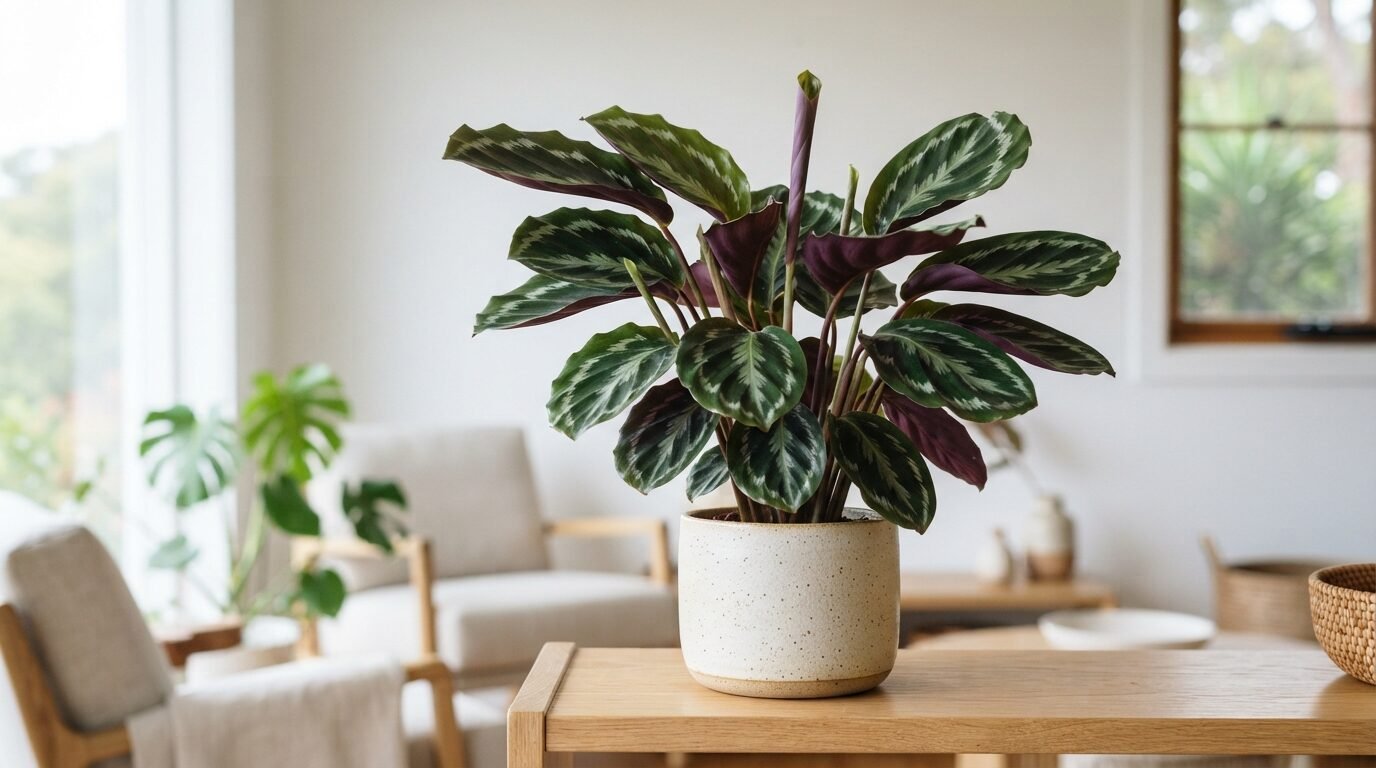
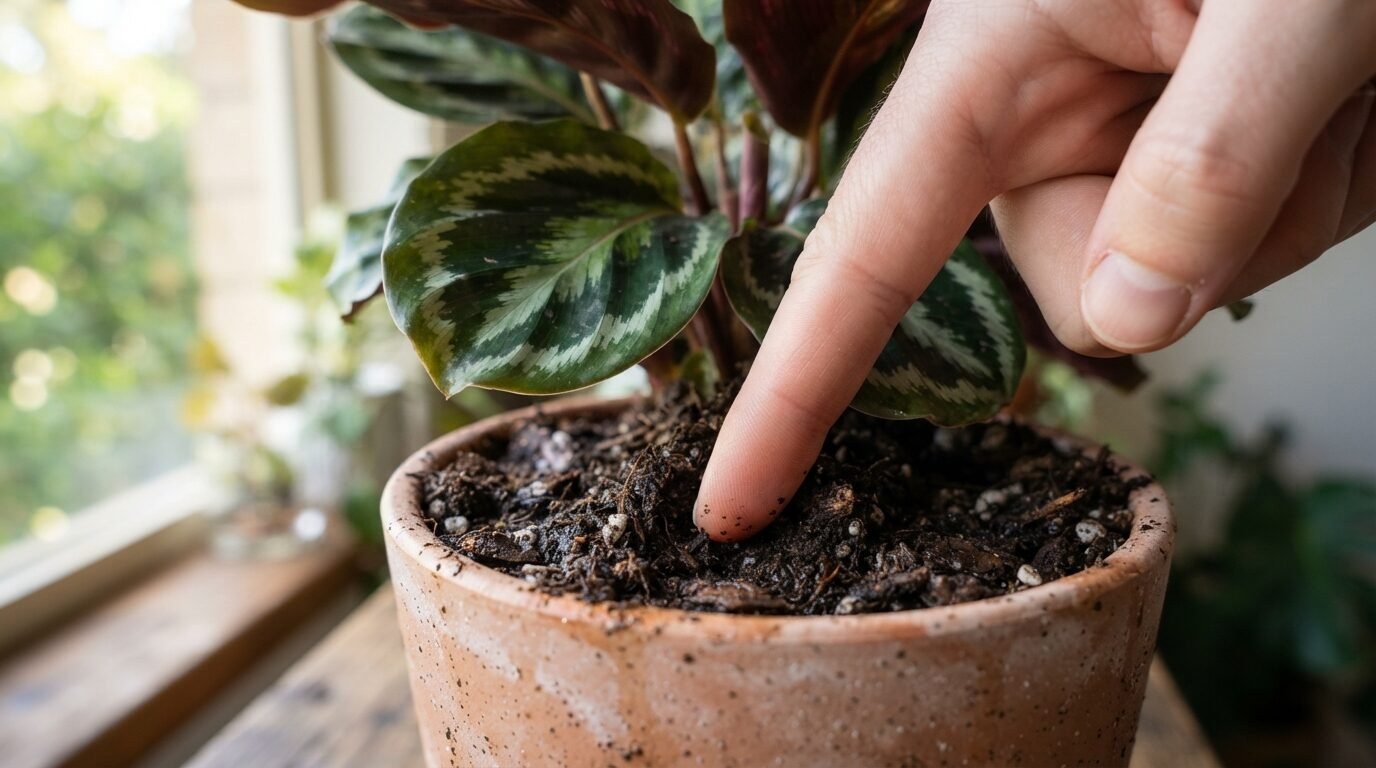
Signs your mix needs attention
- water runs straight through and the plant dries out very fast (compacted or rootbound);
- the mix stays wet for many days (too heavy, or no drainage);
- a pale salt crust on the surface or pot rim;
- the mix smells sour, suggesting poor aeration.
Any of these is a cue to repot into fresh, free-draining mix. For the broader care picture, see our Calathea growing and care guide for Australia, and if the edges are already browning from salts, our brown tips guide explains how to flush and recover.
Frequently asked questions
What is the best potting mix for Calathea in Australia?
A good-quality indoor or premium potting mix that drains freely but still holds some moisture. Many growers add extra perlite for drainage and some coco coir or fine orchid bark for structure and moisture retention. The aim is airy, free-draining mix that never stays waterlogged.
Can I use normal potting mix for Calathea?
A quality premium indoor mix can work, but plain, heavy or cheap mixes often hold too much water and compact over time. Lighten a standard mix with perlite and a little coco coir or bark so air can reach the roots. Avoid dense garden soil or water-retentive seed-raising mixes.
Does Calathea like acidic soil?
Calathea generally prefers a slightly acidic to neutral mix, which most quality indoor potting mixes already provide. You do not usually need to adjust pH specially — focusing on free drainage and even moisture matters far more for indoor Calathea.
Should Calathea soil be well-draining or moisture-retentive?
Both, in balance. Calathea likes consistently lightly moist conditions, so the mix should hold some moisture, but it must also drain freely so the roots get air and never sit in water. An airy mix with perlite plus some coir or bark achieves that balance.
How often should I repot Calathea and refresh the mix?
Repot every one to two years or when the plant becomes rootbound, ideally in spring or early summer. Refreshing the mix also clears accumulated salts. Move up only one pot size, as an oversized pot holds too much wet mix around the roots.
Do I need to add perlite to Calathea mix?
It is strongly recommended. Perlite opens up the mix, improves drainage and keeps air around the roots, which helps prevent the soggy conditions that lead to root rot. A handful mixed through premium indoor potting mix is a simple, effective improvement.
Can Calathea grow in LECA or semi-hydro?
Some growers do grow Calathea in LECA or semi-hydro successfully, but it is more advanced and needs careful attention to water levels and nutrients. For most people, a free-draining potting mix in a pot with drainage is simpler and reliable.
Why does my Calathea mix dry out too fast or stay wet too long?
Mix that dries very fast is often old, compacted or the plant is rootbound; mix that stays wet is usually too heavy or the pot lacks drainage. Both are fixed by repotting into fresh, free-draining mix in a correctly sized pot with drainage holes.
- Calathea growing & care guide for Australia — the complete care hub.
- How to water Calathea in Australia — moisture balance the mix enables.
- How to propagate Calathea by division — use fresh mix for new divisions.


