
Calathea Brown Tips & Crispy Edges: Australian Fix Guide

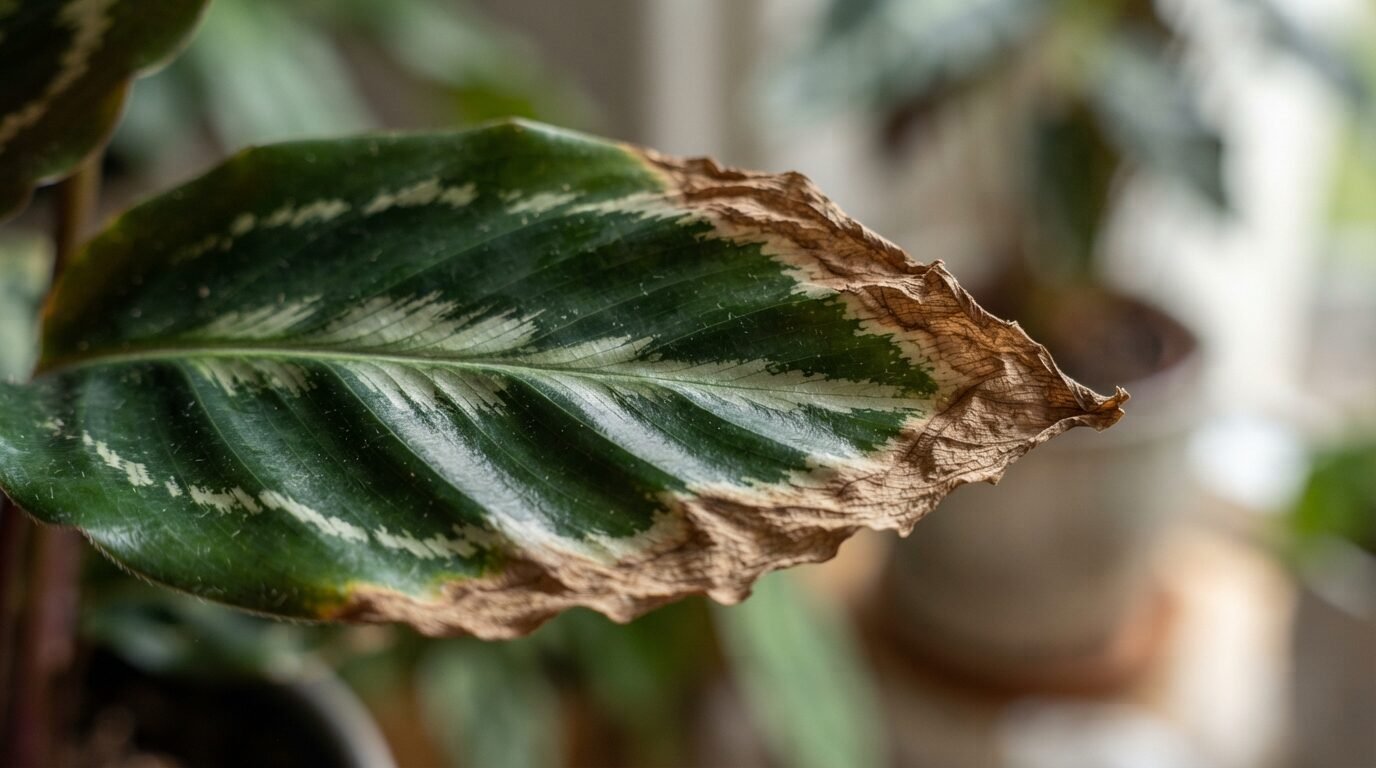
Quick answer: Brown tips and crispy edges on Calathea almost always mean moisture stress at the leaf margin. The three strongest causes are low humidity / hot dry air, inconsistent or insufficient watering, and salt build-up from fertiliser or hard water. Check humidity and watering consistency first, flush the pot if you fertilise, and keep the plant out of harsh direct sun and drying draughts.
Brown edges are one of the most common complaints with Calathea in Australian homes, and they look alarming because the damage is permanent — browned tissue will not turn green again. The good news is that the pattern of browning tells you a lot about the cause, so you can usually fix it and grow clean new leaves.
The key is to read the edge. Brown tips and margins are an edge problem, driven by what is happening at the very tips of the plant’s water supply. That makes them different from whole-leaf yellowing, which points more toward watering or root issues.
What should you check first for brown tips?
Work through these in order rather than changing everything at once:
That last check matters most. If only the margins and tips are browning while the leaf centre stays green, you are dealing with edge stress. If the leaf is yellowing all over, treat it as a different problem.
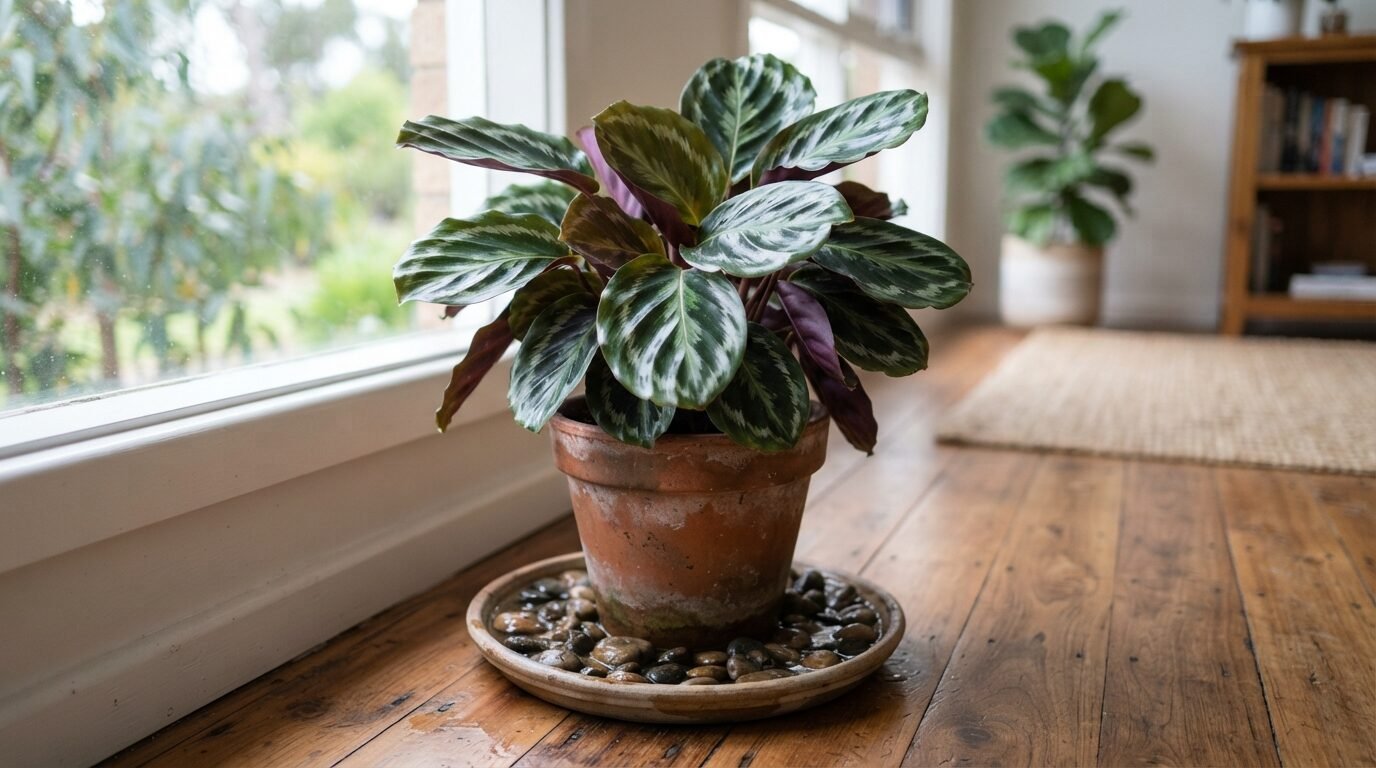
Low humidity and hot, dry air are the classic cause
Gardening Australia notes that prayer plants such as Calathea respond poorly to air that is too hot or dry, and crispy leaf edges are one of the clearest signs. The leaf loses moisture at the margins faster than the plant can replace it, and those edges dry and brown. It is especially common in:
- air-conditioned or heated rooms;
- apartments with strong western sun;
- plants sitting in the path of a vent;
- hot inland areas where indoor air is very dry.
How to raise humidity without overwatering
Humidity and soil moisture are not the same thing — soaking the pot will not fix dry air. Better options:
- move the plant away from heating and cooling vents;
- group it with other indoor plants;
- run a humidifier where the room stays very dry;
- choose a naturally more humid room if the light suits.
Be careful: raising humidity should not mean constantly wet leaves in still air — keep some airflow to avoid fungal problems.
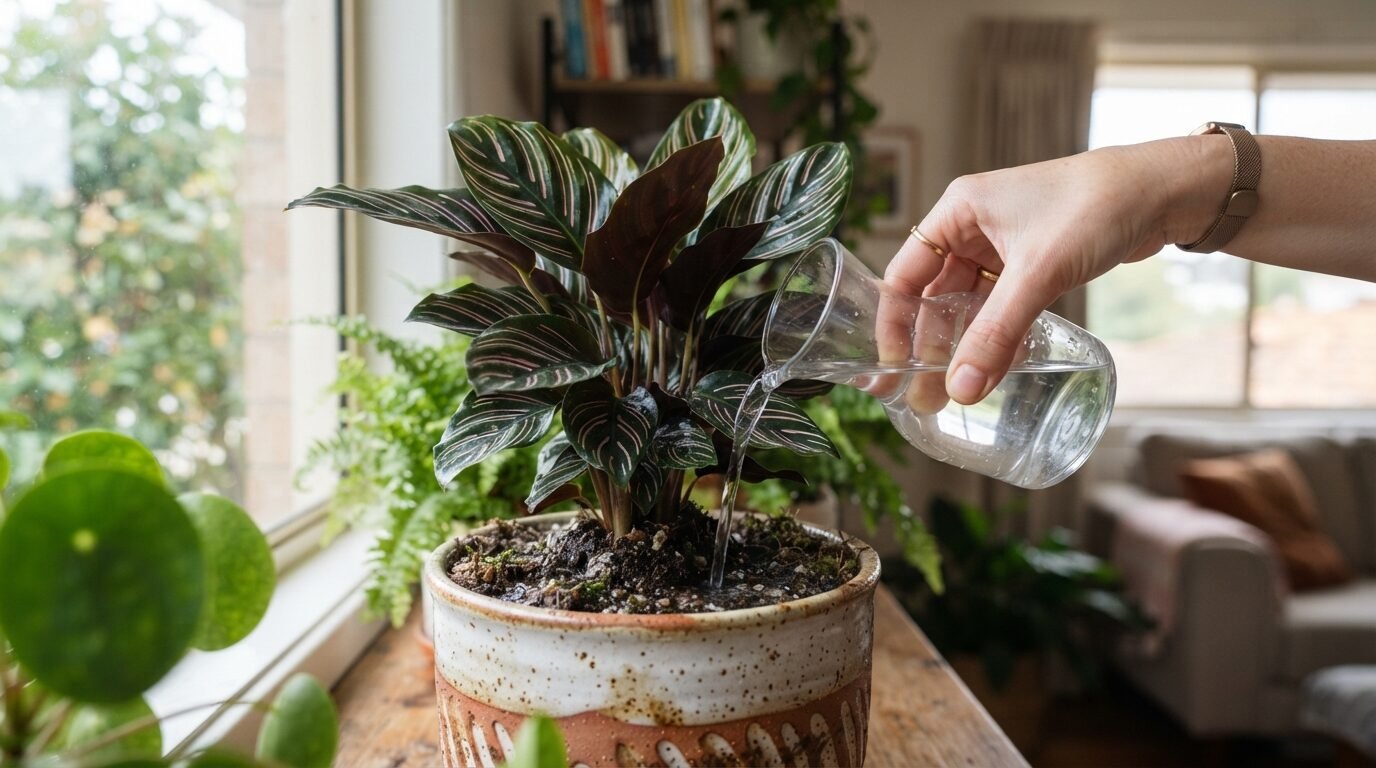
Inconsistent or insufficient watering browns the edges
When a Calathea is allowed to dry out too far, or swings between very dry and saturated, the leaf margins are the first tissue to suffer. A fixed weekly routine is a common cause: it is often too much in cool weather and too little during an Australian summer. Check the potting mix and water according to how quickly that pot is actually drying, aiming for steady moisture without prolonged saturation. If you want the full routine, see our Calathea growing and care guide for Australia.
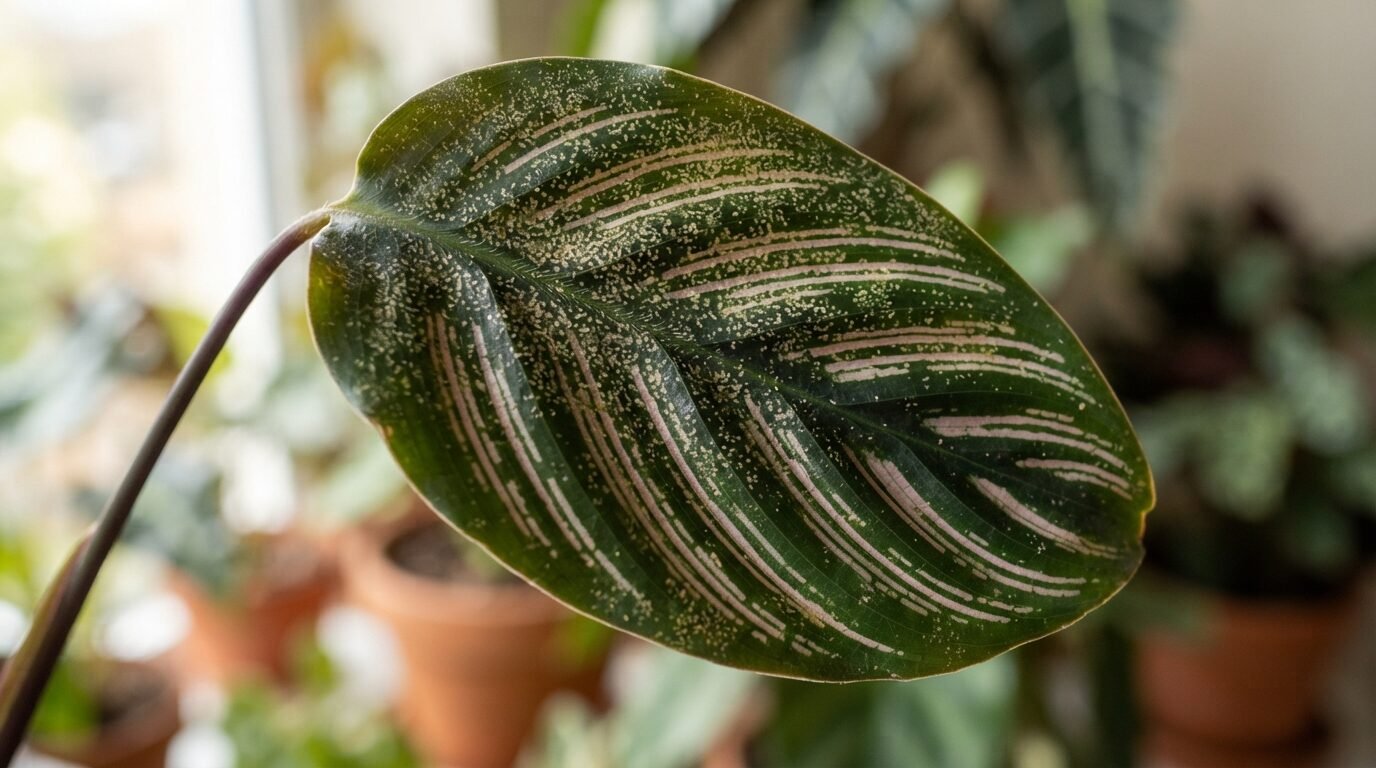
Fertiliser and mineral salt build-up
This is the cause that is easy to miss, and it is often stronger for brown tips than for curling. Repeated fertilising, hard water and evaporation can leave soluble salts behind in the potting mix. Those salts draw moisture away from the roots and burn the leaf edges. Suspect salt build-up when:
- there is a pale crust on the mix surface or around the pot rim;
- you have been feeding regularly, especially at full strength;
- browning is worsening despite reasonable humidity and watering;
- the plant is in the same mix it has had for a long time.
To fix it, flush the potting mix thoroughly with water so it drains freely out the bottom, carrying salts with it, then let the pot drain fully. Hold off fertilising until the plant stabilises, and feed lightly during the growing season rather than heavily.
On tap water: Calathea is often said to require filtered water, but Australian guidance (including Gardening Australia) does not treat that as essential. Tap minerals can contribute to edge browning over time, but flush the pot and fix humidity and watering before spending money on bottled water.
Heat and direct sun can scorch the edges
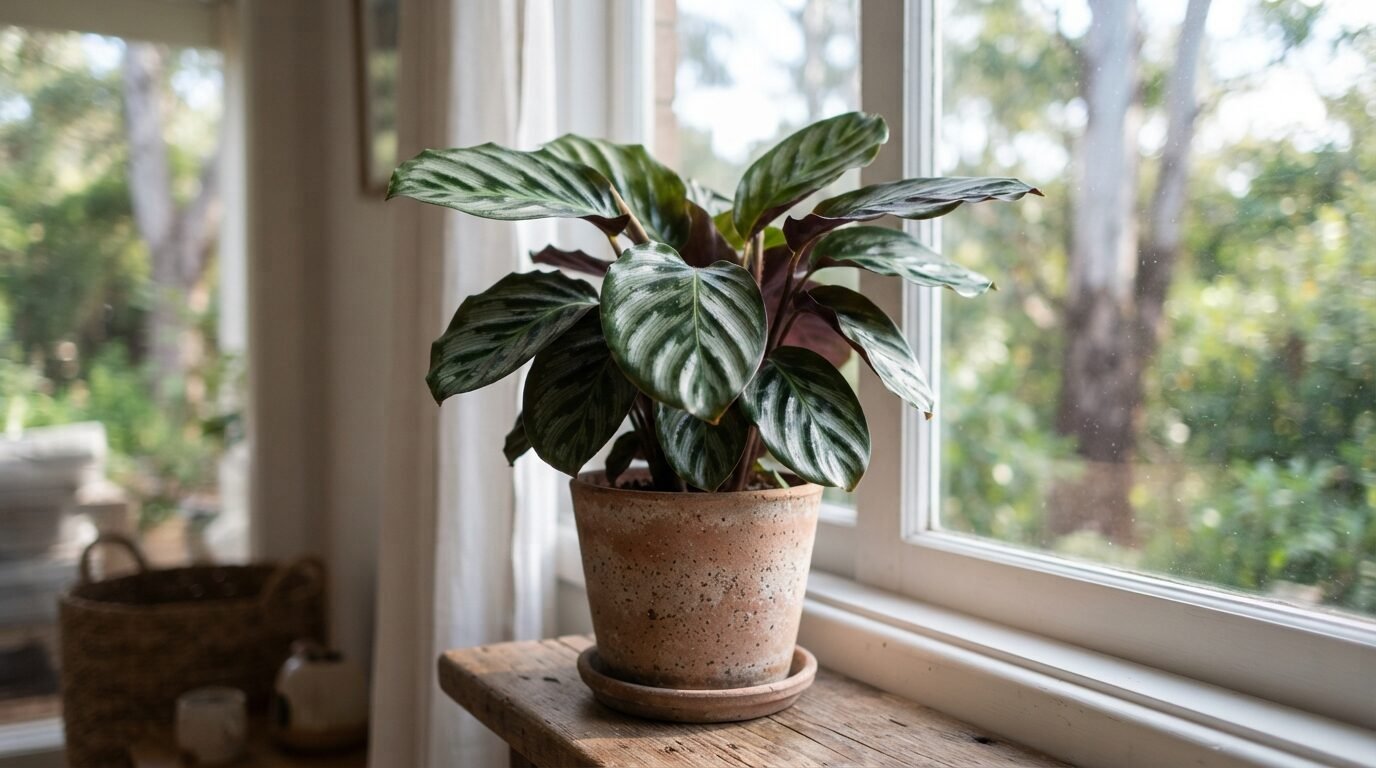
Calatheas prefer bright, filtered light. Harsh direct sun — especially hot afternoon sun through glass — can scorch the margins and bleach colour. Look for browning that is worst on the window-facing side, dry patches, washed-out colour, and symptoms that worsen on hot sunny afternoons. Move the plant back from the glass into a bright but filtered position rather than into a dark corner.
Brown tips versus other symptoms
Matching the pattern to the likely cause saves you from guessing:
| What you see | More likely explanation |
|---|---|
| Dry, crispy tips and margins; leaf centre green | Low humidity, inconsistent watering or salt build-up |
| Pale crust on mix or pot; browning after feeding | Fertiliser / mineral salt build-up — flush the pot |
| Scorched edges worst near a sunny window | Too much direct sun or window heat |
| Whole leaf yellowing, not just edges | Watering or root issue — see the yellow-leaves guide |
| Edges brown plus fine webbing or stippling | Check for spider mites |
If yellowing is the dominant symptom, use our Calathea yellow leaves diagnosis guide instead, and if the leaves are rolling or folding, see our Calathea leaves curling guide.
Should you trim brown tips off Calathea?
Trimming is cosmetic — it tidies the plant but does not cure the cause. If you want to trim:
- use clean, sharp scissors;
- cut just inside the dead brown tissue, leaving a thin margin;
- follow the natural shape of the leaf so it still looks natural;
- only remove a whole leaf if it is mostly dead or badly damaged.
Healthy green areas of a leaf are still feeding the plant, so do not strip leaves just because the tips are brown. Fix the underlying cause and new growth will come through clean.
A practical plan to fix and prevent brown tips
CALATHEA BROWN-TIP RECOVERY PLAN
Brown tips are rarely a single-cause problem, but they are very preventable. Consistent humidity, consistent watering and occasional flushing keep the edges clean on most Calatheas grown indoors in Australia.
Frequently asked questions
Why does my Calathea have brown tips and edges?
Brown tips and crispy margins are usually caused by moisture stress at the leaf edge: low humidity and hot dry air, inconsistent or insufficient watering, or a build-up of fertiliser and mineral salts in the potting mix. Heat and direct sun can scorch edges too. Check humidity and your watering consistency first.
Is it brown tips or yellowing I am seeing?
Edge browning affects the margins and tips while the rest of the leaf often stays green. Whole-leaf yellowing is a different signal that usually points to watering or root problems. If the leaf is going yellow overall, use the Calathea yellow leaves guide instead.
Can fertiliser cause brown tips on Calathea?
Yes. Over-fertilising or salts accumulating from repeated feeding and hard water can burn leaf edges. Flush the potting mix thoroughly with water, let it drain, and hold off feeding until the plant settles. Feed lightly during the growing season rather than heavily.
Do Calatheas need filtered water to stop brown tips?
Not necessarily. Australian horticultural guidance does not treat filtered water as essential. Mineral or fertiliser salts can contribute to edge browning in some mixes, but humidity, watering consistency and flushing the pot should be checked before switching to bottled water.
Will brown tips turn green again?
No. Damaged brown tissue does not recover its colour. Once you correct the cause, new growth should come through clean. You can trim badly browned edges for appearance, following the natural leaf shape, but fixing the cause matters more than cosmetic trimming.
Should I cut off the brown edges?
You can trim heavily browned tips and margins with clean scissors, cutting just inside the dead tissue and following the leaf outline so it still looks natural. Only remove a whole leaf if it is mostly dead or badly damaged, as healthy green areas still feed the plant.
Why do my Calathea leaves get crispy in summer?
Australian summer heat dries pots faster and lowers indoor humidity, especially with air-conditioning or strong afternoon sun. Check the plant more often in hot weather, keep it out of harsh direct sun, and water by the feel of the mix rather than a fixed schedule.
How do I stop Calathea getting brown tips again?
Keep humidity reasonable, water consistently by checking the mix rather than the calendar, flush the pot occasionally if you fertilise, and keep the plant out of hot dry draughts and harsh direct sun. Consistency prevents most recurring edge browning.
- Calathea growing & care guide for Australia — the complete hub for light, water and positioning.
- Calathea leaves curling: causes & fixes — when leaves roll or fold.
- Calathea yellow leaves: causes & easy fixes — when the whole leaf yellows.


