Little Gem Magnolia Australia: Care, Size, Growing & Buying Guide

Little Gem Magnolia (Magnolia grandiflora ‘Little Gem’) is the compact, evergreen version of the classic Southern Magnolia — bred to give you the glossy leaves and big, fragrant white flowers on a tree small enough for a normal Australian backyard. This is a practical, Australian-focused guide to how big it really gets, how fast it grows, where to plant it, and how to keep it looking its best.
Little Gem Magnolia Spacing & Plant-Count Planner
Quick answer: is Little Gem the right magnolia for your garden?
If you want the look of a Southern Magnolia but don’t have room for a 10–15 m tree, Little Gem is usually the answer. In Australian gardens it holds to around 4–6 m tall and 2–3 m wide, stays evergreen year-round, and flowers from spring through summer. It suits a front-entry feature, a narrow evergreen screen, or a large pot while it’s young. It’s slow-to-moderate growing, low-maintenance once established, and happy in most parts of the country given full sun to part shade and free-draining soil.
What is Little Gem Magnolia?
Little Gem is a cultivar of Magnolia grandiflora, the evergreen Southern Magnolia native to the south-eastern United States. The straight species is a large tree — commonly 10–15 m in Australian conditions — which is far too big for most suburban blocks. Little Gem was selected for its compact, upright habit and its tendency to flower from a young age, so you get the same leathery, glossy dark-green leaves (with a soft bronze underside) and the same large, lemon-scented white blooms on a tree a fraction of the size.
It’s grown right across Australia, from cool-temperate Melbourne and Adelaide gardens through to warmer Sydney, Brisbane and south-east Queensland, which is a large part of why it’s one of the most planted feature trees in the country.
Mature size and growth rate (Australian figures)
Size is the number people most want to pin down, so here’s what Australian growers and nurseries actually list. Expect a mature tree of roughly 4–6 m tall by 2–3 m wide, reached over about 15–20 years. Growth is moderate — in the order of 30–75 cm a year in good conditions — faster than most other compact magnolias but not a tree you’ll be pruning off the gutters in a hurry.
| Source (Australian) | Mature height | Mature width | Notes |
|---|---|---|---|
| Evergreen Trees Direct | 4–6 m | 2–3 m | Growth 30–75 cm/yr; upright, dense, pyramidal |
| Tesselaar | 3–5 m | 2–3 m | Compact evergreen |
| Burke’s Backyard | ~4 m | ~2.5 m | Grows well across much of Australia |
| City of Parramatta (NSW council) | 4–6 m | ~3 m | Listed as a suitable street tree |
A note on the numbers: mature size is a guide, not a guarantee. Local climate, soil, water and how hard (and how often) you prune all shift the final result. The height can be held lower with light annual pruning, which is exactly why Little Gem works as both a feature tree and a hedge.
Where to plant Little Gem — position, climate and spacing
Light: Full sun to part shade. More sun gives you denser foliage and more flowers; it will still grow in part shade but tends to be a little more open.
Climate: Little Gem is adaptable across most Australian climates and is frost-hardy once established. In hot inland or far-north gardens, make sure it gets deep watering through its first few summers while the root system develops.
Soil: Free-draining soil improved with compost is ideal. It dislikes sitting in wet ground, so heavy clay should be opened up with gypsum and organic matter, or the tree planted on a raised mound, before it goes in.
Spacing: As a single feature tree, give it 2–3 m of clearance from walls, paths and other trees. For a narrow evergreen hedge or screen, plant 1.5–2 m apart; along a driveway, around 2 m spacing reads structured without being stiff.
Watering, feeding and pruning
Watering: Water deeply once a week through the first summer after planting. Established trees handle dry spells well, but a deep soak during prolonged heat keeps foliage and flowering at their best.
Mulch: A 5–7 cm layer of organic mulch each spring conserves moisture and feeds the soil — keep it pulled back a few centimetres from the trunk.
Feeding: A balanced slow-release fertiliser in spring is enough. If leaves yellow between green veins (a sign of iron deficiency, common in alkaline soils), a dose of iron chelate and a slightly more acidic feed usually corrects it.
Pruning: Little Gem holds its tidy, upright shape naturally, so pruning is optional. If you want to shape it or keep it to a set height, prune lightly just after the main flowering flush. Avoid hard pruning into bare old wood.
Little Gem in pots and small gardens
Little Gem is one of the better magnolias for a large pot, which makes it a go-to for courtyards, balconies and entryways. Choose a generous container (the bigger the root room the better), use a quality free-draining potting mix, and be consistent with watering and feeding — potted trees dry out and exhaust nutrients faster than those in the ground. Expect a potted specimen to stay smaller than one planted out, and plan to pot up or refresh the mix every couple of years. For a small in-ground garden, its 2–3 m width and upright form mean it casts a manageable footprint and won’t swamp nearby planting.
Common problems (and roots)
Little Gem is a tough, low-fuss tree, but a few issues come up in Australian gardens:
- Yellowing leaves: Older leaves yellowing and dropping in spring is normal renewal. Widespread yellowing between the veins usually points to iron/manganese deficiency in alkaline soil — correct with iron chelate and acidic feeding.
- Black, sooty coating on leaves: Sooty mould grows on the honeydew left by scale insects. Treat the scale (horticultural oil) and the mould clears.
- Leaf spots: Fungal spotting is usually cosmetic and worse in humid conditions or with overhead watering; improve airflow and water at the base.
- Poor growth or sudden decline: Most often a drainage problem. Magnolias resent wet feet, and root rot from waterlogged soil is the usual culprit — which is why free-draining soil matters from day one.
On roots: Little Gem has a relatively compact, non-aggressive root system compared with large shade trees, which is part of why it’s used near paths and in smaller gardens. Even so, give it room from pipes and paving and keep it well-watered while establishing so roots grow down rather than scrabbling at the surface.
Buying tips: which Little Gem (and which size)
The Australian search results for “magnolia little gem” are dominated by nurseries, so a quick orientation helps:
- Buy true ‘Little Gem’, cutting-grown: cultivars are propagated from cuttings so they stay true to form. A reputable nursery will label it Magnolia grandiflora ‘Little Gem’.
- Pick your starting size by patience and budget: smaller pots (200 mm) are cheaper and establish well but take longer to feel like a tree; advanced stock (45–100 L bags) gives instant presence at a higher price.
- For hot climates, related compact cultivars like ‘Kay Parris’ are bred for heat and flower young — worth asking about if you’re in Queensland or warmer inland NSW.
- For a fuller, broader look with bigger leaves, gardeners often weigh Little Gem against ‘Teddy Bear’. The two suit slightly different gardens — if you’re choosing between them, see our Teddy Bear vs Little Gem comparison for a side-by-side.
What to plant with Little Gem
Little Gem’s glossy evergreen backdrop pairs well with lower, softer planting and seasonal colour. For AU-specific underplanting and companion ideas, see our guide to companion plants for magnolias in Australia.
Frequently asked questions
How big does Little Gem Magnolia get in Australia?
Around 4–6 m tall and 2–3 m wide at maturity in Australian conditions, reached over roughly 15–20 years. It can be kept lower with light annual pruning.
How fast does Little Gem Magnolia grow?
Moderately — in the order of 30–75 cm a year in good conditions. That’s faster than most other compact magnolias but still a manageable, slow-to-moderate pace.
Is Little Gem Magnolia evergreen?
Yes. It holds its glossy dark-green leaves (with bronze undersides) all year, so it keeps its presence and screening value through winter.
When does Little Gem Magnolia flower?
From spring through summer, with large, fragrant white blooms around 10 cm across. Younger trees may produce a few flowers, with the display building as the tree matures.
Will Little Gem Magnolia grow in a pot?
Yes — it’s one of the better magnolias for a large container. Use a generous pot with free-draining mix and stay consistent with watering and feeding. Potted trees stay smaller than those planted in the ground.
How far apart should I plant Little Gem for a hedge or screen?
About 1.5–2 m apart for a narrow evergreen hedge or screen. As a single feature tree, allow 2–3 m of clearance from walls, paths and other plants.
Does Little Gem Magnolia have invasive roots?
No — it has a relatively compact, non-aggressive root system for its size, which is why it’s often used near paths and in smaller gardens. Still give it sensible clearance from pipes and paving.
Where is the best place to plant Little Gem Magnolia?
In full sun to part shade, in free-draining soil improved with compost, with room for its mature 2–3 m width. Avoid wet, poorly drained spots — magnolias dislike waterlogged roots.
From bare spot to flowering Little Gem, in six steps
Prefer the detail? Jump back to the full written guide.
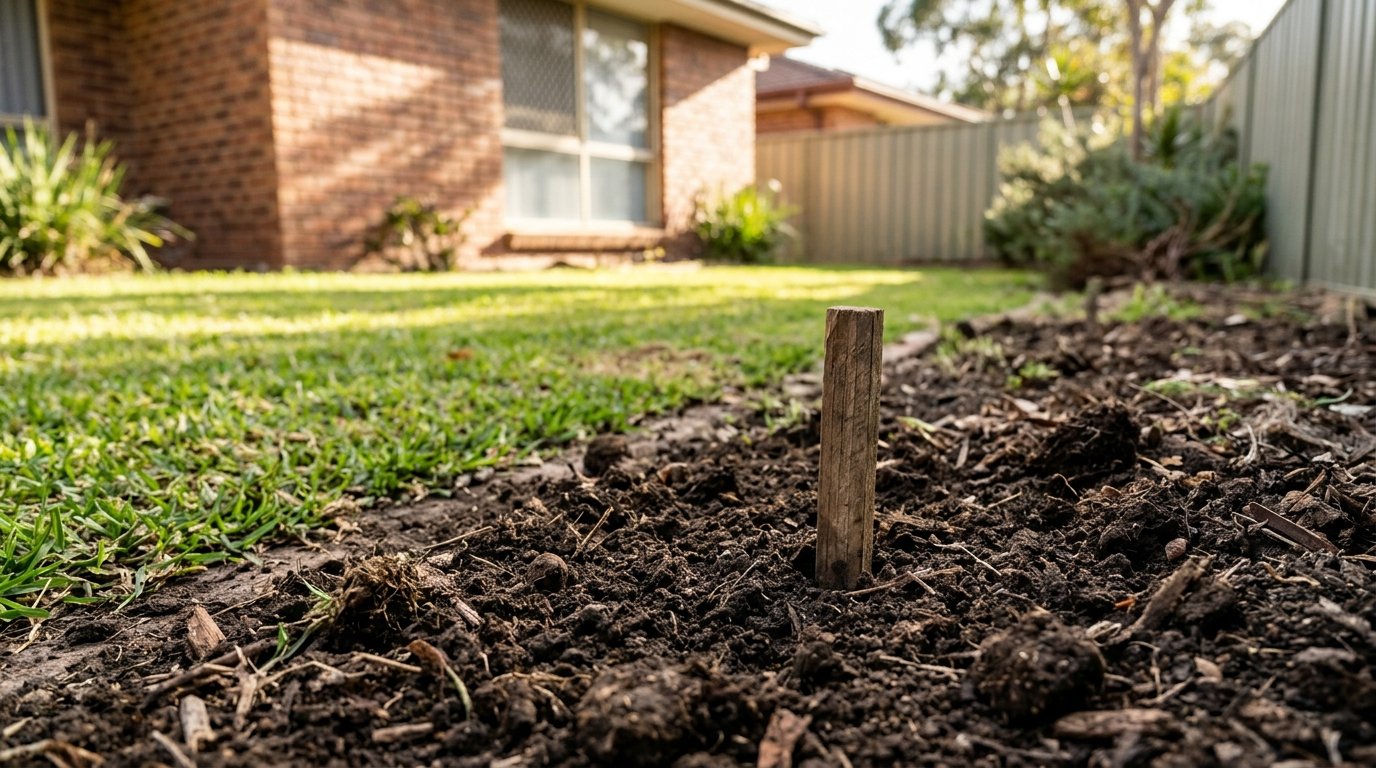
Pick a sunny, well-drained spot
Full sun to part shade gives the densest foliage and most flowers. Avoid low, wet ground — Little Gem dislikes waterlogged roots.
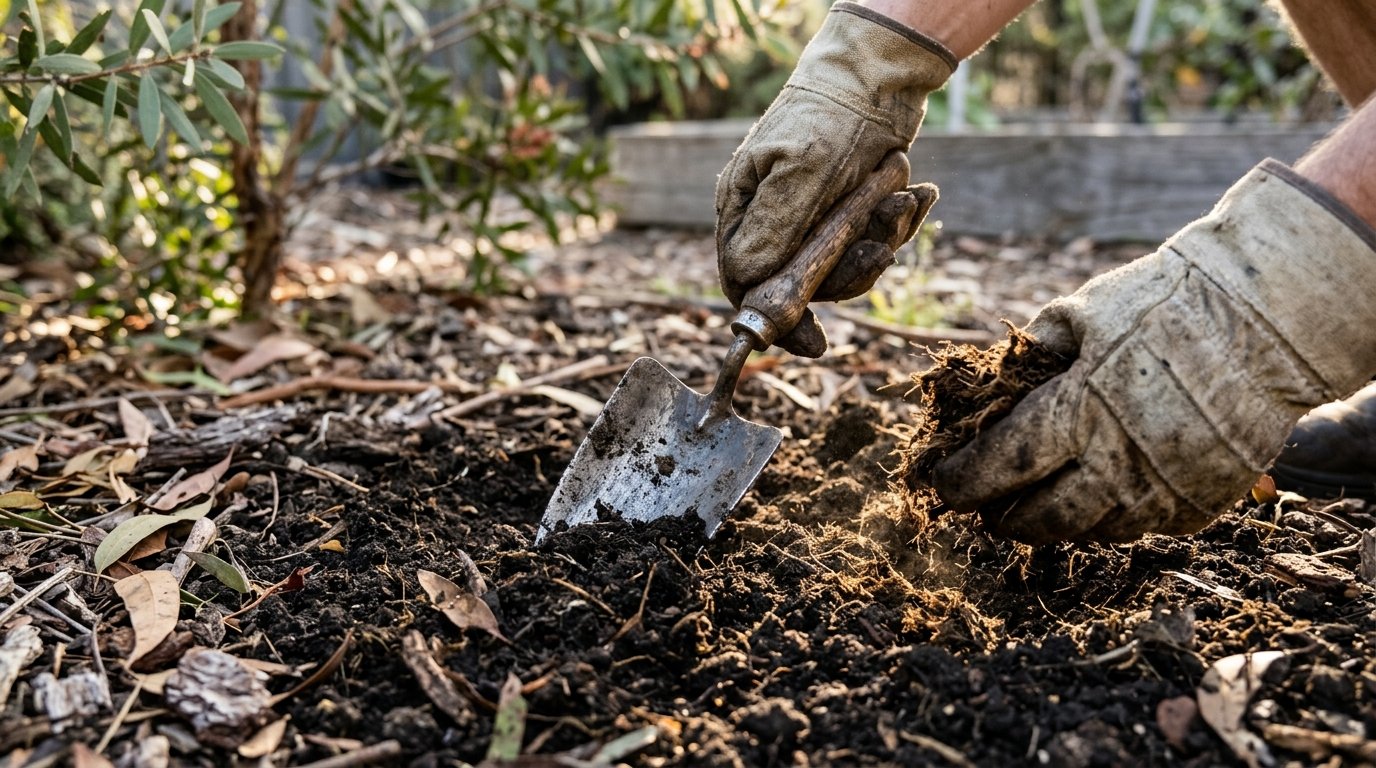
Open up and improve the soil
Dig in compost for free drainage. On heavy clay, add gypsum and organic matter or plant on a raised mound so water moves away from the roots.
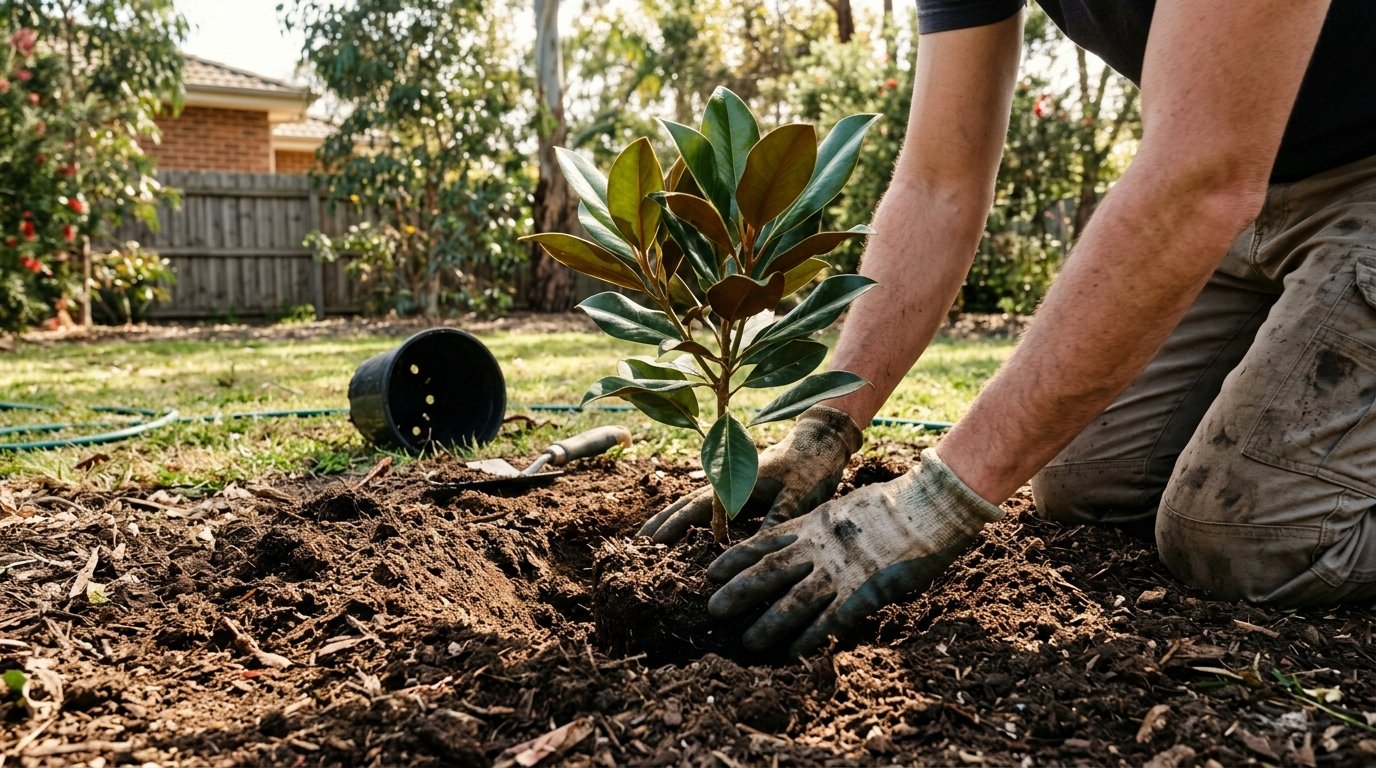
Plant with room to grow
Allow 2–3 m clearance for a single feature tree, or space 1.5–2 m apart for a narrow evergreen hedge or screen.
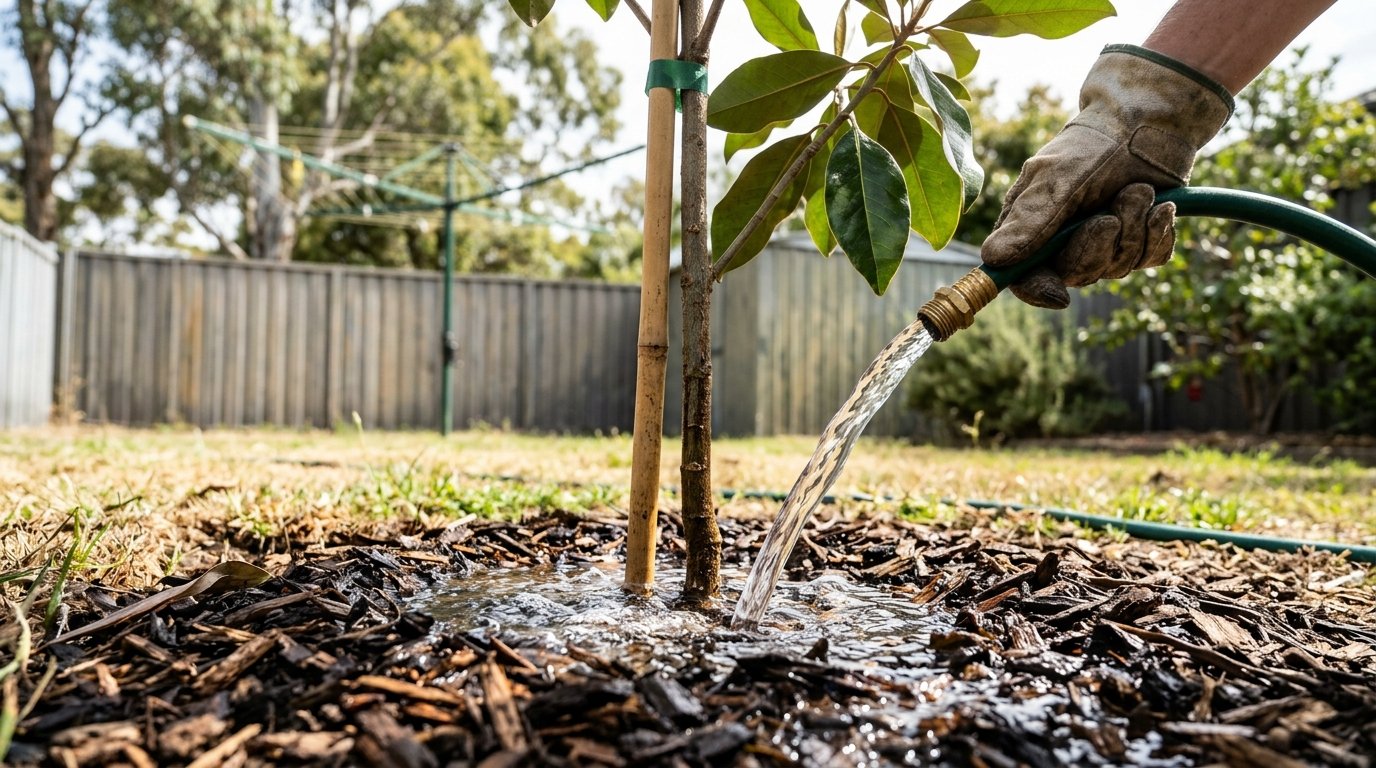
Water deeply through the first summer
A deep soak once a week while it establishes. After the first year or two it handles dry spells well, with the odd deep drink in long heat.
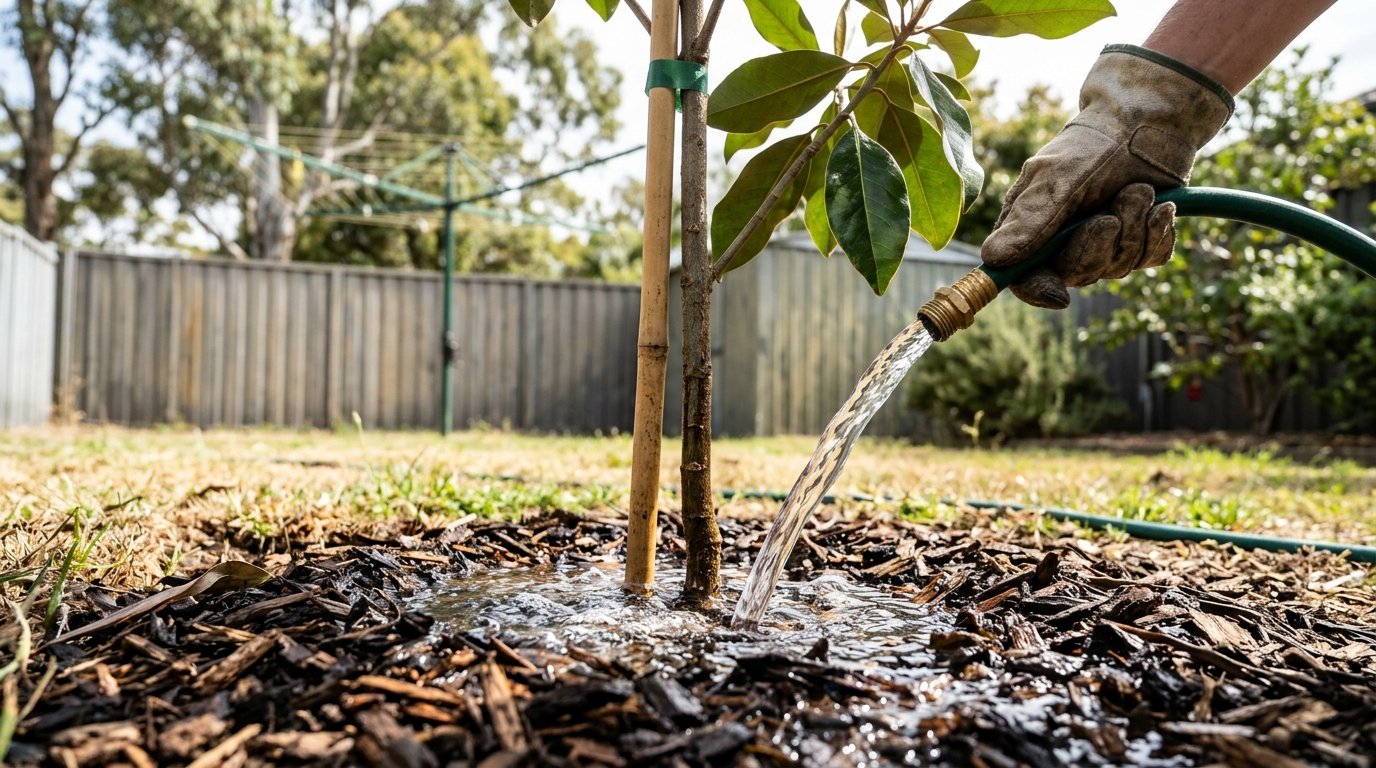
Mulch and feed in spring
A 5–7 cm layer of organic mulch each spring (kept off the trunk) plus a balanced slow-release feed is all it needs.
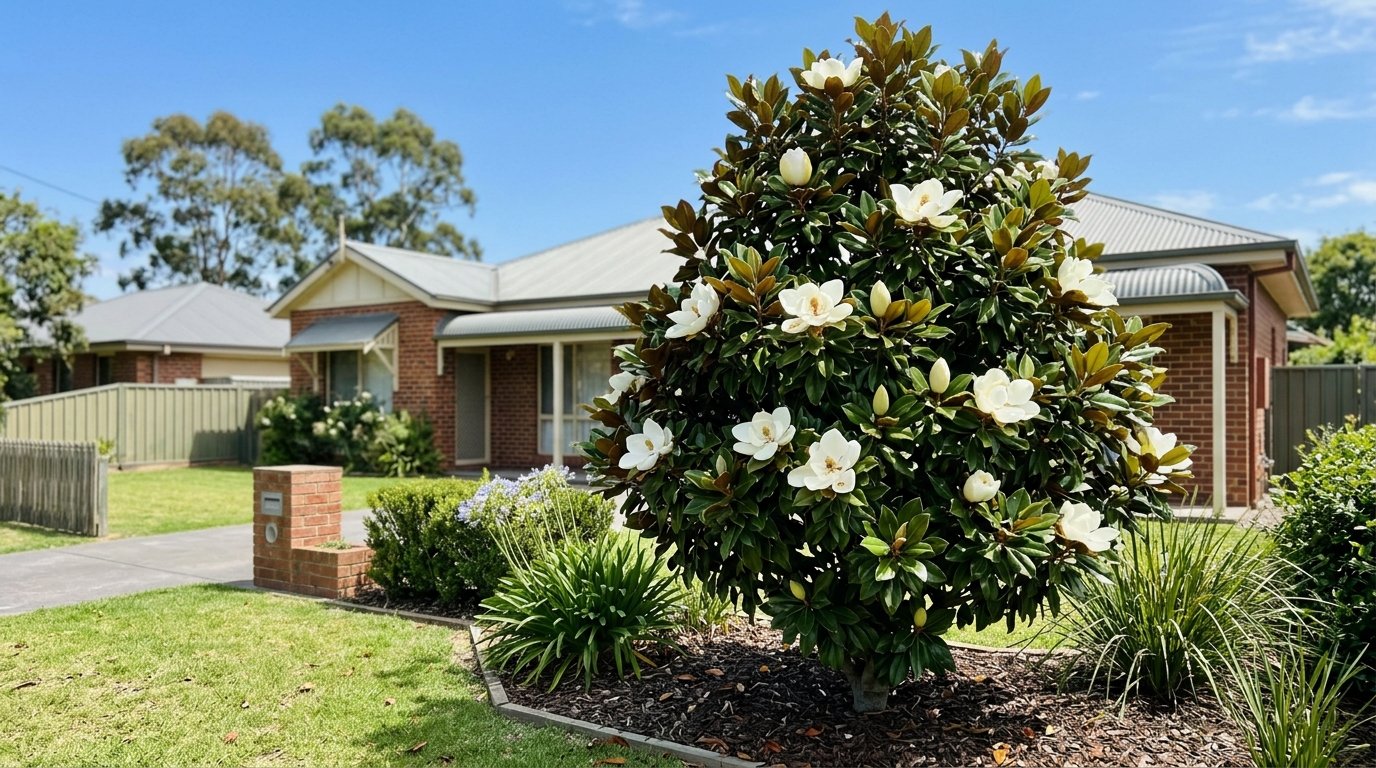
Light prune after flowering
Little Gem holds its tidy upright form naturally. Shape lightly just after the main flowering flush if you want to hold a height — avoid hard cuts into bare wood.
Reviewed by the Garden Green Australia team. Sizes and growth rates are typical ranges for Australian gardens drawn from Australian nursery and council sources (Evergreen Trees Direct, Tesselaar, Burke’s Backyard, City of Parramatta); your result will vary with climate, soil, watering and pruning.