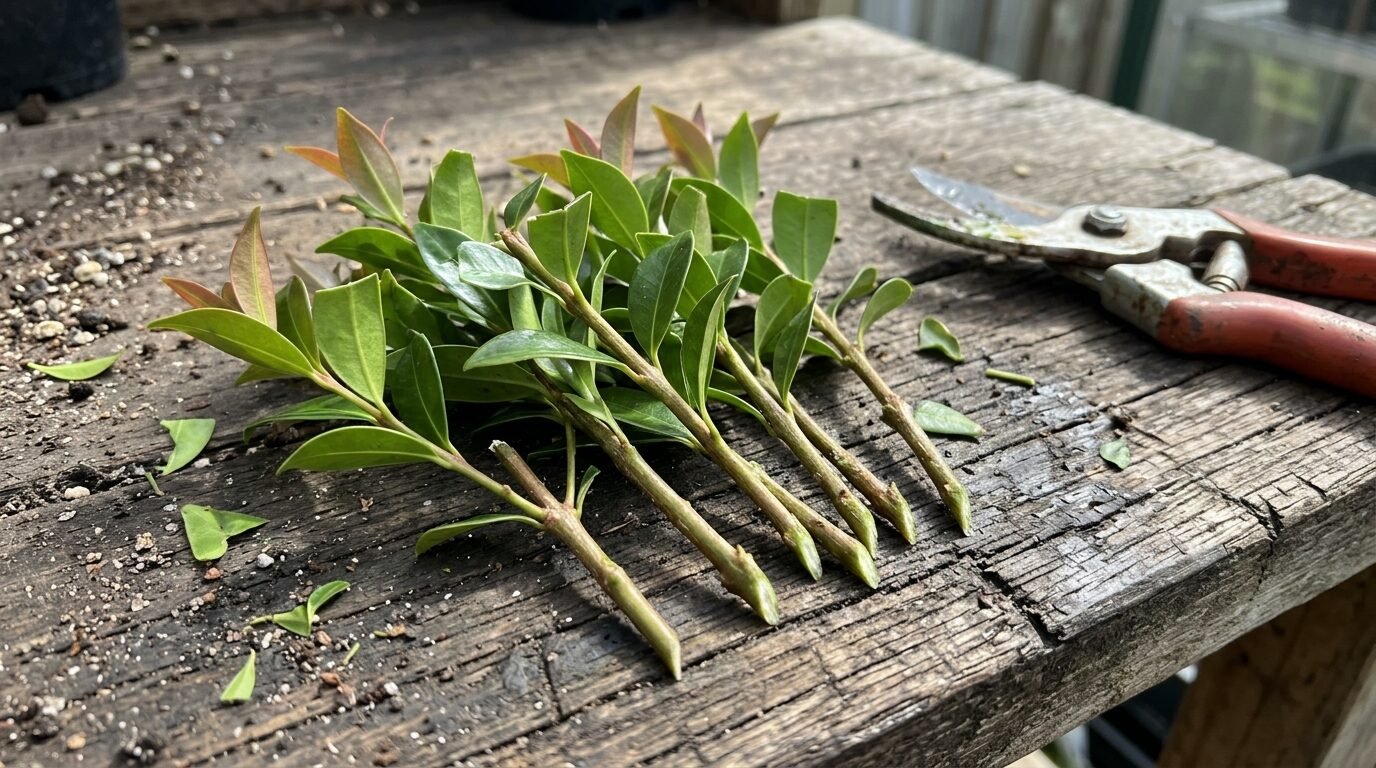
Propagate Lilly Pilly most reliably from semi-hardwood cuttings taken in late spring to summer — firm, current-season tips about 10–15 cm long, lower leaves stripped, dipped in rooting hormone and set in a free-draining propagating mix kept warm and humid. They can also be grown from fresh seed, but cuttings keep named varieties true to type. Expect roots in roughly 6–10 weeks.
✔ How this guide was checked
Methods follow standard semi-hardwood cutting propagation for Syzygium/Acmena — timing, cutting type, hormone, mix and humidity — plus the note that cuttings (not seed) are needed to keep cultivars true. Timeframes are given as typical ranges that vary with warmth and variety.
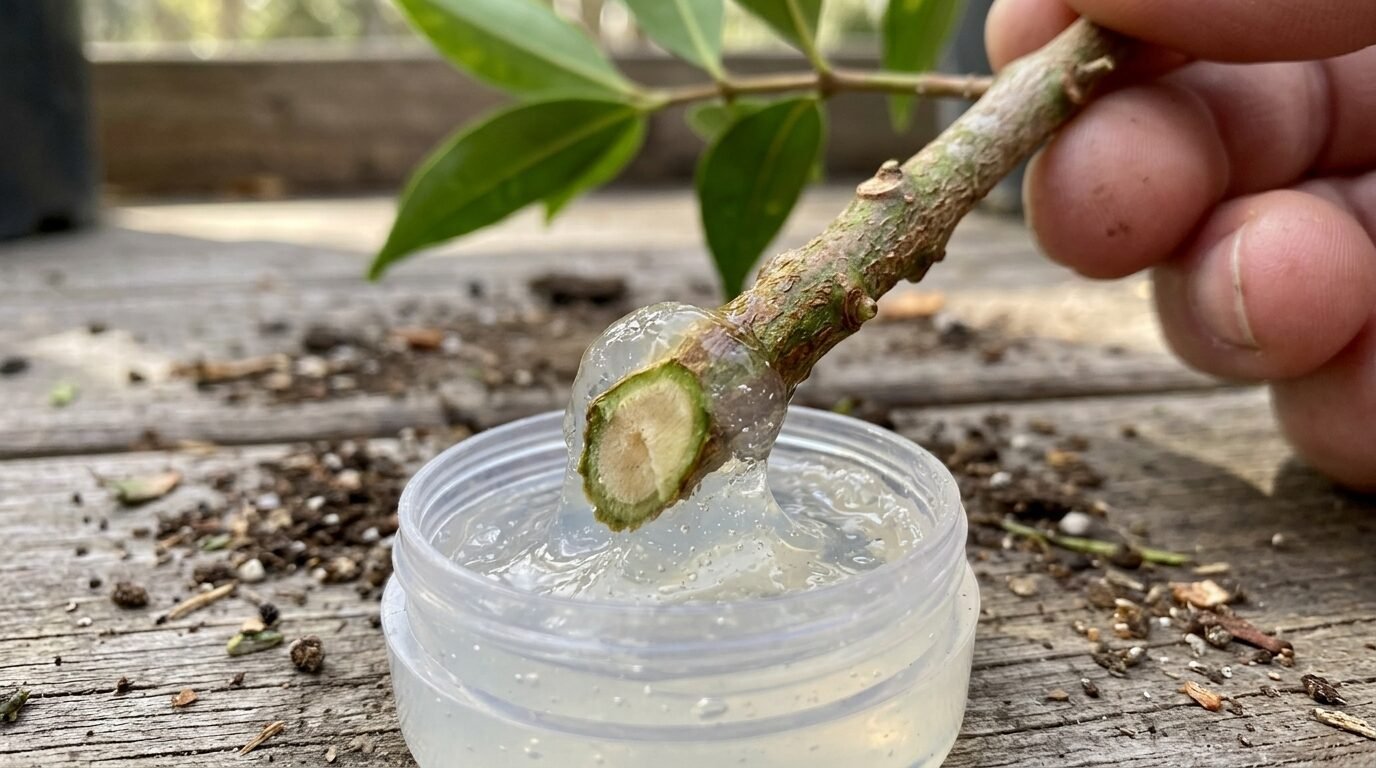
Dipping a Lilly Pilly cutting base into rooting hormone
Cuttings or seed?
Both work, but they do different jobs. Cuttings are the go-to for hedging because they’re clones — every plant matches the parent in size, density and leaf colour, which is exactly what you want for an even hedge, and they reach plantable size faster. Seed is cheap and easy from fresh fruit, but seedlings vary and many named cultivars (and their psyllid resistance) won’t come true from seed. For a uniform hedge, take cuttings from one good plant.
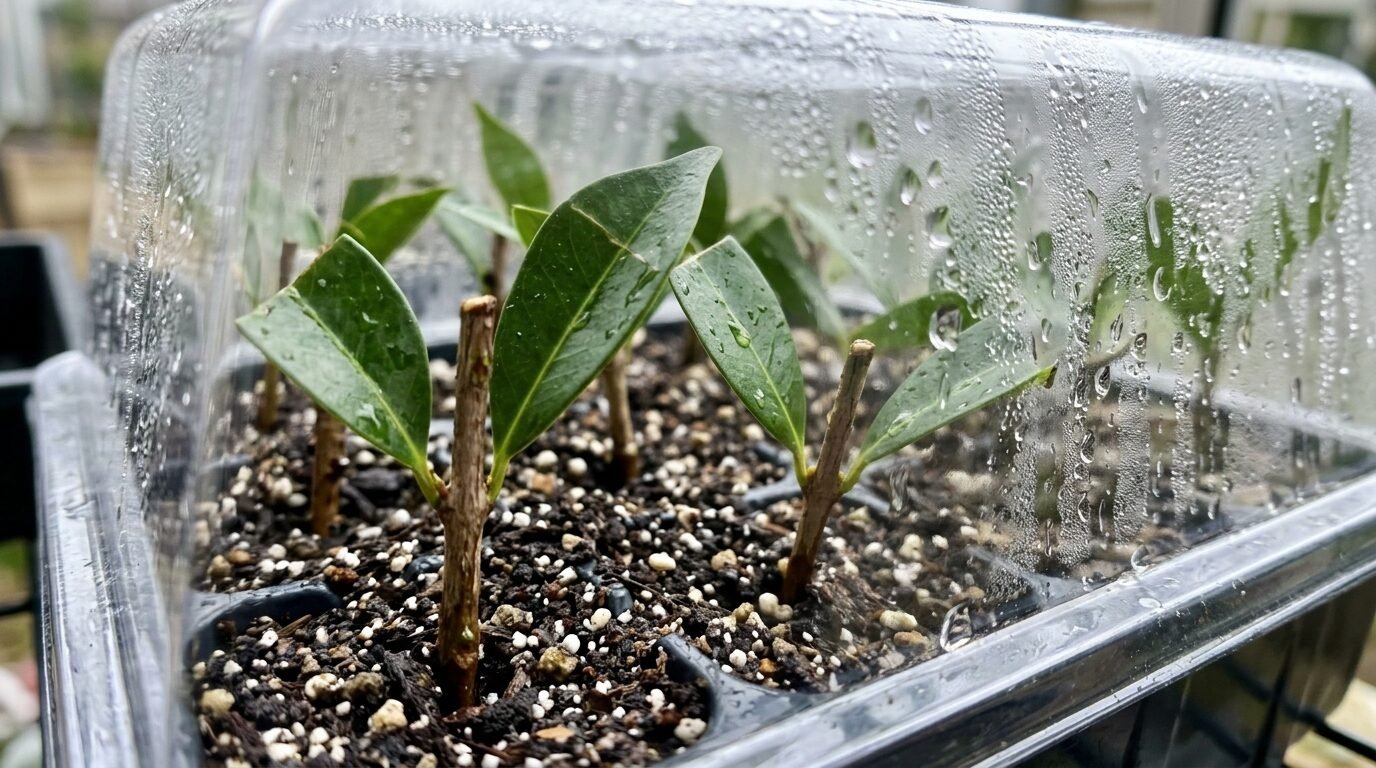
Lilly Pilly cuttings set in propagating mix under a humidity cover
How to take Lilly Pilly cuttings, step by step
1
Choose the right wood
Take semi-hardwood tip cuttings in late spring to summer: current-season growth that has firmed up but isn’t old and woody. Aim for 10–15 cm, healthy and pest-free.
2
Prepare each cutting
Cut just below a node, strip the lower leaves, and reduce any large remaining leaves by half to cut water loss. Keep the tip and a few top leaves.
3
Hormone and plant
Dip the base in rooting hormone (gel or powder), then push into a free-draining propagating mix — such as a perlite and coir or propagating-sand blend — in small pots or a tray.
4
Warm and humid
Keep the mix moist but not wet, in bright warmth out of direct sun, under a humidity cover or in a propagator. Bottom heat speeds rooting.
5
Pot on
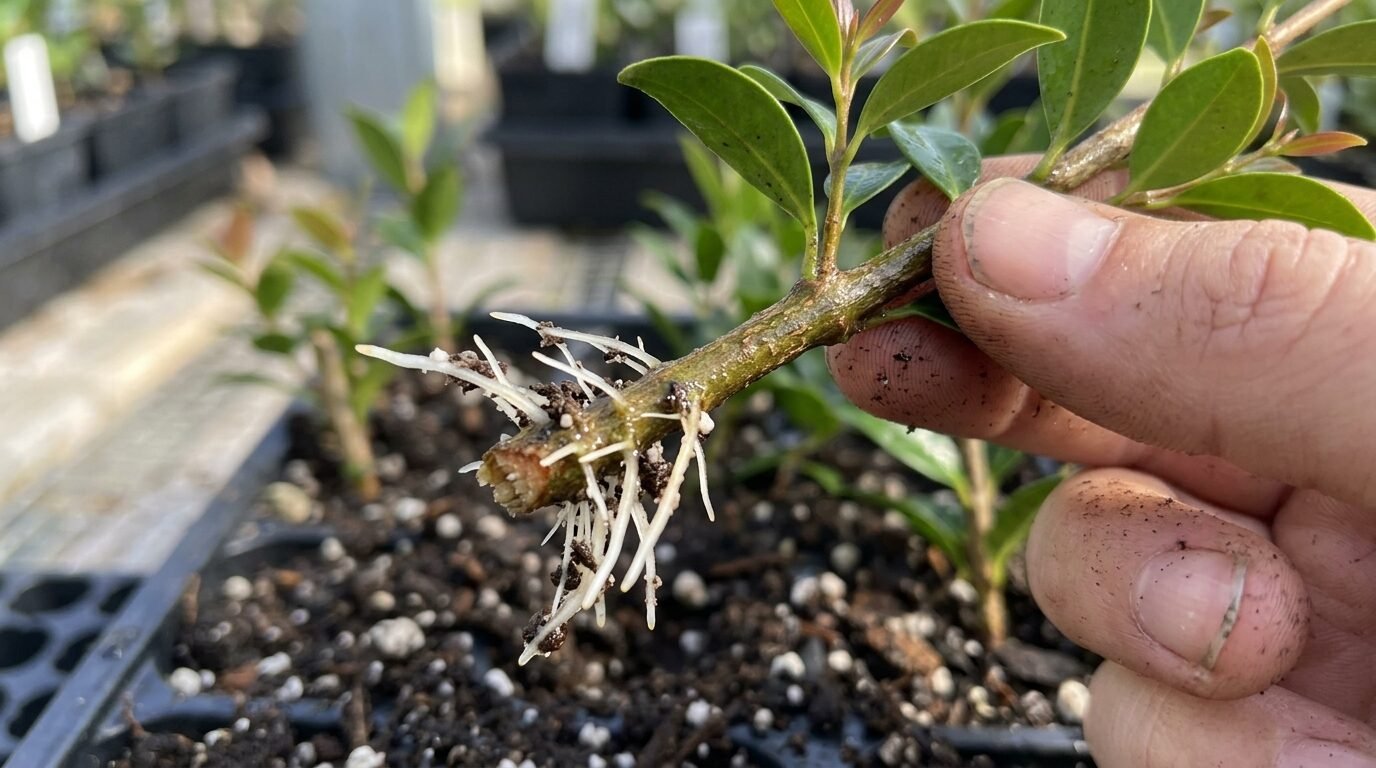
Once cuttings resist a gentle tug (about 6–10 weeks), they’ve rooted. Harden them off, pot into a quality mix, grow on, then plant out following our planting & spacing guide.
Rooted Lilly Pilly cutting showing fresh white roots
Growing Lilly Pilly from seed
If you just want lots of plants cheaply and don’t mind some variation, sow fresh seed from ripe fruit: clean the flesh off, sow into seed-raising mix, keep warm and moist, and expect germination over a few weeks. Remember seedlings may differ from the parent and can be more psyllid-prone than bred cultivars — see Lilly Pilly psyllid.
Keep it legal and clean
Only take cuttings from your own plants or with permission, use clean sharp tools, and don’t propagate from material showing disease. Healthy parent stock gives the strongest strike rate.
Frequently asked questions
How do you propagate Lilly Pilly?
Most reliably from semi-hardwood tip cuttings taken in late spring to summer: 10–15 cm of firm current-season growth, lower leaves stripped, dipped in rooting hormone and set in a free-draining mix kept warm and humid.
When is the best time to take Lilly Pilly cuttings?
Late spring through summer, when you can take semi-hardwood tips — current-season growth that has firmed up but is not yet old and woody.
How long do Lilly Pilly cuttings take to root?
Typically around 6–10 weeks, faster with bottom heat and good humidity. They are ready to pot on once they resist a gentle tug.
Can you grow Lilly Pilly from seed?
Yes, from fresh seed cleaned of fruit pulp, but seedlings vary and named cultivars (and their psyllid resistance) will not come true. Use cuttings for a uniform hedge.
Do Lilly Pilly cuttings need rooting hormone?
It is not strictly essential but it noticeably improves strike rate and speed for semi-hardwood cuttings, so it is recommended.
What mix should I use for cuttings?
A free-draining propagating mix such as a perlite-and-coir or propagating-sand blend — moist but never soggy, so the cuttings do not rot before they root.
Why are my Lilly Pilly cuttings dying?
Usually rot from a too-wet mix, drying out from low humidity, or using wood that is too soft or too old. Aim for semi-hardwood, a free-draining mix, and a humid but airy environment.
Will cuttings keep my variety true?
Yes. Cuttings are clones, so they match the parent in size, density, leaf colour and psyllid resistance — which is why they are preferred for hedging.