
How to Propagate Alocasia (Corms & Division) in Australia

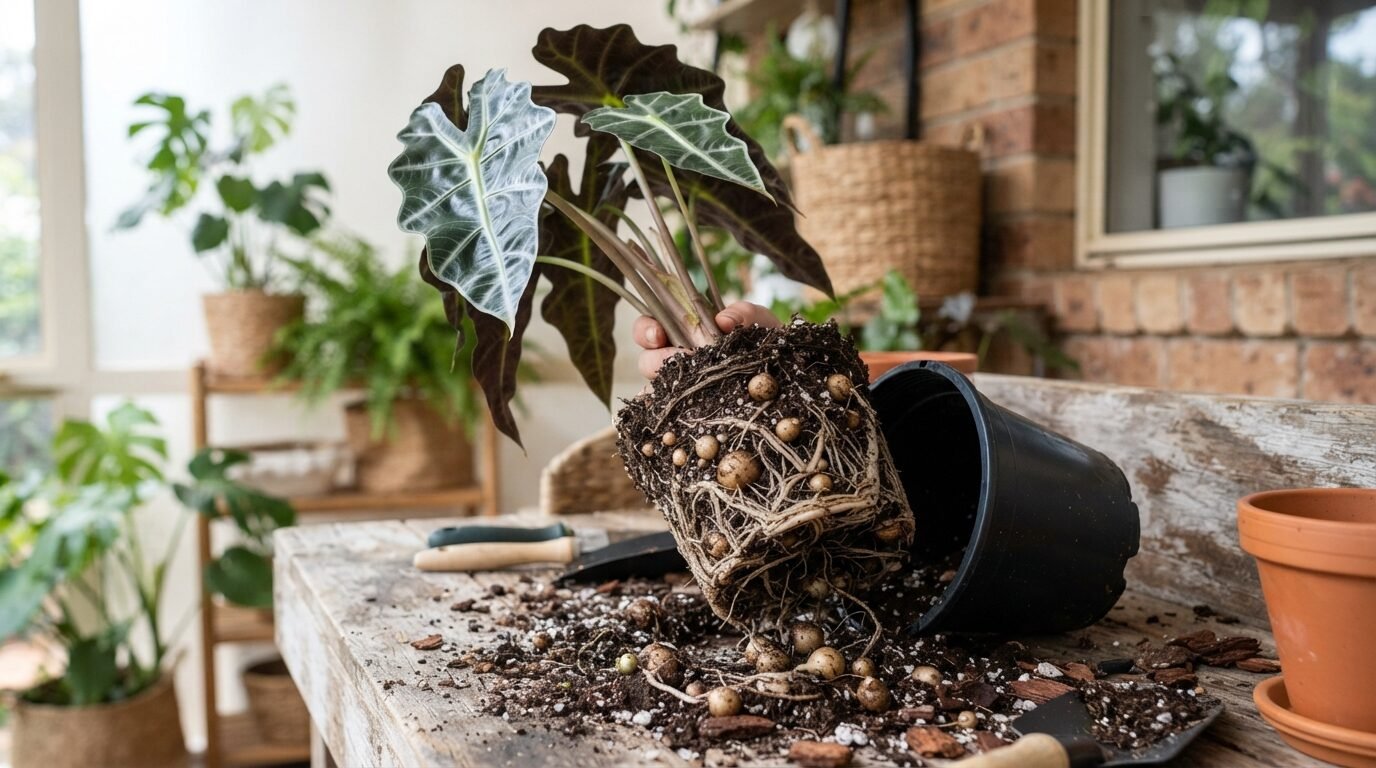
Quick answer: Alocasia are propagated by division (separating a rooted pup from the clump), by offsets, and by growing on the small corms that form around the base — not from leaf cuttings. Division is easiest: at repotting, split off a well-rooted pup and pot it up. Corms take patience: keep them warm, humid and just-moist and wait several weeks. Propagate in spring–summer for the best results.
Leaf cuttings do not work: a common mistake is trying to root an Alocasia leaf in water like a pothos. It will not grow — a lone leaf has no growing point and simply rots. Alocasia multiply from the base, not the foliage.
The three ways Alocasia multiply
- Division: separating a rooted offset (pup) that has formed beside the parent — easiest and fastest.
- Offsets: small plantlets that appear around the base and can be detached once they have roots.
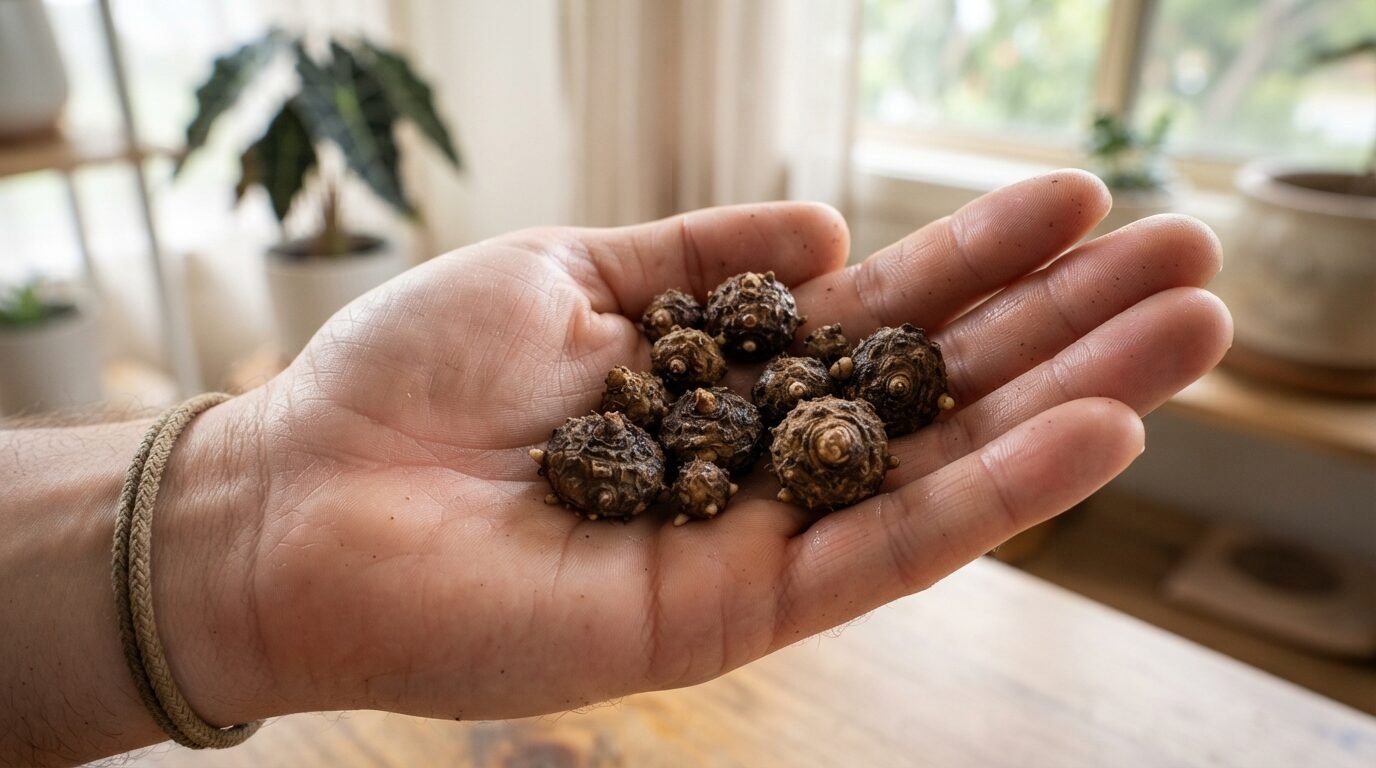
- Corms: little firm storage bulbs around the roots that can be grown into new plants with time and warmth.
When to propagate in Australia
Do it in spring or summer, during active growth and warmth. Propagating in the warm season gives divisions and corms the best chance to root and establish before autumn and winter, when Alocasia slow down or go dormant. It is most convenient to do at the same time as repotting.
How to divide an Alocasia
Dividing a clump
- 1Water the day before, then slide the plant out of its pot.
- 2Gently tease soil from the roots so you can see the pups and where they join the parent.
- 3Separate a pup that has its own roots and at least one leaf, easing it apart by hand or with a clean cut.
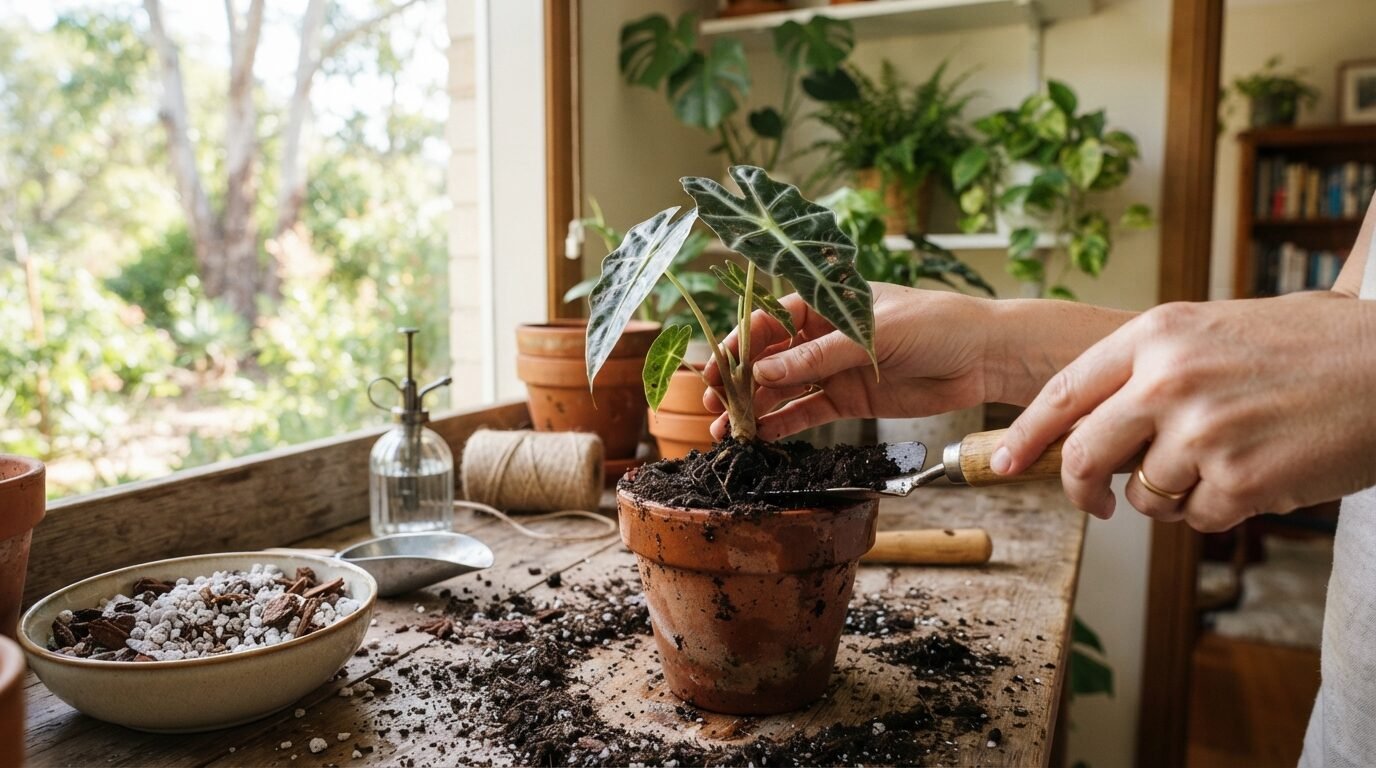
- 4Pot each division into fresh, free-draining mix in a pot that just fits its roots.
- 5Water in, then keep warm, humid and in bright indirect light while it settles.
How to grow Alocasia from corms
Starting corms
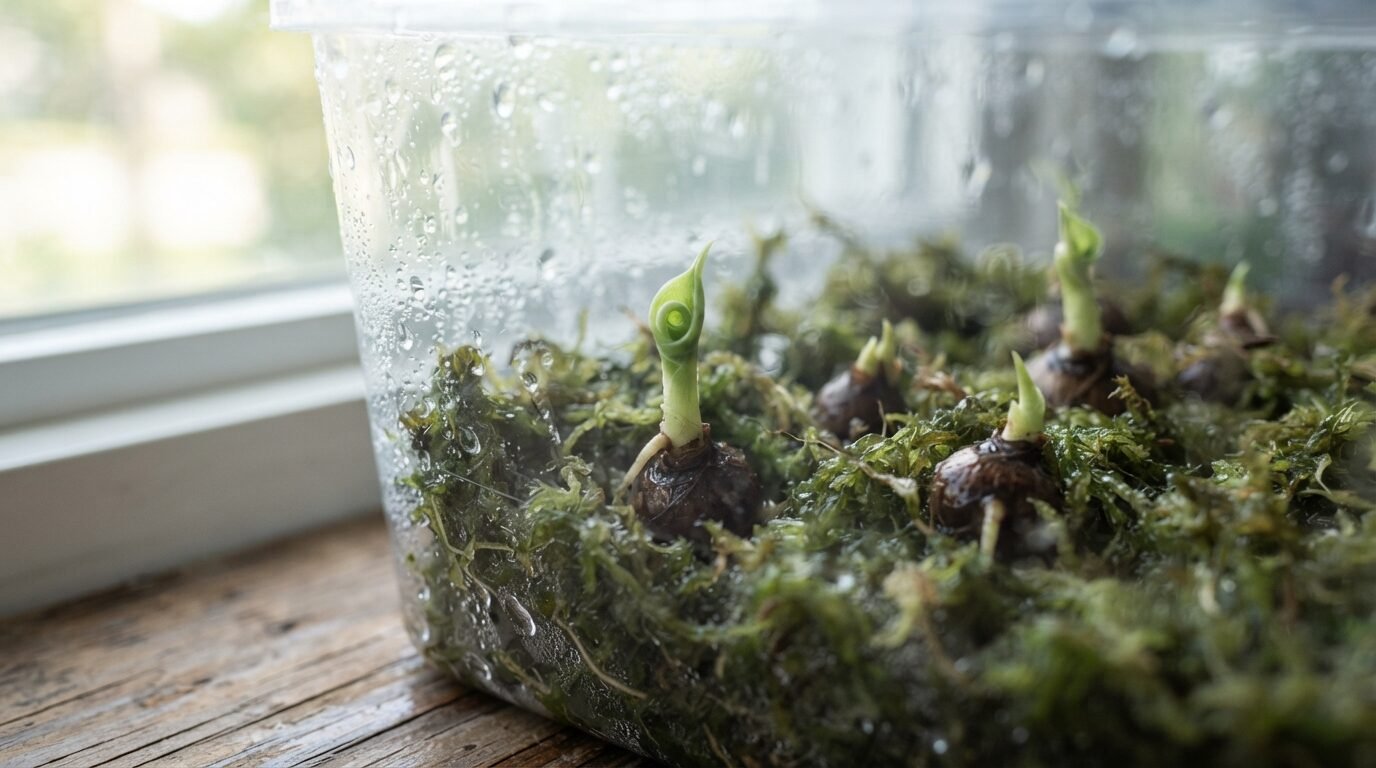
- 1Find the small, firm corms around the base and roots; discard any that are soft or mushy.
- 2Peel off the papery brown coat if it comes away easily (optional but helps).
- 3Half-bury each corm in moist sphagnum moss or coir, or sit it in a shallow dish of water, pointy end up.
- 4Keep warm, humid and bright — a covered container or propagator helps hold humidity.
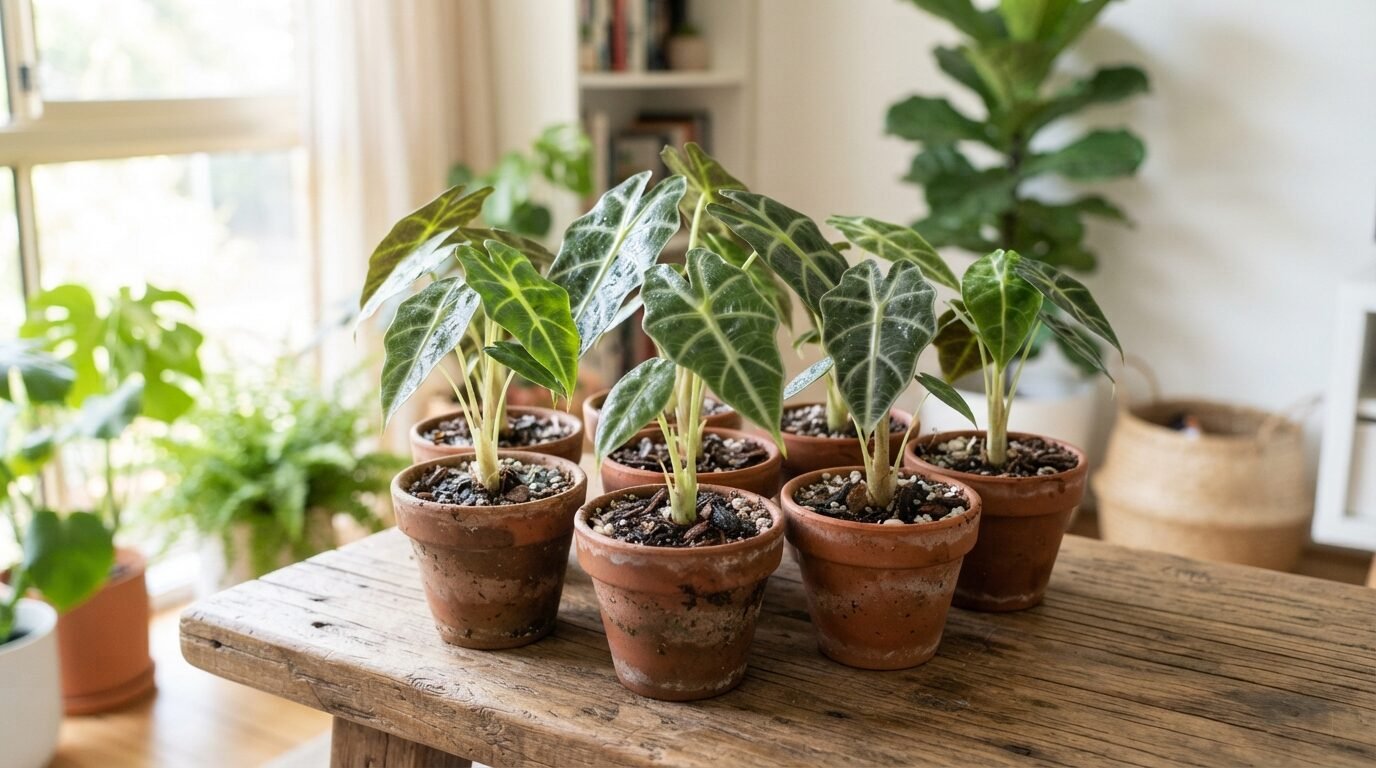
- 5Wait. Once roots and a shoot appear, pot up into free-draining mix and grow on.
Patience pays: corms can sit for weeks looking like they are doing nothing before suddenly sprouting. As long as a corm stays firm, give it warmth and time.
For aftercare of new divisions and corms, follow the watering guide (go easy at first) and the main Alocasia care guide.
Frequently asked questions
Can you propagate Alocasia from a leaf cutting?
No. Unlike some aroids, Alocasia will not grow a new plant from a leaf or a leaf-in-water cutting — a single leaf has no growing point and will just rot. Alocasia are propagated by division of the clump, by separating offset pups, or by growing on the small corms that form around the base.
What is the easiest way to propagate Alocasia?
Division is the easiest and most reliable method: at repotting time, separate a well-rooted offset (pup) from the parent and pot it up on its own. It already has roots and leaves, so it establishes quickly with far less fuss than growing corms from scratch.
How do I propagate Alocasia from corms?
Find the small, firm, pea-to-marble-sized corms around the base and roots, gently detach them, peel the papery coat if present, and set them half-buried in moist sphagnum or coir (or sit them in a little water). Keep them warm, humid and bright, and be patient — sprouting can take several weeks.
When is the best time to propagate Alocasia in Australia?
Spring and summer, during active growth and warmth, give the best and fastest results. Dividing or starting corms in the warm season means they establish before the cooler months, when Alocasia slow down or go dormant.
How long do Alocasia corms take to sprout?
It varies, but a viable corm in warm, humid, bright conditions usually shows a shoot or root within a few weeks to a couple of months. Patience is essential — a corm can look like it is doing nothing for weeks before it suddenly takes off.
Do I need to put Alocasia corms in water or soil?
Both work. Many growers start corms in water or damp sphagnum so they can watch for roots and shoots, then pot them into mix once growing. Others start them straight in a moist, free-draining mix. The key factors are warmth, humidity and not letting them dry out or sit sopping wet.
Why are my Alocasia corms not growing?
Usually they are too cold, too dry or rotting from being too wet. Give steady warmth and humidity, keep the medium just moist, and discard any corm that has gone soft or mushy. Firm corms that are simply slow often just need more time and warmth.
Can I separate Alocasia pups without repotting?
It is easiest to do when you have the plant out of its pot for repotting, so you can see the roots and separate cleanly. You can carefully dig down the side to detach a well-rooted pup in situ, but you risk disturbing the parent, so most people combine it with a repot.


