
How to Water Alocasia in Australia (Complete Guide)

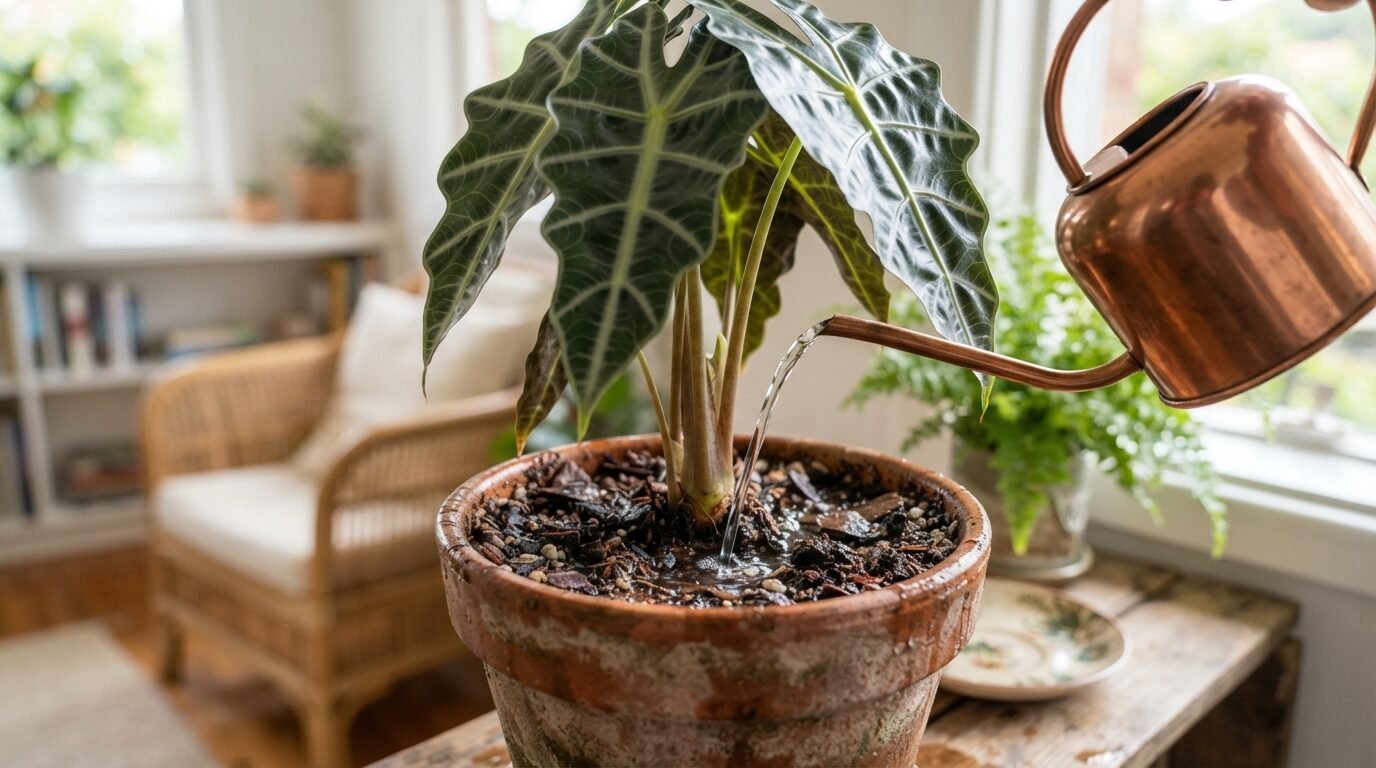
Quick answer: Water your Alocasia when the top 2–3 cm of soil has dried but the pot is still lightly moist below — then water thoroughly and let all the excess drain away. Keep the mix evenly moist, never soggy and never bone-dry. Water more in the warm growing season and much less in winter or dormancy. The pot must have drainage holes, and never leave it sitting in a saucer of water.
Alocasia have a reputation for being “thirsty divas”, but most watering problems come from how you water, not how often. Get the rhythm right and they are far easier than their reputation suggests.
How to tell when your Alocasia needs water
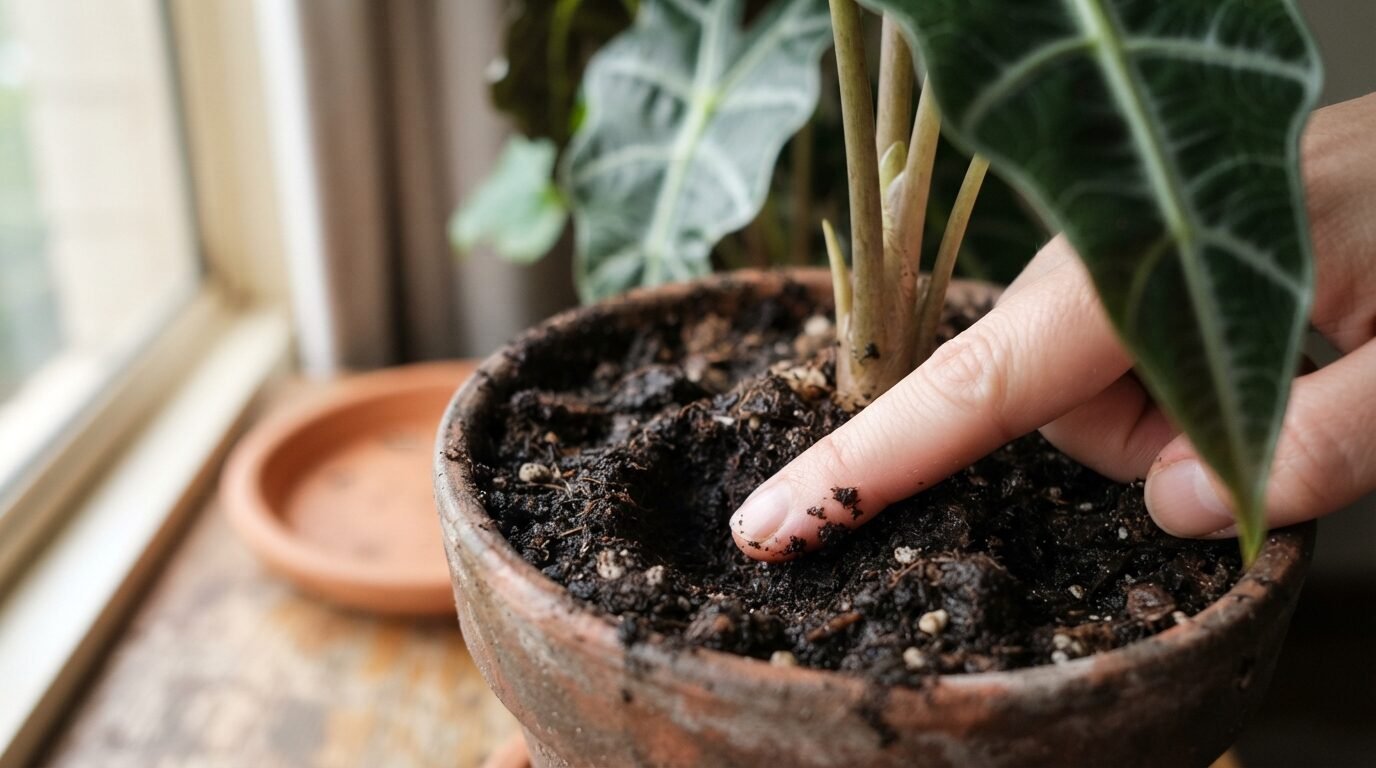
Forget a fixed schedule — feel the soil. Push a finger into the top of the mix:
- top 2–3 cm dry, moist below — time to water;
- still wet near the surface — wait;
- bone-dry all through and the plant is drooping — you have left it too long.
Moist, not wet — and not bone-dry
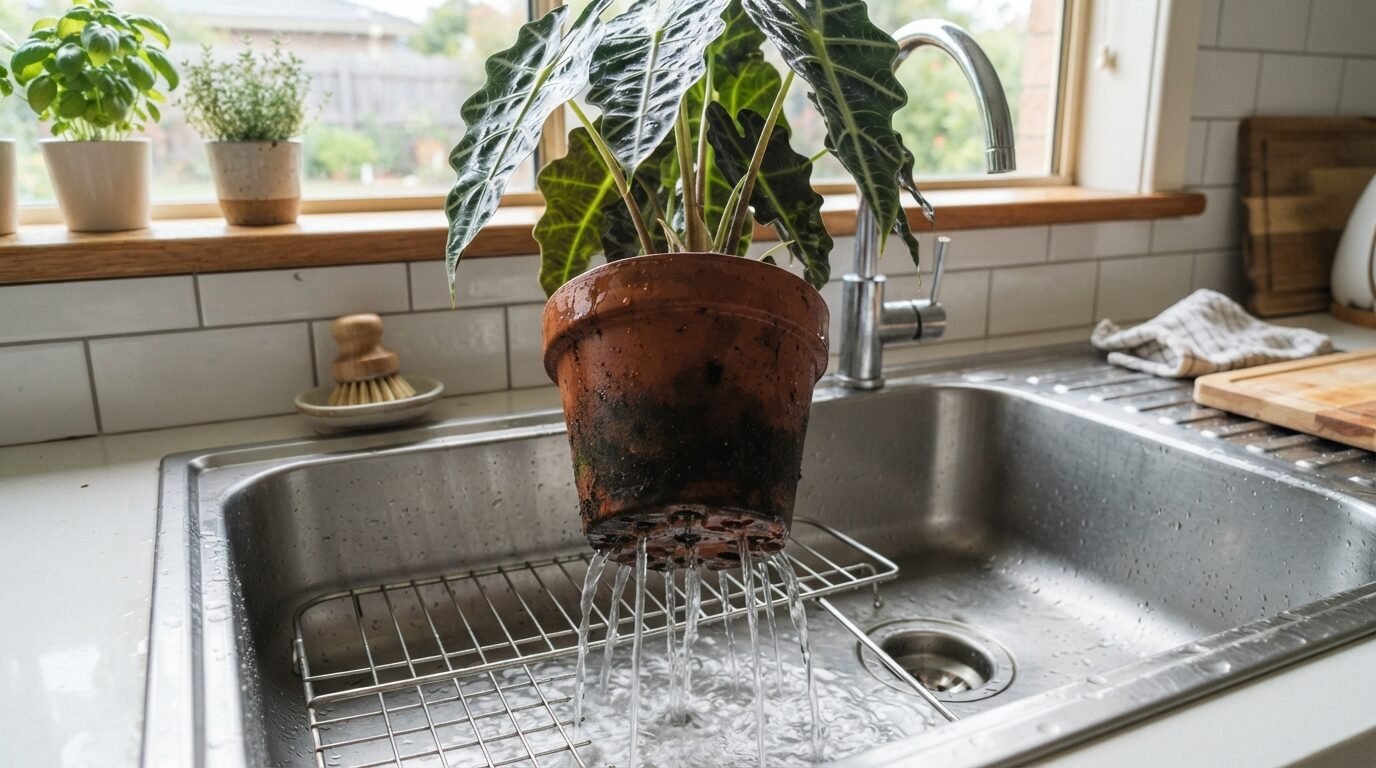
Alocasia want consistent even moisture. Letting them dry out completely stresses the roots and crisps the leaves; leaving them waterlogged suffocates the roots and causes yellowing and root rot. Aim for the middle: water well, then let the top dry before the next drink.
How watering changes with the seasons
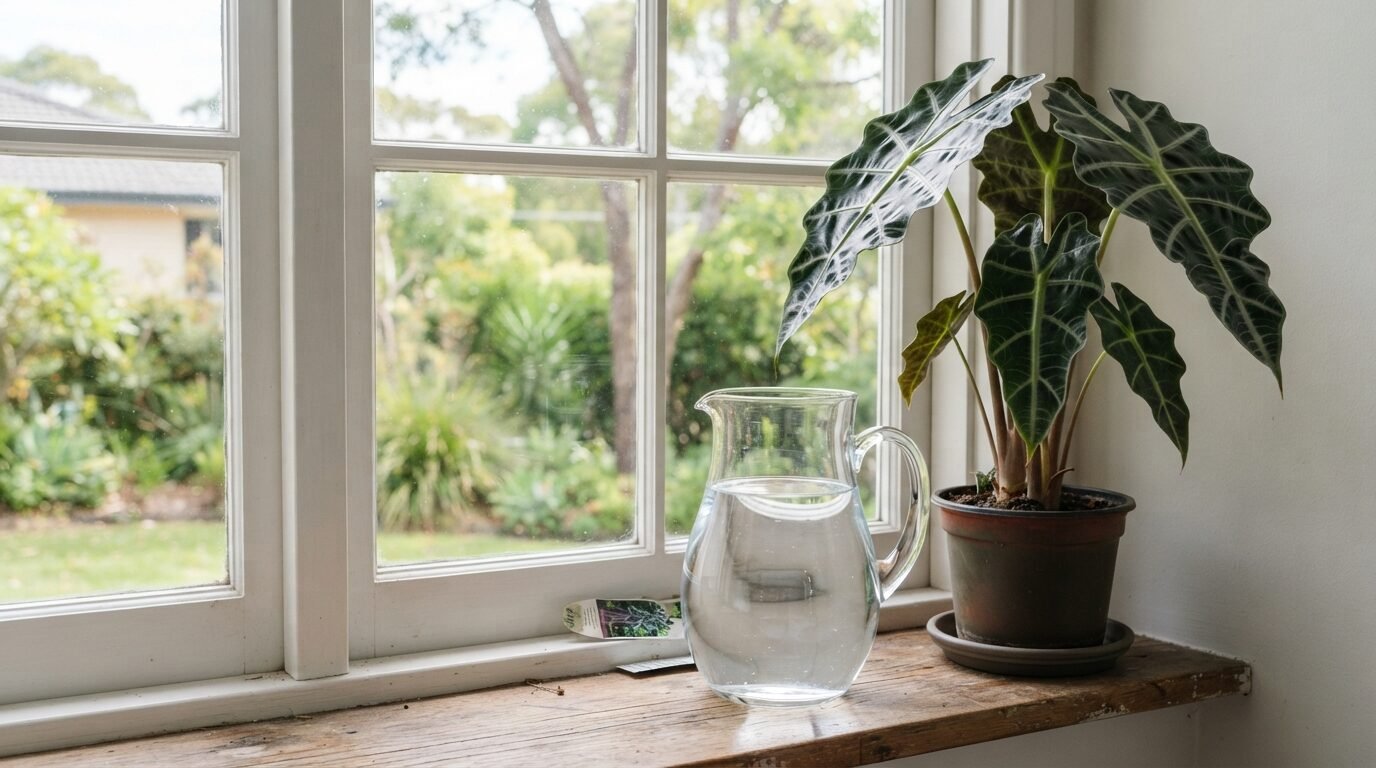
This is where most Australians go wrong. Alocasia water needs swing hugely across the year:
| Season | Growth | Watering |
|---|---|---|
| Spring–summer | Active, pushing leaves | Regular — whenever the top dries |
| Autumn | Slowing down | Ease back as growth slows |
| Winter / dormancy | Resting or died back | Minimal — just stop the mix fully drying |
Winter overwatering is the classic killer: a slowing or dormant Alocasia barely drinks. Keep watering it on your summer routine and the soil stays wet around resting roots, which rot. In the cool months, when in doubt, water less. See the dormancy guide.
Top-water or bottom-water?
Both work. Top-watering thoroughly until it drains flushes the mix evenly. Bottom-watering — standing the pot in water for 15–30 minutes, then draining — wets the root zone gently and avoids surface compaction. Whichever you use, always let the excess drain and never leave the pot in standing water.
Signs you are over- or under-watering
| Overwatering | Underwatering |
|---|---|
| Soil stays wet for days | Soil dries out fast and fully |
| Yellowing leaves, soft stems | Crispy edges, drooping |
| Sour smell, possible rot | Plant perks up quickly after a drink |
For the full care picture see the Alocasia care & varieties guide for Australia, and pair this with the soil & potting mix guide — the right mix is half of good watering.
Frequently asked questions
How often should I water an Alocasia?
There is no fixed number — water when the top 2–3 cm of soil has dried but the pot still feels lightly moist below. In a warm, bright Australian summer that might be every few days; in winter or dormancy it can be every couple of weeks or less. Always check the soil rather than following a calendar.
Do Alocasia like to dry out between waterings?
Not fully. Alocasia prefer consistent, even moisture and dislike going bone-dry, but they equally hate sitting in water. Let the top of the mix dry, then water thoroughly — aim for “evenly moist, never soggy, never dust-dry”.
How do I water an Alocasia correctly?
Water thoroughly until it runs from the drainage holes so the whole root ball is wetted, then let all the excess drain away and never leave the pot standing in a full saucer. This flushes the mix evenly and stops water pooling at the bottom.
Should I use tap water or rainwater?
Tap water is usually fine for Alocasia, which are more forgiving than Calathea about water quality. If your water is very hard or you see mineral crusting, rainwater or filtered water is a gentle upgrade, but it is rarely essential.
How does watering change with the seasons in Australia?
Water more often through the warm growing season when the plant is actively pushing leaves, and much less in autumn and winter as growth slows or the plant goes dormant. Over-watering a resting plant in cold months is a leading cause of rot.
Is bottom-watering good for Alocasia?
Bottom-watering works well: stand the pot in water for 15–30 minutes so the mix draws moisture up, then let it drain fully. It wets the root zone evenly and avoids compacting the surface, but still finish by letting excess drain so the plant is not left sitting in water.
Why is my Alocasia drooping after watering?
Drooping right after watering, with wet soil, usually means too much water, not too little. Let the mix dry out more before the next water and check drainage. If the soil was dry and it perks up after watering, it was simply thirsty.
Can I let an Alocasia sit in a saucer of water?
No. Leaving the pot in standing water keeps the roots waterlogged and starves them of oxygen, leading to yellowing and root rot. Always tip out the saucer a few minutes after watering.


