
Why Is My Calathea Drooping? Causes & Fixes (Australia)

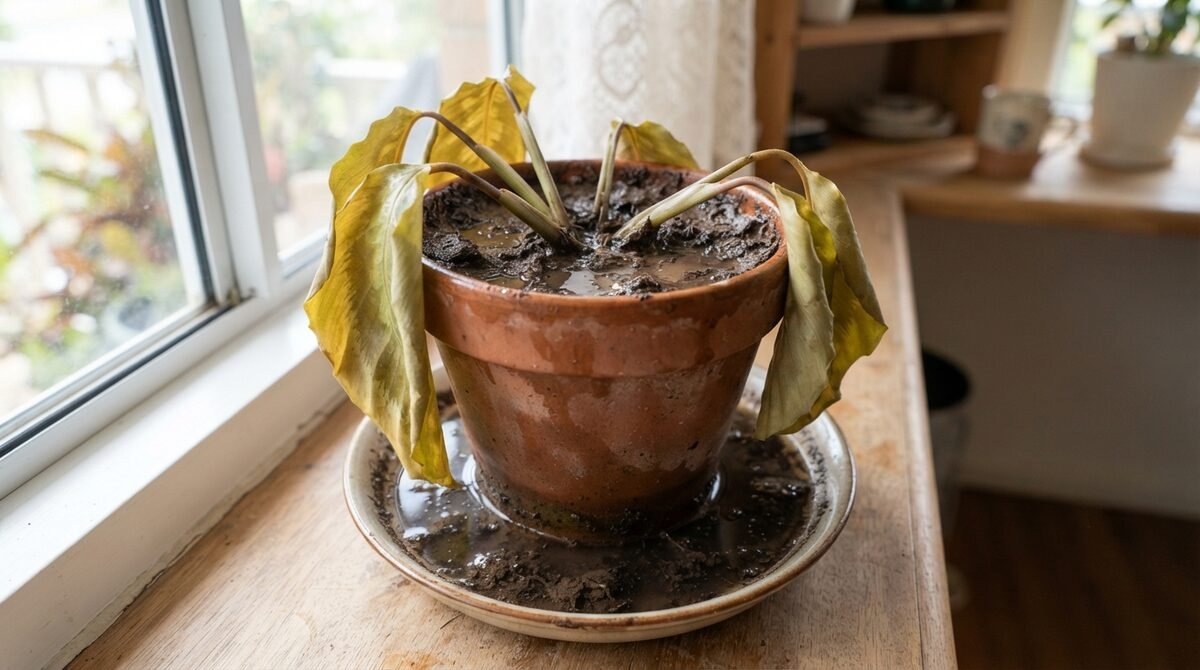
Quick answer: A drooping Calathea is almost always telling you about water, warmth or shock. Feel the soil first: dry soil means it is thirsty — water thoroughly and it should perk up within hours. Wet, heavy soil means the opposite, so stop watering and check the roots. Recent repotting, a cold draught or a sudden move can also cause temporary drooping that settles with steady, correct care.
A sagging, limp Calathea looks alarming, but it is usually a fixable stress signal rather than a death sentence. The trick is to read the soil and the recent history before you act — because the wrong response (watering an already-soggy plant) makes things worse.
First, rule out normal leaf movement
Not all “drooping” is a problem: Calathea and other prayer plants naturally raise their leaves at night and lower them during the day. If the leaves look different morning versus evening but are otherwise firm and healthy, that is normal rhythm, not stress. True problem drooping stays limp all day.
Diagnose the cause from the soil and history
| What you notice | Most likely cause | What to do |
|---|---|---|
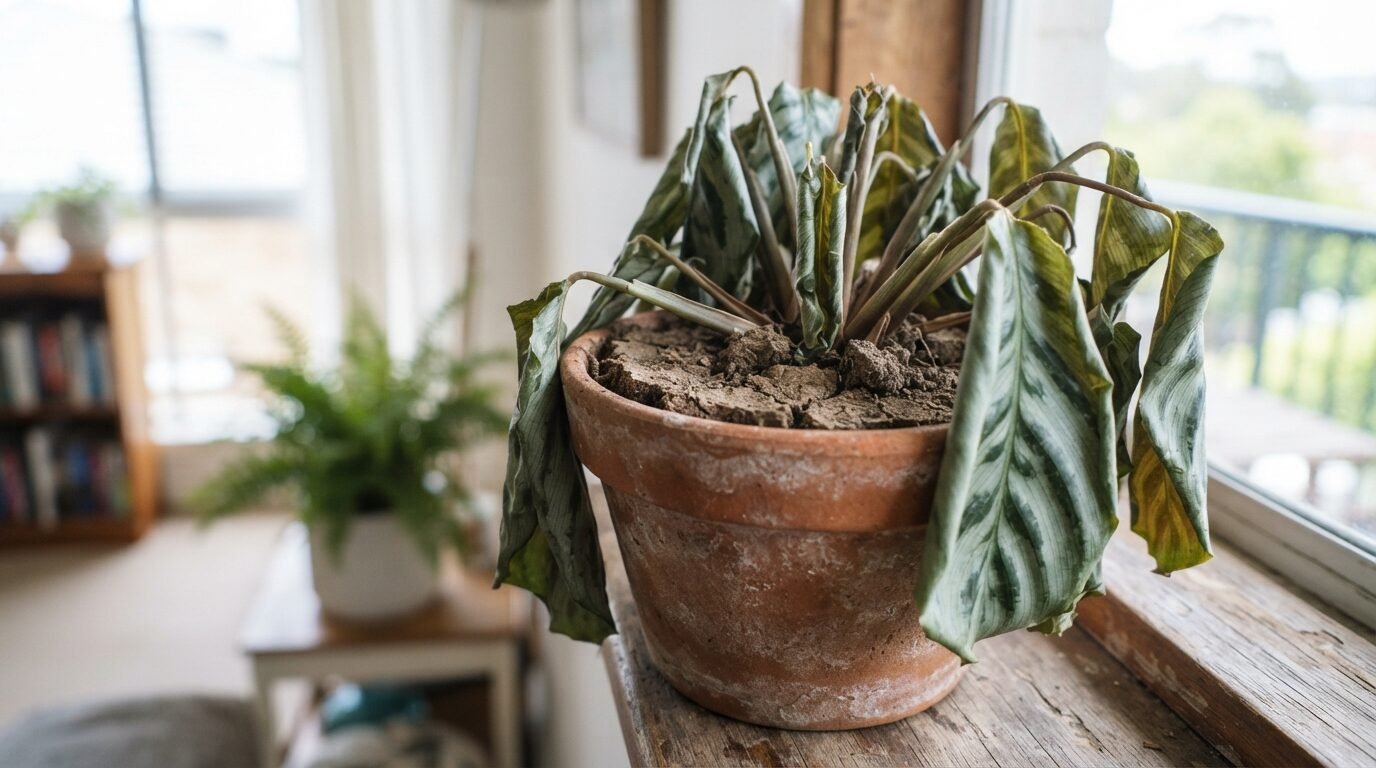
| Soil bone-dry, leaves limp | Underwatering (thirst) | Water thoroughly; perks up in hours |
| Soil wet/heavy, maybe sour smell | Overwatering / root issues | Stop watering, dry out, check roots |
| Drooped soon after repotting | Root-disturbance shock | Warmth, humidity, steady light; wait |
| Drooped after moving it | Light/temperature shock or draught | Stable warm spot, bright filtered light |
| Near a heater, vent or cold window | Draught / temperature stress | Move away from the draught source |
| Up at night, down by day, leaves firm | Normal prayer-plant movement | Nothing — this is healthy |
If the soil is dry: rehydrate properly
Reviving a thirsty Calathea
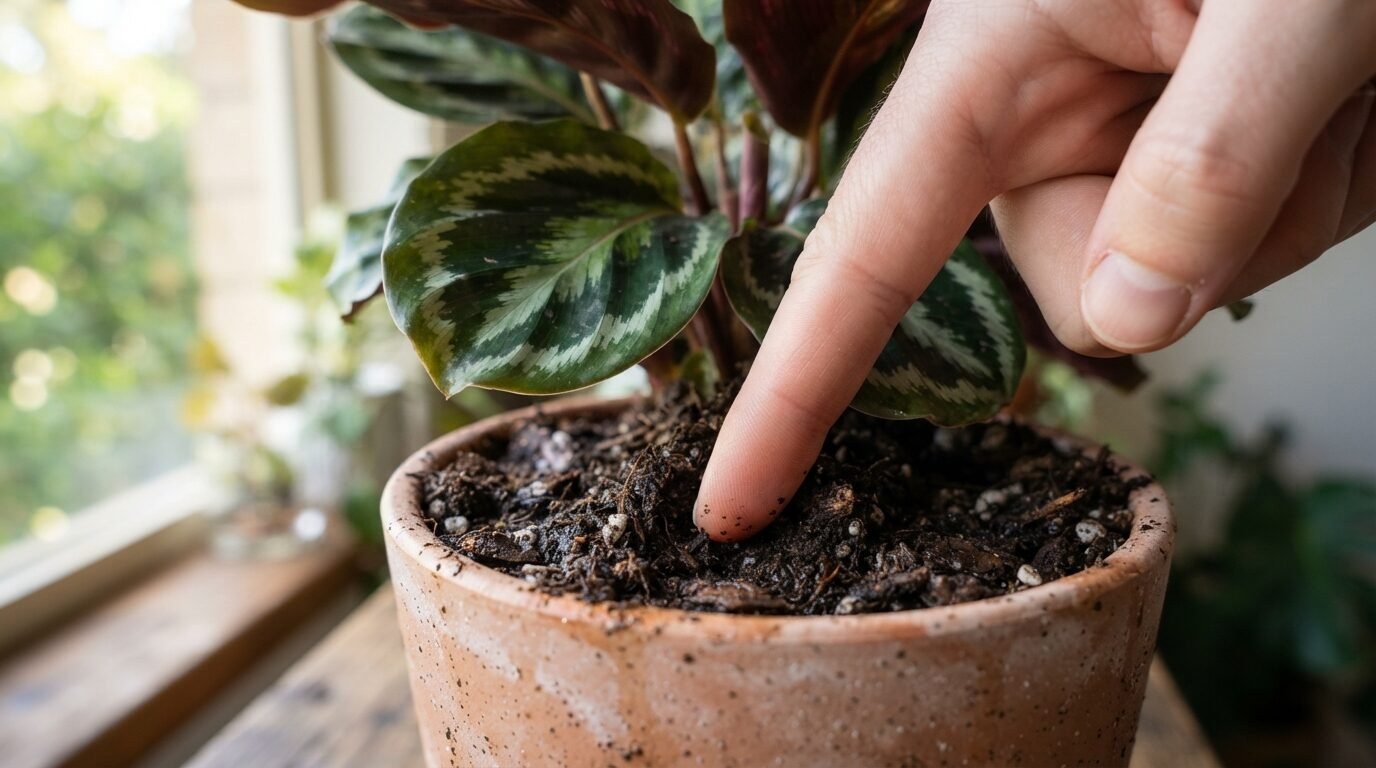
- 1Confirm the top few centimetres of soil are genuinely dry.
- 2Water thoroughly until it runs from the drainage holes, so the whole root ball is wetted.
- 3Let all excess drain away — never leave the pot sitting in water.
- 4Return it to bright, indirect light and wait. Most thirsty Calatheas stand back up within a few hours to a day.
- 5Going forward, water before it reaches the point of drooping — see the watering guide below for timing.
If the soil is wet: stop and check the roots
Drooping with soggy soil is an overwatering signal. Adding more water is the worst thing you can do. Instead:
Dealing with an overwatered, drooping Calathea
- 1Stop watering immediately and move it out of any saucer of standing water.
- 2If the soil is sour-smelling, slide the plant out and inspect the roots.
- 3Trim away any brown, soft, mushy roots with clean scissors; healthy roots are firm and pale.
- 4Repot into fresh, free-draining mix in a pot with drainage holes.
- 5Water only when the top of the soil dries, and keep it warm and brightly lit while it recovers.
For the full method on both fronts, see our Calathea watering guide and best soil & potting mix guide.
Shock from repotting, moving or draughts
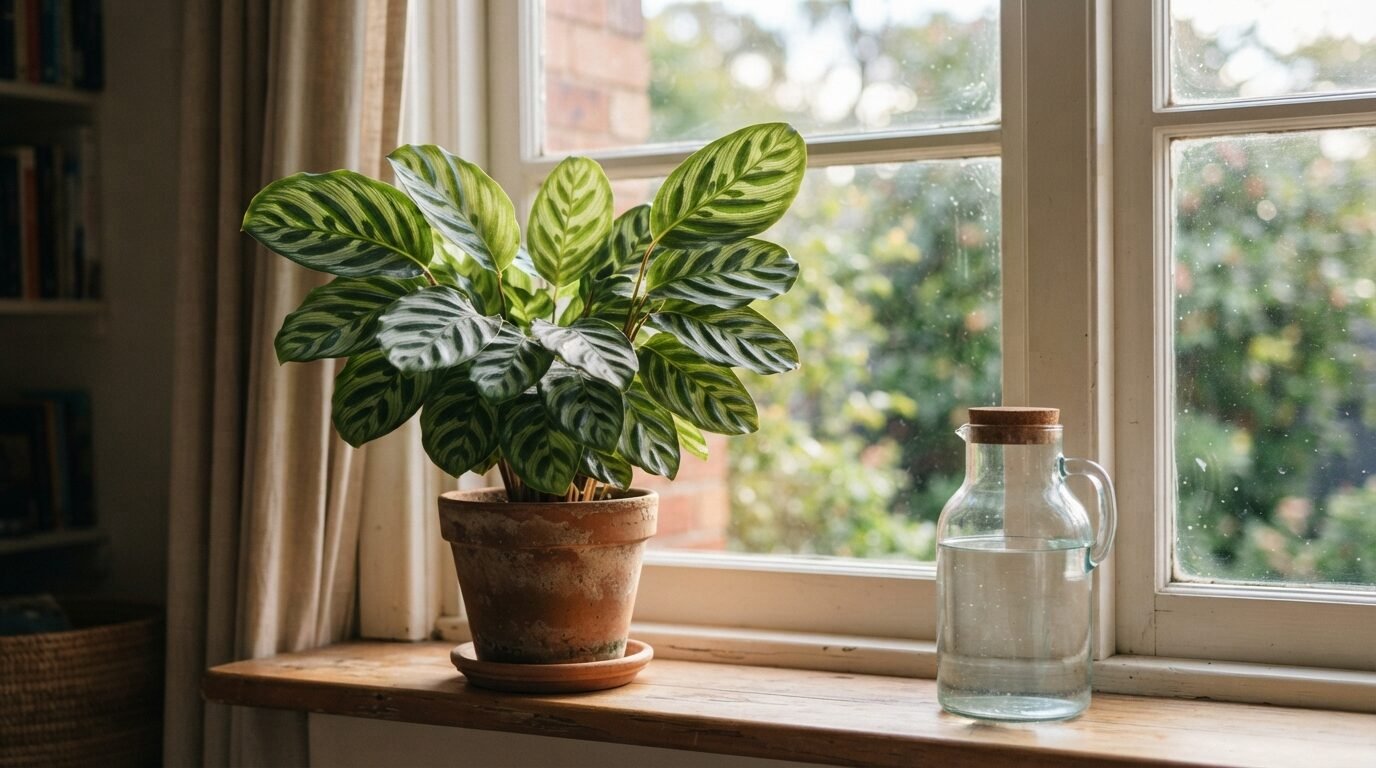
Calathea dislikes change. It commonly droops and sulks for a week or two after repotting, after being moved to a new spot, or when it sits in the path of a heater, air-conditioning vent or cold draughty window. The fix is patience plus stability:
- keep it in one warm, stable spot with bright filtered light;
- move it away from heaters, vents, draughts and cold glass;
- maintain humidity and lightly moist (not soggy) soil;
- hold off on fertiliser until it is clearly growing again.
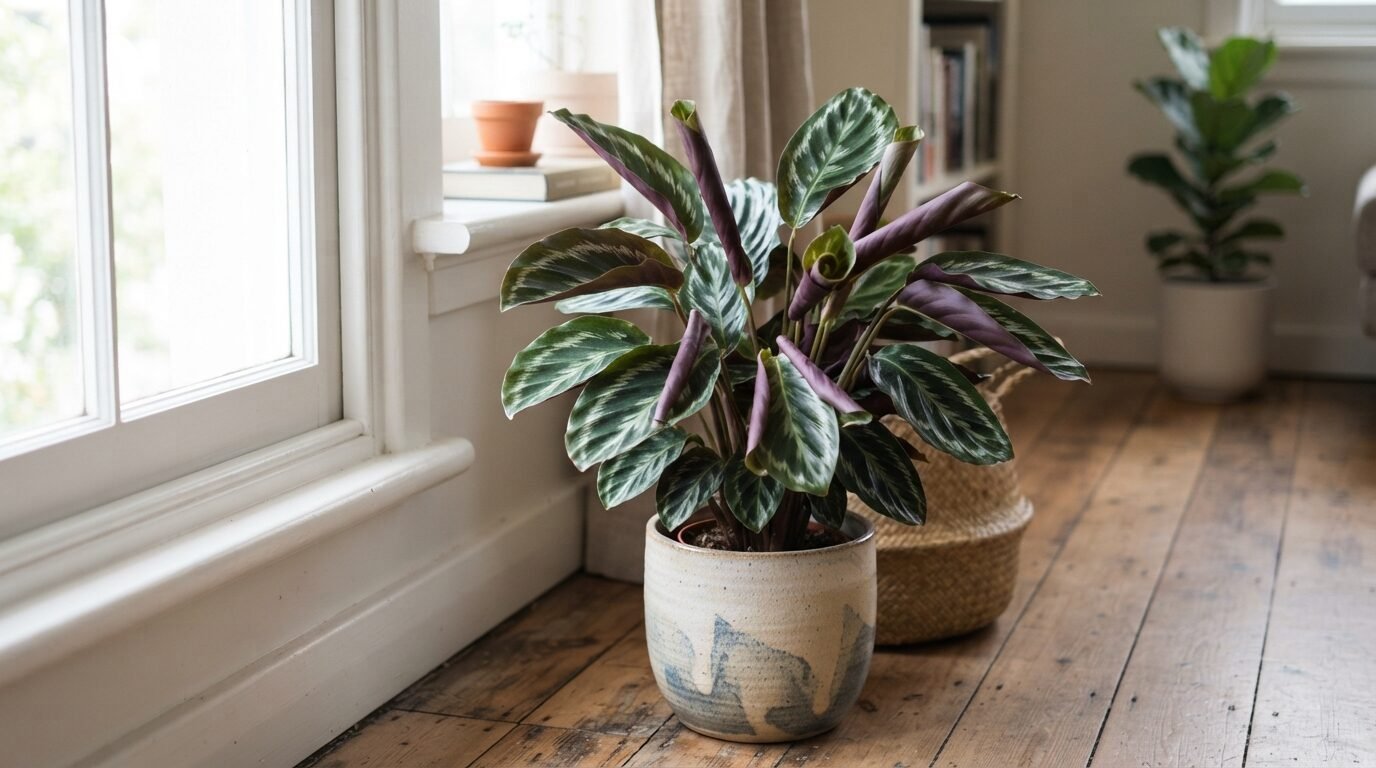
Give it time: shock drooping can take one to two weeks to resolve. Fresh, healthy new growth is the clearest sign your Calathea has recovered.
Prevent future drooping
- water on a feel-the-soil basis, before it gets desperate;
- use a free-draining mix and a pot with drainage holes;
- keep it warm, humid and out of draughts;
- avoid moving or repotting more than necessary.
Drooping often travels with other stress signs. If you are also seeing crispy edges or curling, cross-check our brown tips guide and curling guide, and for the whole care picture see the Calathea care hub.
Frequently asked questions
Why is my Calathea drooping all of a sudden?
Sudden drooping is most often a watering issue, either too dry or waterlogged, or shock from a sharp change such as repotting, a cold draught or a big move. Check the soil first: bone-dry usually means underwatering, while soggy, smelly soil points to overwatering and possible root problems.
Does drooping mean under or over watering?
Both can cause it, so the soil tells you which. Dry soil with limp leaves means thirst, and the plant usually perks up within hours of a thorough water. Wet, heavy soil with drooping leaves means the roots are struggling to take up water, which is an overwatering problem, not a reason to add more.
Should I water my Calathea if it is drooping?
Only if the soil is actually dry. Feel the top few centimetres: if it is dry, water thoroughly and the plant should recover. If the soil is already wet, more water will make things worse. In that case, stop watering, let it dry out and check the roots.
How long does it take a Calathea to recover from drooping?
A thirsty plant that is watered properly often stands back up within a few hours to a day. Recovery from overwatering, repotting shock or a cold event is slower and can take one to two weeks of steady, correct care. New healthy growth is the clearest sign it has turned the corner.
Why does my Calathea droop at night or in the morning?
Calathea and other prayer plants naturally raise their leaves up at night and lower them during the day on a daily rhythm. Leaves looking different morning to evening is usually this normal movement, not drooping. True problem drooping stays limp regardless of the time of day.
Can repotting cause my Calathea to droop?
Yes. Calathea dislikes root disturbance and often sulks and droops for a week or two after repotting. Keep it warm, in bright indirect light, with lightly moist (not soggy) soil and good humidity, and avoid feeding until it settles. It usually recovers once the roots re-establish.
Why is my Calathea drooping after I moved it?
A sudden change in light, temperature or a cold draught can shock a Calathea into drooping. Move it away from draughts, heaters and cold windows, give it stable warmth and bright filtered light, and let it adjust. Avoid shifting it around repeatedly while it settles.
My Calathea is drooping and the soil is wet and smelly, what now?
Soggy, sour-smelling soil with drooping leaves suggests overwatering and possible root rot. Stop watering, slide the plant out and check the roots: trim any brown, mushy ones, repot into fresh free-draining mix, and water only when the top of the soil dries. See our watering and soil guides for the full method.
- Calathea growing & care guide for Australia — the complete care hub.
- How to water Calathea in Australia — the #1 cause of drooping.
- Calathea leaves curling: causes & fixes — often appears alongside drooping.


