
Calathea Light Requirements in Australia (Complete Guide)

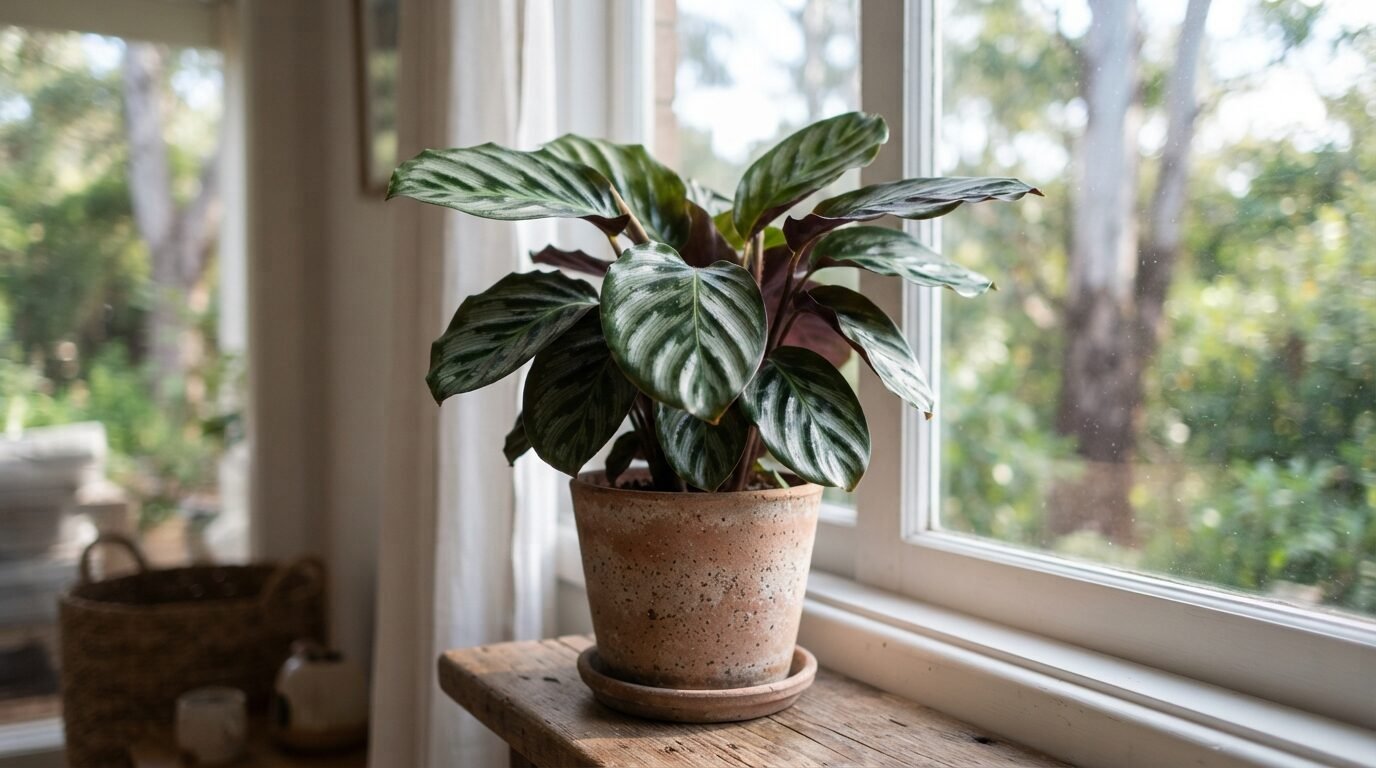
Quick answer: Calathea wants bright, indirect (filtered) light. Place it near a window where it is bright but out of harsh direct sun. It tolerates lower light better than scorching sun, but a genuinely dark corner dulls colour, slows growth and makes it leggy. The sweet spot is plenty of brightness with the direct rays kept off the leaves.
Light is one of the most misunderstood parts of Calathea care, mostly because it is often sold as a “low-light plant.” That is only half true. Calathea tolerates lower light better than it tolerates harsh sun, but it is not a dark-corner plant. Get the light right and the patterning, colour and growth all improve.
What “bright, indirect light” actually means
Indirect or filtered light is bright light that does not include the sun’s direct rays landing on the leaves. In practice that means:
- near a window, but set back from the glass or behind a sheer curtain;
- a spot that feels bright to read in without a lamp during the day;
- gentle early-morning sun at most, not harsh midday or afternoon sun.
If you can see the sun directly hitting the leaves for much of the day, that is usually too much for a Calathea in Australian conditions.
Why “low light” is overstated
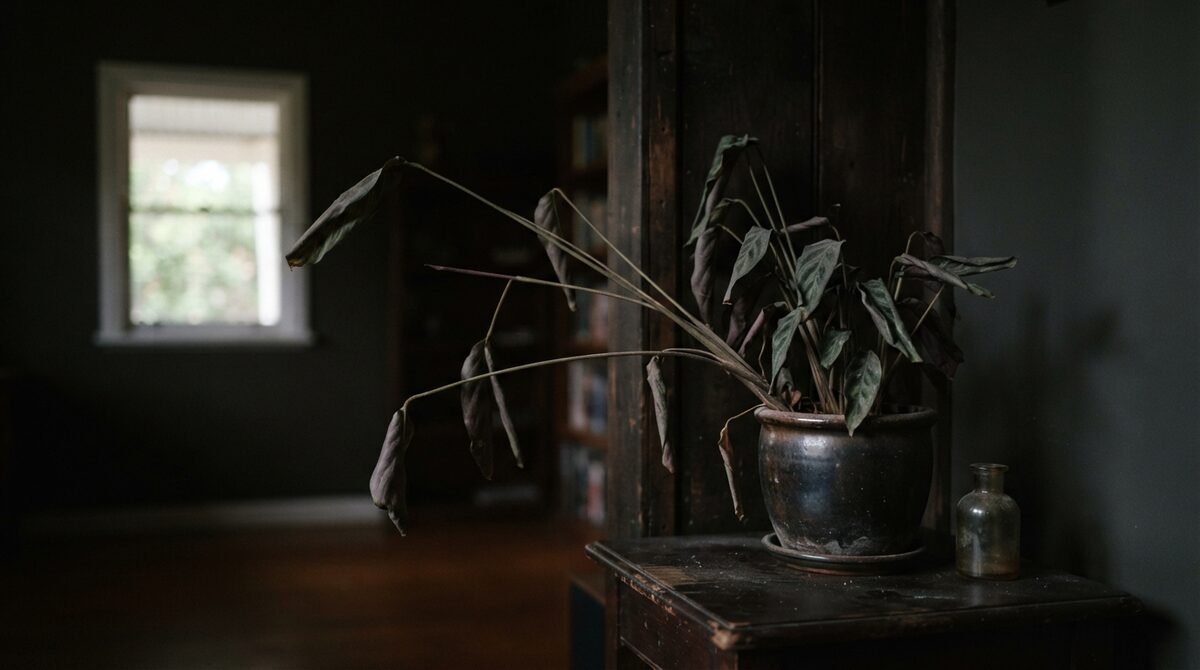
Calathea copes with lower light better than many plants, which is why it earns the low-light label. But in a genuinely dim position:
- growth slows right down;
- new leaves come in smaller and duller;
- the patterning fades;
- stems stretch and lean toward the nearest window.
None of that is fatal, but it is not thriving either. A bright, filtered position gets far better results than a dark corner.
Too much light versus too little
The leaves will tell you which way you have gone wrong:
| What you see | Likely light problem |
|---|---|
| Bleached, washed-out or scorched patches, worst near the window | Too much direct sun |
| Crispy edges plus fading on the sunny side | Sun scorch and heat stress |
| Slow growth, small dull leaves | Too little light |
| Stems stretching and leaning toward the window | Reaching for more light (too dim) |
| Leaves raising and lowering day to night | Normal prayer-plant movement, not a light problem |
If the symptom is scorching and fading, move the plant back from the glass. If it is stretching and dullness, move it to a brighter filtered spot. For the browning and curling that can come with sun and heat stress, see our brown tips guide and curling guide.
Best positions in an Australian home
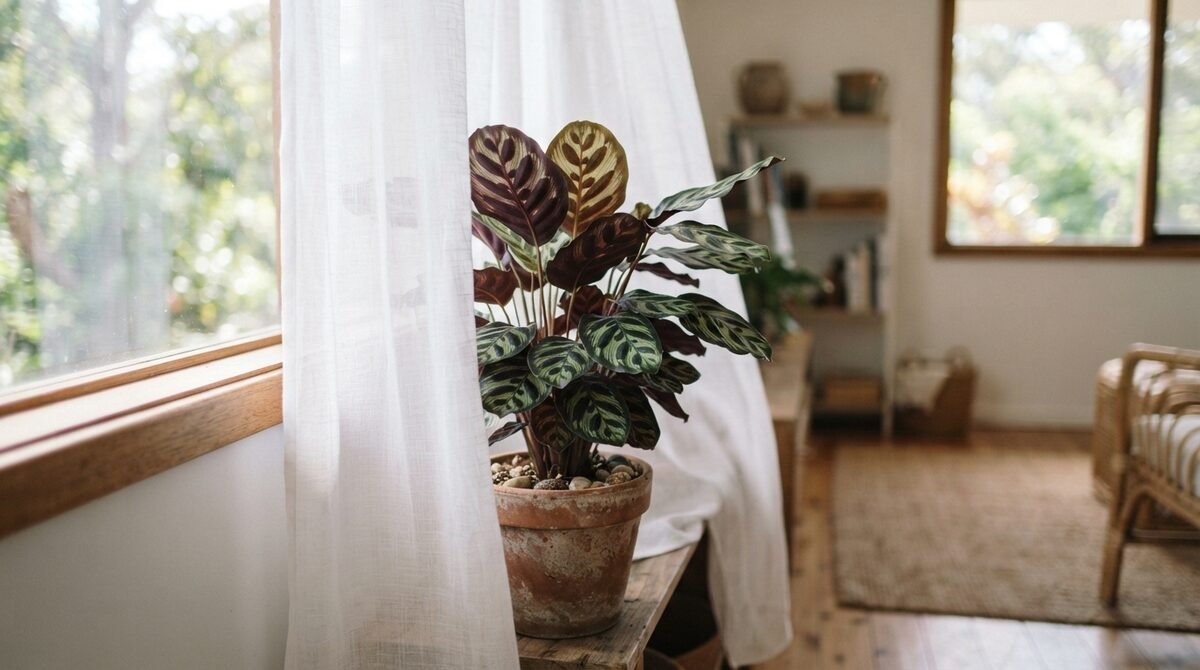
- East-facing window: gentle morning light is ideal.
- North or west window, set back: bright but out of the direct afternoon rays.
- Bright south-facing room: can work if it is genuinely bright.
- Behind a sheer curtain: softens strong light into filtered light.
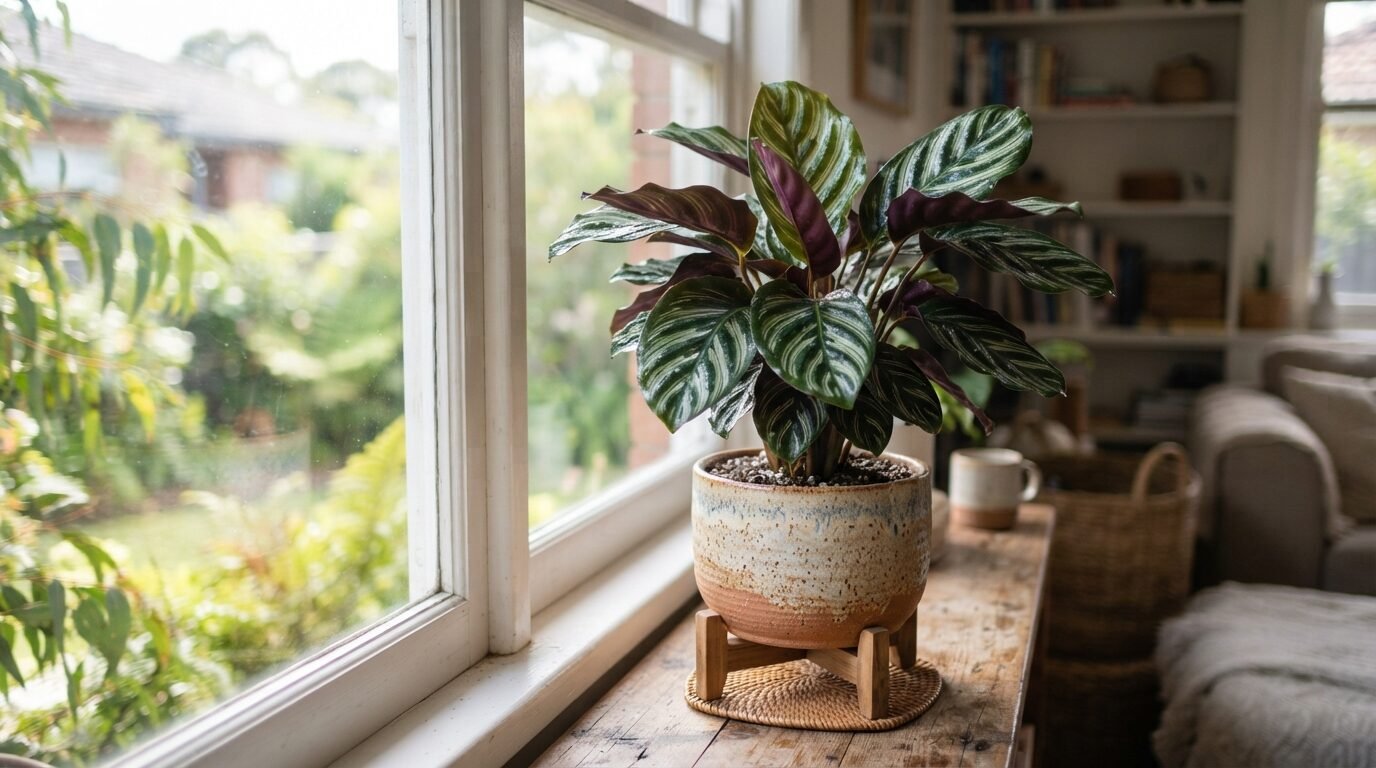
Watch the hot west window: strong afternoon sun through a west-facing window is the most common cause of scorched, faded Calathea leaves in Australian summers. Keep the plant back from it or filter the light.
Seasons change the light, too
A position that is perfect in winter can become too bright and hot in summer as the sun’s angle shifts and intensifies. A Calathea that was happy close to a bright window in July may need to move back a little in January. Check how the light falls on the plant across the seasons and adjust its position rather than assuming one spot is right all year.
Using a grow light
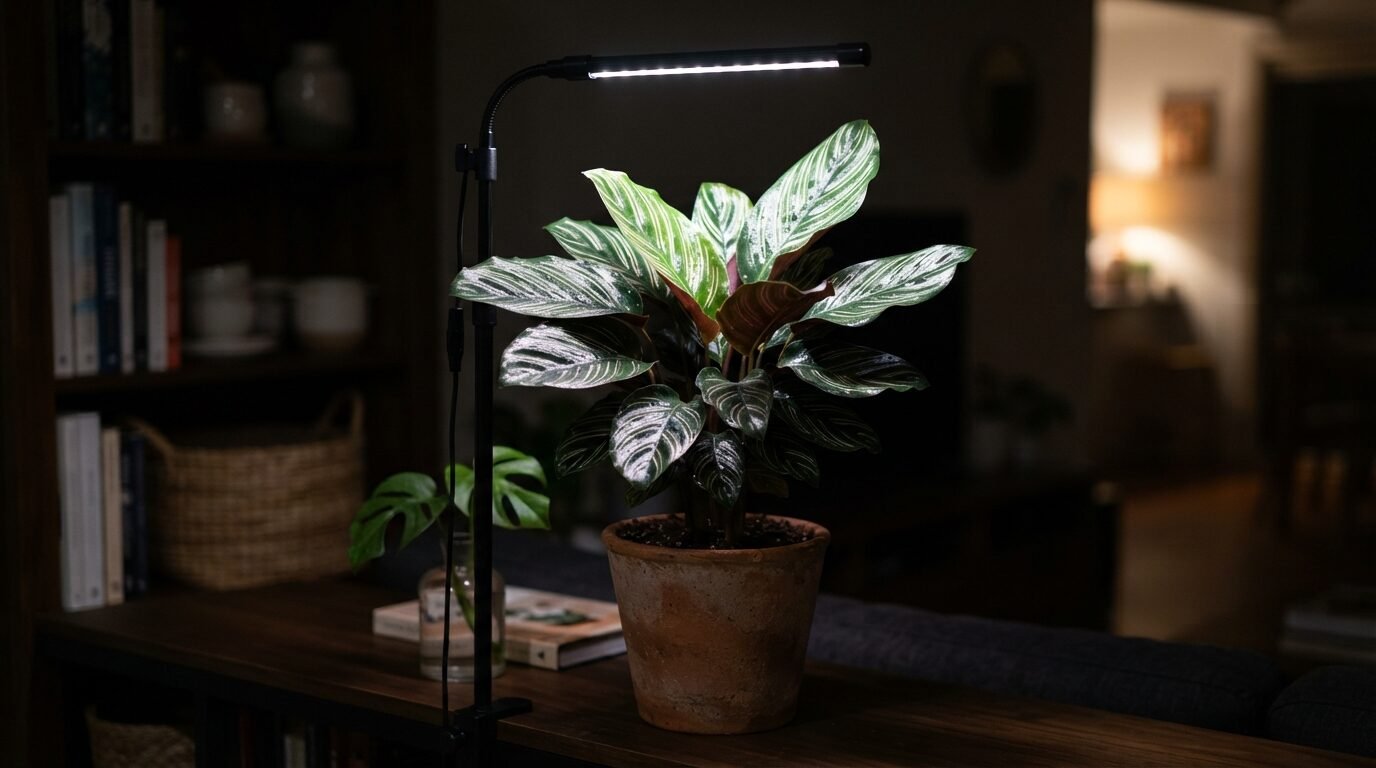
In a dim room, a good indoor grow light can keep a Calathea’s growth and colour strong. Aim for bright, even light across a normal daytime period, positioned so it is not intensely close to the foliage. This is a practical option for interior rooms with little natural light. For the full balance of light with watering, humidity and feeding, see our Calathea growing and care guide for Australia.
Frequently asked questions
How much light does a Calathea need?
Bright, indirect (filtered) light is ideal. Calathea does best near a window where it gets plenty of brightness but not harsh direct sun on the leaves. Too little light dulls growth and patterning; too much direct sun scorches and fades the leaves.
Can Calathea grow in low light?
It tolerates lower light better than harsh direct sun, but “low light” is often overstated. In genuinely dim spots growth slows, colours fade and the plant becomes leggy. A bright position with filtered light keeps it healthiest; a dark corner is not a good long-term home.
Can Calathea take direct sunlight?
A little gentle early-morning sun is usually fine, but harsh midday and afternoon direct sun scorches the leaves, bleaches the pattern and dries the plant out. In Australian conditions, keep Calathea back from strong direct sun, especially through a hot west-facing window.
Which window is best for a Calathea in Australia?
An east-facing window with gentle morning light, or a bright spot set back from a north or west window so the plant gets brightness without direct sun, works well. South-facing rooms can work if they are bright. The goal is bright but filtered light.
Why is my Calathea fading or losing its pattern?
Fading and washed-out colour usually mean too much direct sun, while dull, weak patterning can mean too little light. Move a sun-scorched plant back from the glass, or move a dim-room plant to a brighter filtered spot, and the new growth should colour up better.
Is my Calathea getting too much or too little light?
Too much light: bleached or scorched patches, worst on the window-facing side, often with crispy edges. Too little light: slow growth, small dull leaves, long stretched stems reaching toward the window. Adjust the position based on which pattern you see.
Do Calatheas close their leaves at night because of light?
Calathea and related prayer plants naturally raise and lower their leaves on a daily rhythm linked to light and dark, which is normal and healthy. This leaf movement is different from stress curling, which stays rolled and usually comes with other symptoms.
Can I use a grow light for Calathea?
Yes. In a dim room, a good indoor grow light can supplement natural light and keep growth and colour strong. Position it to give bright, even light for a normal daytime period, rather than very intense light close to the leaves.
- Calathea growing & care guide for Australia — the complete care hub.
- Calathea leaves curling: causes & fixes — sun and heat can trigger curling.
- Calathea brown tips & crispy edges — scorch shows at the edges.


