
Calathea Leaves Curling? Causes & Fixes Australia

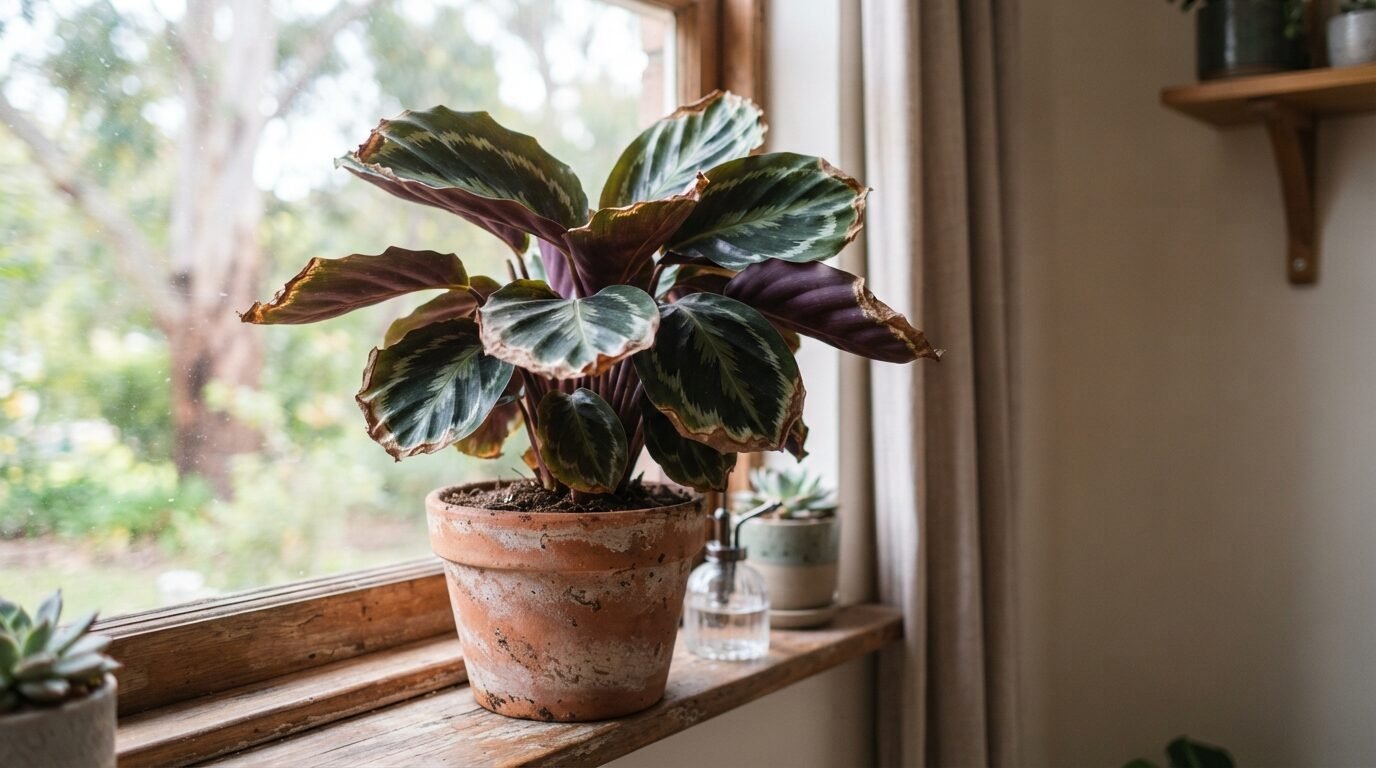
Quick answer: Calathea leaves usually curl because the plant is trying to reduce moisture loss. Check dry or inconsistently moist potting mix first, then look at hot dry air, direct sun, cold draughts and spider mites. If the mix is staying wet rather than drying, investigate root stress instead of adding more water.
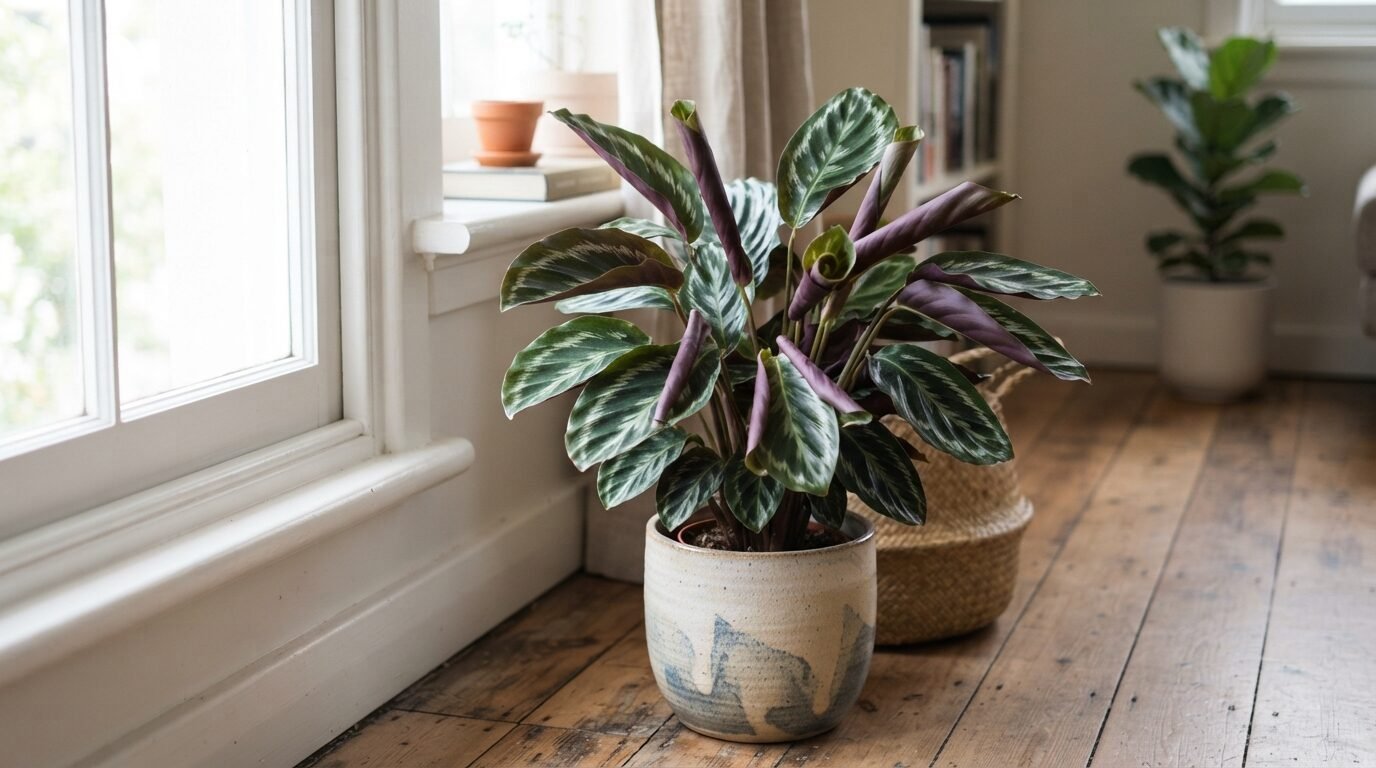
One curled leaf does not automatically mean your Calathea is dying. These plants naturally move their leaves through the day, and some cultivars hold foliage more upright at night. The warning sign is a leaf that stays tightly rolled, develops dry edges, loses colour or curls together with other signs of stress.
In Australian homes, the cause can also change with the season. A plant that was comfortable near a bright window in winter may become hot and dry there in summer, while a Calathea that drinks steadily through warm weather may use much less water during a cooler southern winter.
What should you check first when Calathea leaves curl?
Work through the plant in this order rather than changing everything at once:
This order matters because a thirsty Calathea and a root-stressed Calathea can both curl their leaves, but giving more water to already saturated roots can make the second problem worse.
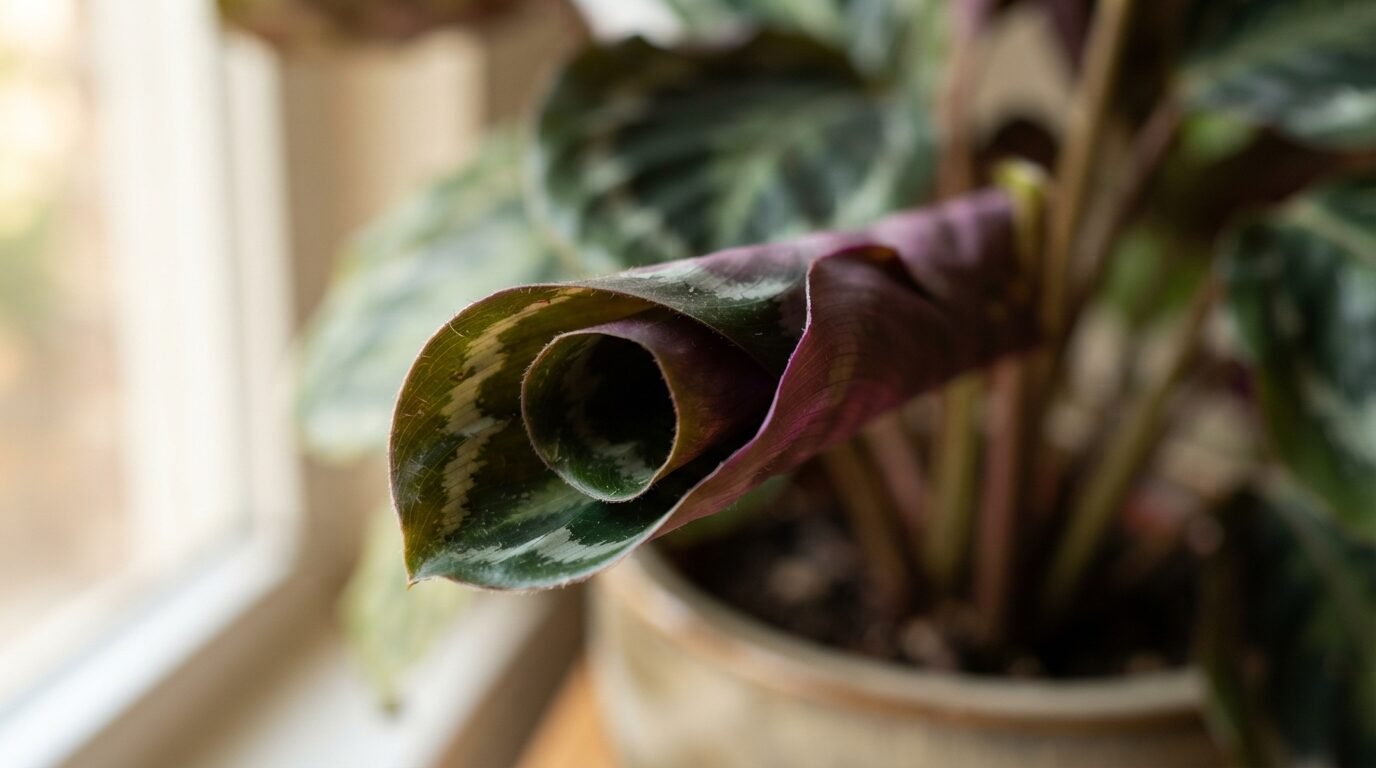
Underwatering is one of the most common causes
Bunnings Australia notes that Calathea leaves can roll into a tube when the potting mix is allowed to dry out too far. The response makes sense: curling reduces the exposed leaf surface and helps the plant limit further moisture loss.
Underwatering is more likely when:
- the potting mix feels dry below the surface;
- the pot feels noticeably lighter than usual;
- several leaves curl at once;
- the foliage also feels limp rather than firm;
- the plant is near a warm window, heater or moving air;
- the problem appeared during hotter weather.
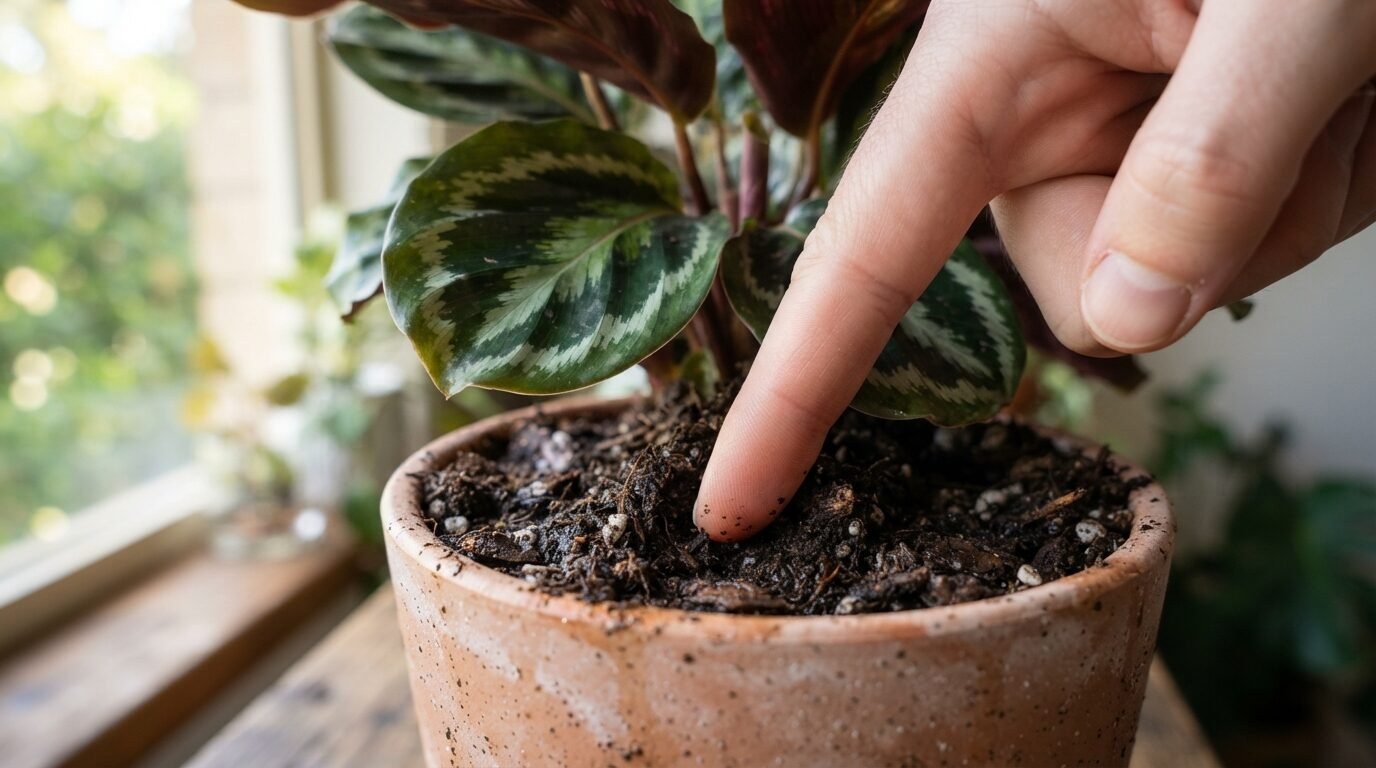
If the mix is genuinely dry, water thoroughly so the root ball becomes evenly moist, then allow excess water to drain away. Do not compensate by leaving the pot standing permanently in water.
Inconsistent watering can curl leaves even when the plant gets enough water overall
Calathea tends to respond better to reasonably consistent moisture than to a repeated cycle of very dry soil followed by saturation. This is common when a plant is watered by calendar rather than by checking the potting mix. A fixed weekly routine may be too frequent in cool weather and not frequent enough during an Australian summer heat spell. Instead, check the root zone and water according to how quickly that particular pot is drying. A dedicated Calathea watering guide will cover this in more depth, but the basic rule is simple: aim for moisture without prolonged saturation.
Low humidity and hot dry air
Gardening Australia identifies curled leaves in Marantaceae such as Calathea as a common response to air that is too hot or dry. This can be especially noticeable in:
- air-conditioned rooms;
- heated rooms in winter;
- apartments with strong western sun;
- plants positioned beside drying vents;
- hot inland climates where indoor air becomes very dry.
Low humidity is more convincing as the cause when the plant also develops dry or crispy leaf edges.
How to improve the environment without making the pot wetter
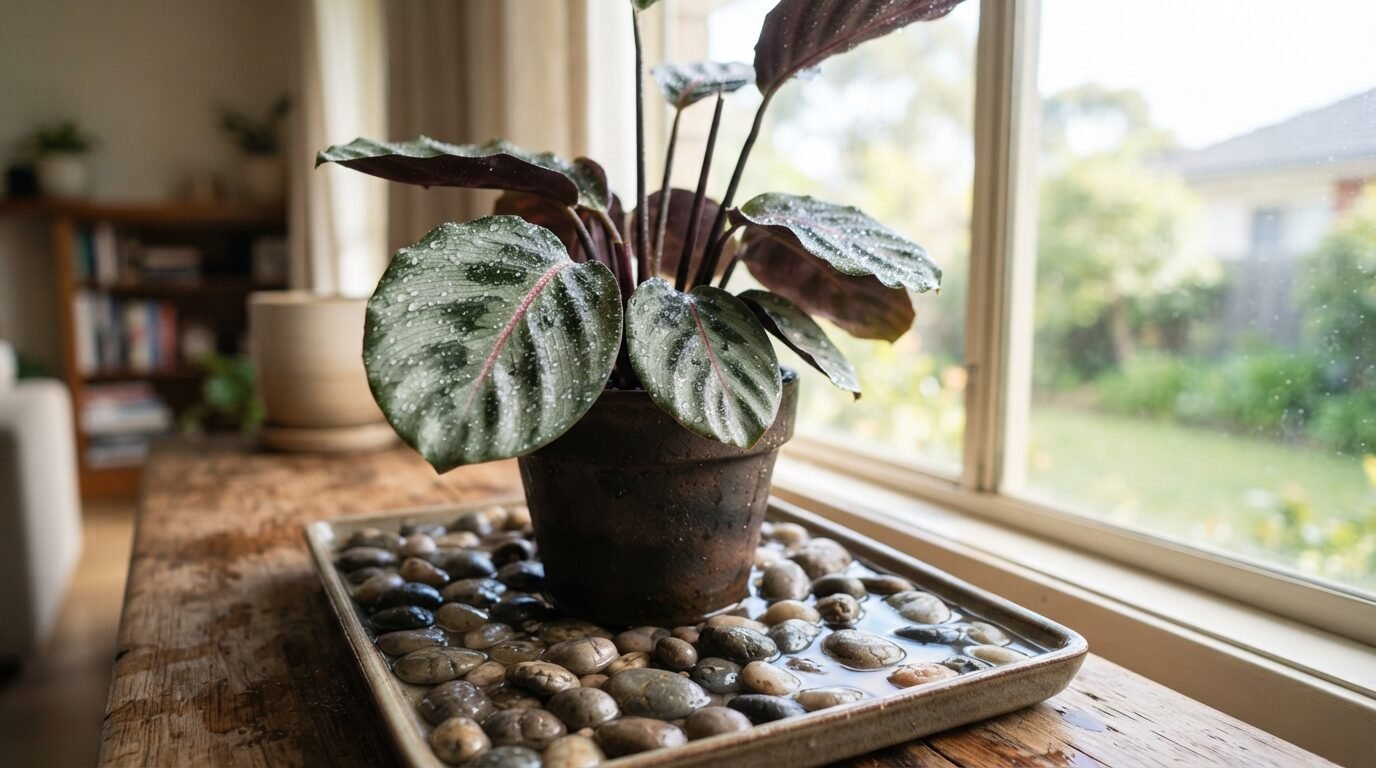
Humidity and soil moisture are not the same thing. If the air is dry, repeatedly watering already-moist potting mix will not solve the problem. Better options include:
- moving the plant away from heating or cooling vents;
- grouping compatible indoor plants together;
- using a humidifier where very dry indoor air is persistent;
- choosing a naturally more humid room if the light is suitable.
Be careful: humid does not need to mean stagnant — avoid creating constantly wet foliage with poor airflow.
Too much direct sun can make Calathea curl
Calatheas generally perform best in bright, filtered or indirect light rather than harsh direct sun. A plant can curl its leaves when strong light increases heat and water loss faster than the roots can replace it. Look for:
- curling strongest on the window-facing side;
- bleached or washed-out colour;
- dry patches or scorched edges;
- a problem that began after moving the plant closer to glass;
- symptoms that worsen on hot sunny afternoons.
Move the plant back from harsh direct sun while keeping it in a bright position. Do not move it from excessive sun into a dark corner. Calathea tolerates lower light better than direct scorching sun, but it still needs useful ambient light for good growth.
For the broader balance of light, watering and positioning, see our Calathea growing and care guide for Australia.
Cold draughts can also cause curling
Calatheas are tropical foliage plants and dislike sudden cold exposure. In cooler parts of Australia, winter problems often come from position rather than outdoor frost itself. Watch for plants sitting:
- against cold window glass;
- beside frequently opened exterior doors;
- in the path of air-conditioning;
- in an unheated room that cools sharply overnight.
If curling appeared after a cold snap but the soil moisture has not changed, check the overnight position before altering the watering routine.
Spider mites can make Calathea leaves curl and deteriorate
Calathea is particularly worth checking for spider mites when conditions are warm and dry. Gardening Australia notes that mites are commonly more active in hot, low-humidity conditions and often feed on the undersides of tender foliage. Early damage can be subtle. Look for:
- fine pale speckling or stippling;
- silvery or lightly bronzed areas;
- tiny moving dots beneath the leaves;
- very fine webbing around leaf edges, veins or stems;
- curling accompanied by progressive discolouration.
Use a magnifying glass if necessary. Spider mites are easy to miss until the population becomes substantial. If mites are present, isolate the plant from nearby indoor plants, physically wash foliage where practical and use an appropriate treatment according to its Australian label. A dedicated Calathea pest guide will cover the control options separately.
Tap water and mineral build-up: possible, but do not blame the tap first
Calathea has a reputation online for supposedly requiring filtered or distilled water. That advice is often presented too absolutely. In an Australian ABC Everyday guide to Calathea/Goeppertia orbifolia, Gardening Australia presenter Craig Miller-Randle specifically challenged the idea that ordinary tap water is automatically unsuitable.
That does not mean water quality is irrelevant. Repeated fertilising, hard water and evaporation can allow soluble salts to accumulate in potting mix. Root-zone salt stress is more likely to show as brown tips or margins, poor growth and general stress than as isolated curling alone. If you suspect build-up:
- look for crusting around the pot or mix surface;
- check whether fertiliser has been applied heavily;
- flush the potting mix thoroughly with suitable water and let it drain;
- avoid adding more fertiliser until the plant stabilises.
Do not automatically switch to expensive bottled water without first checking the more common causes: soil moisture, humidity, light and root condition.
Rootbound Calathea can curl because the root zone dries too quickly
A congested root system holds less usable potting mix and can make the plant difficult to water evenly. You may notice:
- the pot drying unusually quickly;
- roots circling densely inside the container;
- roots emerging from drainage holes;
- water racing through instead of soaking evenly;
- growth slowing despite otherwise suitable conditions.
If the plant is genuinely congested, repot into fresh, free-draining indoor potting mix and avoid moving immediately into an excessively large container.
Wet roots can produce curling too
This is why curling should never be diagnosed from the leaf alone. Roots kept without enough air can become damaged and lose their ability to supply water to the leaves. The canopy can then behave as though it is thirsty even though the potting mix is wet. Suspect root stress rather than simple underwatering when:
- the mix remains wet for a long time;
- the pot has poor or blocked drainage;
- curling appears together with yellow leaves;
- stems or roots are becoming soft;
- the plant continues declining after watering.
If yellowing is becoming the dominant symptom, use our Calathea yellow leaves diagnosis guide rather than repeatedly treating the plant as dry.
Calathea curling versus natural leaf movement
Calathea and related prayer plants naturally change their leaf position between day and night. That movement is not the same as stress curling.
| What you see | More likely explanation |
|---|---|
| Leaves lift or change angle at night, then relax again | Normal daily movement |
| Leaf edges roll inward and remain rolled | Moisture, humidity, heat or root stress |
| Curling plus fine webbing or stippling | Check for spider mites |
| Curling plus crispy margins | Dry air, inconsistent moisture, heat or salt stress |
| Curling plus yellowing while soil remains wet | Check drainage and roots |
Why Calathea can suddenly curl in an Australian summer
A plant may appear perfectly stable for months and then curl during the first stretch of hot weather. Possible reasons include:
- the pot drying faster than it did in spring;
- stronger afternoon sun reaching further through a window;
- air-conditioning lowering indoor humidity;
- spider mites multiplying in warm, dry conditions.
Do not assume the plant suddenly needs a completely different care routine. Often it needs the same basic conditions delivered more consistently under faster summer drying.
Why Calathea can curl in winter
Winter curling often has a different pattern. Possible triggers include:
- cold window exposure;
- heater-dried indoor air;
- reduced light;
- watering at the same frequency even though the pot is drying more slowly.
This is why seasonal watering should be based on the potting mix rather than the calendar.
Should you mist curled Calathea leaves?
Misting can temporarily wet the leaf surface, but it does not reliably correct persistently dry room air. If the plant repeatedly curls because of low humidity, address the room environment rather than treating misting as the main solution. More importantly, do not mist a plant while ignoring dry potting mix or an active spider-mite infestation.
Should you cut off curled leaves?
Do not remove a leaf simply because it has curled. If the cause is corrected and the leaf remains largely healthy, it can continue contributing to the plant. Remove a leaf when it is:
- mostly dead or badly scorched;
- severely damaged by pests;
- yellowing and collapsing;
- damaged enough that keeping it adds little value.
Use clean cutting tools and remove the leaf at its stem rather than tearing it away.
Do some Calathea varieties curl more readily?
Different Calatheas do vary in how forgiving they are of household conditions. Some thin-leaved, highly patterned cultivars show dry-air and moisture stress quickly, while others adapt more easily to ordinary indoor conditions. If you are choosing a plant rather than troubleshooting an existing one, our guide to Calathea varieties for Australian homes can help you compare forms before buying.
A practical recovery plan for curled Calathea leaves
CALATHEA CURLING RECOVERY PLAN
The last point is easy to overlook. Moving the plant, repotting it, fertilising it, changing the water and treating for pests on the same afternoon makes it almost impossible to know what caused the original problem — and adds another layer of stress.
Frequently asked questions
Why are my Calathea leaves curling up?
Calathea leaves most often curl because the plant is losing moisture faster than the roots can replace it. Check dry potting mix first, then consider low humidity, heat, direct sun, cold draughts and spider mites. If the soil is already wet, inspect drainage and root health instead of adding more water.
Will Calathea leaves uncurl after watering?
Leaves may relax after watering when simple dryness is the cause and the roots remain healthy. Recovery is less predictable if the leaf has been badly scorched, roots are damaged or pests are involved. Check the soil before assuming every curled leaf needs water.
Does low humidity make Calathea leaves curl?
Yes. Calathea and related prayer plants can curl or develop dry edges in hot, dry air. Move the plant away from heaters and air-conditioning, group compatible plants or use a humidifier if the room remains persistently dry.
Can too much water cause Calathea leaves to curl?
Yes. Saturated roots can lose their ability to function properly, so the foliage may show water-stress symptoms even while the potting mix is wet. Curling combined with yellow leaves, persistently wet soil or soft roots points toward drainage or root problems rather than simple thirst.
Do Calatheas need filtered water in Australia?
Not universally. Australian horticultural guidance does not support the idea that every Calathea must receive filtered water. Mineral or fertiliser salts can accumulate in some potting mixes and contribute to leaf-edge stress, but moisture, humidity, light and root health should usually be checked first.
Can spider mites cause Calathea leaves to curl?
Yes. Spider mites feed on tender foliage and are particularly troublesome in warm, dry indoor conditions. Look beneath leaves for fine pale stippling, bronzing, tiny moving mites or delicate webbing, then isolate and treat the plant if mites are confirmed.
Why does my Calathea curl more in summer?
Australian summer conditions can make pots dry faster, increase heat through windows and encourage spider mites where indoor air is dry. Check the plant more frequently during hot periods, but water according to soil moisture rather than simply increasing watering on a fixed schedule.
Is Calathea leaf curling the same as prayer-plant movement?
No. Healthy Calathea leaves naturally change their angle between day and night. Stress curling usually causes the leaf edges or blade to remain rolled or folded and is often accompanied by dryness, discolouration, pest damage or another sign that conditions are unsuitable.
- Calathea growing & care guide for Australia — the complete hub for light, water and positioning.
- Calathea yellow leaves: causes & easy fixes — when yellowing is the main symptom.
- Best Calathea varieties for Australian homes — compare forms before you buy.


