
Heliconia ‘Hot Rio Nights’: Size, Flowers and Growing Guide for Australian Gardens

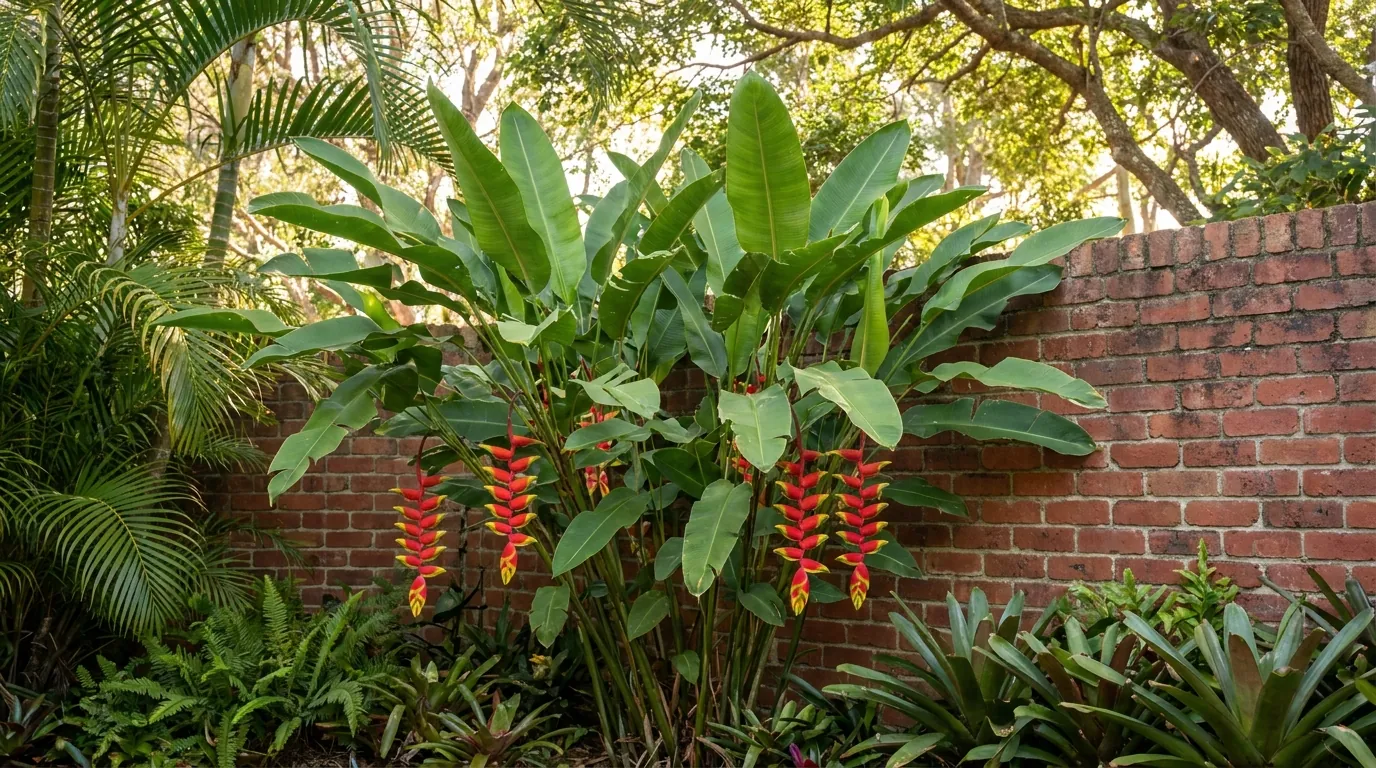
‘Hot Rio Nights’ is the kind of Heliconia that can completely change the scale of a tropical garden.
It is not a compact edging plant and it is not one of the smaller Heliconia psittacorum types. It is a large, upright hybrid between Heliconia bihai and Heliconia caribaea, selected for strong vertical growth, dense clumping and large red inflorescences.
Australian growers commonly list it at around 3–4 metres tall, with Plantmark giving an indicative spread of about 1–1.5 metres and Bamboo Land describing it as tight-clumping and upright. Some Australian nursery listings allow for a wider mature clump, so width should be treated as a planning guide rather than a hard limit.
That makes ‘Hot Rio Nights’ best suited to gardeners who actually want height:
- screening
- a tropical backdrop
- a bold feature clump
- privacy behind a pool or patio
- height behind lower gingers and foliage plants
If you are comparing it with smaller species or cultivars, start with our Best Heliconia Varieties for Australian Gardens guide before choosing by flower colour alone.
Quick Answer: What Is Heliconia ‘Hot Rio Nights’?
‘Hot Rio Nights’ is a cultivated hybrid Heliconia with the parentage:
Heliconia bihai × Heliconia caribaea
Some nurseries simplify the botanical name to Heliconia hybrida ‘Hot Rio Nights’, but it should not be confused with Heliconia psittacorum.
NParks records the plant as being of horticultural origin from a hybrid cross between H. caribaea and H. bihai. Australian growers Bamboo Land and Plantmark use the same hybrid identity.
In Australian gardens it is typically grown for:
- tall upright tropical foliage
- large red to deep-red bracts
- dense clumping growth
- screening
- dramatic background planting
- warm-climate feature beds
Hot Rio Nights at a Glance
| Feature | ‘Hot Rio Nights’ |
|---|---|
| Botanical identity | Heliconia bihai × H. caribaea ‘Hot Rio Nights’ |
| Plant type | Large clumping tropical perennial |
| Typical height | About 3–4 m |
| Indicative width | About 1–1.5 m in some nursery specifications; can spread wider with age and conditions |
| Habit | Upright, clumping, relatively tidy |
| Light | Full sun to part shade |
| Soil | Moist, fertile, well drained |
| Climate | Tropical and subtropical; warm protected temperate sites possible |
| Flowering | Mainly summer into autumn in Australian nursery guidance |
| Landscape use | Screening, backdrop, feature clump, tropical garden |
| Frost | Frost tender; protect from cold exposure |
This table is an Australian planning guide, not a promise of final size in every garden. Bamboo Land lists 3–4 m as typical height and Plantmark gives approximately 3–4 m high by 1–1.5 m wide, while another Australian nursery lists a possible spread of 2–3 m.
Is Hot Rio Nights Really a Hybrid?
Yes.
This is worth stating clearly because online listings sometimes shorten the name to “Heliconia hybrida” or simply “Heliconia Hot Rio Nights”.
The hybrid origin is well supported.
NParks describes it as a cultivar of a hybrid cross between Heliconia caribaea and H. bihai. Bamboo Land lists it as Heliconia bihai × caribaea ‘Hot Rio Nights’, while Plantmark uses the horticultural shorthand Heliconia hybrida ‘Hot Rio Nights’.
Why the name matters
Correct identification helps you predict the plant’s scale.
A gardener expecting a compact H. psittacorum-type Heliconia could seriously underestimate how tall ‘Hot Rio Nights’ becomes.
This is a large landscape Heliconia, not a small patio filler.
How Big Does Hot Rio Nights Grow?
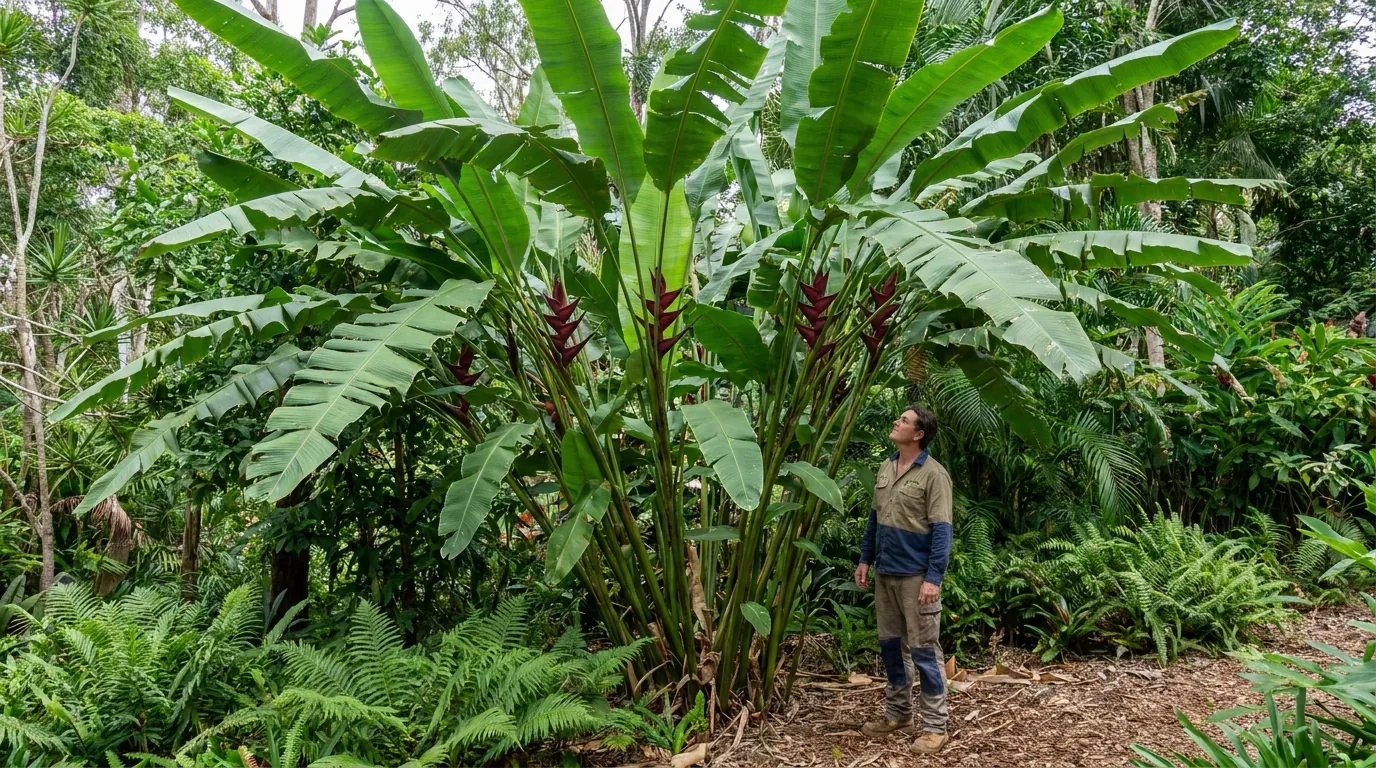
For most landscape planning, allow for a plant around 3–4 metres high once established in suitable conditions.
Bamboo Land lists a typical height of 3–4 m. Plantmark also gives approximately 3–4 m high, while Sunshine Coast Plants states that established plants can reach up to about 4.5 m.
How wide does it get?
This is less consistent between nursery references.
Plantmark gives approximately 1–1.5 m wide, while another Australian nursery lists 2–3 m.
The useful conclusion is not that one source must be wrong.
Heliconias spread through rhizomes and form clumps. Width depends on:
- plant age
- available ground
- moisture
- climate
- nutrition
- whether new shoots are allowed to expand
- whether the clump is divided or contained
For placement, allow more space than the nursery pot suggests and expect the footprint to increase over time.
What Do Hot Rio Nights Flowers Look Like?
The display is bold rather than delicate.
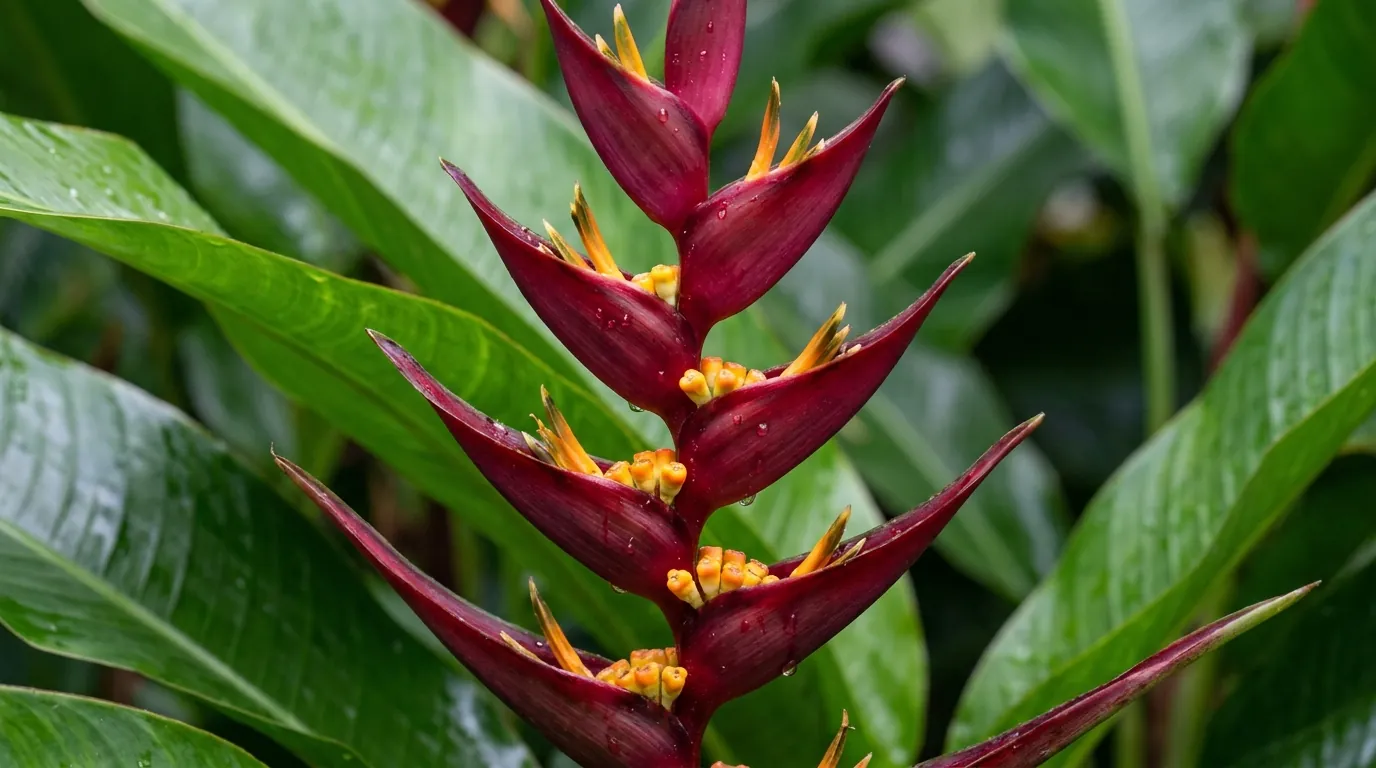
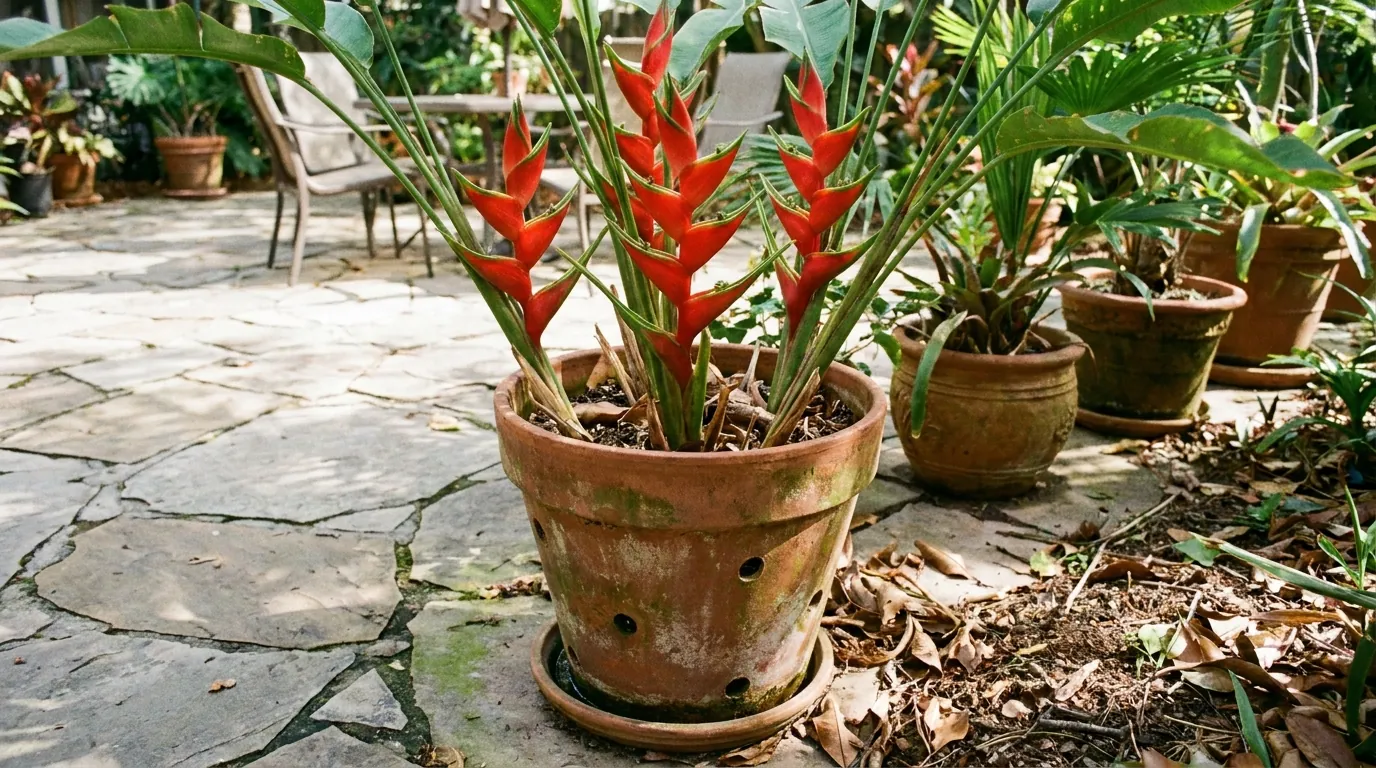
Bamboo Land describes massive bright-red inflorescences that can approach half a metre long. NParks describes dark-red inflorescences up to around 30 cm with multiple bracts and white flowers. Plantmark describes the bracts as deep burgundy to rich red.
The colourful structures most people call the “flowers” are primarily bracts.
The true flowers sit within them.
When does Hot Rio Nights flower?
Australian nursery guidance commonly places flowering in the warmer part of the year.
Bamboo Land lists summer to autumn, while Nurseries Online similarly notes summer through autumn, with spring flowering possible under favourable conditions.
Do not treat those months as a fixed national calendar.
Flowering timing changes with:
- climate
- plant maturity
- warmth
- light
- establishment
- local seasonal conditions
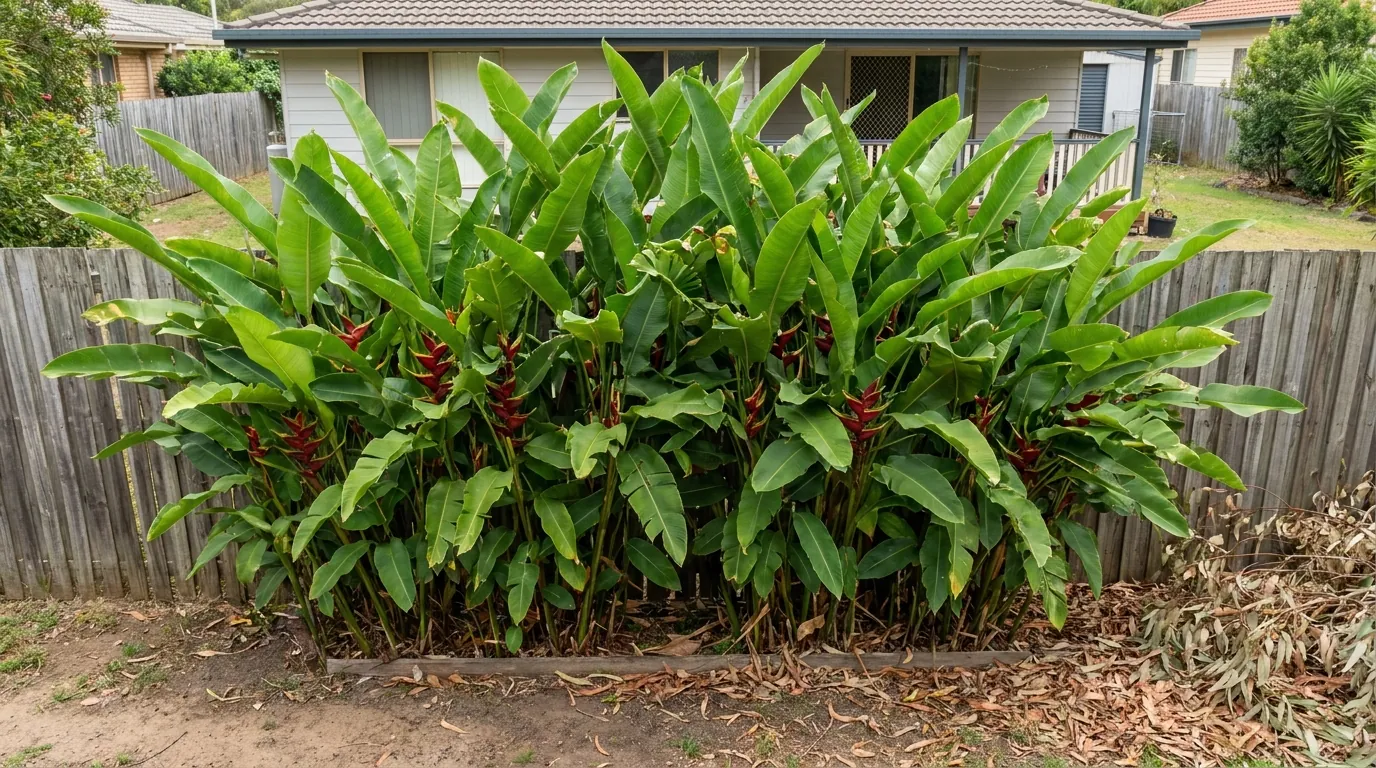
Is Hot Rio Nights Good for Screening?
Yes, where its mature scale suits the site.
Bamboo Land specifically recommends it for screening and blocking neighbours because of its upright, clumping growth.
It works best when you want a tall tropical screen, not a formal clipped hedge.
Useful positions include:
- behind pool landscaping
- along a warm boundary
- behind lower tropical foliage
- screening an outdoor entertaining area
- hiding a plain fence
- creating a tall backdrop behind gingers or cordylines
It is not a narrow hedge by default
Do not plant it assuming the clump will remain the width of its original nursery pot.
Rhizomes produce new shoots and the clump expands.
If the available strip is extremely narrow, a 3–4 m Heliconia may be the wrong plant even if its flowers are perfect.
For comparison with smaller and differently shaped Heliconias, use our Best Heliconia Varieties for Australian Gardens guide.
Where Can Hot Rio Nights Grow in Australia?
Its easiest climates are tropical and subtropical.
Bamboo Land lists tropical and subtropical climates as preferred but also notes that it can grow in warm protected temperate locations such as coastal Sydney. Nurseries Online makes the same general point: Sydney can be possible where a warm, sheltered microclimate provides enough heat and protection.
Tropical northern Australia
This is the most natural fit.
Long warm seasons support:
- strong foliage growth
- rapid clump development
- reliable warm-season flowering
- quicker establishment
Good drainage still matters. Tropical rain does not make permanent waterlogging desirable.
Subtropical Queensland and northern NSW
These areas are also well suited where the plant is protected from damaging wind and the soil remains fertile and moist without staying stagnant.
Bamboo Land specifically identifies coastal Queensland, including south-east Queensland, as suitable territory for ‘Hot Rio Nights’.
Coastal Sydney and warm protected temperate gardens
Possible, but site selection matters more.
A warm courtyard, sheltered north-facing or protected position can perform very differently from an exposed inland garden in the same general region.
Bamboo Land specifically uses coastal Sydney as an example of a warm protected temperate area where the cultivar can be grown.
Frost-prone gardens
Treat ‘Hot Rio Nights’ as frost tender.
Mountain View Nursery lists it as frost tender, and its tropical hybrid background means repeated cold exposure is not what this cultivar is selected for.
Do not sell yourself the idea that “temperate tolerant” means “frost-proof”.
Does Hot Rio Nights Need Full Sun?
It can grow from full sun to part shade.
Bamboo Land and Plantmark both list that range, and NParks lists full sun and semi-shade.
The useful question is not simply “sun or shade?”
It is:
How much heat, wind and moisture stress comes with that sun in this particular garden?
In humid tropical and subtropical gardens
Strong light can support vigorous growth, but afternoon exposure combined with reflective paving, hot walls or drying wind can damage foliage.
In cooler protected gardens
A brighter position may help provide the warmth and light needed for stronger growth and flowering.
Nurseries Online recommends more shade in warmer climates and somewhat more sun in cooler conditions, which is a practical way to think about placement rather than using one rule nationally.
Does Wind Matter?
Yes, especially if appearance matters.
Heliconias have large leaves. Strong wind can split and shred them.
The plant may remain alive and vigorous while looking untidy.
A sheltered location is especially valuable when ‘Hot Rio Nights’ is being used as:
- a feature plant
- pool landscaping
- a formal tropical backdrop
- a screen visible from living areas
Mountain View Nursery specifically recommends a sheltered site to minimise leaf damage from wind.
What Soil Does Hot Rio Nights Prefer?
Think fertile and moisture-retentive, but drained.
Bamboo Land recommends moist, well-drained soil rich in organic matter. Plantmark lists loam and well-drained soil, while NParks records moist, fertile loamy and well-drained root-zone preferences.
That means two common mistakes sit at opposite ends:
- dry, exhausted soil that cannot support large tropical foliage
- waterlogged soil where the root zone remains stagnant
Organic matter helps, but drainage still matters
Compost and organic mulch can help maintain a more even root-zone environment.
Do not convert a poorly drained planting hole into a permanently wet bowl by adding rich material without considering where excess water goes.
For broader species-level planting and care principles, use our Heliconia growing and care guide rather than duplicating the full general-care article here.
How Often Should Hot Rio Nights Be Watered?
There should not be one fixed schedule for every Australian garden.
‘Hot Rio Nights’ likes moisture, but actual watering frequency depends on:
- rainfall
- temperature
- soil texture
- mulch
- establishment
- sun exposure
- wind
- container versus ground
- plant size
NParks lists moderate to high water preference together with moist, well-drained soils. Bamboo Land likewise recommends moist, well-drained growing conditions.
Newly planted plants
Keep the root zone from repeatedly drying hard during establishment.
Established clumps
Watch the plant and soil rather than watering because a calendar says another week has passed.
A hot exposed clump in sandy soil behaves differently from one in heavier soil receiving regular summer rain.
Does Hot Rio Nights Need Fertiliser?
Large tropical foliage and repeated new shoots require resources, but fertiliser is not a substitute for suitable climate, water or root conditions.
If the soil is poor and active growth is weak, an appropriate fertiliser used according to its label may support growth.
Do not increase rates simply because you want faster screening.
If foliage is yellowing, distorted, spotted or failing to flower, diagnose the cause first. Our Heliconia troubleshooting guide owns that intent.
How Fast Does Hot Rio Nights Grow?
In suitable warmth it can establish quickly compared with many woody screening plants.
Bamboo Land describes the cultivar as vigorous and tight clumping, while Nurseries Online characterises growth as fast under good conditions.
But do not turn “fast” into a made-up centimetres-per-year promise.
Growth speed depends on:
- starting rhizome or pot size
- soil warmth
- moisture
- available light
- climate
- nutrition
- root competition
- establishment
A useful measure is not only height.
For screening, the number of strong new shoots and how quickly the clump fills laterally can matter as much as the tallest stem.
Can Hot Rio Nights Grow in a Pot?
Technically, yes — but scale changes the recommendation.
Nurseries Online notes that ‘Hot Rio Nights’ can be grown in containers.
That does not make it an ideal long-term plant for a small decorative pot.
A cultivar capable of reaching 3–4 m requires:
- substantial root volume
- stable container weight
- adequate moisture
- reliable drainage
- enough space above and around it
A large outdoor container can work where ground planting is impossible, but expect more maintenance and eventual root restriction than in a suitable garden bed.
For a small balcony or compact courtyard, one of the smaller Heliconia types in our Heliconia varieties guide may be a better fit.
Does Hot Rio Nights Spread?
Yes, by clump expansion.
Heliconias grow from rhizomes, and new shoots emerge around the established plant.
NParks lists division as the propagation method for the cultivar, reflecting that rhizomatous clumping habit.
Is it invasive?
Do not confuse “spreads into a clump” with a formal invasive-species designation.
The useful garden question is whether the clump is occupying more space than you want.
Where space is limited:
- monitor new shoots
- maintain accessible edges
- divide the clump when necessary
- avoid planting directly against structures without enough working room
What Should Be Planted With Hot Rio Nights?
Because ‘Hot Rio Nights’ is tall, it works visually as a back layer.
Lower tropical plants can create a more natural transition beneath it.
Potential combinations include:
- ornamental gingers
- lower Heliconias
- Cordylines
- selected bananas where space permits
- broad-leaved subtropical foliage plants
The exact choice should reflect climate, scale and moisture rather than appearance alone.
For the full design discussion, use our Companion Plants for Heliconias in Australia guide.
Why Is My Hot Rio Nights Not Flowering?
Do not assume the cultivar is defective.
Poor flowering can result from broader Heliconia issues such as:
- insufficient warmth
- inadequate light
- a plant that is not yet established
- root-zone stress
- unsuitable nutrition
- cold damage
This cultivar page should not duplicate the troubleshooting cluster.
If the plant is healthy-looking but refusing to flower, or if yellow leaves, spots, pests or decline appear, move to our Heliconia troubleshooting guide.
Hot Rio Nights or a Smaller Heliconia: Which Fits Better?
Choose ‘Hot Rio Nights’ when you want:
- 3–4 m of tropical height
- a large red-bracted feature
- a tall screen
- an upright background clump
- enough garden space for rhizome expansion
Choose a smaller Heliconia when you need:
- a compact bed
- a modest patio pot
- planting below windows
- easier winter protection
- less vertical dominance
This is why cultivar selection should start with mature dimensions, not flower colour.
Our Best Heliconia Varieties for Australian Gardens guide compares other forms for different spaces and climates.
Frequently Asked Questions
What is Heliconia ‘Hot Rio Nights’?
It is a cultivated hybrid between Heliconia bihai and Heliconia caribaea. Some nurseries list it under the horticultural shorthand Heliconia hybrida, but it is not a Heliconia psittacorum cultivar.
How tall does Hot Rio Nights Heliconia grow?
Australian growers commonly list it at about 3–4 metres tall. Sunshine Coast Plants notes that established plants can reach approximately 4.5 metres in suitable conditions.
How wide does Hot Rio Nights grow?
Plantmark gives an approximate width of 1–1.5 metres, while some other Australian nursery listings allow for wider established clumps. Because Heliconias spread by rhizomes, allow additional room where the plant can mature naturally.
Can Hot Rio Nights grow in Sydney?
Yes, in the right microclimate. Bamboo Land specifically lists warm protected temperate areas such as coastal Sydney as possible, but the plant still needs warmth and protection from frost and damaging cold.
Does Hot Rio Nights need full sun?
It grows in full sun to part shade. The better choice depends on local climate, heat exposure, moisture and wind. In very warm areas some afternoon protection can help maintain foliage quality.
Is Hot Rio Nights frost tolerant?
Treat it as frost tender. It is best in tropical, subtropical or warm protected sites rather than exposed frost-prone gardens.
When does Hot Rio Nights flower?
Australian nursery guidance commonly places flowering from summer into autumn, with timing shifting according to climate and growing conditions.
Is Hot Rio Nights good for screening?
Yes. Its tall upright stems and tight clumping habit make it useful as a tropical screen where there is enough width and height for the mature plant.
Can Hot Rio Nights grow in a pot?
Yes, but it needs a large, stable container because it is a substantial Heliconia. Long-term container plants require more attention to root space, moisture and drainage than plants growing freely in the ground.
Why is my Hot Rio Nights Heliconia not flowering?
Possible causes include insufficient warmth or light, establishment stress, root-zone problems or unsuitable nutrition. Diagnose the pattern rather than immediately applying more fertiliser; use our Heliconia troubleshooting guide for the detailed diagnostic process.
Final Thoughts
‘Hot Rio Nights’ is a cultivar for gardeners who want the large end of the Heliconia scale.
Its hybrid parentage — H. bihai × H. caribaea — produces an upright, strongly clumping plant commonly listed around 3–4 m tall, carrying dramatic red to burgundy bracts during the warmer flowering season.
Its strengths are also the things you need to plan for:
- substantial height
- expanding rhizomatous clump
- high moisture demand during active growth
- preference for warmth
- large foliage that benefits from wind protection
- frost sensitivity
Use it when you genuinely want screening, tropical height or a major background feature.
If you are still deciding which Heliconia fits your climate and available space, start with our Best Heliconia Varieties for Australian Gardens guide.
If an existing plant is yellowing, failing to flower or developing pests or leaf problems, use our Heliconia troubleshooting guide instead.


