Stop thinking you need a massive backyard to grow a stunning native garden. Your bare balcony or concrete patio is actually prime real estate! for your Grevillea vibrant Canberra Gem foliage.
Can You Grow a Canberra Gem in a Container?
The short answer is: 100% yes!
My Experience Canberra Gem in Pots!
After growing Grevillea Canberra Gem in containers for several seasons, I have found that drainage is far more important than watering frequency.
- The Core Issue: Most potted grevilleas fail because excess moisture remains around the roots for too long, not because the plant was watered too often.
- The Winning Setup: Plants grown in large pots with excellent drainage, a coarse native potting mix, and plenty of sunlight consistently outperform those in heavy mixes.
If you focus on drainage first and watering second, you will avoid most of the common problems.
If you’re just starting your gardening journey, head back to our Canberra Gem Hub Page.
View the Complete Care Guide →Growing Canberra Gem in Different Australian Climates
While Canberra Gem adapts well to much of Australia, growing conditions can vary significantly between regions.
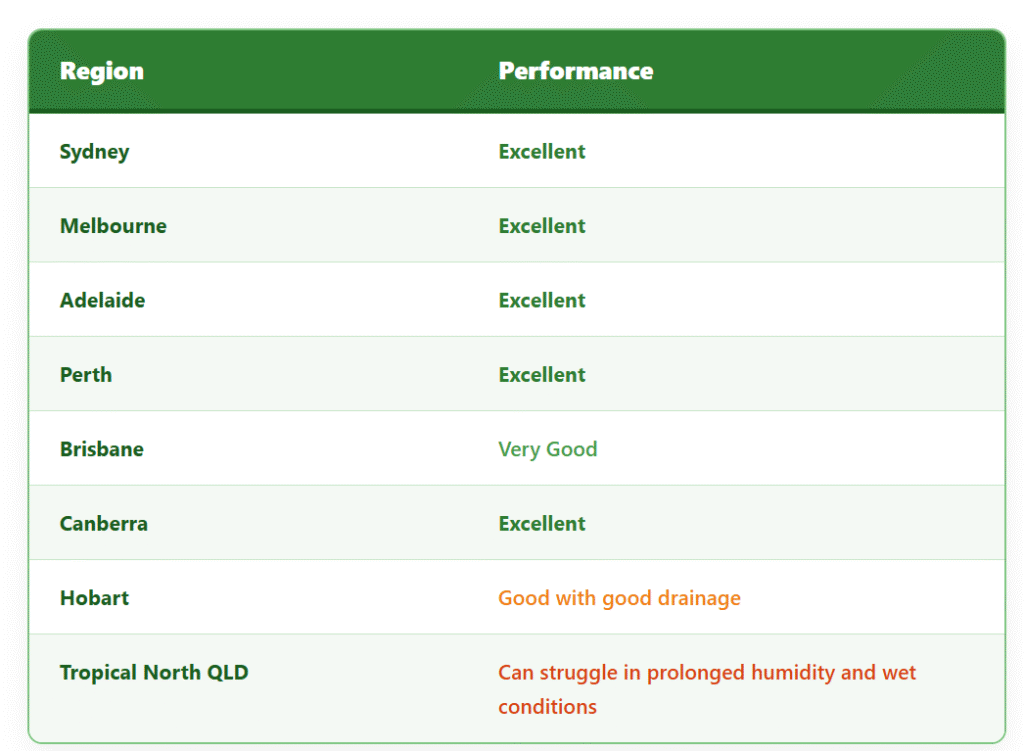
In hotter regions, containers may require more frequent watering during summer. In cooler regions, protecting roots from prolonged winter wetness is often the bigger challenge.
(Need the full, ground-up basics before you start potting? Head back to our [Master Canberra Gem Care Hub Page] for the complete botanical blueprint.)
Choosing the Right Pot Size and Drainage
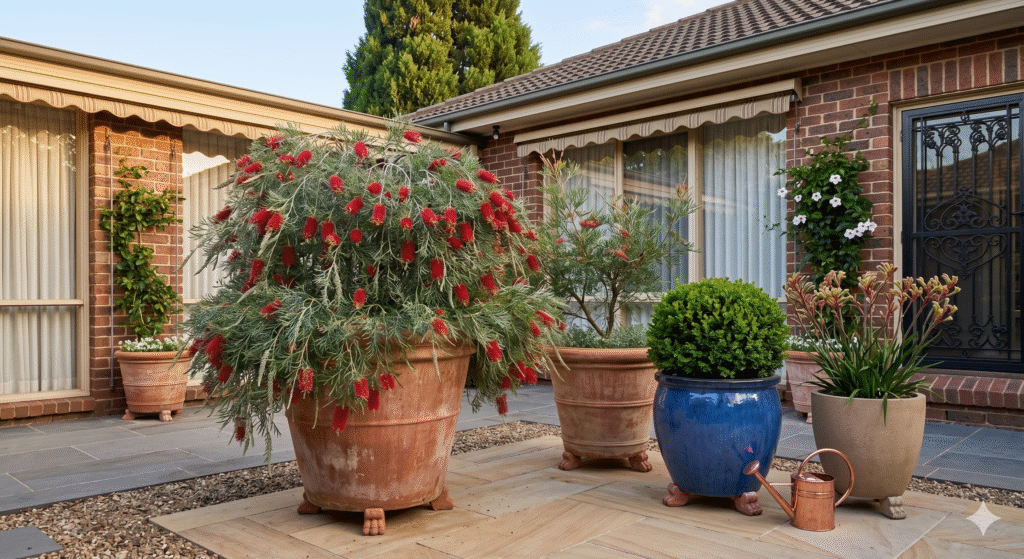
You cannot just throw a native shrub into any cheap plastic bucket and hope for the best. You need a container that breathes, drains instantly, and offers enough room for the aggressive roots to anchor without baking in the summer sun.
- Size Matters: Start with a pot that is at least 40cm to 50cm wide. Too small, and the roots will boil; too big, and the excess soil will hold stagnant water.
- The Golden Rule of Drainage: Elevate your pot! Patios and balconies create a vacuum seal under flat-bottomed pots, trapping water and causing root rot. Grab a set of heavy-duty Pot Feet here to ensure air constantly circulates underneath.
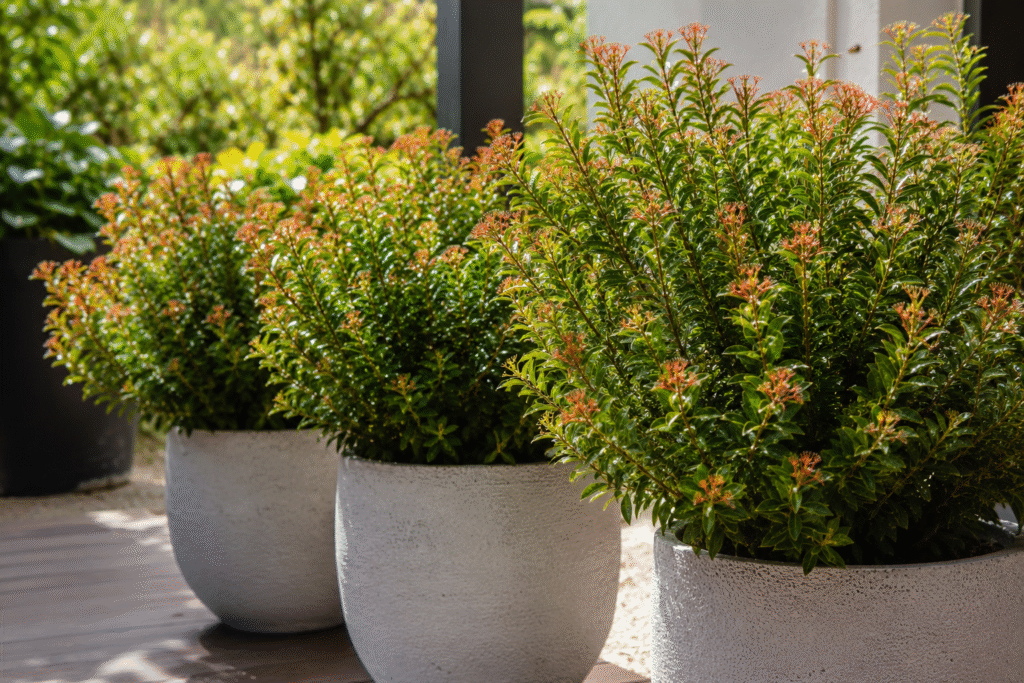
Planning to block out the street or neighbors? To get a dense, gap-free privacy screen, you must get your spacing right.
Read our Guide: How to Grow a Dense Canberra Gem HedgeThe Best Potting Mix Recipe for Potted Grevilleas
Stop right there. Do not use that leftover bag of standard potting mix or tomato compost sitting in your shed. Regular potting soils are packed with high levels of phosphorus, which acts like slow-acting poison to Grevilleas.
To mimic their natural sandy, free-draining habitat in a container, you must build a specific soil profile.
The Ultimate Native Container Recipe:
- 70% Premium Native Potting Mix: This is specifically formulated to be free-draining and incredibly low in phosphorus. [Stock up on Certified Native Mix here].
- 30% Horticultural Perlite: This is your secret weapon. Blending perlite into the mix creates massive air pockets, ensuring water flushes straight through the pot and roots can breathe. [Get Coarse Perlite here].
- Zero Standard Fertiliser: If you must feed your plant, only use a specialized native liquid tonic (like a seaweed extract) to settle the roots.
What Size Pot Do I Need?
Choosing the correct pot size is a matter of life and death for a native plant. If you place a young plant directly into a massive tub, the excess soil holds onto too much water, drowning the root system.
The secret to a thriving Canberra Gem is to “step up” your container size gradually as the root ball expands.
Young Plant
Perfect for recent nursery purchases. Provides just enough room for roots to establish without waterlogging.
Medium Plant
The vital upgrade stage. Move to this size once roots begin circling the bottom of the young pot.
Mature Plant
The final home. A heavy, wide base to prevent the mature shrub from blowing over in heavy balcony winds.
⚠️ Pro Visual Tip: Always ensure your chosen pot has at least 3 to 4 large drainage holes. If you are resting a large 600mm+ pot on concrete, you must use pot feet to elevate it and let the soil breathe.
Instant Balcony Makeovers
If a live Canberra Gem doesn’t fit your lifestyle—whether your balcony is a wind tunnel, lacks direct sun, or you simply want to avoid the heavy lifting of soil and ceramic pots—you don’t have to give up on a lush, green aesthetic.
You can bypass the complex soil chemistry and strict watering routines entirely. For an instant, high-impact privacy screen that stays vibrant year-round, [Shop our collection of ultra-realistic faux potted plants and artificial hedges]. You get a perfect, maintenance-free green space without a single drop of water or a trace of soil.
The Ground vs. The Pot: Why the Rules Change
You might be wondering: Can I treat a potted Canberra Gem the same way I treat one in a garden bed? No.
In the ground, a plant’s roots can travel to find water and regulate their own temperature. In a container, the plant is entirely at your mercy.
The pot creates a “micro-climate” where soil heats up faster, dries out rapidly, and depletes nutrients quickly. Success with potted natives requires a shift from passive gardening to active “container management.”
Canberra Gem: Landscaping vs. Container Growing
To read more on this topic, click the link below.
Read there: How to Grow a Dense Grevillea Canberra Gem Hedge Spacing & Pruninge →Canberra Gem vs Other Popular Balcony Plants
If your goal is privacy, colour, and year-round greenery, Canberra Gem is one of the strongest performers for Australian balconies and courtyards.
For gardeners wanting a combination of vibrant flowers, dense foliage, and fast growth, Canberra Gem remains one of the most versatile Australian native choices for container growing.
Canberra Gem in Pots: Diagnostic Guide
Container environments act as micro-climates. When your potted native shows signs of stress, use this visual matrix to instantly identify the cause and apply the exact fix needed to save it.
🍂 Yellow Leaves
Likely Cause: Overwatering or phosphorus toxicity.
🔥 Brown Tips
Likely Cause: Heat stress or extreme drying balcony winds.
🌤️ Poor Flowering
Likely Cause: Lack of adequate sunlight.
💧 Root Rot (Wilting)
Likely Cause: Poor drainage and suffocated roots.
🪴 Slow, Stunted Growth
Likely Cause: The pot is too small (rootbound).
Planning to block out the street or neighbors? To get a dense, gap-free privacy screen, you must get your spacing right.
Read our Guide: How to Grow a Dense Canberra Gem HedgeThe Final Verdict: Your Balcony, Your Rules
Growing Grevillea Canberra Gem in a pot isn’t a compromise—it gives you greater control over soil, drainage, sunlight, and plant health.
Success comes down to a few key factors: choose a large pot with excellent drainage, use a premium low-phosphorus native potting mix, and avoid overwatering.
Position your plant in full sun and rotate or relocate the container if strong winds or excessive heat become an issue.
Your Balcony Action Plan
- Choose a large, well-drained pot and elevate it on pot feet.
- Use a quality native potting mix that is low in phosphorus.
- Water consistently, but allow excess water to drain freely.
- Place the pot in a sunny position with at least 6 hours of direct sunlight daily.
- Feed only with fertilisers formulated for Australian native plants.
- Prune lightly after flowering to maintain a dense, compact shape.
FAQS about Can Grevillea <strong>Canberra Gem in Pots</strong>?
Why is my potted Canberra Gem turning yellow?
This is usually phosphorus toxicity caused by using standard potting mix. Australian natives require a specialized, low-phosphorus Native Potting Mix. Flush the soil heavily and repot if necessary.
How often should I water my pot in an Aussie summer?
Balcony pots dry out drastically faster than garden beds. During heatwaves, check the soil daily. Water thoroughly when the top 5cm of the mix feels dry to the touch, ensuring excess water freely escapes the bottom.
My high-rise balcony gets heavy winds. Will it survive?
Yes, but wind creates a “wind-tunnel effect” that accelerates soil drying and strips moisture from the foliage. You will need to increase your watering frequency and optionally use a heavy terracotta pot so it doesn’t blow over.
Should I put gravel at the bottom of the pot for drainage?
Absolutely not. This creates a “perched water table,” actually trapping water closer to the roots and causing root rot. Fill the entire pot with a uniform, free-draining native mix and perlite blend.
Can I keep it small so it doesn’t take over my courtyard?
Yes! Potted Grevilleas respond excellently to tip-pruning. Trimming the soft, new growth immediately after the spring flowering flush keeps the plant dense, compact, and perfectly scaled to your balcony size.
What size pot do I need for a Canberra Gem?
Do not plant a small tube-stock directly into a massive tub, or the excess soil will stay dangerously wet. Start with a pot slightly larger than the nursery pot (around 40cm wide) and step up gradually as it grows.
My pot sits on a concrete slab. Is the heat an issue?
Concrete radiates extreme heat that can literally cook the roots inside a pot. You must elevate the container on “pot feet” to allow cooling airflow underneath and prevent the pot from acting as an oven.
Why are the leaves wilting even though the soil is wet?
This is a classic sign of suffocation (root rot). Check if your balcony tiles have created a vacuum seal against the bottom drainage holes. Elevate the pot immediately so excess water can drain away.
How do I fertilise it since nutrients wash out of pots?
While potted plants need more frequent feeding than ground plants, you must still be cautious. Apply a slow-release Native Granular fertiliser once in early spring, and supplement with a liquid seaweed root tonic monthly.
The potting mix has become hard and water runs straight off.
Old potting mix can become “hydrophobic,” actively repelling water. Plunge the entire pot into a larger tub of water for 30 minutes to rehydrate the peat, then treat the topsoil with a native-safe soil wetter.
Is terracotta or plastic better for Australian balconies?
Terracotta breathes beautifully (protecting against root rot) but dries out faster in summer. Lightweight fiberglass is often the best compromise for balconies, offering durability without the extreme weight or moisture loss.
Can I grow it indoors if my balcony gets no sun?
No. Grevilleas need at least 6 to 8 hours of direct sunlight to thrive and produce flowers. If your space is heavily shaded, it is far better to invest in premium artificial greenery instead of fighting a losing battle.