Need to block out noisy neighbours, but don’t want to spend every weekend watering and pruning a fussy hedge?
Meet the Babingtonia Virgata (commonly known as the Twiggy Heath Myrtle).
Tired of plants that struggle in Australia’s harsh climate? This tough native shrub thrives where others fail, growing quickly into a dense evergreen screen and rewarding you with masses of beautiful white flowers.
But there is a catch.
If you drop it into the wrong potting mix, or mess up the critical first 12 weeks of watering, you won’t get a lush hedge. You will be left with a bare, sparse plant covered in crispy brown leaves.
Planning your boundary line? If you are debating between this and a traditional hedge, check out our head-to-head comparison of the Babingtonia Virgata vs. Lilly Pilly.
⚖️ Read the Comparison: Babingtonia Virgata vs. Lilly Pilly
This practical 2026–27 guide covers everything you need to know to grow a healthy, thriving Twiggy Heath Myrtle—from planting and pruning to preventing common problems before they become costly headaches.
Let’s get your privacy screen sorted.
Babingtonia Virgata
🌿 QUICK FIX PROBLEM & SOLUTION GUIDE 🌿
Diagnose and save your Twiggy Heath Myrtle before it is too late.
The Problem:
Most fast-growing hedging plants are extremely high-maintenance. They require constant irrigation, heavy chemical feeding, and drop mountains of messy leaves in the winter.
The Solution:
The Twiggy Heath Myrtle bypasses all these issues. It is a wildly adaptable native that has evolved to survive extreme Australian conditions. While botanists have given this plant a bit of an identity crisis over the years—re-classifying it from Baeckea virgata to Babingtonia bidwillii and even Sannantha virgata—its rugged reliability remains unchanged.
Year-Round Privacy with Zero Mess:
- As a true evergreen, its fine foliage forms an impenetrable screen that provides permanent privacy and structure to your garden all year long without choking your gutters with dead leaves.
A Magnet for Native Wildlife:
- During the warmer months, the shrub transforms, producing profuse clusters of dainty white flowers. These lightly honey-scented blooms are an absolute magnet for essential pollinators, bees, and small native birds like wrens and finches.
Government-Backed Water Efficiency:
- Once fully established, this plant relies almost entirely on natural rainfall. In fact, official environmental frameworks, such as the guidelines published by the Western Australian Water Corporation, strongly advocate for planting deep-rooted native shrubs like this to permanently slash residential water consumption and survive severe municipal water restrictions.
The Problem:
Homeowners frequently buy plants without checking their mature size, resulting in massive trees cracking small balcony pots, or tiny dwarf shrubs failing to cover a 6-foot boundary fence.
The Solution:
You must select the precise variety that matches your spatial limitations and landscaping goals.
Click the link below to learn more about:
🍂 Why Is My Babingtonia Virgata Dying? (Brown Leaves & Easy Fixes)<strong>1. The Standard Form (For Massive Hedging & Screening)</strong>
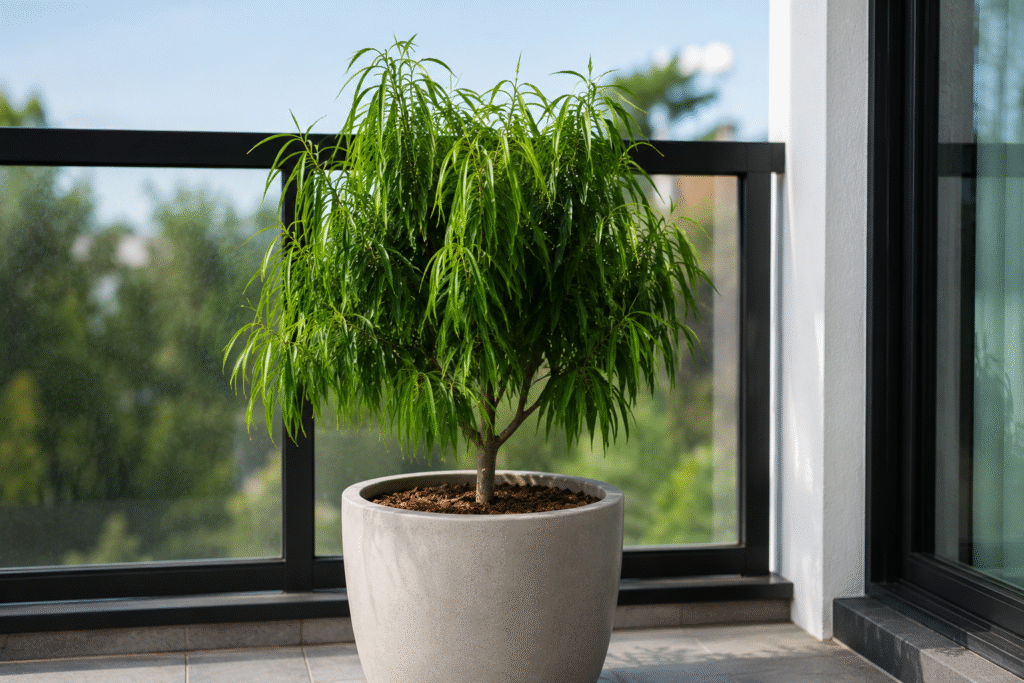
The standard Babingtonia Virgata is a powerhouse grower, typically reaching up to 4 meters in height and up to 3 meters across. It is highly suited to large boundary lines, pool areas, and coastal barriers.
If you are about to invest in a massive perimeter screen and are torn between native options, you must read our in-depth comparison on Babingtonia Virgata vs. Lilly Pilly to determine which hedge is actually the most cost-effective and disease-resistant for your specific property.
2. The Dwarf Form (For Small Courtyards & Containers)
If you live in a modern townhouse with a tiny courtyard or a high-rise balcony, the standard form will quickly outgrow its space. Instead, you need dwarf variations like ‘Compacta’ or ‘Nana’ (Miniature Baeckea).
These brilliant cultivars max out between 30cm and 1.5 meters in height while delivering the exact same dense texture and white flowers. To ensure your container garden thrives without dying from heat stress.
Follow our exact blueprint in Babingtonia Virgata Dwarf Form: Best Pots, Soil, and Care Tips.
Working with a smaller space or patio? If you want to grow this native beauty in containers, read our dedicated guide on exactly how to keep the miniature variety thriving in pots without drying out.
Click Here on the link to know more about:
🪴 Babingtonia Virgata Dwarf Form – Best Pots, Soil, and Care TipsThe Problem:
Australian natives have uniquely sensitive root systems. Dropping them into poor, compacted dirt or using a standard, chemical-heavy potting mix will burn the roots and kill the plant before it even has a chance to establish.
The Solution: Precise soil preparation and correct spacing are the secrets to rapid, healthy growth.
1. Nailing the Spacing for a Solid Hedge
If your goal is to block out the neighbors, do not plant these shrubs too far apart. For a dense, impenetrable hedge, you must space your tubestock or potted plants precisely 50cm to 70cm apart. This specific spacing forces the canopies to weave together rapidly, creating a seamless living wall within just two growing seasons.
2. Conquering Difficult Soil Types
Remarkably, the Twiggy Heath Myrtle is exceptionally adaptable, capable of surviving in free-draining sandy soils and even tolerating boggy, poorly drained sites where other plants would drown.
- Tackling Hard Clay: If your garden consists of rock-hard clay, dig a hole twice as wide as the pot. Incorporate a generous amount of gypsum to break down the dense clods, and always plant your shrub on a slight, raised mound. This prevents the sensitive root collar from rotting in stagnant water during heavy winter rains.
- Enhancing Sandy Soil: Coastal sandy soils drain too fast, starving the plant of moisture. Dig in a high-quality organic compost to build up the soil’s water-holding capacity.
Gardengreen Expert Tip: Never gamble with fertilizers. Natives are highly sensitive to phosphorus. We strongly advise using a premium, certified low-phosphorus Native Plant Potting Mix. If you are planting directly into your garden beds and are unsure of your soil’s chemistry, you must use a reliable Soil pH Testing Kit to check your baseline before you start digging.
The Problem: Shrubs that are left to their own devices often become “leggy”—meaning they grow tall but lose all their lower leaves, destroying your privacy screen. Additionally, new plants frequently die of dehydration in their first summer.
The Solution: Strategic, deep watering combined with an aggressive annual pruning schedule.
Watering schedule
1. The Critical 12-Week Watering Window
While mature Babingtonias are fiercely drought-tolerant, young tubestock plants are highly vulnerable. For the first 12 weeks after planting, they require deep, consistent watering to encourage their roots to push deep into the soil.
Avoid using light surface sprinklers, as they encourage shallow, weak roots. Instead, lay down a heavy-duty weeping soaker hose along your fence line to ensure the water penetrates deep into the root zone.
2. How to Prune for Ultimate Density
To prevent the shrub from becoming sparse and woody at the base, you must tip-prune it immediately after its vibrant floral display finishes in late summer. Taking off the top few centimeters of growth forces the plant to push out thick, fresh foliage from the center, maintaining a tight, compact shape.
Always utilize a pair of sharp, high-quality bypass pruning shears. Dull blades will crush the stems, inviting fungal infections that can devastate the entire plant.
The Problem: You wake up one morning and notice the fine green leaves on your prize hedge are suddenly turning brittle, brown, and dropping rapidly, threatening to leave a massive hole in your privacy screen.
The Solution: Immediate diagnosis. Do not panic and dump chemical fertilizer on a sick plant—this is the fastest way to kill it!
Twiggy Heath Myrtle is typically pest-free, so sudden browning or dieback usually points to root-damaging curl grubs, leaf-chewing caterpillars and beetles, or a serious watering problem. Don’t wait for the damage to spread—identify the cause and save your plant with our guide: Why Is My Babingtonia Virgata Dying? (Brown Leaves & Easy Fixes).
The Problem: Growing a massive, 10-meter living boundary fence takes significant time, back-breaking soil preparation, and years of patient watering and annual pruning. What if you live on a harsh coastal property with toxic soil, or you simply need immediate, 100% privacy today to block out an unsightly view?
The Solution: The modern artificial pivot.
Need Immediate Privacy Without the Decades of Maintenance?
Skip the watering schedules, ditch the pruning shears, and stop waiting for plants to grow. You can completely transform your boundary fence today with our premium, UV-stabilized artificial green walls. Engineered specifically to withstand the brutal Australian sun without fading, they look incredibly lush and provide 100% instant, zero-maintenance privacy the exact moment you install them.
Shop Gardengreen Artificial Hedges Now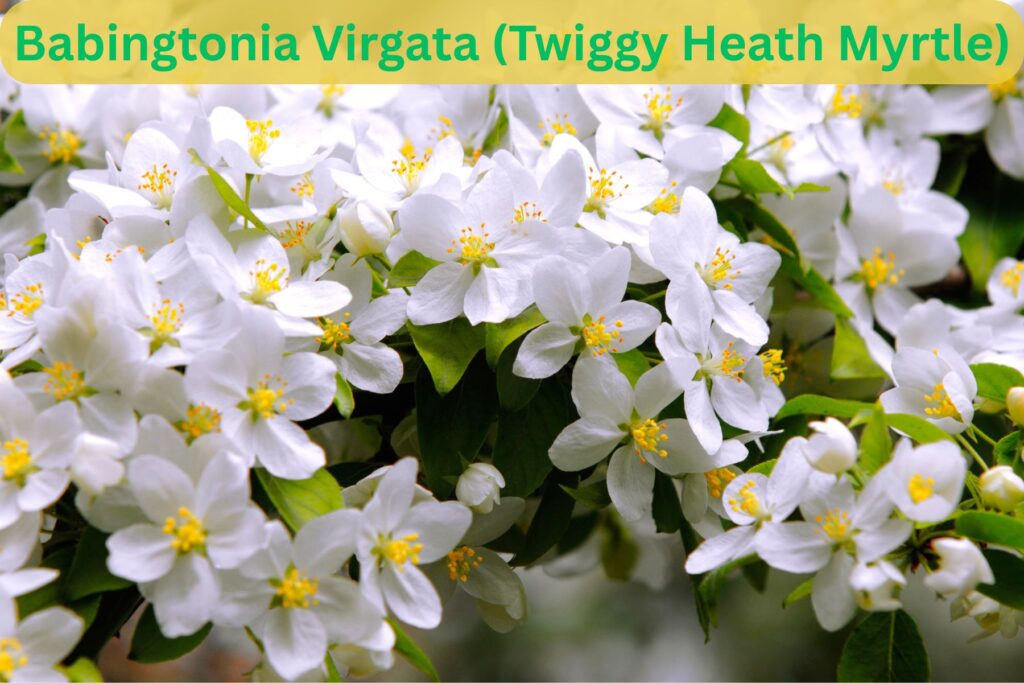
FAQS about Babingtonia Virgata (Twiggy Heath Myrtle)
How fast does Babingtonia Virgata grow in Australia?
It is considered a fast-growing native shrub. In optimal conditions with well-draining soil and adequate early watering, it can grow up to 1 meter per year, quickly reaching its mature height of 3 to 4 meters to form a dense privacy screen.
Is Babingtonia Virgata frost tolerant?
Yes. Once fully established, the Twiggy Heath Myrtle is highly resilient and can easily tolerate moderate frosts, as well as harsh coastal winds and extended dry periods.
When should I prune my Twiggy Heath Myrtle?
The best time to prune is in late summer or early autumn, immediately after its white flowers have finished blooming. A light tip-prune will encourage fresh, compact growth and prevent the plant from becoming woody at the base.
Can I grow Babingtonia Virgata in a pot?
Yes, but you must choose a dwarf variety such as ‘Compacta’ or ‘Nana’ (Miniature Baeckea). Use a large container with excellent drainage and a certified native potting mix to ensure it thrives on a balcony or courtyard.
Are Babingtonia Virgata roots invasive?
No. They have a relatively shallow, non-invasive fibrous root system. This makes them perfectly safe to plant along fence lines, near retaining walls, and close to underground plumbing without fear of structural damage.
Is Twiggy Heath Myrtle safe to plant around swimming pools?
Absolutely. Because it does not drop messy, broad leaves or fleshy fruit, it is an excellent, low-mess screening plant for pool areas. Just ensure the soil around the pool has adequate drainage.
Why are the leaves on my Babingtonia turning yellow?
Yellowing leaves (chlorosis) usually indicate phosphorus toxicity from using the wrong fertilizer, or a lack of iron in highly alkaline soil. Stop using standard fertilizers immediately and apply a native-safe iron chelate.
Is Babingtonia Virgata toxic to dogs and cats?
No, Babingtonia Virgata is considered non-toxic to dogs, cats, and livestock, making it a completely safe addition to family backyards.
Can it survive in boggy or waterlogged clay soil?
While adaptable, prolonged waterlogging will cause fatal root rot. If you have heavy clay that holds water for days after a storm, you must plant your shrub on a raised mound.
What is the best mulch to use around native shrubs?
Use a chunky, organic mulch like pine bark or eucalyptus drop. Keep the mulch layer about 5cm thick to retain moisture, but always pull it a few centimeters away from the main trunk to prevent collar rot.
Can I transplant an established Babingtonia bush?
It is highly risky. Australian native shrubs generally hate root disturbance. If the plant is older than two years, it rarely survives the transplant shock; you are better off purchasing a new tubestock plant.
Does this plant handle direct, salty coastal winds?
Yes! The fine foliage is highly salt-tolerant, making the Twiggy Heath Myrtle a fantastic first-line defense for gardens located directly on the Australian coastline.
Why is my Twiggy Heath Myrtle not flowering?
A lack of flowers is typically caused by too much deep shade, or by pruning at the wrong time (cutting off the buds before Spring). Ensure the plant gets plenty of sun and only prune right after the summer flowers fade.
How long does a Babingtonia hedge live?
With correct soil drainage and regular tip-pruning to prevent the base from becoming woody, a healthy Twiggy Heath Myrtle hedge can thrive and look spectacular for 15 to 20 years.