You cannot relax in an exposed backyard. Whether blocking street noise, hiding an ugly wall, or shutting down a nosy neighbour’s sightline, getting your privacy back is the priority. You need a fast-growing, impenetrable natural screen as Grevillea Canberra Gem hedge,
Enter the Grevillea Canberra Gem.
With its dense, prickly foliage and vibrant red spider flowers, this tough Australian native is one of the best living privacy screens you can grow. It is particularly popular on suburban blocks across Melbourne, Adelaide, Perth, and regional Australia because Grevillea Canberra Gem hedge:
- Grows quickly
- Tolerates drought once established
- Provides year-round screening
However, growing a seamless hedge isn’t as simple as putting a few plants in the ground. Get the spacing or pruning wrong, and you’ll end up with thin, patchy gaps that defeat the entire purpose of planting a screen.
Here’s our proven strategy for creating a dense, long-lasting Canberra Gem hedge.
How to Grow a Dense Grevillea Canberra Gem Hedge
The Ultimate Blueprint for Spacing & Pruning a Seamless Privacy Screen
1. The Perfect Spacing
Do not overcrowd the roots. To achieve a fast, gap-free privacy screen, measure from the centre of each plant.
2. Site Preparation
Grevilleas thrive in harsh Australian sun but hate wet feet. Mound heavy clay soil to prevent winter root rot.

3. Pruning Timing
Never prune just before the blooming season. Wait until the vibrant red spider flowers have completely finished.
4. Tip-Pruning Strategy
Do not let it grow straight up. Snipping the new growth forces branches to split, creating an impenetrable wall.
If you’re just starting your gardening journey, head back to our Canberra Gem Hub Page.
View the Complete Care Guide →Why Canberra Gem Makes an Excellent Privacy Hedge
Not all screening plants are created equal. Many hedges require frequent watering, constant clipping, or struggle in Australia’s harsh climate.
Grevillea Canberra Gem hedge stands out because it offers:
- Fast growth once established
- Dense, prickly foliage that discourages intruders
- Attractive red flowers for much of the year
- Excellent drought tolerance
- Strong bird-attracting qualities
- Adaptability to a wide range of Australian climates
For homeowners seeking a low-maintenance privacy solution, it is one of the most reliable native options available.
Beyond privacy, Grevillea Canberra Gem hedge also contributes to local biodiversity. The nectar-rich flowers are highly attractive to honeyeaters, native bees, and other pollinators. Many gardeners notice increased bird activity once mature plants begin flowering heavily, making the hedge both practical and environmentally beneficial.
How Big Does Grevillea Canberra Gem Grow?
Before deciding on hedge spacing, it helps to understand the plant’s mature size.
Under typical Australian growing conditions, Grevillea Canberra Gem hedge commonly reaches around 4–5 metres tall and 3–4 metres wide if left unpruned. Growth rates vary depending on climate, soil quality, and available moisture, but it is generally considered one of the faster-growing grevillea cultivars.
Many homeowners make the mistake of planting shrubs too closely in an attempt to achieve instant privacy. While this can look effective during the first year or two, overcrowded plants often compete for sunlight and airflow as they mature.
In our experience, giving each plant enough room from the beginning produces a healthier hedge and a more attractive long-term result.
The Perfect Spacing for a Solid Privacy Screen
The biggest mistake homeowners make when planting a boundary hedge is incorrect spacing.
Even if you’re planting tiny tubestock today, you must allow enough room for the shrubs to reach their mature size. There is nothing more frustrating than watching a healthy hedge become overcrowded because it was planted too close to a pathway, driveway, or fence line.
Based on our experience growing Grevillea Canberra Gem hedge in Australian suburban gardens, the 1-metre spacing mark consistently delivers the fastest canopy closure.
Recommended Spacing
- For a dense, gap-free privacy hedge: Plant Grevillea Canberra Gem 1–1.2 metres apart, measuring from the centre of one plant to the centre of the next.
- For a looser, informal garden border: Increase spacing to approximately 1.5 metres apart.
At the tighter spacing, neighbouring branches naturally weave together within a few years, creating a seamless green wall that blocks unwanted views.
Click below: to know more aboutGrevillea Canberra problems?
Click Here to Know More →Why Australian Choose Canberra Gem Over Other Hedge Plants?
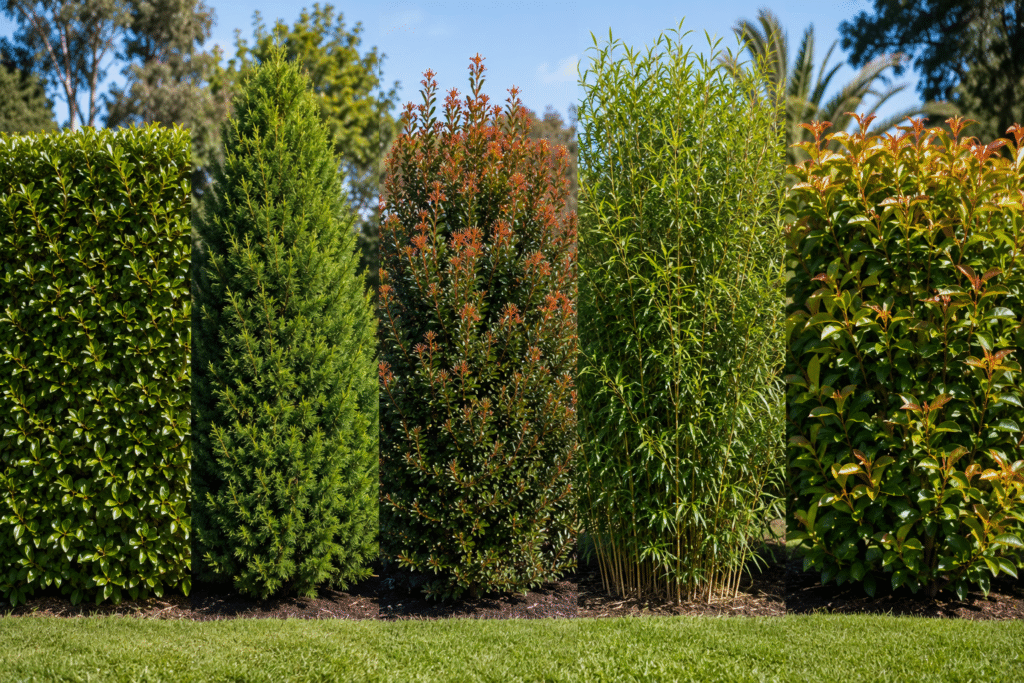
Australian homeowners have plenty of screening plant options, including Lily Pilly, Viburnum, Photinia, Murraya, and Ficus Hillii.
However, Canberra Gem offers a unique combination of rapid growth, drought tolerance, and wildlife value. Unlike many traditional hedging plants, it performs exceptionally well in hot, dry conditions once established. Its dense, prickly growth habit also creates a more secure barrier than many softer-leaved alternatives.
For homeowners seeking a hardy native hedge that combines privacy, flowering colour, and bird attraction, Canberra Gem remains one of the strongest choices available.
Why Australians Choose Canberra Gem
Over Other Hedge Plants
💧 Superior Drought Tolerance
Many traditional hedges require constant irrigation to survive an Aussie heatwave. Once established, the Canberra Gem thrives in hot, dry conditions with zero supplemental watering.
🛡️ Impenetrable Security
Soft-leaved plants look nice, but they don’t deter intruders or pets. The dense, needle-like foliage of this Grevillea creates a prickly, physical barrier that no one wants to push through.
⏱️ Instant Privacy Rate
You don’t have five years to wait for a boundary screen. Pushing 40cm to 60cm of dense vertical growth every single year, it shuts down nosy neighbour sightlines incredibly fast.
🦜 Native Bird Magnet
Instead of a sterile, boring green wall, you get a living ecosystem. The vibrant red spider flowers act as a massive drawcard for local honeyeaters, native bees, and beneficial insects.
How Long Until It Blocks Out the Neighbours?
One of the biggest reasons homeowners choose Canberra Gem is its impressive growth rate. While it’s certainly a fast-growing native shrub, realistic expectations are important.
Under full-sun conditions with adequate water during establishment, most plants will produce approximately 40–60cm of new growth each year.
Typical Privacy Timeline
- Tubestock (50mm): 2–3 years
- 140mm Pot: 1.5–2 years
- Advanced Plant (200mm+): Less than 1 year
If complete privacy is your goal, investing in larger plants can significantly reduce the waiting period.
Watering During Establishment
Although Canberra Gem is highly drought tolerant once established, young plants require regular watering during their first year.
A common mistake is assuming that native plants never need supplemental water. In reality, newly planted hedges perform best when they receive deep watering while their root systems establish.
As a general guide:
- Water deeply once or twice per week during the first growing season.
- Increase watering during extended heatwaves.
- Reduce watering during periods of regular rainfall.
- Apply organic mulch around the base of each plant to help retain soil moisture.
Once established, Canberra Gem usually requires very little additional watering except during prolonged dry periods.
How Long Until It Blocks Out the Neighbours?
Typical Privacy Timeline
- Tubestock (50mm): 2 to 3 years to full privacy
- 🪴 140mm Pot: 1.5 to 2 years to full privacy
- Advanced Plant (200mm+): Less than 1 year to full privacy
💧 Watering During Establishment
Although Canberra Gem is highly drought-tolerant once established, young plants require regular watering during their first year.
A common mistake is assuming that native Australian plants never need supplemental water. In reality, newly planted hedges perform best when they receive deep, consistent watering while their root systems establish in the surrounding soil.
Best Soil and Position for a Canberra Gem Hedge
Choosing the right location is just as important as proper spacing.
For best results, plant your hedge in:
- Full sun
- Well-drained soil
- An open area with good airflow
- A position protected from prolonged waterlogging
While Canberra Gem can tolerate a range of soil types, heavy clay soils require special attention. Poor drainage increases the risk of root diseases and can dramatically shorten the life of your hedge.
Growing Canberra Gem in Clay Soil If you have heavy clay soil:
- Build up the planting area slightly above ground level
- Apply gypsum to help improve soil structure
- Avoid planting in low-lying areas where water collects
- Ensure excess water can drain away during winter
A little preparation before planting can save years of frustration later.
The Golden Rule of Pruning for Maximum Density
Do not allow young plants to grow straight upward without shaping. The secret to creating a thick, impenetrable privacy screen is encouraging side branching from an early age.
The most effective technique is regular tip-pruning.
When to Prune The ideal time is immediately after the main flush of flowers finishes, typically during late winter or early spring.
How to Tip-Prune
- Wait until flowering has finished.
- Use sharp bypass secateurs.
- Remove approximately 5–10cm from the tips of new growth.
- Lightly trim both the top and sides of the hedge.
Every cut encourages the branch to split into multiple new stems. Over time, this creates a much denser hedge while also promoting heavier flowering in future seasons.
Many gardeners skip pruning during the first few years because they are eager to gain height quickly. In reality, lightly shaping young plants often produces a thicker and more effective privacy screen than allowing them to grow unchecked.
Essential Hedge Maintenance Tools
| Recommended Tool | Why You Need It |
|---|---|
| Premium Bypass Secateurs | Essential for precise, clean tip-pruning right after flowering to force double the hedge density. |
| Heavy-Duty Leather Gloves | Required. Canberra Gem foliage is needle-sharp and very prickly to handle with bare hands. |
| Mechanical Hedge Shears | Perfect for fast, uniform annual shaping across a long suburban boundary fence line. |
| Low-Phosphorus Native Fertiliser | Grevilleas are highly sensitive to phosphorus. You must use a specialized native blend to avoid toxic root burn. |
Grevillea Canberra Gem in Pots: Soil, Watering, and Care Tips
Read the full breakdown in our official guide: .
Read the Full Guide →Cost to Hedge a 20-Metre Boundary
If you’re screening an entire backyard fence line, understanding the costs upfront is essential.
Remember that plant prices are only part of the overall budget. Mulch, soil improvement products, irrigation materials, edging, and professional installation can all increase the total project cost.
Budget Option: Tubestock
- Approximately 20 plants required
- Cost per plant: $5–$8
- Total plant cost: $100–$160
- Privacy wait time: around 3 years
Mid-Range Option: 140mm Pots
- Approximately 20 plants required
- Cost per plant: $15–$20
- Total plant cost: $300–$400
- Privacy wait time: 1.5–2 years
Premium Option: Advanced Plants
- Approximately 20 plants required
- Cost per plant: $40–$60+
- Total plant cost: $800–$1,200+
- Privacy wait time: less than 12 months
🚜 Planting a Large Boundary Hedge?
Prepping heavy soil, mounding trenches, and installing automated irrigation lines for a 20-meter hedge can be exhausting. Let local professionals do the heavy lifting.
Get 3 Free Quotes From Local Australian LandscapersThe Instant Privacy Alternative
While Canberra Gem is one of Australia’s fastest-growing privacy shrubs, even the fastest living hedge requires time.
If you need immediate screening around a fence, retaining wall, pool area, or outdoor entertaining space, artificial hedge panels provide instant privacy while your living hedge establishes itself.
Banksia vs Grevillea Care: Which Native Plant is Better for Australian Garden 2026?
Click the link below.
Read the Full Plant Comparison Here →Frequently Asked Questions
What is the ideal Canberra Gem hedge spacing?
Plant them 1 to 1.2 metres apart. This distance allows neighbouring plants to knit together into a seamless privacy screen while avoiding root overcrowding and thin patches.
How fast does Canberra Gem grow?
Expect 40 to 60cm of new growth each year. Once established in full sun, it grows rapidly. Tubestock generally takes 2 to 3 years to form a complete, eye-level privacy wall.
Can Canberra Gem be kept as a neat hedge?
Yes, it responds exceptionally well to regular pruning. Light tip-pruning immediately after its flowering cycle prevents it from becoming woody and keeps the hedge highly dense.
Does Canberra Gem grow in heavy clay soil?
Yes, but you must guarantee excellent drainage. Heavy clay soils retain water and cause root rot. Always improve clay blocks with gypsum and plant your hedge on a raised mound.
How tall does a Canberra Gem hedge grow?
It can reach 4 to 5 metres tall if left unpruned. This makes it ideal for blocking out two-storey homes, though you can easily maintain it at a standard 2-metre fence line.
Is Canberra Gem truly drought tolerant?
Yes, once its root system is fully established. It is perfectly suited to dry Australian conditions, but young plants require deep watering during their first scorching summer.
Can I plant it close to a boundary fence?
Yes, but maintain a realistic distance. Allow enough room for the plant to spread naturally without smashing structures. Proper clearance makes ongoing pruning much easier.
How close to a Colorbond fence should I plant?
Leave at least 50 to 100cm from the centre of the plant. This protects the foliage from the intense heat radiated by metal fences during peak summer and ensures airflow.
Does Canberra Gem have invasive roots?
No, the root system is completely non-invasive. It is highly safe for standard suburban blocks. Just keep it a reasonable distance away from foundations and pool infrastructure.
Can it grow in coastal locations?
Yes, provided the soil drains freely. It handles coastal environments well, though providing structural shelter from extreme salt-laden winds will protect young plants.
Is Canberra Gem suitable for attracting birds?
Absolutely. It is a magnet for local wildlife. The bright red flowers produce high amounts of nectar, making the hedge a top choice for inviting honeyeaters into your yard.
Is it safe for households with pets or children?
Yes, it is non-toxic, but the foliage is sharp. The needle-like leaves actually provide an excellent natural security barrier along boundary lines, keeping roaming pets safely inside.