
If your backyard feels like a baking tray by midday, most traditional shrubs will throw in the towel.
The Canberra Gem is different. Bred specifically for Australian extremes, it thrives where other plants simply bake.
Canberra Gem: Quick Snapshot
The “At a Glance” Plant Snapshot Table
| 🌱 Canberra Gem: Fast Facts | |
|---|---|
| Mature Height | 2.0m – 2.5m |
| Mature Width | 2.0m – 2.5m |
| Position | Full Sun (Best flowering) to Part Shade |
| Frost Tolerance | High (Survives down to -5°C) |
Click below: to know more aboutGrevillea Canberra problems?
Click Here to Know More →<strong>Why the Canberra Gem is Australia’s Toughest Native Shrub</strong>?
Drought and Frost Proof:
Once grow up completely, its deep root system hunts for moisture, easily surviving strict water bans and scorching 40°C summer days. It also shakes off sub-zero winter frosts down to -5°C.
Clay Soil Survivor:
Got rock-hard, compacted clay? Not a problem. While it prefers good drainage, this hybrid handles heavy soils far better than most sensitive coastal natives.
The Ultimate Windbreak:
The complex, needle-like foliage doesn’t just block the neighbors; it heavily filters harsh winds, protecting the more delicate plants in your garden beds.
Grevillea Health Diagnostic
Troubleshoot your Canberra Gem in seconds. Match your plant’s symptoms to find the instant cure.
Yellowing Leaves
Cause: Phosphorus Toxicity from standard fertilisers.
FIX: Flush soil & switch to Native foodSudden Collapse
Cause: Root rot from waterlogged clay.
FIX: Mound planting & improve drainagePhoto Here
Sparse/No Flowers
Cause: Inadequate light or lack of pruning.
FIX: Relocate to sun & tip-pruneBrittle Leaves
Cause: Severe dehydration in young plants.
FIX: Deep soak at base & mulchGrevillea Canberra Gem in Pots: Soil, Watering, and Care Tips
Read the full breakdown in our official guide: .
Read the Full Guide →How Fast Does a Canberra Gem Grow?
Aussies are impatient when it comes to privacy. We want the fence covered, and we want it done yesterday.
You can expect the Canberra Gem to pack on up to 60cm to 1m of growth per year in optimal conditions. Fully mature, it maxes out at a dense 2.5 meters tall and 2.5 meters wide, making it the perfect height to screen out the street without requiring scaffolding to prune.
🐛 Expert Pest Alert: Scale & Mealybugs
While the Grevillea Canberra Gem is exceptionally hardy, its dense, prickly interior creates the perfect wind-free hiding spot for sap-sucking pests like Mealybugs. According to the Department of Agriculture , these insects drain the shrub’s vigor and secrete a sticky honeydew that quickly turns into black Sooty Mould. Because this plant is a magnet for native honeyeaters, you must avoid harsh chemicals and treat the infestation with a bird-safe horticultural oil.
Watering: Getting it Through Its First Aussie Summer
Do not let the “drought-tolerant” label trick you into neglecting a newly planted Grevillea. It only becomes bulletproof after the roots have dug deep into your soil.
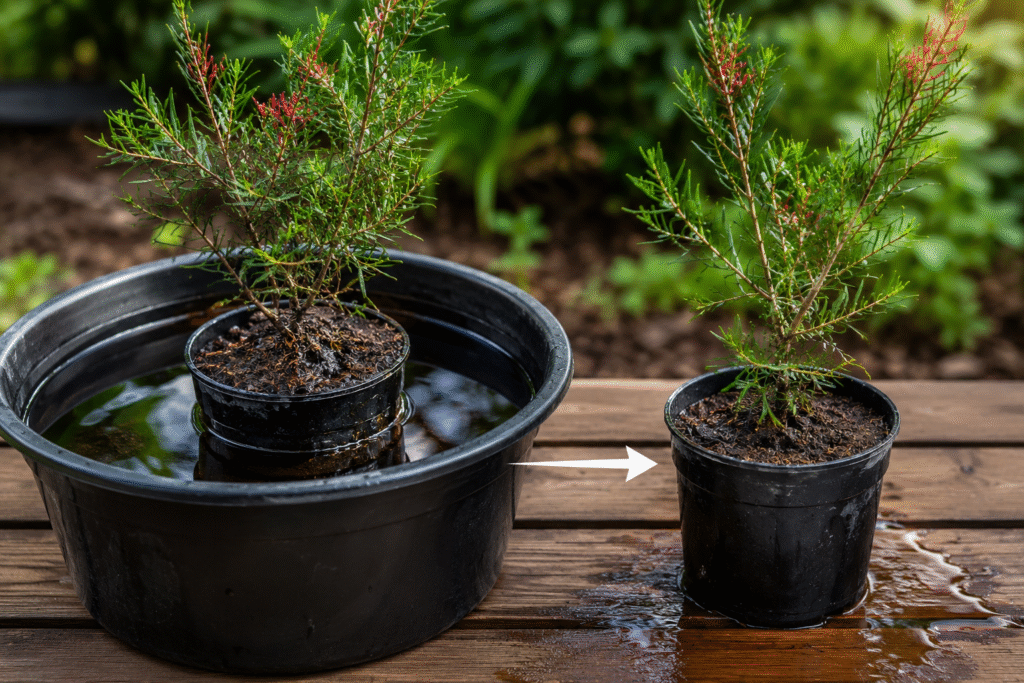
For the first 12 weeks, you need to water your Canberra Gem deeply twice a week, especially if you are planting in the warmer months.
The Soak and Dry Method
Do not give it a light sprinkle every day. Native roots need to chase the water down.
Give the base of the plant a long, slow soak, and then let the top few centimeters of soil dry out completely before watering again. Once it survives its first full summer, you can practically turn off the tap.
Why the Canberra Gem Dominates Aussie Gardens
- Drought Proof: Thrives through scorching heatwaves and strict water restrictions once established.
- Bird Magnet: Dripping with nectar-rich flowers from late winter to warm summer, drawing in flocks of native birds.
- Bulletproof Privacy: The thick, prickly foliage forms an impenetrable barrier that keeps nosy neighbors and stray animals out.
- Zero Fuss: Highly adaptable and thrives in poor, rocky, or compacted clay soils where other plants give up.
To read more on this topic, click the link below.
Read there: How to Grow a Dense Grevillea Canberra Gem Hedge Spacing & Pruninge →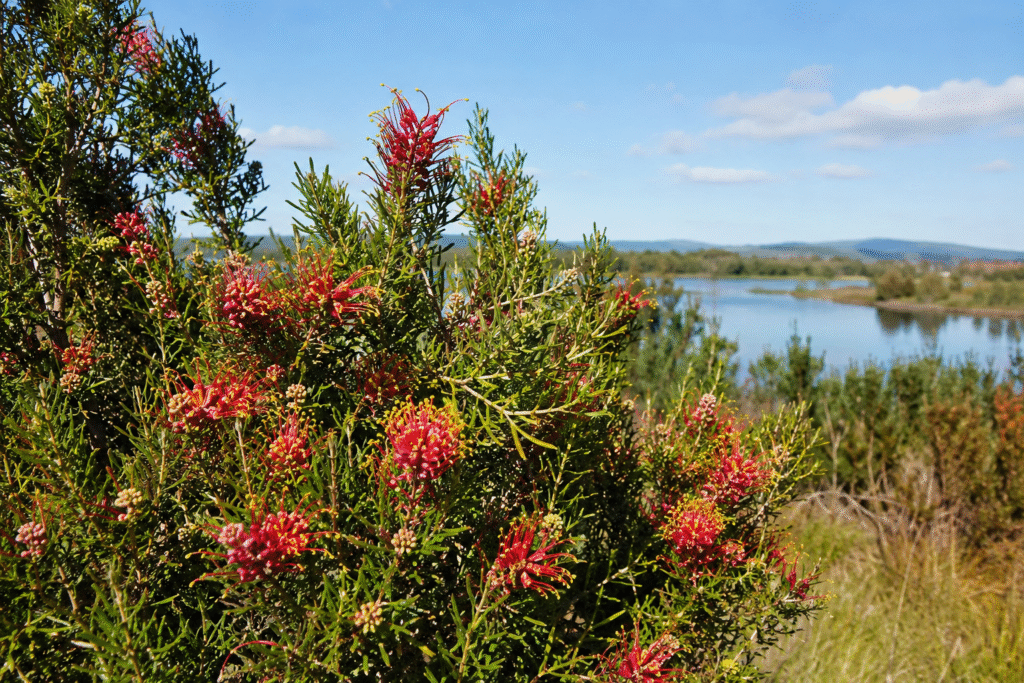
<strong><strong>The Golden Rule for Grevilleas (Soil & Fertilizer)</strong></strong>
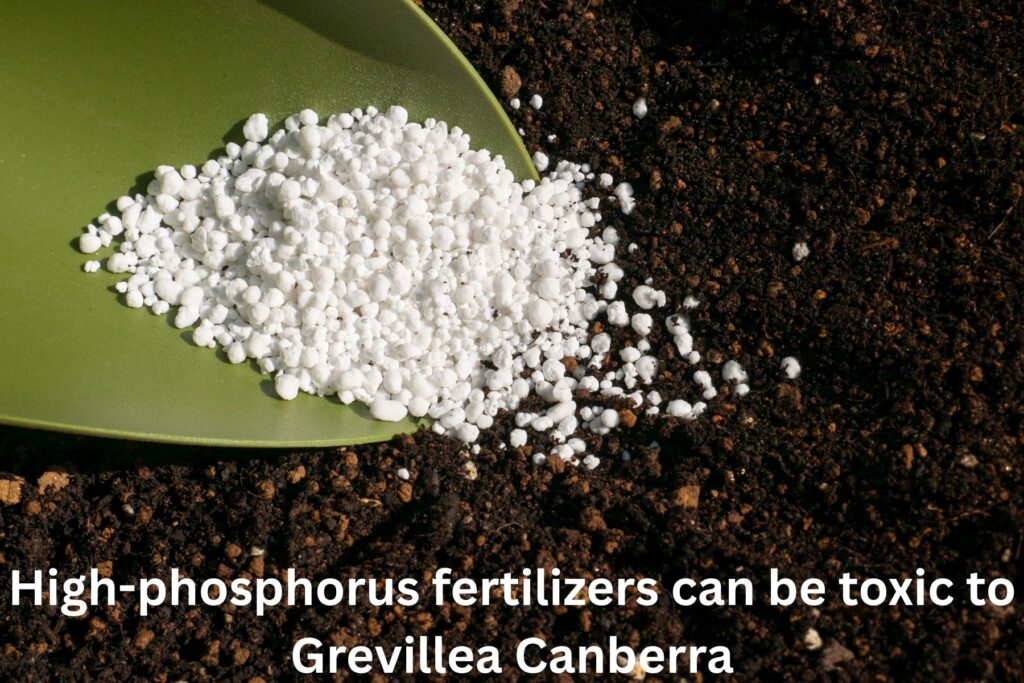
Stop before you fertilize! If you treat a Grevillea like a standard rose or citrus tree, you will kill it.
The Canberra Gem belongs to the Proteaceae family. These native plants have evolved specialized “proteoid” roots to survive in Australia’s ancient, nutrient-poor soils. Because of this, they are incredibly efficient at absorbing phosphorus.
Important to know!
If you feed them a standard, high-phosphorus garden fertilizer, it acts like poison. The leaves will quickly turn yellow, the stems will die back, and the plant will perish from phosphorus toxicity.
The Fix: You must only use specialized, low-phosphorus native plant food.
The Palm-Specific Missing Link: Manganese (Frizzle Top)
While nitrogen and magnesium are important, the most critical deficiency specific to Golden Cane Palms is Manganese (not to be confused with Magnesium). A lack of manganese causes a dreaded condition known as “Frizzle Top.”
You will know your palm has this if the newest, emerging fronds at the very top of the plant come out looking scorched, crinkled, and severely stunted.
The Fix: Standard garden fertilizers and all-purpose potting mixes simply do not contain enough of this crucial micronutrient.
To prevent Frizzle Top, you must always buy a slow-release fertilizer that is explicitly labeled for “Palms,” as these blends are specifically formulated with the exact trace elements tropical palms need to survive.
Pruning for Dense Foliage and Maximum Flowers
The Canberra Gem naturally wants to grow wide and bushy, but if you leave it completely alone for years, the center can become woody and bare.
To maintain that lush, solid green wall, tip pruning is essential.
- Give it a light trim all over just after the main flowering flush finishes in late spring.
- Cut back the green growth, but never cut hard into the old, brown, leafless wood—it will struggle to shoot back.
A warning for the gardener: The leaves on the Canberra Gem are essentially rigid little needles. Plunging your arms into this shrub bare-handed will leave you covered in scratches.
Planning to block out the street or neighbors? To get a dense, gap-free privacy screen, you must get your spacing right.
Read our Guide: How to Grow a Dense Canberra Gem HedgeDon’t Have the Patience for a Real Hedge?
Even though the Canberra Gem is a fast-growing Aussie native, nature operates on its own schedule. If you are starting from small tubestock, it will still take 2 to 3 years to build a solid, eye-level privacy screen.
If you have an ugly colorbond fence staring you down, or you need immediate privacy from a two-story house next door, you might not have years to wait.
Banksia vs Grevillea Care: Which Native Plant is Better for Australian Garden 2026?
Click the link below.
Read the Full Plant Comparison Here →Important Faqs: Grevillea Canberra Gem:
Why are the leaves on my Canberra Gem turning yellow?
Usually phosphorus toxicity from standard fertilisers. Flush the soil immediately and switch strictly to a low-phosphorus native plant food.
How far apart should I plant them for a dense privacy hedge?
Space them exactly 1.5 metres apart. This ensures the prickly foliage interlocks tightly for a gap-free screen without roots aggressively competing for water.
Can the Canberra Gem survive in hard clay soil?
Yes. It punches through compacted clay well. However, if your soil gets waterlogged in winter, plant it on a slight mound to prevent root rot.
When is the best time to prune a Grevillea in Australia?
Late spring, just after the main flowering flush. Lightly tip-prune all over. Never prune during summer heatwaves to avoid burning exposed inner foliage.
How often does a newly planted Canberra Gem need watering?
Water deeply twice a week for the first 12 weeks. Once established after its first year, it becomes highly drought-tolerant and relies strictly on natural rainfall.
Does it attract native bees as well as birds?
Absolutely. The nectar-rich flowers are a massive winter food source for Australian native bees, beneficial hoverflies, and larger birds like Honeyeaters.
Will severe winter frost kill my Canberra Gem?
No. It is highly frost-tolerant and comfortably survives down to -5°C. Foliage may dull slightly but bounces back vigorously in spring.
Are Grevillea flowers and foliage safe for dogs?
Yes, it is completely non-toxic to dogs and cats. However, the needle-like leaves are very sharp, so pets quickly learn to avoid running through them.
Why is my plant dying back and turning brown in the center?
This happens when the shrub gets too thick without tip-pruning, blocking sunlight from inner branches. Trim the outer canopy yearly to allow airflow.
Can I grow a Canberra Gem in a pot on my balcony?
Yes, in a large, well-draining pot (50cm+ wide) using strict Native Potting Mix. Remember, potted plants dry out faster and need more frequent watering.
How long does it take to reach its full height?
In full sun, it grows up to 1 metre per year. Starting from tubestock, you will have a solid 2-metre privacy screen in roughly 2 to 3 years.
Do I need to water it during a strict summer hose ban?
If established (2+ years old), it easily survives strict water restrictions. During extreme 40°C heatwaves, a single deep bucket of greywater is enough.