
Garden Sprayer Buying Guide Australia: Types, Sizes & Safety

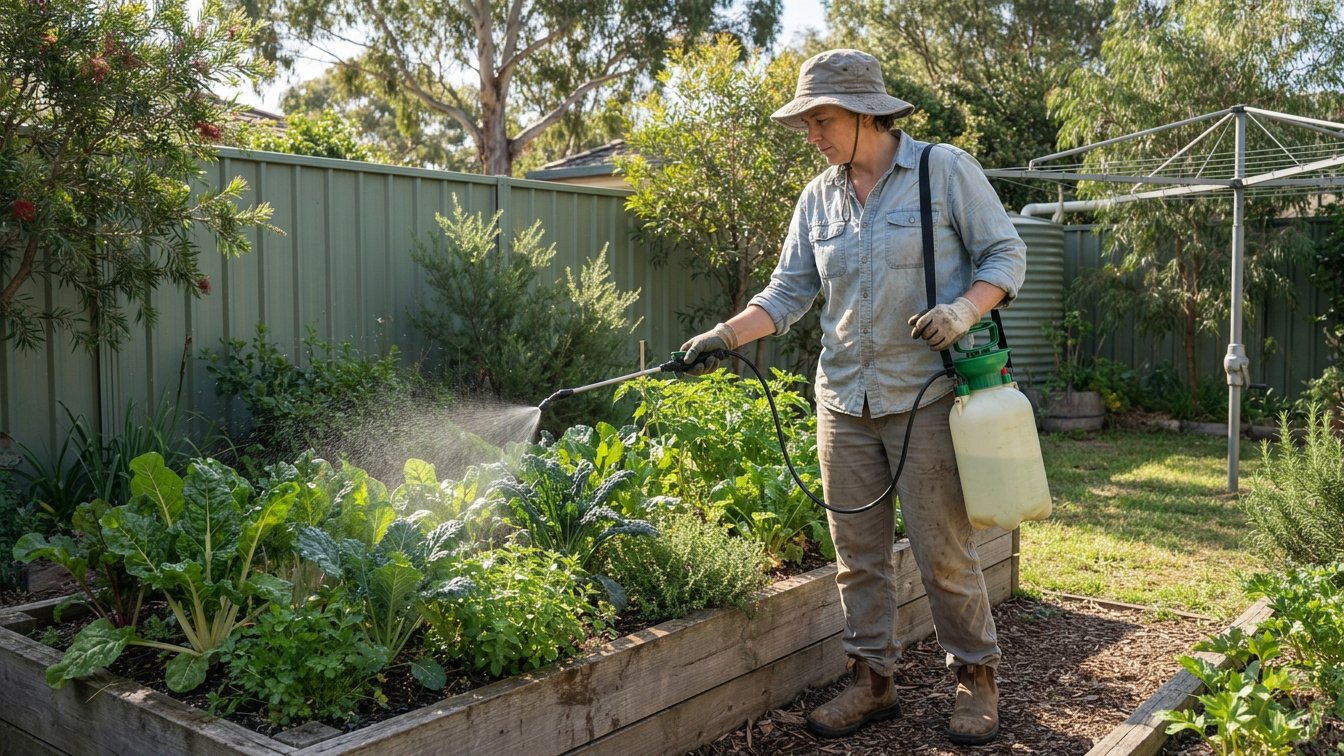
The best garden sprayer is the one matched to the job and the liquid you’ll put through it: a small handheld or pump sprayer for spot jobs and foliar feeding, a larger backpack or wheeled sprayer for big gardens, and a model whose seals and fittings suit whatever you plan to spray. Buying too big makes a sprayer awkward to carry; buying too small means constant refilling. The right size and type come down to the area you cover and how often.
Quick pick: which garden sprayer suits you?
| Your situation | Sprayer type | Why |
|---|---|---|
| Pot plants, spot jobs, indoor use | Handheld trigger or small pump (0.5–1 L) | Quick, light and easy to control for small areas |
| Typical suburban garden | Pump (pressure) sprayer (3–8 L) | Enough capacity for beds and paths without being heavy to carry |
| Large garden or acreage | Backpack sprayer (12–20 L) | Big capacity and comfortable to carry over distance |
| Very large areas / repeat jobs | Wheeled or battery sprayer | Saves pumping and carrying for frequent, large jobs |
The main sprayer types
| Type | Best for | Trade-off |
|---|---|---|
| Handheld trigger sprayer | Pot plants, misting, tiny spot jobs | Small capacity; tiring for larger areas |
| Pump / pressure sprayer | General garden use — the common all-rounder | You pump to build pressure; needs occasional re-pumping |
| Backpack sprayer | Large gardens, longer spraying sessions | Heavier when full; worn on your back |
| Battery / powered sprayer | Frequent or large jobs without manual pumping | More expensive; a battery to keep charged |
Match the sprayer to what you’ll spray
This is the part people most often overlook. Sprayers are used for very different liquids — plain water, seaweed and liquid feeds, wetting agents, and various garden treatments — and not every seal and gasket suits every product. A few sensible habits:
- Check that the sprayer’s seals are rated for what you intend to use, and follow the product label.
- If you use different products, consider keeping separate, clearly labelled sprayers to avoid cross-contamination — especially keep anything used for weed treatments well away from sprayers used on plants you want to keep.
- Rinse thoroughly after every use so residue doesn’t clog the nozzle or damage seals.
Follow the registered product label. For any garden product you spray, the registered label is the legal instruction: it governs what you may apply it to, how much and when, the protective clothing (PPE) to wear, drift and spray controls, and how to clean up and dispose of leftovers and rinse water. Those label directions take priority over any general guidance here.
Capacity: enough, not as much as possible
A bigger tank means fewer refills but more weight to carry. Water is about a kilogram a litre, so a full 20 L backpack is heavy. Match the tank to the area you cover in one session and to what you can comfortably carry — a sprayer that’s too heavy tends to stay unused.
Nozzles, wands and comfort
An adjustable nozzle (from a fine mist to a narrow jet) makes one sprayer far more useful: mist for foliage, a stream for spot targets. A longer wand saves bending and helps you reach the base of plants and the back of beds. For anything you’ll use regularly, look at:
- an adjustable or interchangeable nozzle;
- a comfortable, lockable trigger (so you’re not squeezing constantly);
- a wand length that suits your reach;
- for backpacks, padded straps and a pump lever on the side you prefer.
Build quality and maintenance
The parts that fail first are usually seals, O-rings and the nozzle, so a sprayer with replaceable seals and easy-to-find spare parts lasts much longer. Simple care goes a long way:
- Rinse the tank, wand and nozzle with clean water after every use.
- Release the pressure before opening or storing the tank.
- Store out of direct sun — UV ages plastic tanks and seals.
- Keep a spare set of seals and a spare nozzle for anything you use often.
Where our recommended picks will go
Garden Green has not joined an affiliate program and has not completed controlled testing of current sprayer models, so we are not publishing a fake ranking based on copied retailer descriptions. When specific recommendations are added, they will be grouped by real use case — small spot jobs, general garden, and large-area backpack use — rather than pretending one sprayer suits every job.
Frequently asked questions
What size garden sprayer do I need?
Match it to the area you cover in one session and what you can comfortably carry. A 1–5 L pump sprayer suits pots and small gardens; a 3–8 L pressure sprayer suits a typical suburban garden; a 12–20 L backpack suits large gardens. Remember a full tank is heavy — water weighs about a kilogram a litre.
Can I use one sprayer for different products?
You can, but rinse thoroughly between uses and check the seals suit each product. For anything used on weeds, it’s safer to keep a separate, clearly labelled sprayer so residue doesn’t harm plants you want to keep. Always follow each product’s own label.
What’s the difference between a pump sprayer and a backpack sprayer?
A pump (pressure) sprayer is a hand-carried tank you pressurise by pumping — ideal for general garden use. A backpack sprayer holds much more and is worn on your back for large gardens and longer sessions, at the cost of extra weight when full.
How do I stop my sprayer nozzle clogging?
Rinse the tank, wand and nozzle with clean water after every use so residue doesn’t dry inside, and strain or dissolve powders fully before filling. Keeping a spare nozzle and seals on hand means a clog or worn part never ends a job.
Are battery garden sprayers worth it?
For frequent or large jobs, yes — they save constant manual pumping and keep a steady pressure. For occasional small jobs, a simple pump sprayer is cheaper and has less to go wrong. Choose by how often and how much you spray.
This guide is part of our complete guide to the best garden tools in Australia. General guidance for Australian gardeners; brands and models change. Always follow the directions and safety advice on any product you spray.


