
How to Propagate Calathea by Division (Australia)

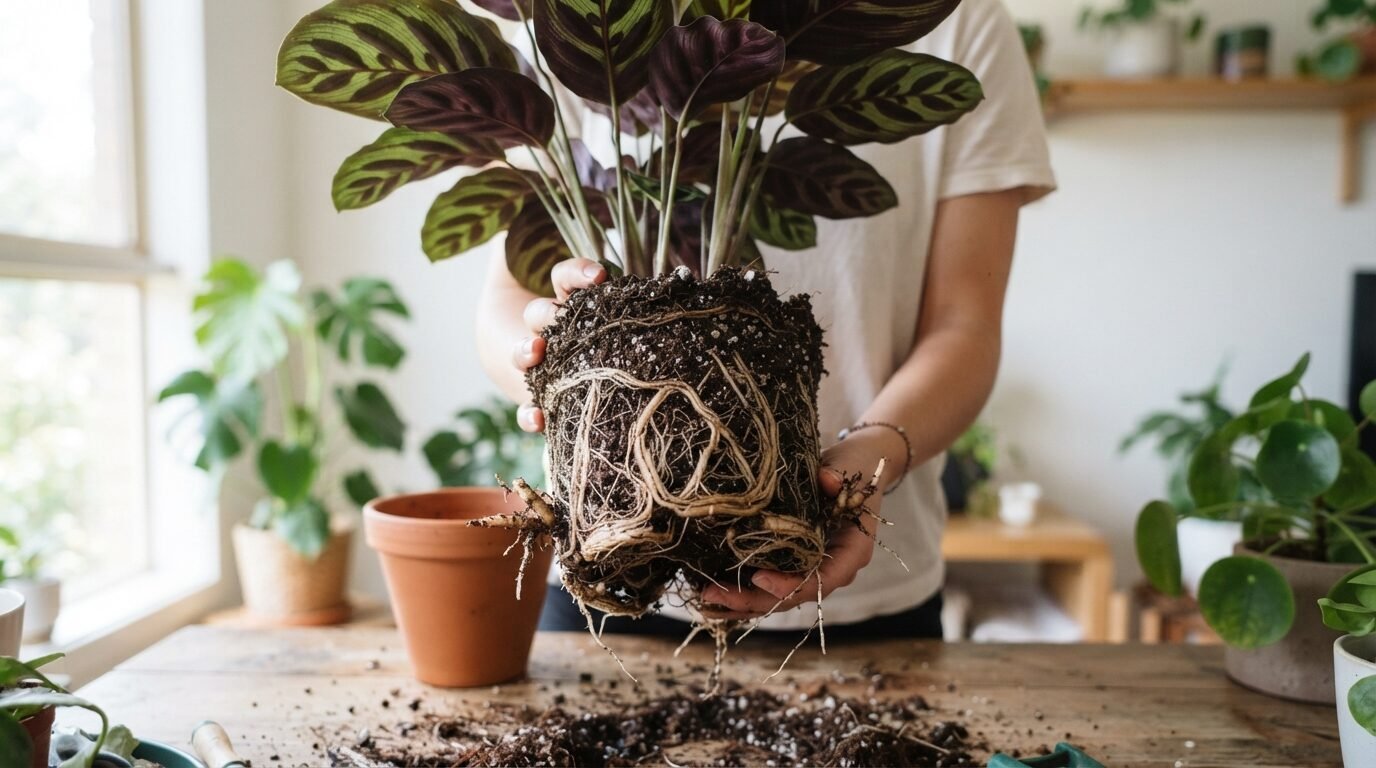
Quick answer: Calathea is propagated by division, not cuttings. At repotting time (ideally spring to early summer), ease the plant from its pot, gently tease the root clump into sections that each keep their own roots and a few leaves, and pot each into fresh, free-draining mix. Keep the new divisions warm, humid, lightly moist and out of direct sun while they settle.
If you have tried to grow a new Calathea from a single leaf and watched it rot, you are not doing anything wrong — Calathea simply does not propagate that way. It grows from a clumping underground rhizome, so the reliable method is to divide an established, healthy plant into smaller rooted sections.
Why cuttings do not work for Calathea
Plants like pothos and philodendron grow along stems with nodes, so a cutting can form new roots. Calathea is different: it grows as a clump of leaves rising from a rhizome at the base. There is no vining node to root from. That is why division — separating the rooted clump — is the propagation method, and why leaf or stem cuttings fail.
Good to know: because each division already has its own roots, you do not need rooting hormone or a water-propagation jar. The job is careful separation and good aftercare.
When to divide a Calathea in Australia
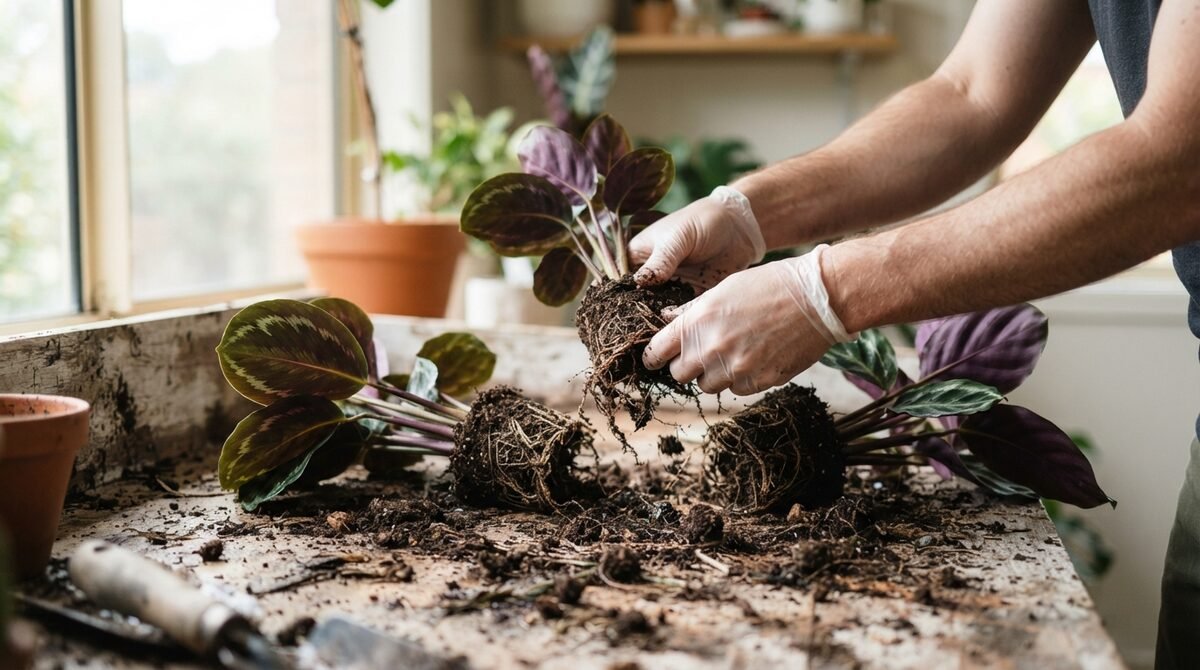
The best time is spring to early summer, when the plant is actively growing and will recover fastest. Dividing in the warm season gives each section time to establish before growth slows in a cooler southern winter. It is also convenient to divide while you are repotting a plant that has outgrown its container.
What you will need
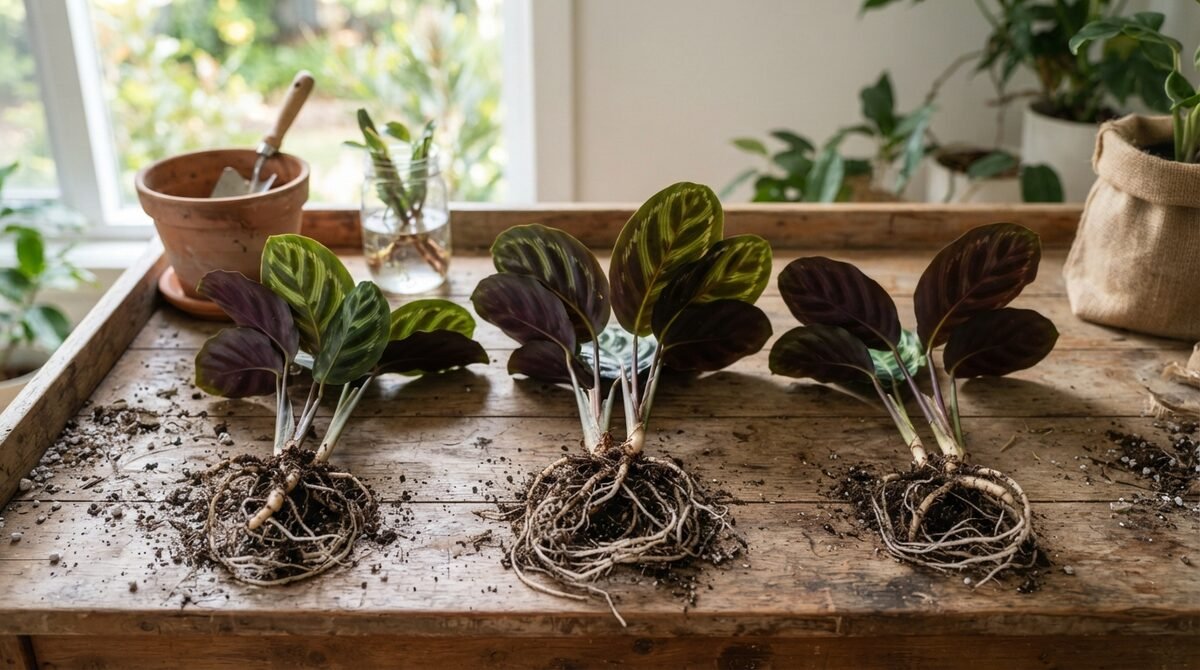
- a healthy, reasonably mature Calathea with a full clump;
- fresh, free-draining indoor potting mix;
- clean pots with drainage holes, sized to each division;
- clean hands or a clean, sharp knife for stubborn clumps;
- a warm, bright, filtered-light spot to recover in.
How to divide a Calathea, step by step
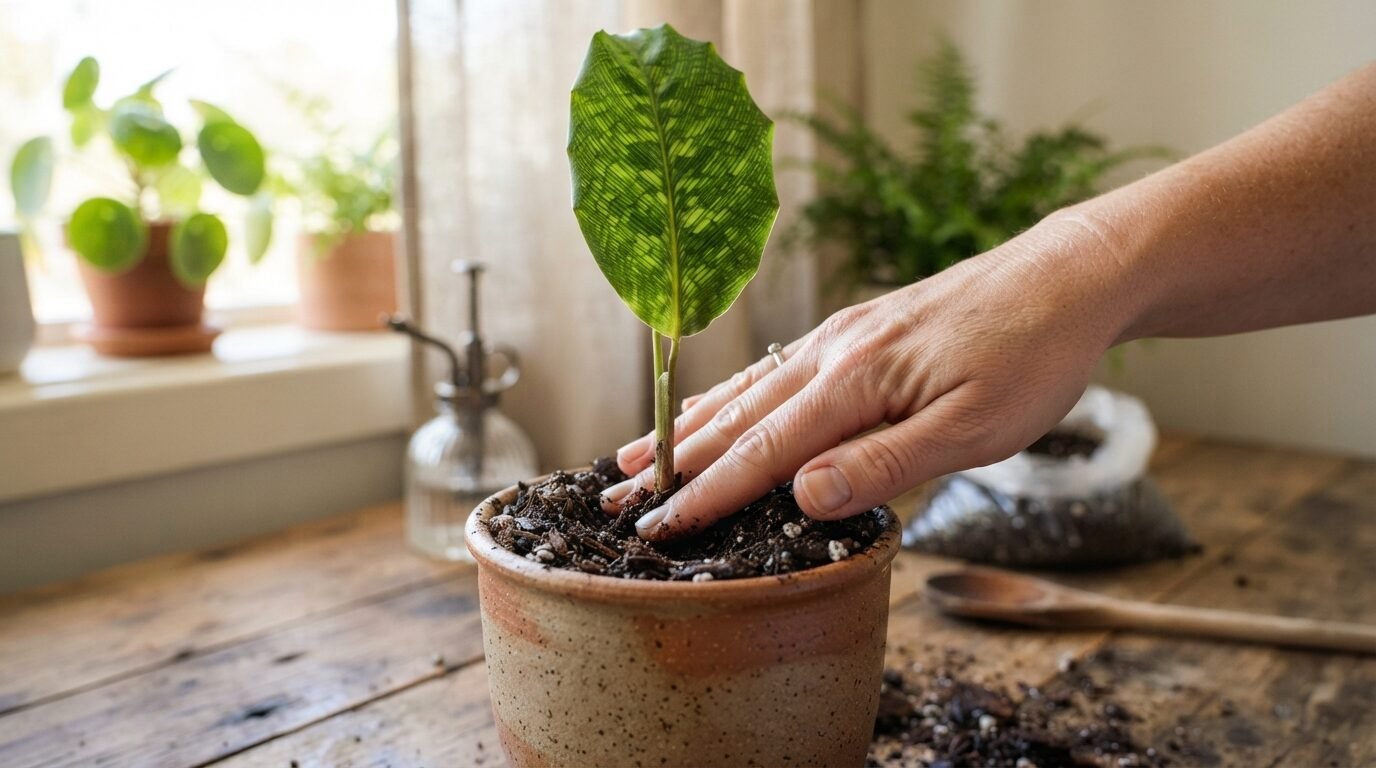
CALATHEA DIVISION STEPS
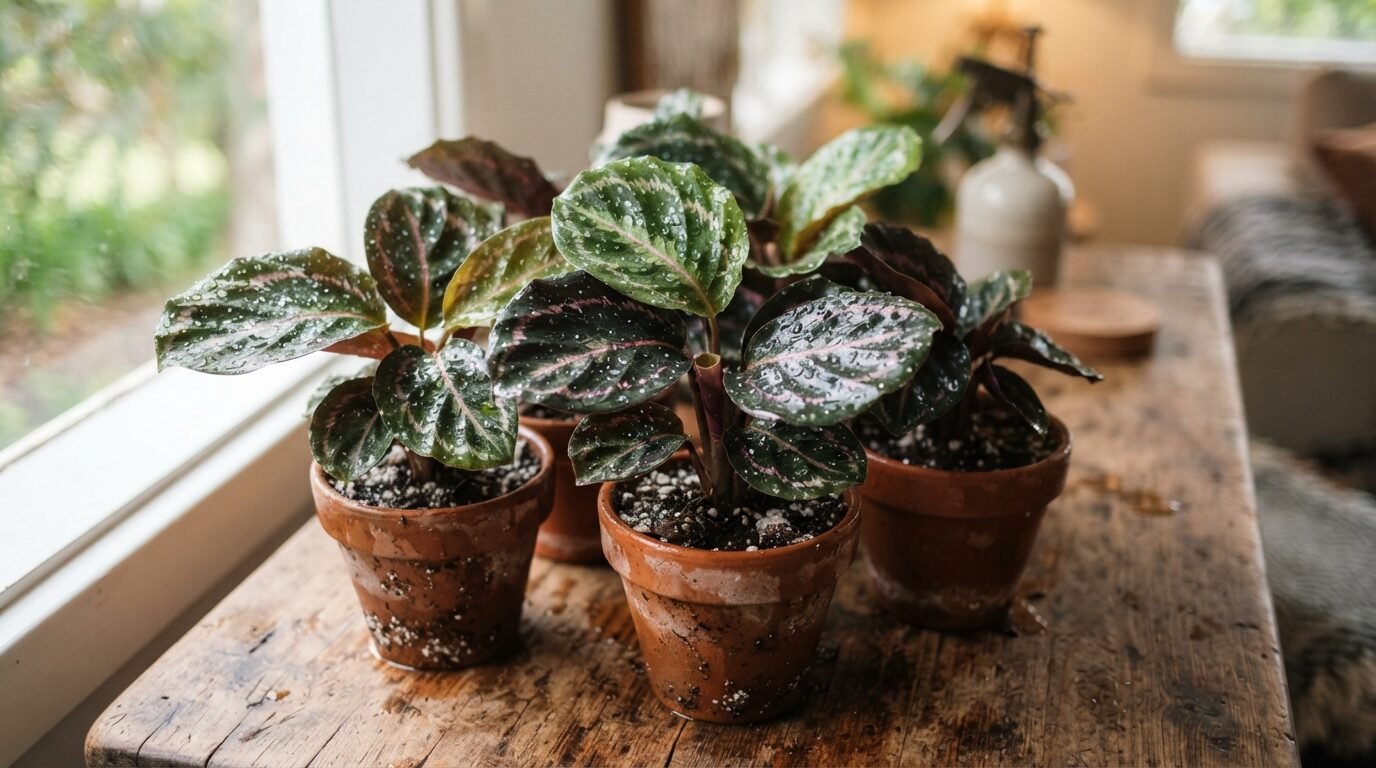
Caring for new divisions
The first few weeks matter most. Give the divisions:
- warm, stable temperatures away from cold draughts;
- bright, filtered light — never harsh direct sun;
- higher humidity to reduce stress;
- lightly moist (not soggy) mix;
- no fertiliser until you see new growth.
Expect some droop: a little leaf droop or sulking for a week or two after division is normal transplant shock. Keep conditions stable rather than reacting — see our curling guide only if symptoms persist well beyond settling in.
Avoid these common mistakes
- dividing into too many tiny pieces — small sections are slow and fragile;
- potting into an oversized container — use a pot sized to the division;
- using heavy, water-retentive mix — Calathea wants free drainage;
- fertilising immediately — wait for new growth;
- placing fresh divisions in direct sun, which scorches stressed leaves.
For the mix itself, our Calathea growing and care guide covers a suitable free-draining blend, and our watering guide explains how to keep new divisions lightly moist without overwatering.
Frequently asked questions
How do you propagate a Calathea?
Calathea is propagated by division, not by leaf or stem cuttings. At repotting time, gently separate the root clump into sections that each have their own roots and a few healthy leaves, then pot each section into fresh, free-draining mix and keep it warm, humid and out of direct sun while it settles.
Can you propagate Calathea from a leaf or cutting?
No. Unlike pothos or philodendron, Calathea will not grow a new plant from a single leaf or a stem cutting, because it grows from a clumping rhizome rather than vining stems with nodes. Division of the rooted clump is the reliable method.
When is the best time to divide a Calathea in Australia?
Spring and early summer are ideal, when the plant is actively growing and recovers fastest. Dividing during the warm growing season gives each section the best chance to establish before cooler weather slows growth.
How big should each Calathea division be?
Each division should have a healthy portion of roots and at least a few leaves. Larger sections with more roots establish more reliably than tiny ones. Avoid splitting the plant into too many small pieces at once, as very small divisions are slow and fragile.
Why is my divided Calathea drooping or struggling?
Some transplant shock is normal — leaves may droop for a week or two. Keep the new divisions warm, humid, lightly moist and out of direct sun, and avoid fertilising until you see new growth. Most settle within a couple of weeks if the roots were healthy.
Do you need rooting hormone to divide Calathea?
No. Because each division already has its own roots, rooting hormone is not needed. The priority is gentle handling, fresh free-draining mix and warm, humid, stable conditions while the sections recover.
Should Calathea divisions go in water or soil?
Soil. Calathea divisions already have roots and establish best in fresh, free-draining potting mix. Water propagation is not the method for Calathea the way it is for pothos — divide into mix and keep it lightly moist.
How long does a Calathea division take to establish?
Expect a settling-in period of about two to four weeks, longer in cooler months. New leaf growth is the sign it has established. Keep conditions stable during this time rather than moving or feeding the plant.
- Calathea growing & care guide for Australia — the complete care hub.
- How to water Calathea in Australia — keep divisions lightly moist.
- Best Calathea varieties for Australian homes — choose which to grow on.


