
Calathea Pests in Australia: Spider Mites & More

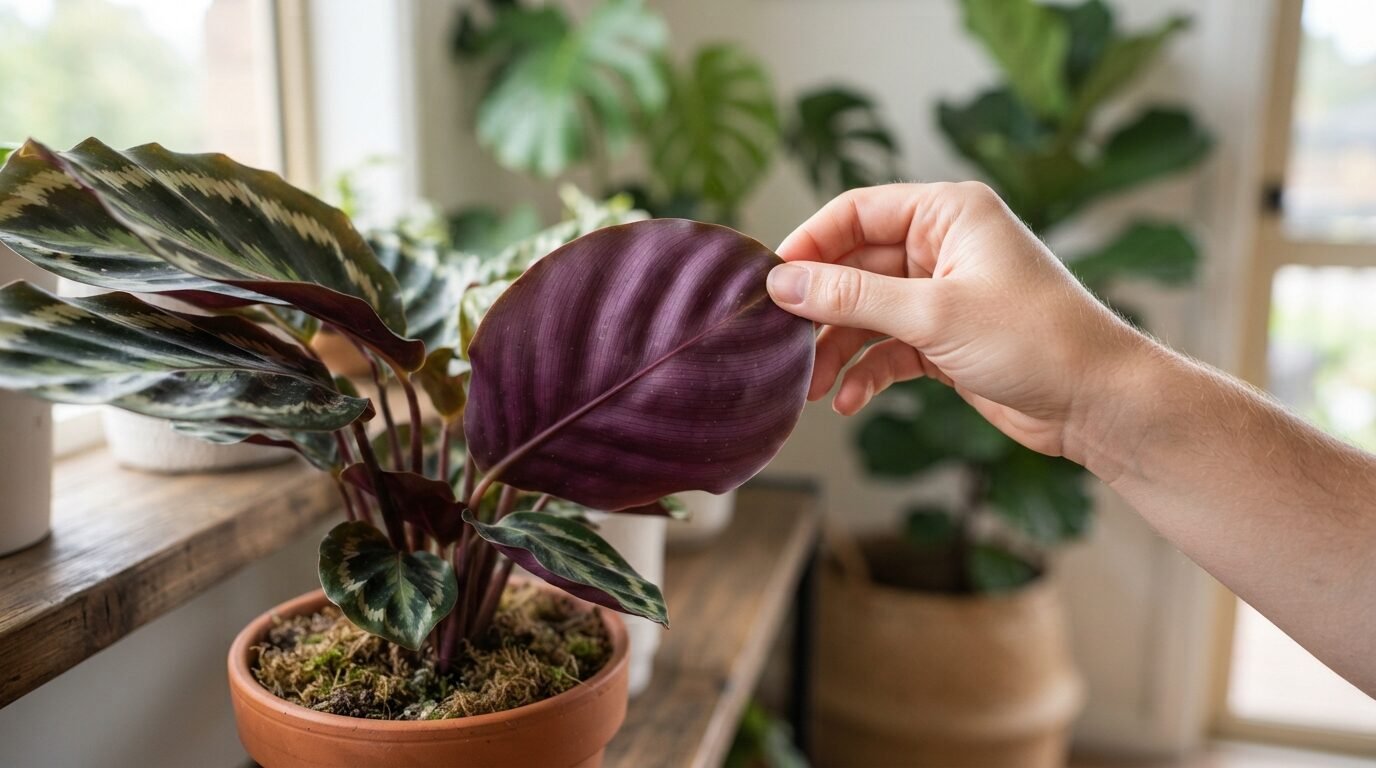
Quick answer: Spider mites are the Calathea pest to watch for in Australia, thriving in warm, dry indoor air. Check leaf undersides for fine stippling, bronzing, tiny moving dots and delicate webbing. Isolate the plant, wash both sides of the leaves, treat with a suitable horticultural oil or insecticidal soap per its Australian label, repeat every few days, and raise humidity to make conditions less friendly to mites.
Pests are one of the hidden reasons a previously healthy Calathea starts curling, stippling and declining. Spider mites in particular do a lot of damage before most people notice them, because they are tiny and feed on the undersides of the leaves. Catching them early makes them far easier to control.
Spider mites: the number-one Calathea pest
Gardening Australia notes that mites become more active in hot, low-humidity conditions and feed on tender foliage — which describes a Calathea on a warm, dry indoor shelf perfectly. They pierce the leaf cells and drain them, leaving a tell-tale pattern of damage.
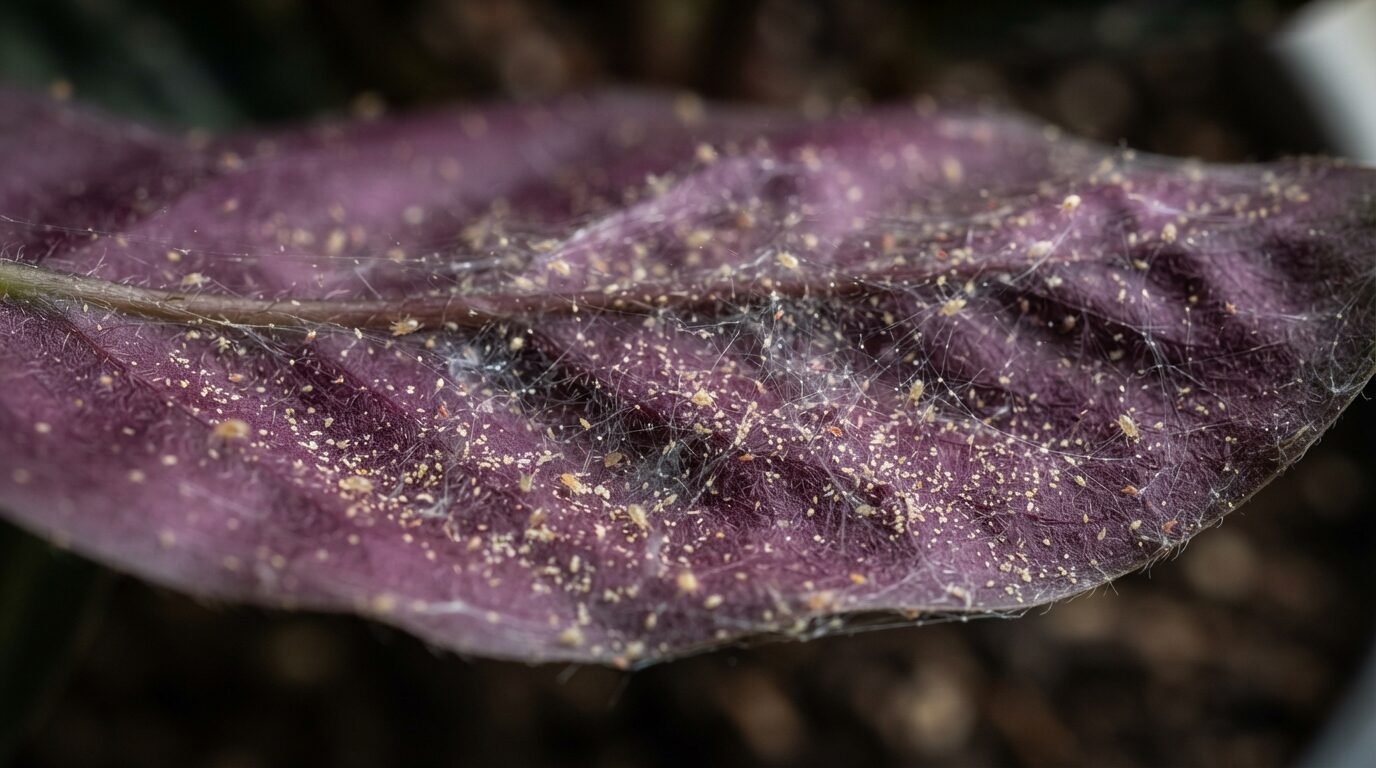
Signs of spider mites
- fine pale speckling or stippling across the leaf;
- silvery or lightly bronzed patches;
- tiny moving dots on the undersides;
- very fine webbing around leaf edges, veins or stems;
- curling or decline that comes with the above.
Confirm before you treat: use a magnifying glass and check several leaves, undersides especially. A clear diagnosis stops you spraying for the wrong problem — dry-air curling and mite damage can look similar at first. See our curling guide for the non-pest causes.
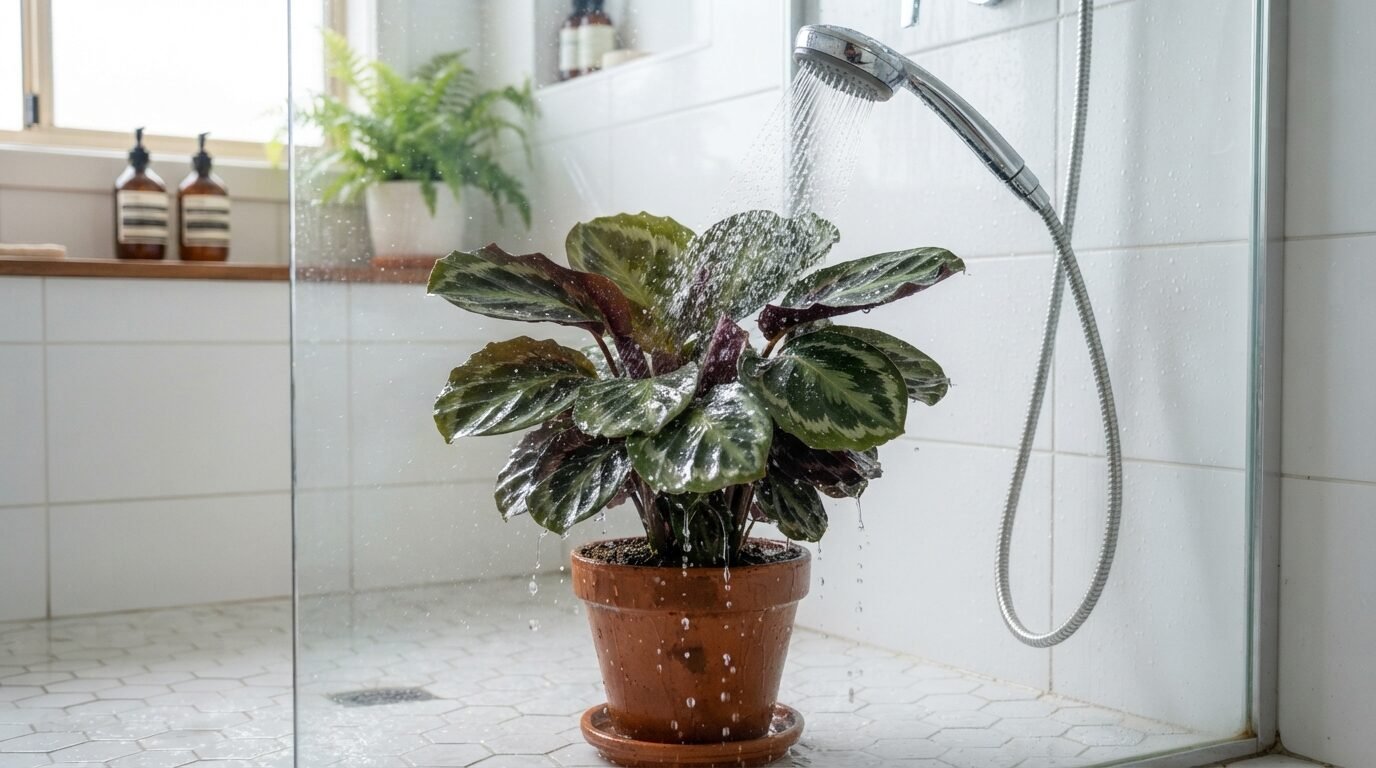
How to treat spider mites on Calathea
SPIDER-MITE TREATMENT STEPS
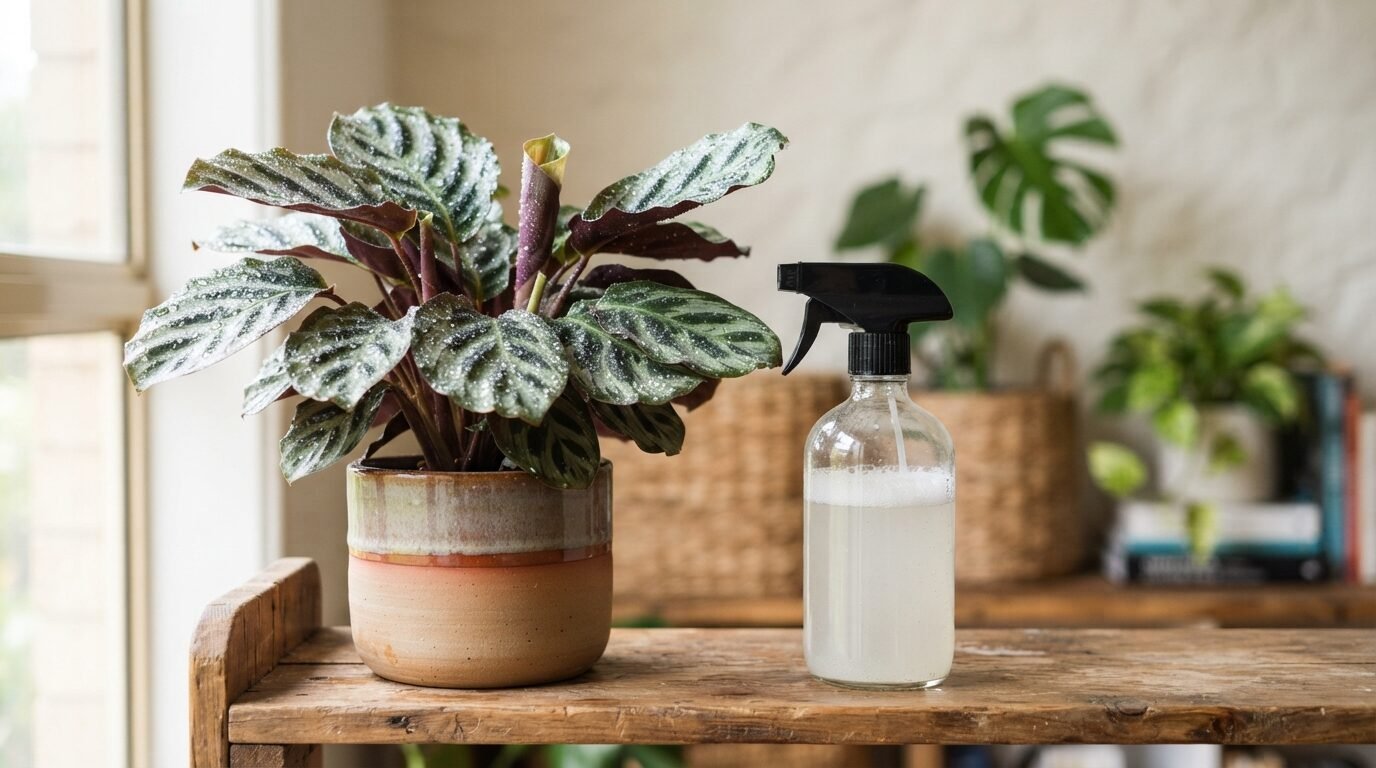
Avoid homemade brews: strong DIY oil or soap mixes can scorch Calathea leaves. Stick to products labelled for Australian use at the recommended strength.
Other Calathea pests to recognise
| Pest | What it looks like | First response |
|---|---|---|
| Spider mites | Fine stippling, bronzing, webbing under leaves | Isolate, wash, treat with oil/soap, repeat |
| Mealybugs | White cottony clusters in leaf joints and stem bases | Dab with alcohol on a cotton bud, then treat |
| Scale | Small brown bumps on stems and leaf undersides | Scrape off gently, treat with horticultural oil |
| Fungus gnats | Small flies around constantly damp mix | Let mix dry more; improve drainage |
Mealybugs and scale
Mealybugs appear as white, cottony clusters tucked into the tight angles where leaves meet stems. Scale shows up as small, firm brown bumps along stems and under leaves, often with sticky residue. For small outbreaks, physically remove them — a cotton bud dipped in diluted isopropyl alcohol for mealybugs, gentle scraping for scale — then follow up with a suitable horticultural oil and keep checking, because both hide in tight spots.
Fungus gnats: a symptom, not just a pest
Those small flies drifting around the pot are usually a sign that the mix is staying too wet. The larvae live in constantly damp mix. The fix is cultural rather than chemical: let the top of the mix dry more between waterings and improve drainage. Our Calathea watering guide covers how to get the moisture balance right so gnats lose their breeding ground.
Preventing pests on Calathea
- inspect any new plant — undersides too — before bringing it home;
- quarantine new or infested plants away from your collection;
- keep humidity reasonable, since dry air favours mites;
- wipe leaves occasionally so you spot problems early;
- avoid leaving the mix constantly wet, which invites fungus gnats and root issues.
If pest damage has left crispy edges behind, those marks will not green up again — see our brown tips and crispy edges guide for how to tidy and prevent further damage once the pests are gone.
Frequently asked questions
What are the most common Calathea pests in Australia?
Spider mites are the most common and troublesome, especially in warm, dry indoor air. You may also see mealybugs (white cottony clusters in leaf joints), scale (small brown bumps on stems and undersides) and fungus gnats (small flies around constantly damp mix). Spider mites do the most damage the fastest.
How do I know if my Calathea has spider mites?
Look under the leaves for fine pale stippling or speckling, silvery or bronzed patches, tiny moving dots and very fine webbing around edges, veins or stems. Mites are easy to miss early, so use a magnifying glass. Curling or declining leaves with webbing is a strong sign.
How do I get rid of spider mites on Calathea?
Isolate the plant immediately, wipe or gently wash both sides of the leaves to remove mites and webbing, and treat with a suitable product such as horticultural oil or insecticidal soap per its Australian label. Repeat every few days to catch newly hatched mites, and raise humidity, since mites thrive in dry air.
Why does my Calathea keep getting spider mites?
Hot, dry indoor air is the main reason — mites multiply fast in it. Low humidity, air-conditioning or a warm sunny windowsill all favour them. Keeping humidity reasonable, inspecting new plants before bringing them in, and quarantining anything infested helps prevent repeat outbreaks.
What are the white fuzzy bits on my Calathea?
White cottony clusters, usually tucked into leaf joints and stem bases, are mealybugs. Dab them off with a cotton bud dipped in diluted isopropyl alcohol, then treat with horticultural oil or insecticidal soap and check regularly, as they hide in tight spots.
Are fungus gnats harmful to Calathea?
The small flies themselves are mostly a nuisance, but they signal that the mix is staying too wet. Let the top of the mix dry more between waterings, improve drainage, and the gnats usually fade. Persistent damp mix is the real issue to fix.
Can I use neem oil on Calathea in Australia?
Oil-based sprays can help, but Calathea foliage is sensitive, so always use products registered and labelled for use in Australia, apply at the recommended dilution, test on one leaf first, and spray out of direct sun to avoid leaf burn. Follow the label rather than homemade concentrations.
Should I throw out a badly infested Calathea?
Not necessarily. If the plant still has healthy growth, isolate it, cut off the worst-affected leaves, treat thoroughly and repeat. Only consider discarding it if the infestation is severe, spreading to other plants and not responding after repeated careful treatment.
- Calathea growing & care guide for Australia — the complete care hub.
- Calathea leaves curling: causes & fixes — rule out pests vs dry air.
- How to water Calathea in Australia — fix the damp mix that breeds gnats.


