
How to Water Calathea in Australia: Complete Guide

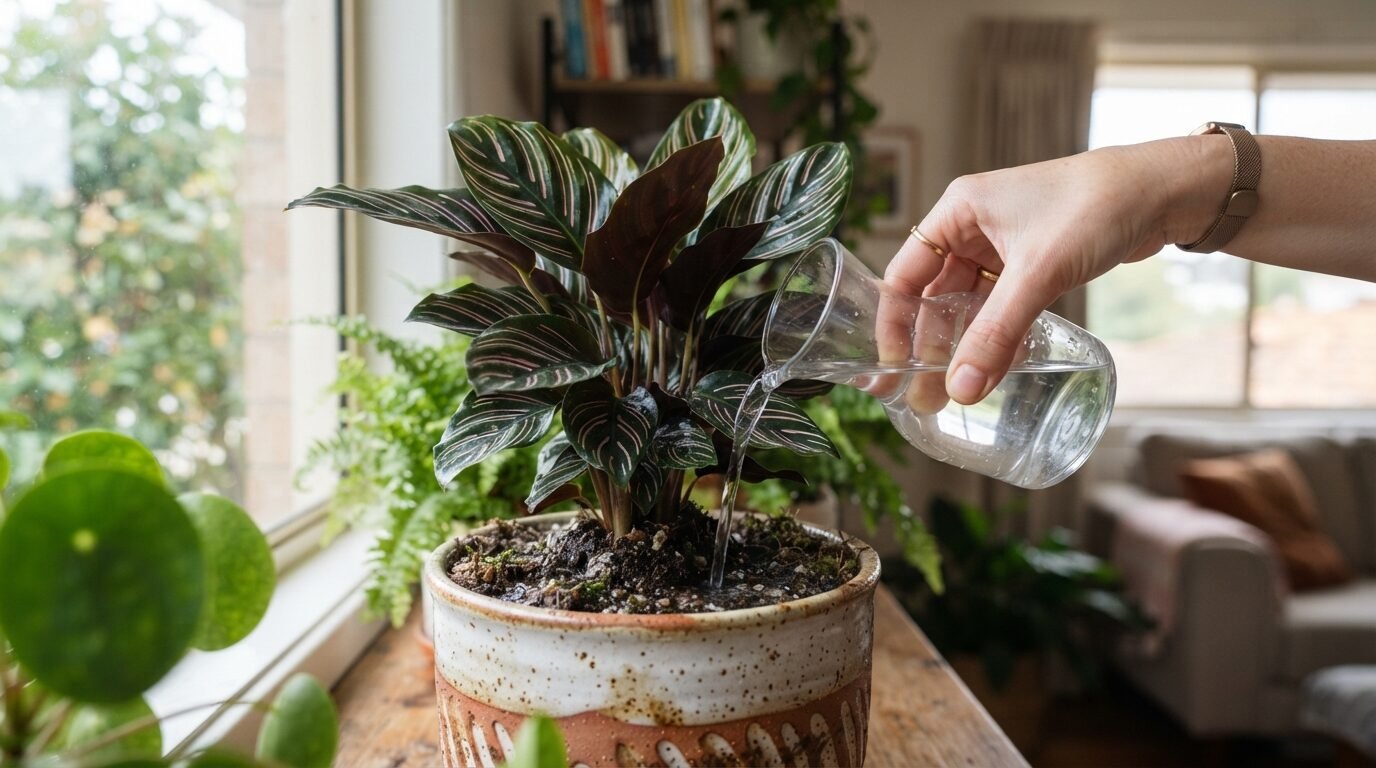
Quick answer: Water your Calathea when the top couple of centimetres of mix is just starting to dry, but the root zone is still lightly moist — not on a fixed schedule. Let excess water drain fully and never leave the pot sitting in water. In an Australian summer that often means watering more frequently; in a cool winter, much less. Consistency, not a calendar, keeps Calathea happy.
Watering is the single biggest thing people get wrong with Calathea, and both directions cause problems. Too dry and the leaves curl and crisp at the edges; too wet and the roots suffocate, and the plant droops and yellows. The trick is not a magic number of days — it is learning to read the pot.
How to tell when your Calathea needs water
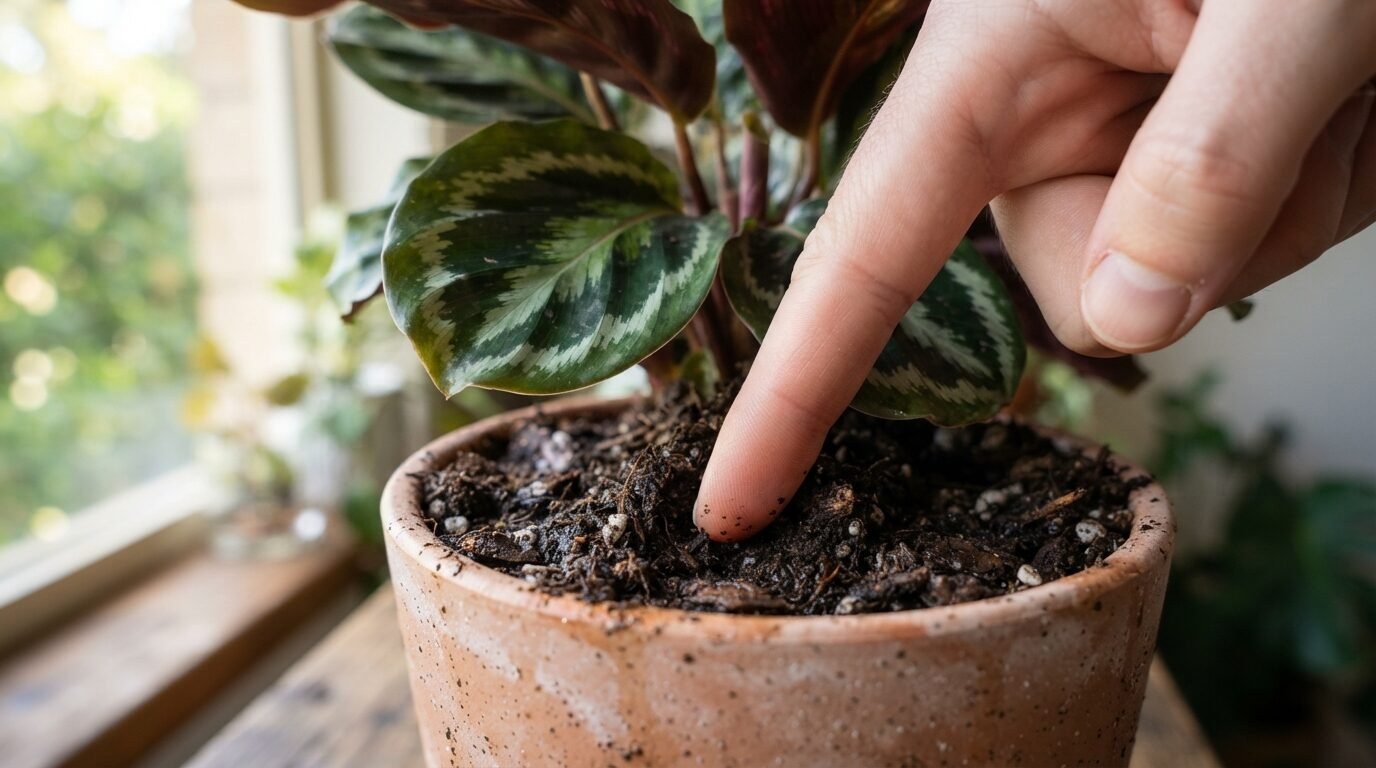
Instead of watering on a schedule, check the plant each time:
Over time you will get a feel for how quickly your particular plant, in its particular spot, dries out — and that is far more reliable than any fixed routine.
Moist, not wet, and never bone-dry for long
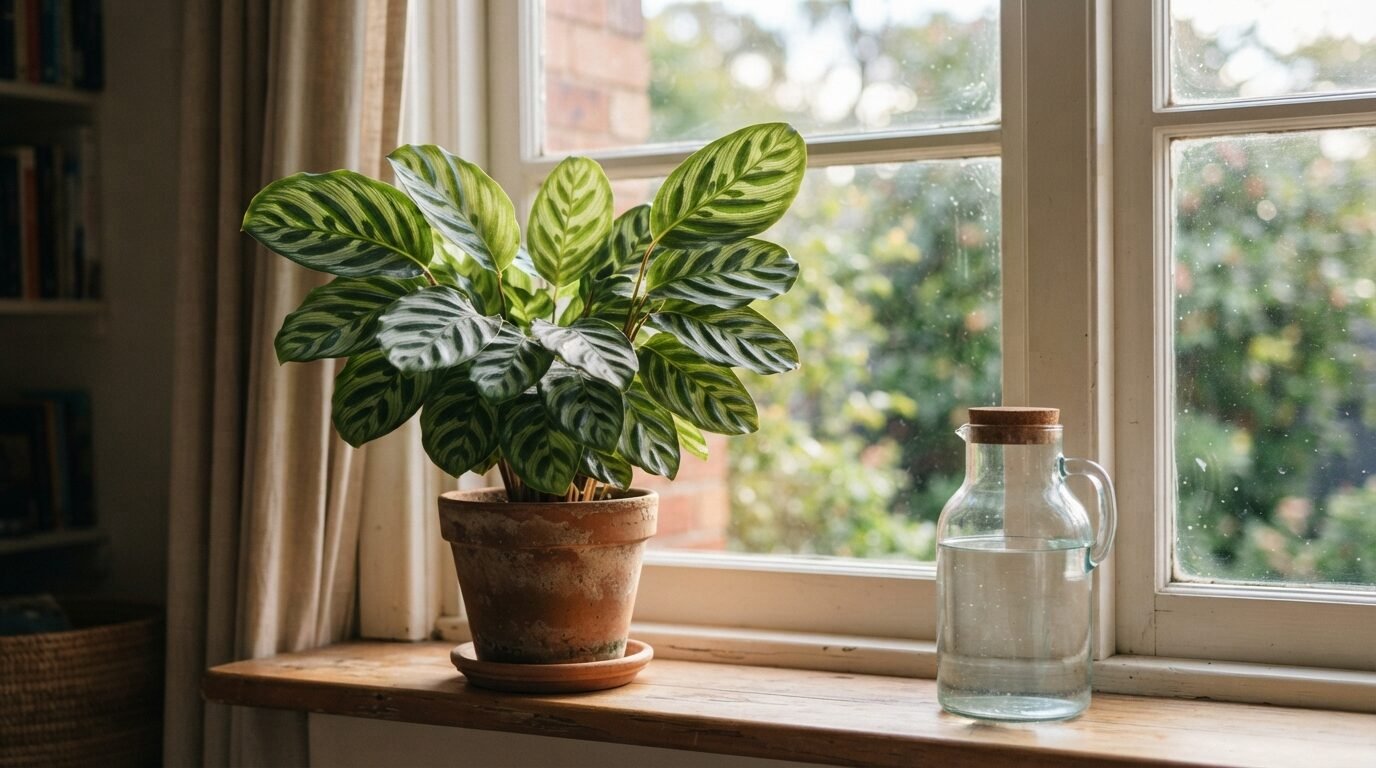
Calathea prefers consistently, lightly moist mix. It dislikes drying out completely, and it equally dislikes sitting in sodden mix. The aim is a steady middle ground: let the very top dry slightly between waterings, but do not let the whole root ball dry out. For the broader care picture — light, humidity and feeding alongside watering — see our Calathea growing and care guide for Australia.
How watering should change with the seasons in Australia
A Calathea uses very different amounts of water across the year, so the same routine will not suit every season:
| Season | What to expect |
|---|---|
| Summer (warm, bright, growing) | Mix dries faster — check more often, water may be needed twice a week in heat |
| Spring / autumn (mild) | Moderate use — check every few days and water as the top begins to dry |
| Winter (cool, low light) | Much slower drying — water less often, sometimes only every week or two |
| Heatwave or air-conditioning on | Pots can dry quickly — check daily in extreme conditions |
This is exactly why a fixed weekly schedule gets people into trouble: it is often too much in winter and not enough during an Australian summer. Always let the pot tell you.
Top-water or bottom-water?
Both work for Calathea:
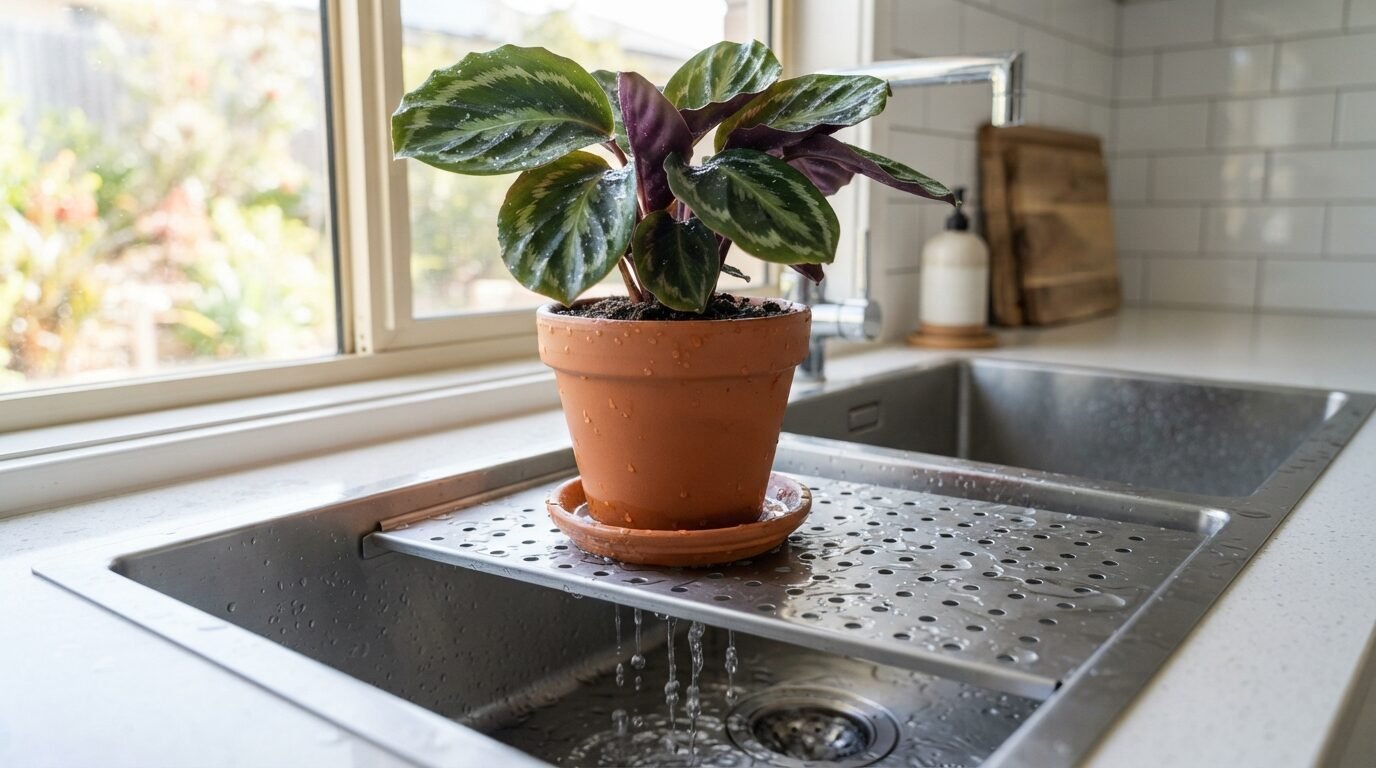
- Top-watering: pour evenly over the mix until water runs from the base, then drain. Simple and effective if you water thoroughly.
- Bottom-watering: stand the pot in a few centimetres of water for 15–30 minutes so the mix wicks up moisture evenly, then remove and drain. Good for avoiding dry pockets in a rootbound plant.
Whichever you choose, the two rules are the same: wet the whole root ball, then let all the excess drain away.
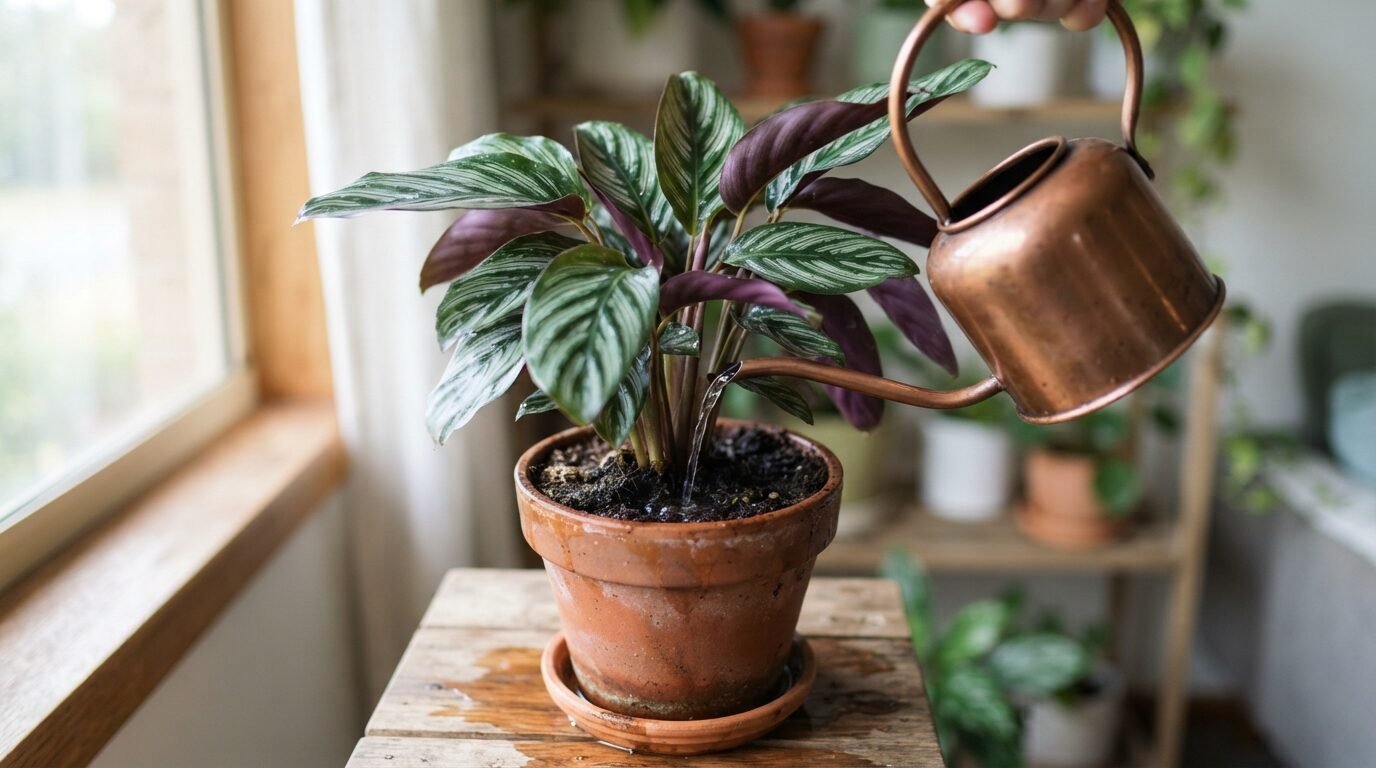
Water quality: do you need filtered water?
Calathea has an online reputation for demanding filtered or distilled water. Australian guidance, including Gardening Australia, does not treat that as essential. What does matter is that minerals and fertiliser salts can slowly accumulate in the mix and contribute to brown leaf edges over time.
Practical approach: flush the potting mix thoroughly with water every so often — especially if you fertilise — so salts drain out the bottom. That is cheaper and more useful than routinely buying bottled water.
Signs you are overwatering
Overwatering is just as damaging as underwatering. Watch for:
- mix that stays wet for many days;
- drooping even though the soil is soggy;
- yellowing leaves alongside wet mix;
- a sour smell or soft, dark roots;
- fungus gnats hovering around constantly damp mix.
Important: if your Calathea is drooping while the mix is wet, do not water more. Check drainage and roots first — see our curling guide and yellow-leaves guide for the related symptoms.
Signs you are underwatering
On the dry side, you will usually see:
- mix that is dry well below the surface and a light pot;
- leaves curling or rolling to reduce moisture loss;
- crispy, brown leaf edges;
- limp foliage that firms up again a few hours after a thorough water.
If the plant perks up within hours of watering, simple thirst was the cause. If it keeps declining after watering, suspect root problems instead.
A simple watering routine that works
CALATHEA WATERING ROUTINE
Get the watering steady and most other Calathea problems become far easier to prevent.
Frequently asked questions
How often should I water my Calathea?
There is no fixed number of days. Water when the top couple of centimetres of mix is just starting to dry but the root zone is still lightly moist. In an Australian summer that may be twice a week; in winter it may be every week or two. Check the mix each time rather than following a calendar.
How do I know if my Calathea needs water?
Feel the mix with your finger or lift the pot. If the surface and the first few centimetres feel dry and the pot is noticeably lighter, it is time to water. If the mix is still damp or the pot feels heavy, wait and check again in a day or two.
Should Calathea soil be moist or dry?
Aim for consistently, lightly moist — never bone-dry for long and never waterlogged. Calathea dislikes both extremes. Let the very top dry slightly between waterings, but do not let the whole root ball dry out, and never leave the pot standing in water.
Do Calatheas really need distilled or filtered water?
Not as an absolute rule. Australian horticultural guidance, including Gardening Australia, does not treat filtered water as essential. Tap minerals and fertiliser salts can build up over time and contribute to brown edges, so flushing the pot occasionally matters more than switching to bottled water.
Why is my Calathea drooping after watering?
Drooping right after watering often means the roots are stressed from being too wet, not too dry. If the mix is already soggy and the plant droops, check drainage and roots rather than watering more. Drooping from genuine dryness usually recovers within hours of a thorough water.
Should I bottom-water my Calathea?
Bottom-watering works well for Calathea: stand the pot in water for 15 to 30 minutes so the mix soaks up moisture evenly, then let it drain fully. It helps avoid dry pockets in the root ball. Top-watering is fine too, as long as you water thoroughly and let excess drain away.
How should watering change between summer and winter in Australia?
Plants use more water in warm, bright, actively growing months and much less in a cool southern winter. Rather than keeping the same schedule, water more often in summer heat and less in winter, always guided by how quickly that particular pot is drying out.
Can you overwater a Calathea?
Yes. Constantly soggy mix starves the roots of air and can lead to root rot, with drooping and yellowing even though the soil is wet. Always let the top of the mix dry slightly, use a free-draining mix and a pot with drainage, and never leave the plant sitting in a saucer of water.
- Calathea growing & care guide for Australia — the complete care hub.
- Calathea leaves curling: causes & fixes — often a watering or humidity signal.
- Calathea brown tips & crispy edges — the edge-stress companion to watering.


