
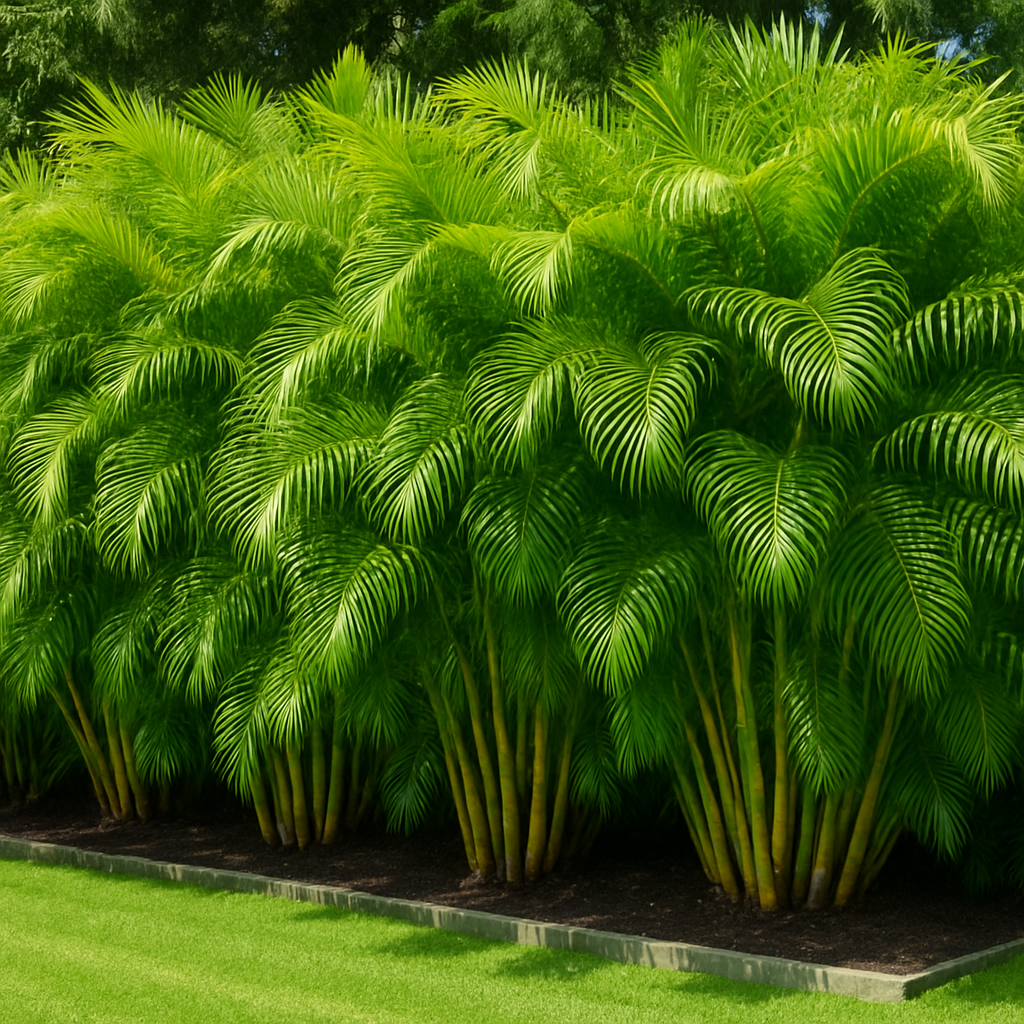
Need to block out a two-storey neighbour or screen a pool fence fast? The Golden Cane Palm hedge (Dypsis lutescens) is Australia’s top-tier choice for rapid, lush privacy.
Many gardeners waste time looking for different varieties of this palm, but there is only one true species.The real secret to making a strong tropical wall is not about the type of plant it relies entirely on precise planting distances and root management.
In this 2026 hedging guide, we make things simple. We explain the spacing, growth, and basic care needed to grow a dense Golden Cane privacy screen from the start.
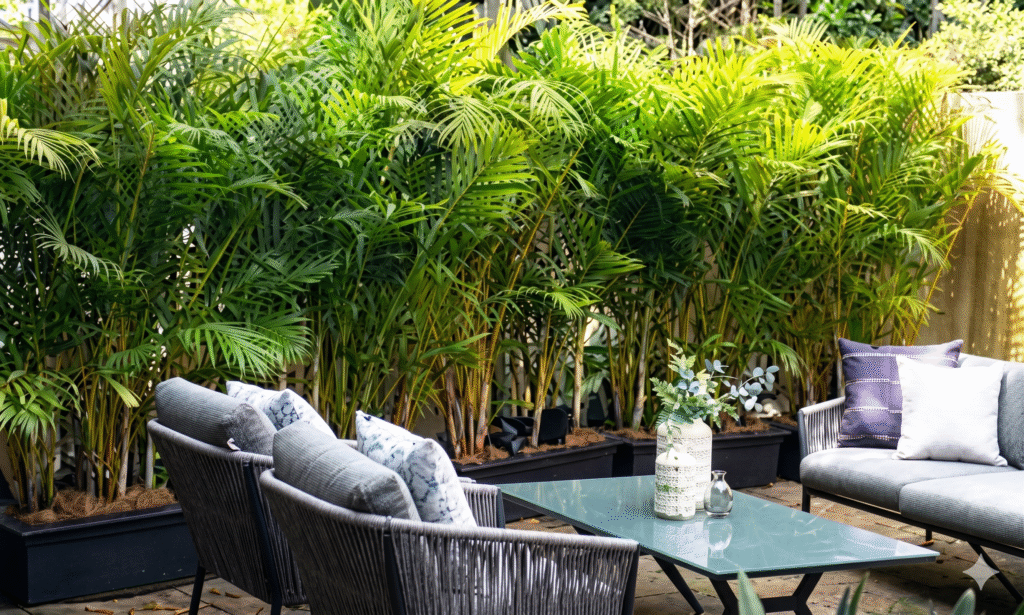
Read our masterclass here:> [How to Grow Golden Cane Palm in Australia: expert’s growing tips 2026-27]
Golden Cane Palm Hedge: The Spacing Cheat Sheet!
1. How Far Apart to Plant
Getting the spacing right is the secret to a great hedge. If you plant them too far apart, you will be staring at your neighbor’s yard for years. Plant them too close together, and they will choke each other.
| Planting Goal | Spacing Guide | Key Benefit |
|---|---|---|
| Instant Screen | 1 meter apart (trunk to trunk) | Quick, dense privacy coverage |
| Healthier Long-Term Hedge | 1.5 meters apart | Better airflow helps prevent fungal diseases like black soot |
| Fence Rule | At least 1 meter away from the fence | Prevents damage as the base grows wider over time |
2. How Fast Will It Grow? (The 2-Meter Rule)
Most Aussies just want to know: When will this block out the neighbors?
In a warm, sunny spot, a healthy Golden Cane Palm will grow about 60cm to 80cm taller every year.
- The Timeline: If you buy a standard knee-high plant from the nursery, it will take about 1.5 to 2 years to completely hide a standard 2-meter Colorbond fence.
- The Speed Boost: To get maximum growth, water them deeply twice a week during their first summer, and use a slow-release palm fertilizer in Spring.
3. Roots Warning: Are They Safe for Pipes and Pools?
People often panic about palm roots destroying their property. Here is the simple truth:
- Around Pipes: Golden Canes do not have thick, woody roots that crush pipes. They have a massive web of thin, stringy roots. They are generally very safe around modern PVC plumbing.
- Around Pools and Paving: Keep them at least 1.5 meters away from pool edges and concrete paths. While the roots won’t crack the concrete, the sheer size of the root ball can push the dirt up, which might lift light pavers over time.
- The Pool Mess: Remember, palms drop dry leaves and seeds. If you plant them right next to the pool, you will be scooping leaves out of your water every single day.
4. The “Trench” Method: The Easiest Way to Plant
If you are planting a long row of palms, do not dig 10 separate holes. Dig one long trench instead.
Why a trench is better:
- Better Drainage: Digging a single hole in hard clay creates a “bathtub” that holds water and rots the roots. A trench lets the water flow away.
- Happy Roots: The roots of all the palms can mix and spread out easily, creating a much stronger, faster-growing hedge.
- Saves Time: It is much easier to mix your compost and fertilizer into a single long trench than to try to measure them out for lots of small holes.
5. How to Trim a Golden Cane Hedge (Crucial Warning)
This is where most beginners make a huge mistake: You cannot use an electric hedge trimmer on a Golden Cane Palm.
Unlike a Lilly Pilly or a Buxus, palms do not grow branches that you can just trim back into a neat box shape. If you cut the top off a palm stem, that stem stops growing forever and will eventually die.
- How to tidy it up: Simply use sharp secateurs to cut off any dead, brown, or ugly fronds as close to the base as possible. Let the green, healthy leaves grow naturally to create that lush, tropical shape
| Plant Type | Look & Vibe | Maintenance Level | Best For… |
|---|---|---|---|
| Golden Cane Palm | Lush, tropical, relaxing | Low (Drop dead leaves naturally) | Pool areas, coastal gardens |
| Lilly Pilly | Traditional, neat, dense box | High (Needs constant trimming) | Formal front yards |
| Slender Weaver Bamboo | Tall, modern, Asian-inspired | Medium (Lots of leaf drop) | Very narrow side passages |
Click here where and how to plant Golden Cane Palm
How to Prune a Palm Hedge: The "Selective Thinning" Method
Maintaining a Golden Cane privacy screen requires a completely different approach than a traditional Lilly Pilly or Boxwood hedge. You cannot simply run a powered hedge trimmer along the top and sides.
The Botanical Science:
Why traditional hedging fails on palms. According to arboriculture, palms are monocots. They do not have a network of branches; instead, each cane grows from a single, vulnerable growing point at the very top (the apical meristem). If you “top” or cut the head off a Golden Cane stem to stop it from growing taller, that specific cane will permanently die and rot.
To control the height of your screen while keeping it thick at eye-level, you must use the Selective Thinning Method.
The 3-Step Selective Thinning Process
- Target the “Canopy Giants”: Once your hedge reaches your desired maximum height (e.g., 3 to 4 metres), identify the oldest, thickest, and tallest canes in the clump that are blocking the sun or pushing against structures.
- The Flush Base Cut: Do not cut them at the top. Take a sharp hand-saw and cut those specific tall canes off completely at the very bottom, completely flush with the soil line.
- Leave the Suckers: By removing the giants, you allow sunlight to reach the base of the clump. This encourages the younger, shorter canes (suckers) to thrive and fill in the gaps, maintaining a dense, green privacy screen right at fence level.
Traditional Hedging vs. Selective Thinning
| Pruning Action | Traditional Hedge (e.g., Lilly Pilly) | Golden Cane Palm Hedge | The Scientific Result |
|---|---|---|---|
| Height Control | Shearing the top leaves horizontally | Sawing the tallest canes off at the soil line | Topping a palm kills the stem. Base-cutting encourages fresh, bushy shoots. |
| Width Control | Trimming the outer sides flat | Removing outward-leaning canes at the base | Prevents the palm from pushing against fences or overtaking pathways. |
| Dead Foliage | Left to decompose inside dense branches | Pulling away dead brown fronds by hand | Improves airflow and reduces the risk of mealybug infestations. |
Pros and Cons of the Selective Thinning Method
To help you manage your landscape effectively, here is what you can expect when committing to this pruning style:
The Professional Planting Guide: Trenches vs. Holes
Most homeowners plant hedges by digging individual holes. While this can work, for longer hedges (more than 3 Golden Cane Palms), professionals usually prefer the trench method for better results.
Why and how the Trench Method Works Better?
In heavy clay soil (common in parts of Melbourne, Sydney, and Brisbane), separate holes can trap water. This creates a “clay bathtub,” where water sits and may lead to root rot.
A trench allows water to spread evenly and helps roots grow outward and connect, creating a stronger, more unified privacy screen
| Method | Best For | Main Benefit |
|---|---|---|
| Individual Holes | 1–3 palms | Simple and quick |
| Trench Method | 3+ palms (hedges) | Better drainage and stronger roots |
1. The Spacing Cheat Sheet: How Far Apart to Plant
Proper spacing ensures a strong hedge. Too far apart, you’ll see your neighbor’s yard for years. Too close, they crowd each other.
- For an Instant Screen: Plant them 1 meter apart (measured trunk to trunk).
- Step-by-Step Trench Planting
1. Dig Wide, Not Deep
Make the trench twice as wide as the pots but the same depth as the pots themselves. Planting deeper than the original pot can cause trunk rot, when the main stem decays due to excess moisture.
2. Break Up the Base
Loosen the soil at the bottom of the trench to help roots grow downward easily. This prevents water from sitting, reducing the risk of waterlogging, which is when soil holds too much water and suffocates roots.
3. Improve the Soil Mix
Mix your soil with organic compost. If your soil is clay-heavy (dense and sticky when wet), add gypsum—a mineral that helps break up compact soil and improve drainage so excess water can escape.
4. Mulch Properly
Add a 5–7 cm mulch layer, keeping it away from trunks to prevent rot.
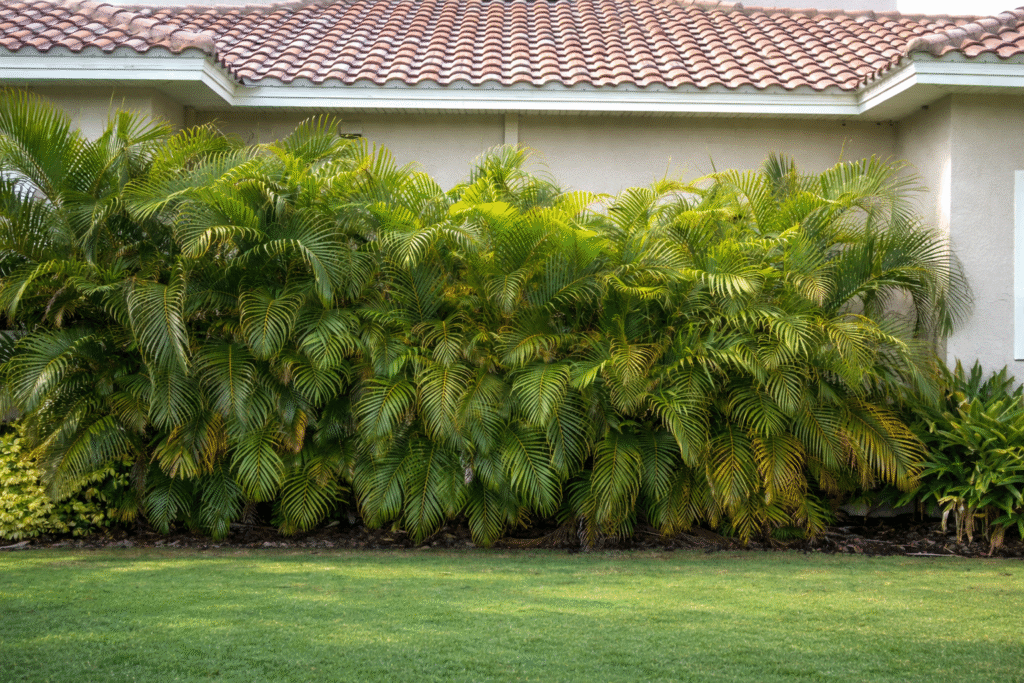
💧 Watering Your Hedge for Fast Growth
While Golden Canes are incredibly drought-tolerant, getting that thick, lush privacy screen requires consistent deep soaking early on. Water deeply every second day for the first 4 weeks, then scale back to twice a week for months 2-6. (Pro tip: Drip irrigation is best for long boundary hedges).
➔ Read our Complete Golden Cane Palm Watering Schedule (Seasonal Advice & Exact Amounts)
Pro Tip: Deep watering encourages strong roots and better wind resistance.
&
Pro Tip: Healthy soil = faster growth and a denser hedge.
Troubleshooting Hedge Stress
Are you Feeding Your Screen?
Planting a Golden Cane privacy screen is a major investment of your time and money. While these palms are incredibly tough, transplant shock, heavy Australian clay, or watering mistakes can occasionally cause a newly planted hedge to throw a tantrum.
If your new privacy screen is looking sick, developing brown crispy tips, or the fronds are turning yellow, do not panic and do not start blindly dumping fertiliser on them—this will often make the problem worse.
Instead, head over to our complete, step-by-step diagnostic guide to accurately identify the issue and save your plants:
👉Click the link Troubleshooting Golden Cane Palms: How to Fix Yellow Leaves & Brown Tips
Coastal Areas (Sydney):
Protect from strong, salty winds when young.
Cooler Areas (Melbourne, Adelaide):
Slower growth. Protect from frost and plant in warmer spots, such as near walls.
Golden Can Golden Cane Palms are tropical, so climate is key. Umid Areas (Queensland):
Fast growth. Ensure spacing for airflow.
Pro Tip: Choose shade-loving plants with shallow roots so they don’t compete too much.
The Finishing Touch: Under-Planting Your Hedge
As palms grow, their lower trunks become bare. Adding plants beneath your hedge makes it look fuller and more polished.
Best Companion Plants:
- Xanadu (Philodendron) – lush green base
- Bromeliads – colorful tropical look
- Liriope – low maintenance and fills gaps
- The Fence Plant at least 1 meter from the fence. As palms grow, their bases widen and can push against panels.ast Will It Grow? (The 2-Meter Rule)
- The Timeline: If you buy a standard knee-high plant from the nursery, it will take about 1.5 to 2 years to completely hide a standard 2-meter Colorbond fence.
- The Speed For fastest growth, water deeply twice a week in the first summer and use spring fertilizer.
Most Aussies ask: When will this block the neighbors?
In a sunny spot, a healthy Golden Cane Palm will grow about 60cm to 80cm taller every year.
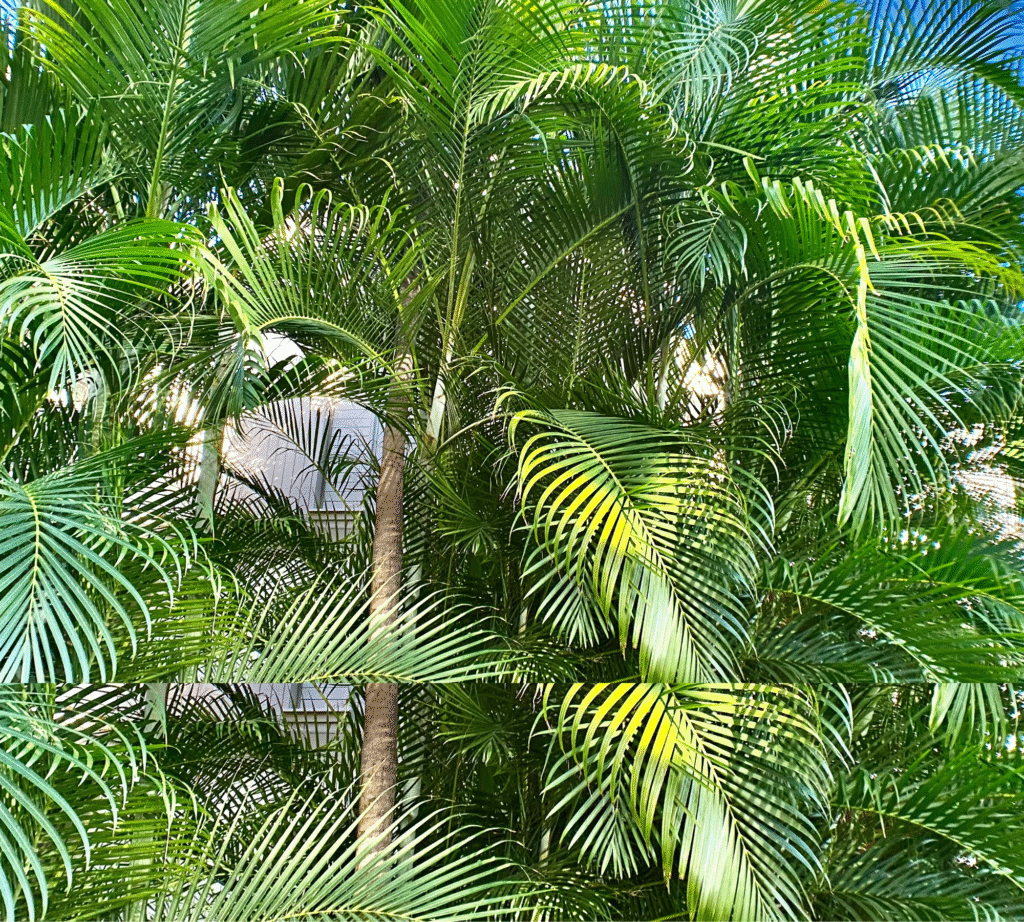
What Is a Golden Cane Palm?
Golden Cane Palm varieties(Dypsis lutescens) are a tropical favourite across Australia, known for their golden stems, elegant arching fronds, and easy care.
Areca Palm, Butterfly Palm, or Yellow Palm, the Golden Cane Palm varieties are native to Madagascar but grow beautifully across Queensland, New South Wales, the Northern Territory, Western Australia, and even parts of South Australia.
What sets it apart?
- Bright golden-yellow stems
- Feathery, arching fronds
- Multi-stemmed clumping growth
- Fast-growing and easy-care
These amazing plants add instant greenery to both indoor and outdoor spaces. More specifically, Golden cane palms are pet-safe, drought-tolerant, and fast-growing.
While often seen as a single plant type, Golden Cane Palms come in various sizes and styles—ideal for hedging, pots, privacy screens, or tropical landscaping.
Let’s explore the variety, features, and planting ideas for Golden Cane Palms in Australia.
Is There More Than One Golden Cane Palm?
Technically, there is only one species: Dypsis lutescens. But in Australian nurseries and homes, you’ll find it in different forms, shapes, and sizes depending on how it’s grown and used.
Here are the most common Golden Cane Palm varieties:
1. Standard Golden Cane Palm (Dypsis lutescens)
This is the classic version you see in most gardens and landscapes.
Grows 4–8 metres tall
Perfect for privacy screens, driveways, or poolside planting
Loves morning sun and dappled afternoon shade
Tolerates humidity and coastal winds
Great for: Large gardens, tropical themes, hedging.
Looking for Indoor or Balcony Palms?
While the Golden Cane is Australia’s ultimate outdoor privacy screen, it is also incredibly popular as a potted indoor feature or a compact balcony plant (often referred to as a “Dwarf” Golden Cane).
However, growing them indoors requires a completely different approach to lighting, watering, and pot size.
If you aren’t planting a hedge and just want to style a Golden Cane inside your living room or on a small patio, don’t use the hedging rules!
Instead, jump over to our dedicated indoor guide: 👉 [Insert Link Here: How to Grow and Style Golden Cane Palms Indoors]
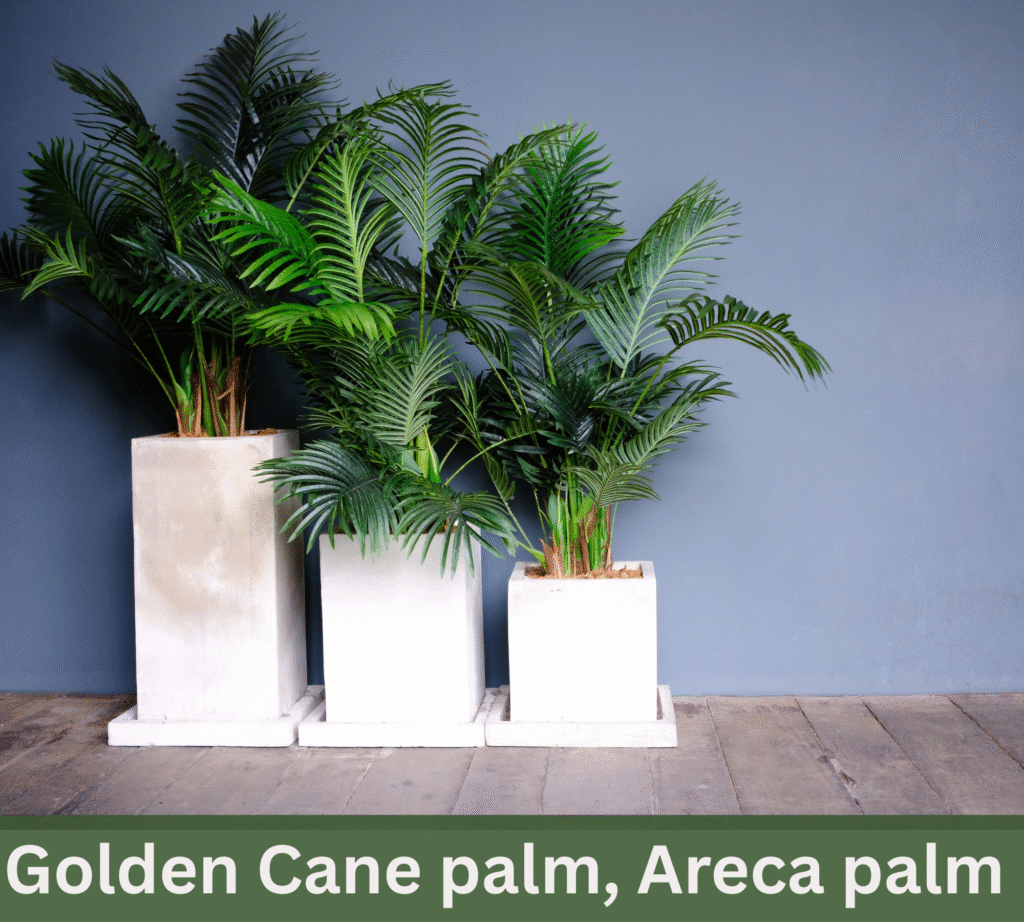
Golden Cane Palm in Landscaped Clusters
Used in modern designs with large rocks, mulch, and contrasting plants.
Mixed heights create visual interest.
Paired with cordylines, agaves, or bromeliads
Creates a tropical paradise feel
Great for: Stylish front yards or designer landscapes.
Variegated Areca Palm – Not a True Golden Cane
Some nurseries stock variegated palms that look like Golden Cane Palms but have striped leaves. These are usually other Dypsis or Chrysalidocarpus species and not true Golden Cane varieties, but they still give a similar effect.
Choosing the Right Golden Cane Palm for Your Space
Location: Best Variety/Form
Small balcony: Dwarf or potted version
Indoor décor: Indoor form with filtered light
Backyard privacy: Clumping hedge
Tropical garden: Standard in open soil
Front yard feature: Clustered landscape style
Are Golden Cane Palms Toxic to Cats and Dogs?
Good news for pet owners: the ASPCA lists the Golden Cane Palm (Dypsis lutescens), also called the Areca or Butterfly Palm, as non-toxic to cats and dogs. This means it is not classified as poisonous, although pets should still be discouraged from chewing or swallowing its fronds.
Non-toxic does not mean completely risk-free. Chewed plant material may still cause physical irritation or digestive upset, while pieces of fibrous frond could be difficult for a small animal to swallow. Remove fallen leaves and contact your veterinarian if your pet becomes unwell, has difficulty swallowing, eats a large amount, or you are uncertain which plant it consumed.
A “palm” label is not a safety guarantee. The Sago Palm (Cycas revoluta) is a cycad rather than a true palm, and the ASPCA lists it as toxic to cats and dogs, with potentially fatal effects. Always verify the botanical name; suspected Sago Palm ingestion requires urgent veterinary attention.
Important Faqs about Golden Cane Palm hedge
Are there different types of Golden Cane Palms?
There is only one true species (Dypsis lutescens), but it is sold in different sizes for indoor use, pots, or hedging.
Can Golden Cane Palms grow in pots?
Yes, they grow well in pots for a few years. However, they can become root-bound after 3–5 years, so they are better in the ground for long-term growth.
How tall do Golden Cane Palms grow?
Outdoors, they can reach 6–8 metres. In pots or indoors, they usually stay under 2–3 metres.
Are they safe around pets?
Yes, Golden Cane Palms are non-toxic to dogs and cats, making them safe for most households.
How fast do Golden Cane Palms grow?
In warm Australian climates, they can grow around 60–80 cm per year with proper watering and feeding. Growth is slower in cooler areas.
How far apart should I plant them for a hedge?
Plant them about 1 metre apart for quick privacy. For healthier long-term growth, spacing of 1.5 metres is better.
Why are my palm leaves turning yellow?
👉 Click here to read our step-by-step diagnostic guide and easy fixes!
How long does it take to form a privacy screen?
With proper care, a dense hedge can form in about 2 to 4 years depending on climate and maintenance.
Do Golden Cane Palms handle cold weather?
They prefer warm climates and can be damaged by frost. In cooler areas, plant them in protected spots like near walls.
The Final Verdict: Your Fastest Route to Backyard Privacy
If you’re tired of looking at your neighbour’s shed or feeling exposed around your pool, a Golden Cane Palm hedge is one of the fastest and easiest ways to create a private backyard in Australia.
Unlike traditional hedges that can take years to fill in, Golden Canes grow quickly and require very little maintenance. By using the trench planting method and spacing them correctly (1 to 1.5 metres apart), you set up a dense, tropical privacy screen that improves every year.
They’re fast-growing, safe for plumbing, and instantly soften harsh fence lines—turning a plain Colorbond fence into a lush, private oasis.
Golden Cane Palms varieties may come from Madagascar, but they’ve found a real home in Aussie gardens. Whether you want a screening hedge, a potted beauty, or a lush indoor plant, there’s a Golden Cane Palm style to suit your space.