
 gardengreen.au
Why Is My Banksia 'Birthday Candles' Dying?
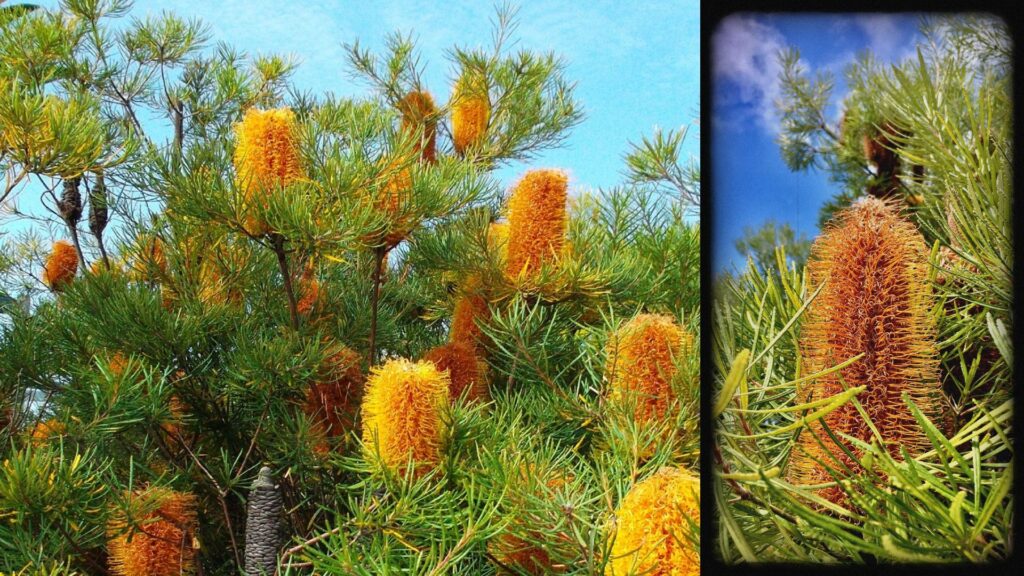
It is the classic weekend nursery impulse buy. You see those stunning, golden-orange flower spikes sitting in the pot, picture them perfectly framing your front pathway, and bring a couple home.
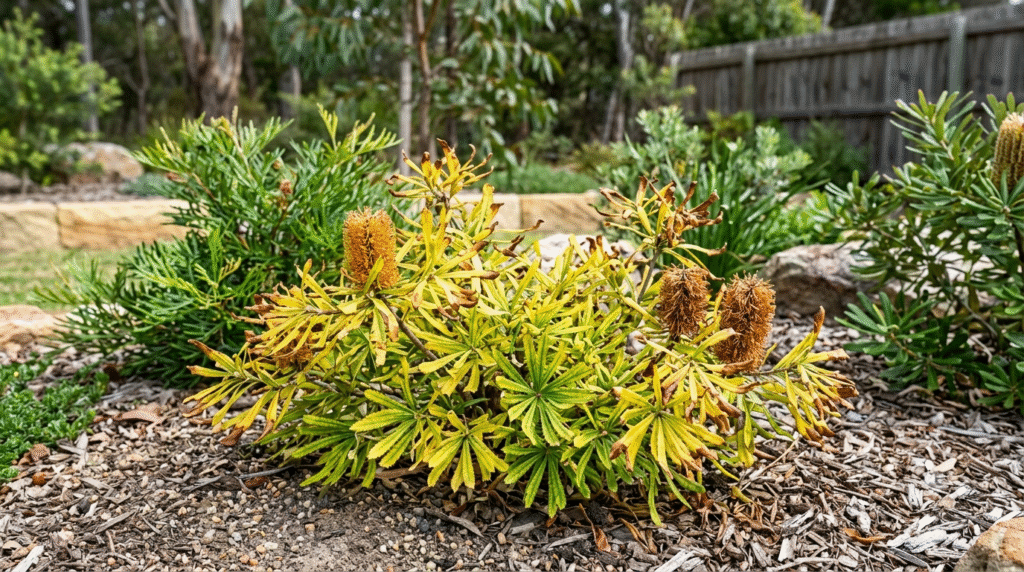
Fast forward six months. The foliage is turning crispy brown, the leaves are throwing a weird yellow hue, and there isn’t a single new flower in sight.
Don’t rip it out of the ground just yet. Banksia spinulosa ‘Birthday Candles’ is an absolute bulletproof native once it establishes, but because it is a low-growing dwarf cultivar, it faces a few unique problems that large, tree-sized Banksias simply do not have to deal with.
Here is the brutal truth about what is going wrong with your ‘Birthday Candles’ and exactly how to fix it.
Quick Diagnosis: What Is Killing Your Plant?
Before you start spraying chemicals or dumping water on the roots, you need to identify the actual problem. Use this quick reference guide to figure out what your Banksia is trying to tell you.
| The Symptom | The Likely Cause | The Immediate Fix |
|---|---|---|
| Entire plant suddenly turns crispy and brown | Root Rot / Collar Rot (Soil is too wet or mulch is touching the trunk) | Pull mulch away from the base, let the soil dry completely, apply anti-rot fungicide. |
| Leaves turning yellow with green veins | Phosphorus Toxicity (Standard fertilizer was applied) | Flush the soil with water; never use non-native fertilizers again. |
| Old leaves are green, but new tip growth is yellow | Iron Deficiency (Soil pH is too high/alkaline) | Apply iron chelates and test soil pH (aim for slightly acidic 5.5 – 6.5). |
| Massive leafy growth but zero flowers | Too much shade OR pruned at the wrong time | Relocate to full, blasting sun. Stop pruning in late spring. |
Click here to Visit our comprehensive guide about Banksia plant in detail
The #1 Killer: "Collar Rot" (You're Smothering It)
When people plant Australian natives, the first thing they do is dump a massive, thick layer of sugar cane or pine bark mulch around the base to keep the weeds down.
For a large gum tree, that is fine. For ‘Birthday Candles’, it is a death sentence.
Because this is a dense, low-growing groundcover (usually only reaching 45cm to 50cm high), the foliage sits right on the dirt. If you pile mulch right up against the main trunk, it traps moisture against the bark. There is zero airflow. The stem rots, the roots suffocate, and the entire plant will literally collapse and turn brown in a matter of days.
The Fix: Pull all the mulch at least 10cm to 15cm away from the main trunk. The collar (where the stem meets the dirt) needs to breathe. If your soil is heavy suburban clay, you need to raise the garden bed or dig through gypsum before planting to ensure the water actually drains away.
Banksia ? ,Varieties , Care and Why is my Banksia dying?
Don’t give up! Most issues are fixable once you know the cause.
Get ready to be inspired by this comprehensive guide. Gardengreen’s experts will disclose top ideas to save your Banksia.
The "Yellow Death" (Phosphorus Poisoning)
Banksias evolved over millions of years in ancient, nutrient-poor Australian soils. To survive, they developed highly specialized “proteoid” roots—a massive, dense mat of microscopic roots designed to aggressively hunt down and absorb phosphorus.
If you throw a handful of standard garden fertilizer, chicken manure, or regular potting mix onto a Banksia, those roots go into overdrive. They absorb a lethal dose of phosphorus, poisoning the plant from the inside out. The leaves will turn a sickly yellow, burn at the tips, and drop off.
The Fix: If you have accidentally fertilized it, flush the soil heavily with a hose to wash away as much of the nutrient as possible. Moving forward, only ever use a specialized Native Slow-Release Fertilizer (which has an incredibly low phosphorus, or “P” rating, on the N-P-K label). Truthfully, once established in the ground, they rarely need feeding at all.
Why Won't My 'Birthday Candles' Flower?
You bought it for the flowers, so staring at a green bush for three years is incredibly frustrating. If your plant is healthy but refusing to produce those iconic golden cones, it comes down to two simple landscaping mistakes.
1. The Shade Trap
Nurseries often display them under shade cloth, tricking buyers into thinking they like the shade. They don’t. To produce a heavy flush of flowers, ‘Birthday Candles’ needs blistering, full Aussie sun for at least 6 to 8 hours a day. If it is sitting under the canopy of a larger tree, it will stay green, but it will never bloom.
2. The Pruning Mistake
Banksias set their flower buds right after the previous season’s flowers fade. If you get the hedge trimmers out in summer or late spring to give the plant a “tidy up,” you are literally cutting off all of next year’s flowers. If you must prune for shape, do it immediately after the flowers finish in late winter/early spring, and never cut back into old, bare wood—it will not shoot back.
Generic Banksia vs. ‘Birthday Candles’
‘Birthday Candles’ shares the same core needs as other banksias, so many problems overlap. If your plant is struggling, our guide to why banksias die — yellow leaves, no flowers and root rot walks through the common causes and how to fix them.
| Care Requirement | Large Banksia (e.g., B. integrifolia) | ‘Birthday Candles’ (B. spinulosa dwarf) |
|---|---|---|
| Planting Location | Deep soil, coastal winds, handles heavy rain well. | Needs excellent drainage; prone to rotting in soggy, flat ground. |
| Airflow Needs | High canopy naturally provides massive airflow. | Extremely dense groundcover; requires strategic pruning to let the center breathe. |
| Pot Viability | Terrible in pots (roots grow too aggressively). | Excellent in pots. Perfect for wide, shallow bowls with premium native potting mix. |
The Ultimate Failsafe (If You've Had Enough)
Sometimes, no matter how perfectly you prep the soil or how carefully you water, a tricky microclimate will just reject a plant. If you have killed your third ‘Birthday Candles’ and are absolutely sick of staring at a brown, dead patch in your landscaping, it might be time to stop fighting the soil.
If you just want that lush, low-growing native look to edge your pathways without the constant stress of root rot and pH testing, check out Garden Green’s premium range of zero-maintenance landscaping alternatives.