
Leaf Blower Buying Guide Australia: Cordless, Petrol or Electric?

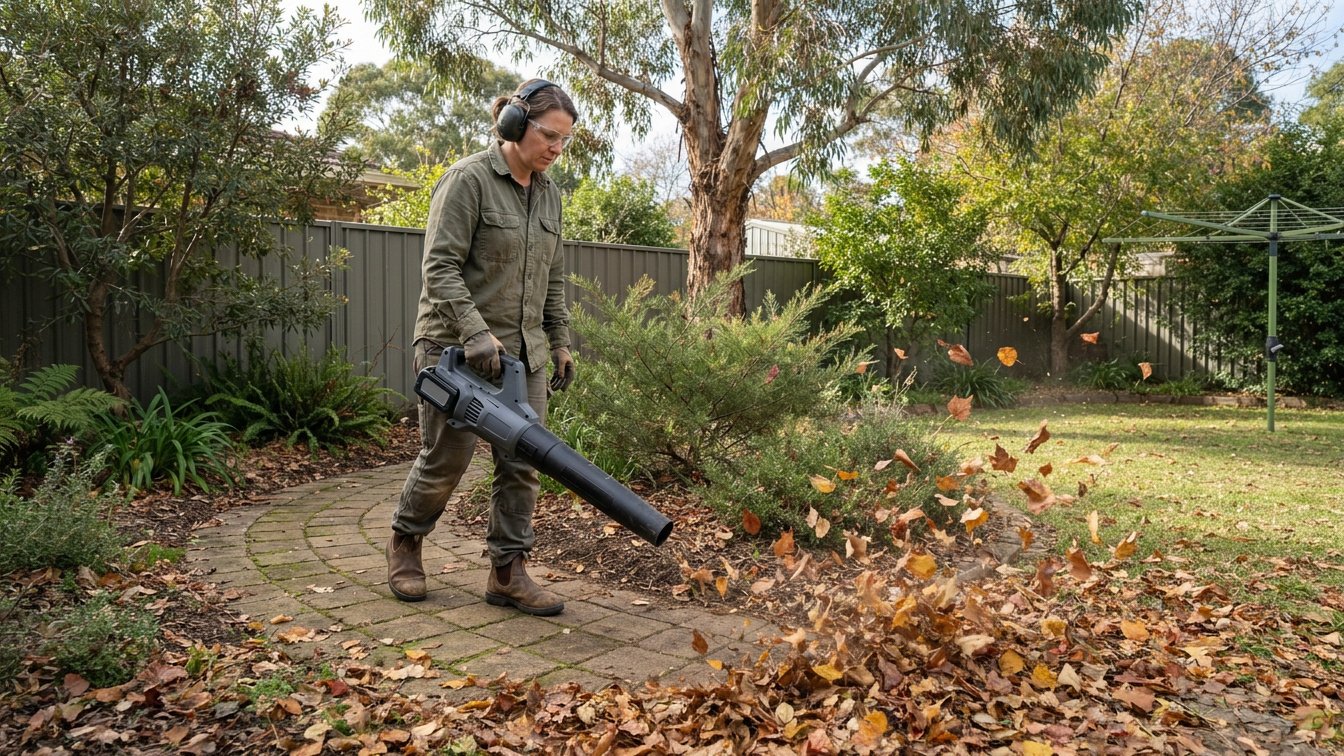
The best leaf blower for most Australian homes is a cordless model light enough to use one-handed, with enough air power to move leaves off your paths and lawn — not the loudest, highest-spec machine on the shelf. A small courtyard needs very little; a large block with established trees in autumn needs more power and run time. Weight, noise and battery life usually matter more day to day than headline numbers.

Quick pick: which leaf blower suits your yard?
| Your situation | What to prioritise | Why |
|---|---|---|
| Small courtyard, balcony, car | Light cordless blower, small battery | Low weight and quiet running matter more than raw power |
| Typical suburban block | Mid-size cordless on a shared battery platform | Enough air power for paths and lawn; the battery suits other tools |
| Large block with big trees | High-power cordless (or petrol) + spare batteries | Autumn leaf fall needs sustained power and run time |
| Also want to clear gutters/debris | Blower with strong, focused nozzle | Air speed (not just volume) shifts wet or stuck leaves |
Corded, cordless or petrol?
| Type | Best for | Trade-off |
|---|---|---|
| Cordless (battery) | Most suburban yards — paths, lawns, light leaf clearing | Limited by run time; big jobs need spare batteries |
| Corded (electric) | Small areas near a power point | Tethered to an extension lead |
| Petrol | Large blocks, heavy leaf fall, long sessions | Heavier, much louder, needs fuel and maintenance |
For most Australian homes a cordless blower on a good battery platform is the easiest choice. If you own more than one cordless garden tool, pick the battery platform first so the blower, trimmer and hedge trimmer share one battery and charger.
Air volume vs air speed
Two numbers describe a blower’s output, and they do different jobs:
- Air volume (how much air it moves) shifts large amounts of dry, loose leaves across a wide area.
- Air speed (how fast the air moves) dislodges wet, matted or stuck leaves and debris.
A good all-rounder balances both. For Australian conditions — dry leaf litter in summer, wetter clumps after rain — enough air speed to lift damp leaves is often more useful than a big volume figure alone.
Weight, noise and comfort
A blower is held and swung for the whole job, so weight and balance decide whether it’s pleasant to use. Noise matters too: cordless models are much quieter than petrol, which is kinder to you, your neighbours and local noise rules. Look for:
- low weight for the run time you need;
- a comfortable grip and balanced feel;
- a variable-speed trigger (full power for leaves, gentle for garden beds and gravel);
- lower noise ratings, especially if you have close neighbours.
Check local rules. Some councils set times when powered garden tools can be used, particularly on weekends and early mornings. A quieter cordless blower gives you more flexibility.
Blower, vacuum or mulcher?
Some models also vacuum and mulch leaves into a bag, which is handy if you collect leaves for compost. The trade-off is extra weight and bulk, and vacuum mode works best on dry leaves on hard surfaces. If you mostly move leaves off paths and lawn, a straight blower is lighter and simpler; if you want to collect and shred, a blower-vac earns its keep.
Using a blower well (and safely)
- Work with the wind, not against it, and push leaves into a pile in one corner.
- Use lower power near garden beds, gravel and mulch so you don’t blast them around.
- Wear eye protection and hearing protection (essential with petrol).
- Keep the nozzle clear of the ground to avoid flinging stones.
- Be considerate of neighbours with timing, especially early mornings.
Looking after your leaf blower
- Clear leaf and dust build-up from the intake and nozzle after use.
- For cordless, store batteries out of extreme heat and don’t leave them fully flat for long.
- For petrol, follow the fuel, air-filter and spark-plug maintenance schedule.
- Store out of the weather to protect plastics and batteries.
Where our recommended picks will go
Garden Green has not joined an affiliate program and has not completed controlled testing of current blower models, so we are not publishing a fake “best blowers” ranking from copied retailer descriptions. When recommendations are added, they will be grouped by real use case — small courtyard, general suburban block, and large leafy property — rather than pretending one blower suits every yard.
Frequently asked questions
Is a cordless or petrol leaf blower better?
For most suburban yards a cordless blower on a good battery platform is the easiest choice — lighter, far quieter and lower-maintenance than petrol. Petrol still leads for large blocks, heavy leaf fall and long sessions. Match the power type to how much you clear and how often.
What’s the difference between air volume and air speed?
Air volume (how much air it moves) shifts large amounts of dry, loose leaves; air speed (how fast the air moves) dislodges wet, matted or stuck leaves. A good all-rounder balances both, and enough air speed to lift damp leaves is often more useful than a big volume figure alone.
How much power do I need in a leaf blower?
Match it to your yard. A small courtyard needs very little; a large block with established trees in autumn needs sustained power and run time. For cordless, a more powerful motor drains the battery faster, so leafy properties benefit from a spare battery.
Should I get a blower that also vacuums and mulches?
If you collect leaves for compost, a blower-vac that shreds leaves into a bag is handy — but it’s heavier and bulkier, and vacuum mode works best on dry leaves on hard surfaces. If you mostly move leaves off paths and lawn, a straight blower is lighter and simpler.
Are leaf blowers too loud to use in suburbs?
Cordless blowers are much quieter than petrol and are usually fine for suburban use, but some councils set times when powered garden tools can be used. Check your local rules, choose a quieter model if you have close neighbours, and avoid very early mornings.
This guide is part of our complete guide to the best garden tools in Australia. General guidance for Australian gardeners; brands and models change. Always follow the manufacturer’s instructions, safety guidance and local noise rules.

