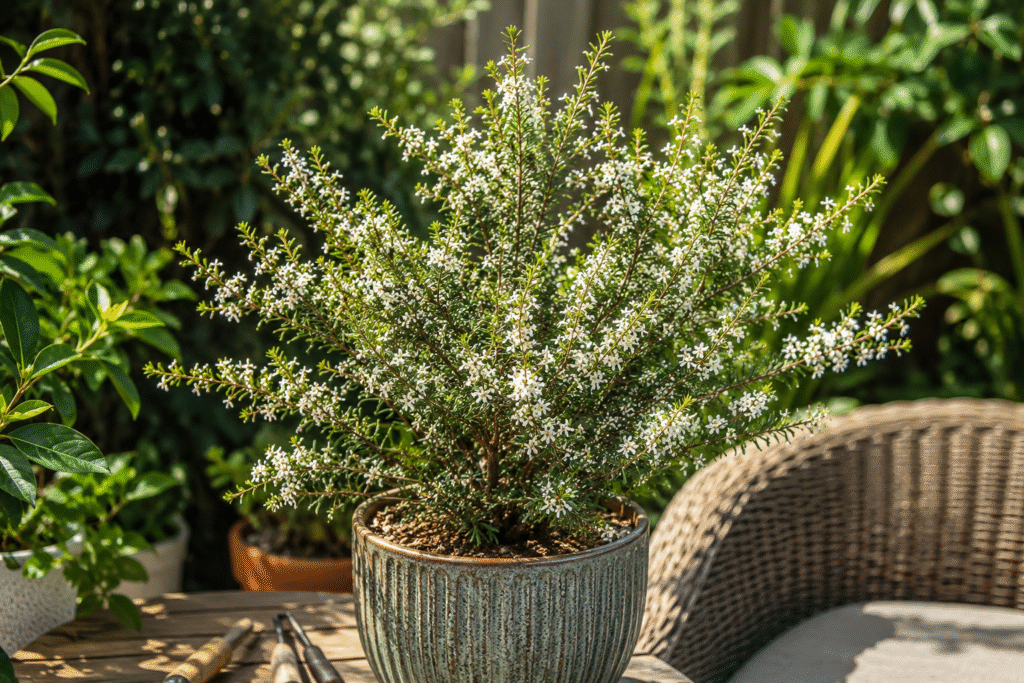
Love the look of lush, native Australian greenery but don’t exactly have a sprawling backyard to plant a massive 4-meter hedge?
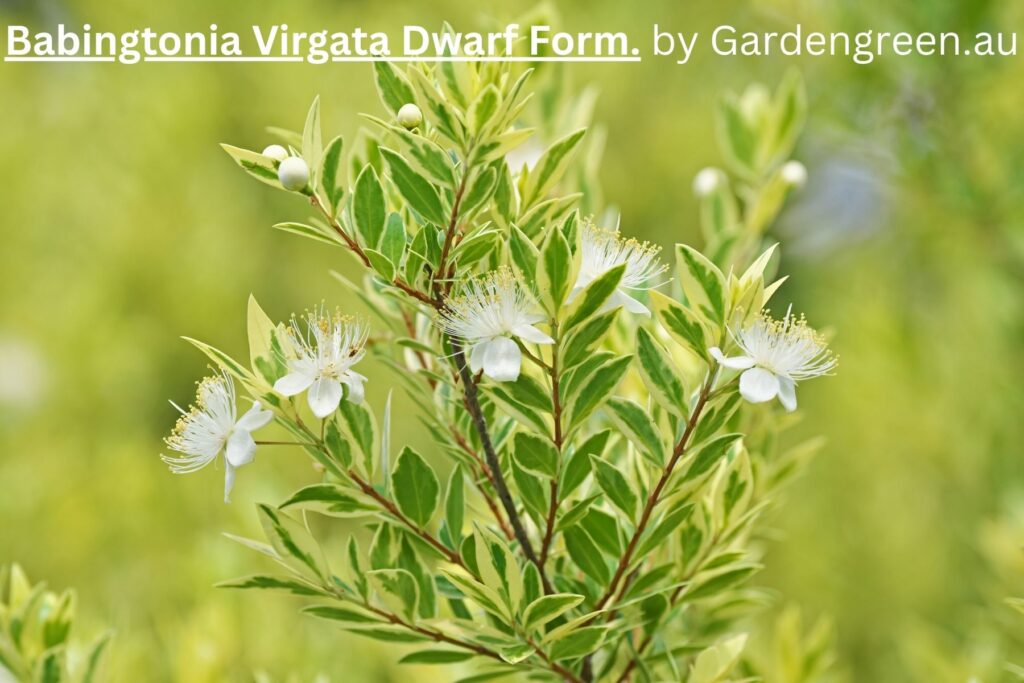
The perfect solution is the Babingtonia Virgata Dwarf Form.
While the full-sized species is famous for massive privacy screens this miniature variety brings that same rugged toughness to tight courtyards and balcony pots.
For further information and complete details regarding the standard plant’s growth habits, soil needs, and long-term care, check out our below comprehensive main guide.
But beware: container gardening is unforgiving. Trap this native in a cheap plastic pot or generic supermarket soil, and it will crisp up and die in days.
Babingtonia Virgata Dwarf
🌿 IDEAL GROWING CONDITIONS 🌿
Thrives in the right conditions for healthy growth and beautiful blooms.
CLIMATE
MILDPrefers mild to warm climates. Ideal in temperate to subtropical regions.
DROUGHT
HIGH TOLERANCELow water needs once established. Tolerates dry periods exceptionally well.
FROST
SENSITIVENot frost hardy. Protect from frost and freezing winter winds.
AIRFLOW
GOODPrefers good airflow to promote healthy growth and reduce disease risk.
🌿 BEST RESULTS: Plant in a sunny to lightly shaded spot with good airflow. Protect from extreme cold and ensure well-draining soil.
If you are debating between this and a traditional hedge, check out our head-to-head comparison of the Babingtonia Virgata vs. Lilly Pilly.”
Planning a larger boundary screen? If you are debating between this native beauty and a traditional hedge, check out our detailed head-to-head comparison to find the perfect fit for your garden.
⚖️ Read the Comparison: Babingtonia Virgata vs. Lilly PillyHow to grow potted Dwarf Twiggy Heath Myrtle
If you want a thriving, bird-attracting feature plant, you need the right setup. Here is exactly how to choose the right pot, the perfect soil chemistry, and the care routine to make your potted Dwarf Twiggy Heath Myrtle thrive.
🌿 Snapshot: The Potted Powerhouse
When Australian gardeners look for a ‘Dwarf Heath Myrtle’ or ‘Dwarf Twiggy Myrtle,’ they want a resilient, no-fuss native that delivers massive greenery in a tight space. Here is exactly what this compact, evergreen powerhouse shrub brings to your garden:
• Hardiness & Resilience:
Unlike fussy exotic plants, this tough Aussie native is built to handle the intense glare of a hot balcony or the heavy wind tunnel of an apartment high-rise.
• Compact Size & Shape:
Perfect for tight courtyards and patio pots. It naturally grows into a neat, tight mound between 30cm and 1 meter tall, meaning you never have to prune it aggressively.
• Eye-Catching Foliage:
It features very fine, needle-like deep green leaves. As a brilliant visual bonus, the fresh spring growth emerges with an attractive bronze tint.
• Wildlife-Friendly Flowers:
It explodes with masses of tiny, star-shaped white flowers from late spring through summer. The blooms have a light honey scent that acts as a magnet for native bees, butterflies, and small birds.
The Problem: Traditional hedging plants are genetically wired to grow massive root systems. When forced into a pot, they quickly become “root-bound,” cracking expensive terracotta and demanding heavy pruning every month to fit the space.
The Solution: Dwarf cultivars of the Babingtonia Virgata Dwarf Form.—sold under nursery names like ‘Gardengreen’, Howie’s Feathertips’ or ‘Compacta’—are ideal container shrubs.
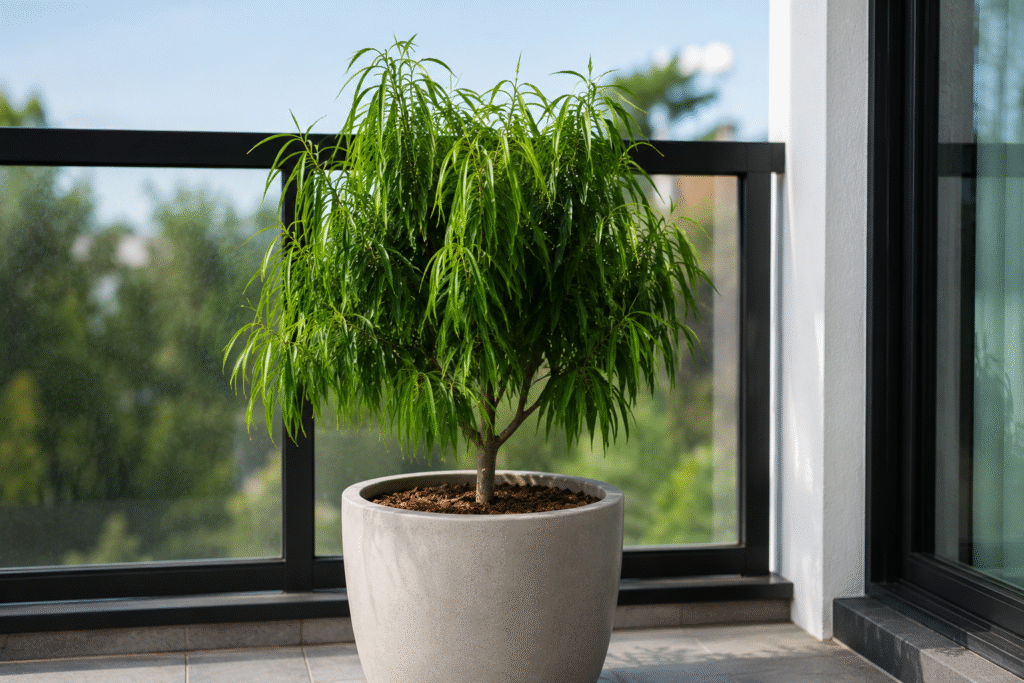
- Perfect Proportions: They naturally max out at 1 meter high and 1 meter wide. They form a dense, rounded mound of fine green foliage without ever requiring a chainsaw or aggressive hedging shears.
- The Summer Floral Show: Despite their miniature stature, they punch well above their weight in spring and summer. They produce an explosion of delicate, honey-scented white flowers, transforming your stark apartment balcony into a feeding ground for local native bees and butterflies.
- Wind and Glare Resistance: High-rise balconies often suffer from brutal wind tunnels and intense reflective glare from glass windows. The dwarf Babingtonia’s fine, tough foliage is built to withstand these harsh coastal and urban microclimates.
The Problem: This is where 90% of container gardeners fail. Australian natives evolved in some of the most nutrient-poor soils on the planet. If you plant your Babingtonia Virgata Dwarf Form in a standard, “premium” potting mix (pumped full of synthetic fertilisers), the high phosphorus levels will physically burn the roots. The leaves will turn yellow, drop off, and the plant will perish.
The Solution: You must use a certified, low-phosphorus Native Potting Mix. A potted plant cannot send its roots deep into the earth to find what it needs, so the soil you provide is its entire universe.
The Great Naming Confusion (Nursery Tag Guide)
Because botanists have continually reclassified this native plant, shopping for the dwarf variety can be frustrating. To make sure you buy the miniature container plant and not a massive 4-meter hedge, look for these names on the nursery tag:
| Botanical Names | Dwarf Cultivars | Common Names |
|---|---|---|
|
• Babingtonia virgata • Baeckea virgata • Sannantha virgata |
• Baeckea virgata ‘Nana’ • Baeckea virgata ‘Compacta’ |
• Dwarf Baeckea • Fairy Lights Plant • Dwarf Heath Myrtle |