
 Huma Naveed
If you’re wondering which Bird of Paradise is safe to plant near your pool, “Strelitzia Nicolai vs Reginae” or which one can handle colder areas like Melbourne, this guide will make it clear.
We’ve removed the confusing plant jargon and broken everything down into a quick, easy comparison—so you can choose the right plant for your space with confidence before you start digging.
Quick answer: Which Bird of Paradise should you choose?
| Use Case | Best Choice | Why It Works |
|---|---|---|
| Small garden / Balcony / Pots | Strelitzia reginae | Compact size, easy to manage, and produces bright, colourful flowers without taking too much space. |
| Large garden / Privacy screen / Tropical look | Strelitzia nicolai | Grows tall with large leaves, perfect for creating a dense, dramatic tropical screen—but needs space and planning. |
Strelitzia Nicolai vs Reginae
Avoid Nicolai if: You are planting within 3 metres of a pool, a glass fence, or a main sewer line.
Choose Reginae if: You want reliable orange flowers and a plant that won’t outgrow a standard suburban fence line.
The Winter Rule: If you get more than 3 frosts a year, Reginae is your only safe bet; Nicolai will likely turn black and rot.
| Feature | Strelitzia Reginae (The Shrub) | Strelitzia Nicolai (The Giant) |
|---|---|---|
| Max Height | Compact 1.5m – 2m. | Massive 6m – 10m+. |
| Flower Color | Iconic bright orange & blue. | White & dark navy/black. |
| Root Risk | Safe. Perfect for pools, pots, and paving. | Aggressive. High risk of cracking concrete. |
| Best Used For | Small courtyards and low garden borders. | Tall privacy screens in large landscapes. |
| Frost Tolerance | High (Survives Melbourne winters). | Low (Needs QLD/Northern NSW heat). |
Which One Should You Choose?
Strelitzia Nicolai vs Reginae: Australian gardeners choose between the giant Strelitzia nicolai (Giant Bird of Paradise) and the classic Strelitzia reginae (Bird of Paradise).
Which is the best
- Choose Strelitzia reginae if you want compact, colourful flowers for pots, small gardens, or a sunny patio. It’s easier to fit in small yards and blooms reliably in good light.
Vs
- Choose Strelitzia nicolai if you want dramatic, large leaves and a bold tropical statement or privacy screen in a larger garden — it can grow into a small tree. Expect a larger footprint and a stronger long-term presence.
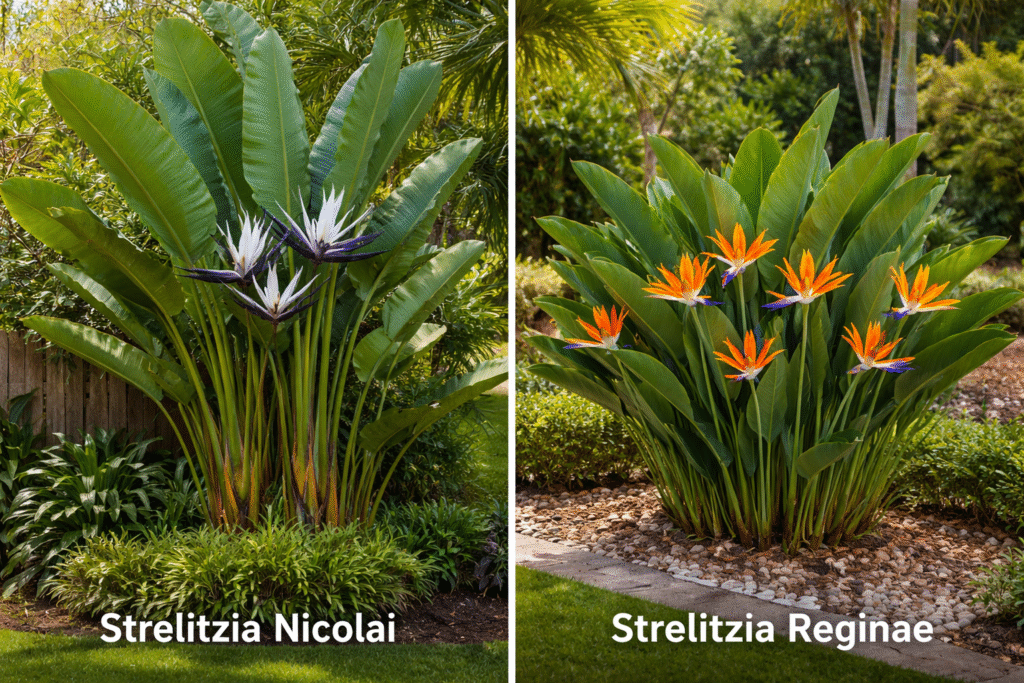
<strong>Feature:</strong>
<strong> Strelitzia reginae vs Nicolai</strong>
Choose Strelitzia Reginae if:
|
Choose Strelitzia Nicolai if:
|
| Quick Tip: If you’re unsure, choose Reginae for smaller spaces and safety. Choose Nicolai only if you have enough room for it to grow freely. | |
Common name is Bird of Paradise or Giant Bird of Paradise:
Mature size (typical cultivated) ~1–2 m tall, 1–1.5 m wide. 4–10 m tall, 2–4 m wide (large clump/stand).
Flower colour:
Bright orange & blue — showy.
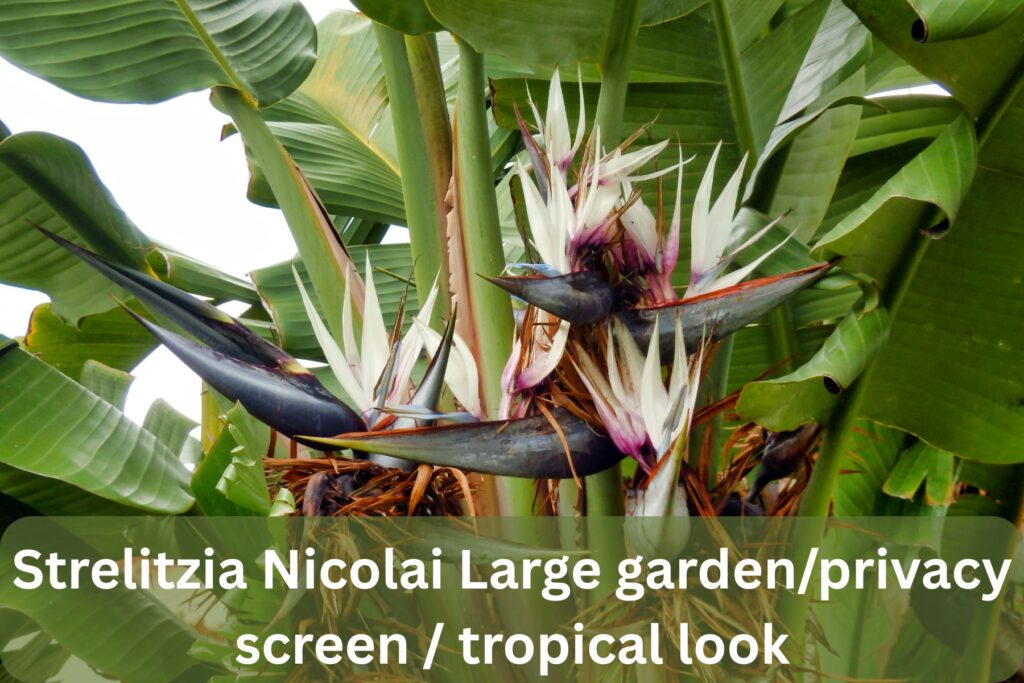
White/blue or pale (larger but less colourful than reginae).
Leaf colour & size:
Green leaves, medium-sized (suitable for pots). Large, deep-green, banana-like leaves, dramatic.
Best for Small gardens, pots, indoor bright spots, and containers. Large gardens, screens, courtyards, public plantings.
Maintenance level Low–medium
Four Seasons Nursery Medium (needs space, regular water while establishing).
Flowering likelihood is High with intense light and some root restriction. Flowers when mature and slightly root-bound; less colourful but sculptural.
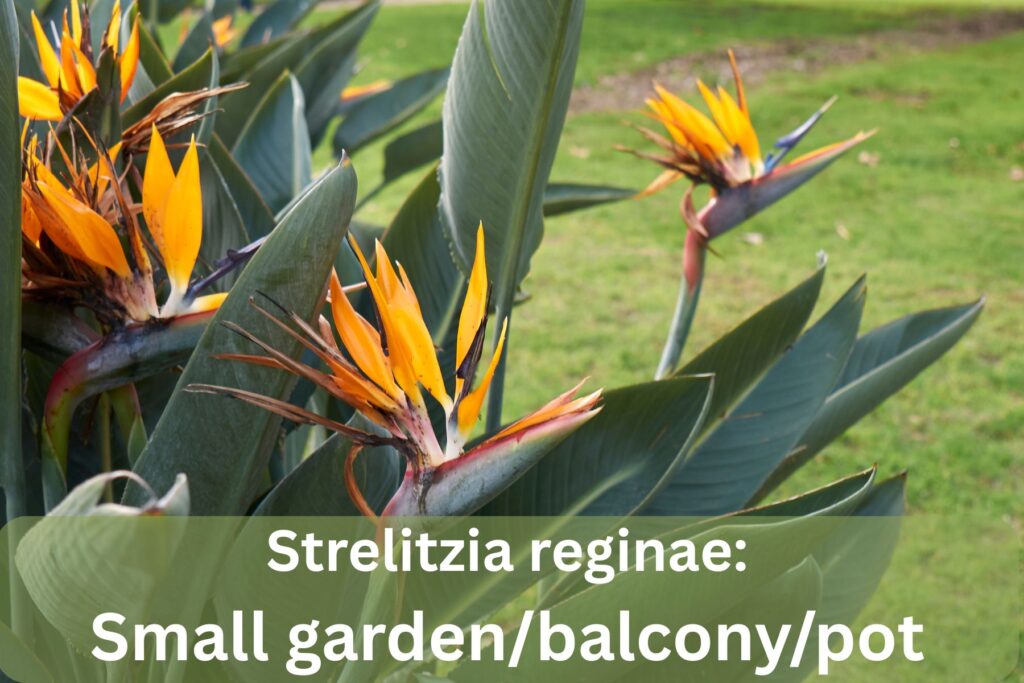
Differences between <strong>Strelitzia reginae or Nicolai</strong>
- Size & shape. S. reginae stays small and clump-forming — ideal for pots and narrow garden beds. S. nicolai becomes a large clump that can reach several metres and looks like a small palm or banana tree.
- Flowers. Reginae gives the classic orange/blue bird-like flowers used in bouquets. Nicolai produces larger, paler flowers (white/blue) that are less showy but still interesting
- Leaves. Nicolai’s leaves are much larger, excellent for tropical screens and dramatic backdrops. Reginae’s leaves are smaller and neater, making them ideal for structured garden designs.
Size comparison
- Strelitzia reginae: typically 1–2 m tall and 1–1.5 m wide in garden conditions. Smaller in pots.
- Strelitzia nicolai: commonly 4–10 m tall and 2–4 m wide as a mature clump (depends on soil and light). Plan for its eventual spread.
Leaf colour & appearance
- S. reginae healthy, glossy green leaves; neat upright clumps that repeat the tropical look without overwhelming a small space.
- S. nicolai — large, deep-green leaves, often with a slightly leathery texture. Leaves may tear in the wind (adds a rugged tropical look). Great for full-size tropical statements.
Maintenance level
Both plants are reasonably low-maintenance once established, but they differ slightly:
Strelitzia reginae (Low–Medium)
- Water regularly until established; drought-tolerant later.
- Loves bright sun (flowering needs intense light).
- Feed during the growing season for more blooms.
- Remove old leaves and spent flowers.
Strelitzia nicolai (Medium)
- Needs room to grow — mulch and regular water while establishing.
- Tolerates part shade but flowers best in full sun.
- Feed twice a year with a slow-release fertiliser.
- Watch for wind damage to large leaves; occasionally, prune damaged leaves.
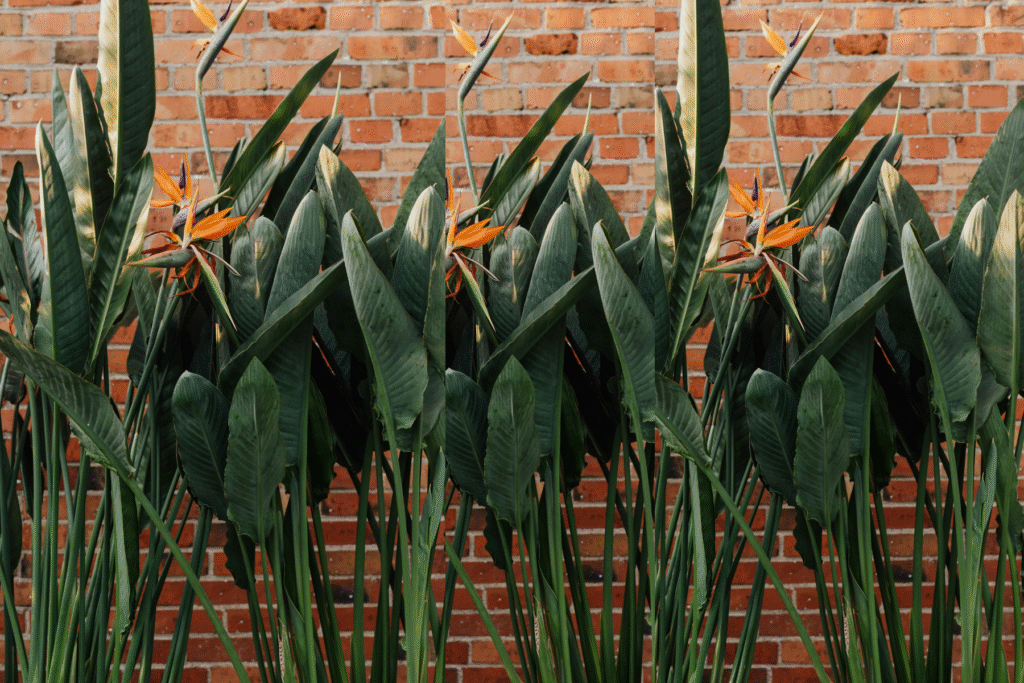
<strong>The Verdict: Which One is Actually Better for Your Garden?</strong>
If you spend five minutes on garden forums like Reddit or PalmTalk, you’ll see the same story over and over: a homeowner planted a “pretty bird of paradise” next to their pool, and five years later, they are paying thousands to repair cracked concrete.
To help you avoid a landscaping disaster, here is the real-world verdict based on typical Australian property needs:
1. Best for Pools and Entertaining Areas
The Winner: Strelitzia Reginae If you are planting near a swimming pool, a glass fence, or expensive paving, do not plant Strelitzia Nicolai.
The root system of a Giant Bird of Paradise is incredibly powerful and fleshy; it expands with enough force to lift pavers and bow pool shells. Reginae, however, is perfectly safe and won’t drop massive amounts of heavy debris into your pool skimmer.
2. Best for Privacy and “Green Walls”
The Winner: Strelitzia Nicolai If you have a two-story neighbour looking directly into your yard, Reginae won’t help you—it’s too short. Nicolai is the king of privacy.
Because it grows so fast (up to 1 metre per year in QLD or NSW), it creates a thick, tropical “wall” that hides overlooking windows better than almost any other plant. Just ensure it is planted at least 3 metres away from your actual house foundation.
3. Best for Low Maintenance and Small Spaces
The Winner: Strelitzia Reginae Let’s be honest: Nicolai eventually becomes a “chainsaw job.” Once it hits 6 metres, you can’t reach the dead leaves with standard loppers. Reginae is truly “set and forget.”
It stays at waist height, it’s easy to tidy up with a pair of hand secateurs, and it won’t outgrow its welcome in a standard 400sqm Australian block.
Best Australian states/climates for each variety
Practical guidance for Australian gardeners.
- Strelitzia reginae — Best: QLD, NSW (coastal), WA (seaside), TAS (warmer sheltered spots), VIC (Melbourne — protected sunny spots). It tolerates temperate to subtropical coastal climates; it can grow inland if frost is mild and the sun is intense.
- Strelitzia nicolai — Best: Best suited to the QLD and NSW coastlines and other subtropical to warm temperate regions where frost is rare (e.g., northern NSW and coastal QLD).
- In cooler mainland areas like Melbourne or Canberra, it can grow in protected courtyards or large conservatories, though growth is slower and large flowers are less likely.
Common pests, diseases & problems
Both are generally pest-resistant. Watch for scale, aphids, or snails, and remove dead material to avoid fungal problems. Avoid waterlogged roots — they need well-drained soil.
Final recommendation for Australians!
IMPORTANT FAQS!
What is the main difference between Strelitzia nicolai and reginae?
Strelitzia nicolai grows into a large, tree-like plant used for privacy screens, while Strelitzia reginae stays compact and is ideal for decorative gardens.
How big do Strelitzia reginae and nicolai grow?
Strelitzia reginae grows around 1–2 metres tall, while Strelitzia nicolai can reach up to 6–10 metres and spread widely.
Which one is better for small gardens?
Strelitzia reginae is best for small spaces because it remains compact and manageable.
Are Strelitzia nicolai roots invasive?
Yes. Strelitzia nicolai has strong roots that can lift paving, affect pool areas, and damage nearby structures if planted too close.
Can I plant Strelitzia near a pool?
Strelitzia reginae is safe near pools, but Strelitzia nicolai should be planted at least 2 metres away.
Which one is better for privacy?
Strelitzia nicolai is ideal for privacy as it grows tall and dense, forming a natural screen.
How fast does Strelitzia nicolai grow?
It grows quickly and can reach up to 1 metre per year in warm Australian conditions.
Are Bird of Paradise plants toxic to pets?
Yes, both types are mildly toxic if pets eat the seeds or flowers, though leaves are less harmful.
Can I plant Strelitzia nicolai directly against a Colorbond fence?
It is highly discouraged. As the giant trunks of S. nicolai mature and clump, they expand with immense force and will eventually push, dent, or bow metal Colorbond fencing.
Will winter frost kill my Bird of Paradise in Melbourne or Tasmania?
Strelitzia reginae handles light to moderate frost reasonably well. However, severe frost will turn Strelitzia nicolai leaves black and can easily kill young, unestablished plants.
Why are the leaves on my Bird of Paradise splitting and looking shredded?
This is a natural survival mechanism, not a disease. Both species split their massive leaves to allow strong coastal Australian winds to pass through without snapping the main stems.
Is it hard to dig out and remove a Giant Bird of Paradise?
Yes. Removing a mature Strelitzia nicolai is a major landscaping challenge because its fleshy root ball turns into a heavy, solid block that often requires an excavator or stump grinder. S. reginae is much easier to remove with a shovel.
Why won’t my Strelitzia nicolai produce any white flowers?
Unlike the smaller Reginae, which flowers reliably, S. nicolai needs to reach full maturity (often taking 3 to 5 years) and requires immense amounts of full sun and warmth (like in QLD or Northern NSW) before it will bloom.
Do Bird of Paradise plants survive Australian summer heatwaves?
Yes. Both species are incredibly drought-tolerant once established in the ground. Their thick, fleshy roots store water, allowing them to easily survive dry spells and 40°C summer heatwaves with minimal watering.