 Huma Naveed
Saving a Sick Golden Cane Palm in the Harsh Aussie Climate
Nothing ruins your backyard’s tropical vibe faster than a sick Golden Cane Palm. When your expensive plant starts looking sad, it is completely normal to panic.
🚨 The 60-Second Panic Guide: Golden Cane Palm Diagnosis
If you are staring at a sick Golden Cane Palm (Dypsis lutescens) and starting to panic, take a deep breath. As professional Australian landscapers, we can tell you that almost every “disease” you see is actually a simple environmental fix.
Before you start ripping up roots or dumping harsh chemicals on your plant, let’s address the top four things that cause Aussie homeowners to freak out:
This is completely normal! It is a harmless genetic trait called “scurf.”
Do nothing. However, if the black spots are actually a sticky, powdery soot covering the leaves, that is Sooty Mould. Wipe the leaves with soapy water and treat for sap-sucking insects.
That isn’t fungus. Those white, cotton-like fluffy clusters hiding in the crevices are Mealybugs (a sap-sucking pest).
Wipe the fluffy clusters away with rubbing alcohol on a cotton swab, then spray the entire plant heavily with Neem oil or eco-oil.
The palm is stressed by dry conditions. In Australia, this is almost always caused by dry coastal winds, harsh afternoon sunburn, or salt build-up from tap water.
Deeply flush the soil with fresh water to remove salt buildup, mist the fronds regularly, and trim only the dead brown edges off (do not cut into the green tissue).
If only the new growth is pale yellow, your palm is starving. If the entire plant is yellow and the soil is soggy, you are drowning it (Root Rot).
For pale new leaves, apply a trace element fertiliser and Epsom salts. For soggy yellow plants, immediately stop watering, improve drainage, and let the soil dry out.
You have an infestation of Scale insects. They latch onto the stems and slowly suck the life out of the plant, leaving behind a sticky residue.
Hit the stems directly with a horticultural oil (like eco-oil) to smother the hard shells, and scrape the worst of them off gently with your fingernail.
Their golden stems brighten any poolside or patio, but many gardeners face common Golden Cane Palm (Dypsis lutescens) problems which slows growth.
But they can also be sensitive — especially to watering, sunlight, Drainage, and pests.
- Problem: Leaves are turning pale or yellow (Nutrient or Water issue)
- Problem: Tips are crispy and brown (Sunburn or Humidity issue)
- Problem: White fluffy spots on the stems (Mealybug Infestation)
- Problem: Black soot on the fronds (Sooty Mold / Scale)
Problem: Yellowing Fronds (Chlorosis)
The Most Common Causes: Overwatering, poor drainage (the “Bathtub Effect”), or Nitrogen/Magnesium deficiency.
How to Diagnose:
- If lower/older leaves are yellowing: This is normal aging.
- If new growth is yellowing: You have a nutrient deficiency (likely Iron or Magnesium).
- If all leaves are yellow and the soil is soggy: You have Root Rot.
If you’re seeing one or more of these issues, this complete Australian guide will show you what’s wrong and exactly how to fix it.
| The Symptom | Likely Cause | Immediate Fix |
|---|---|---|
| Lower leaves turning brown | Natural aging or underwatering | Prune near trunk and check soil moisture |
| New growth turning yellow | Nutrient deficiency (Iron/Magnesium) | Apply trace elements and add Epsom salts |
| Crispy brown leaf tips | Low humidity, strong sun, or salt build-up | Flush soil and mist regularly |
| White cotton-like spots | Mealybug infestation | Clean with alcohol and apply neem oil |
| Black soot on leaves | Sooty mold from insects | Treat pests first and wash leaves gently |
Read our masterclass here:> [How to Grow Golden Cane Palm in Australia: expert’s growing tips 2026-27]
Testing and Fixing Heavy Australian Clay
Before planting Golden Canes directly into standard suburban clay, we always perform a simple ‘Drainage Test.’ Dig a hole 30cm deep and fill it with water. If the water hasn’t completely drained after three hours, you have a drainage problem that will lead to root rot.
Being an expert from past 25 years in our garden trials, I found the perfect soil remediation formula to fix heavy, compacted ground. Do not just use potting mix; instead, blend 50% of your native soil with 25% coarse river sand and 25% rich organic compost.
Finally, mix in a handful of Gypsum. Gypsum works at a molecular level to break apart hard clay particles, ensuring the palm’s fibrous roots can establish themselves without sitting in a stagnant ‘bathtub’ of water.

Tips to Keep Your Golden Cane Palm Happy
- Light: Morning sun with afternoon shade is best
- Water: Keep soil moist but not soggy
- Soil: Use well-draining, rich soil with compost
- Fertiliser: Feed with palm fertiliser in spring and summer
- Pruning: Remove dry or yellowing fronds only
The “Termite & Ant” Magnet: Do Sick Palms Attract Pests?
When a Golden Cane Palm starts looking sick, many Australian homeowners panic, worrying that the declining plant is becoming a magnet for destructive pests. Here is the reality:
Termites do not eat healthy, live palms. However, the tight ‘V’ shape of the palm’s frond bases naturally collects water, dead leaves, and garden debris.
When a palm is stressed and shedding foliage, this creates a dark, humid micro-climate that ants and nesting pests absolutely love. If a frond dies and is left to rot at the base of the clump, that decaying organic matter becomes prime termite bait.
- The Easy Fix: Regularly peel away the dead, brown fronds by hand. Clear out the “crotch” of the palm to remove the humid debris and completely eliminate these pest hiding spots.
Quick Diagnosis Table (Australia 2026 -2027)
| Problem (Quick Symptom) | Main Cause | Best Solution (What to Do) |
|---|---|---|
| Yellow leaves | Overwatering, low light, nutrient deficiency | Improve drainage, increase sunlight, apply palm fertiliser |
| Brown tips | Dry winds, underwatering, salt build-up | Deep watering, misting, and flushing the soil |
| Pale fronds | Magnesium or iron deficiency | Apply trace elements |
| Stunted growth | Compacted roots, cold winds, poor soil | Improve soil and move to a warmer location |
| Sticky leaves | Scale or mealybugs | Use neem oil spray |
| Black / brown spots | Fungal infection | Apply copper fungicide |
| Drooping leaves | Underwatering or low humidity | Deep soak and mist leaves |
| Root rot | Poor drainage and clay soil | Repot in a fast-draining soil mix |
The “Instant Privacy” Mistake: Overcrowding and Pests
Did you plant your Golden Canes tightly together (around 1 metre apart) to get an instant privacy screen? While this provides a quick visual barrier, it is a leading cause of yellowing leaves and plant decline a few years down the track.
Golden Canes are clumping palms, meaning their bases constantly expand outward. When planted too close together, the trunks eventually collide and completely block natural airflow.
- The Pest Problem: This lack of ventilation creates a stagnant, humidd soil nutrients, starving the weaker palms in the trench.
The Fix: If you are planning a new hedge or need to know the exact mathematical spacing required to build a healthy, long-lasting privacy screen without triggering pest outbreaks, check out our dedicated landscaping guide:
👉 Click here for our Complete Golden Cane Palm Spacing & Hedging Guide
1. Yellow Leaves on Golden Cane Palm
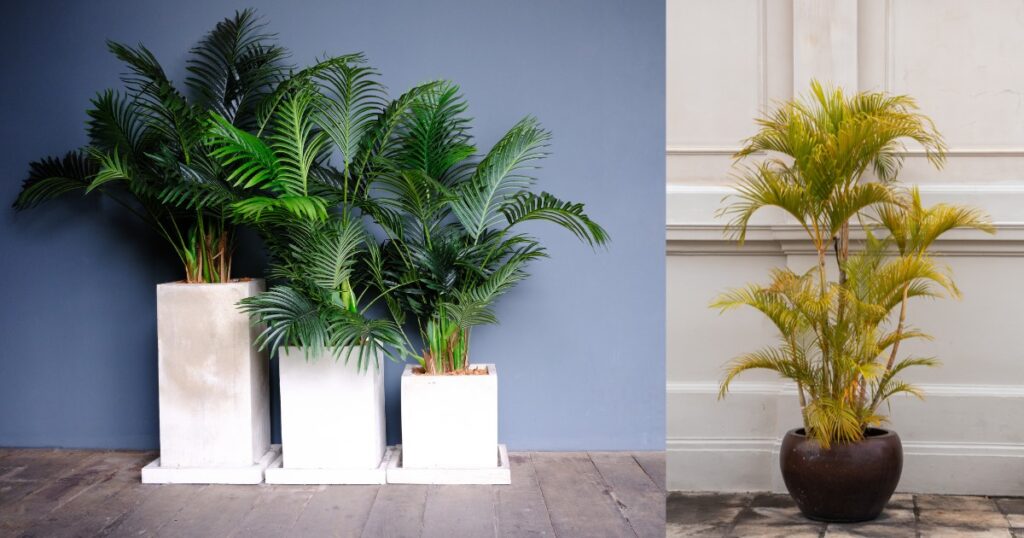
Yellow leaves are the #1 Golden Cane Palm problem across Australia.
Why It Happens
Short causes:
- Overwatering
- Poor Drainage (very common in clay soils)
- Insufficient sunlight
- Cold winds
- Low magnesium
- Pot too small
Fixes for Yellow Leaves
✔ Improve Drainage
Golden Cane Palms hate sitting in soggy soil.
- Add perlite, sand, or pumice to loosen the soil
- Use raised beds in clay regions (Adelaide, Melbourne)
- Ensure pots have large drainage holes
✔ Increase Sunlight
Golden Cane Palms grow best in:
- Full sun (QLD, northern NSW, WA coast)
- Morning sun + afternoon shade (cooler states)
Indoors: Place near a bright east or north-facing window.
✔ Add the Right Fertiliser
Use a slow-release fertiliser labelled Palm & Tropical Plants.
Recommended Products (Safe + Trustworthy)
🛒 Slow-Release Palm Fertiliser
Bunnings (Yates Palm Food):
https://www.bunnings.com.au/yates-500g-dynamic-lifter-organic-plant-food_p2962395
🛒 Seasol Seaweed Solution
https://www.bunnings.com.au/seasol-1l-concentrate-seaweed-plant-tonic_p2960436
2. Brown Tips on Golden Cane Palm
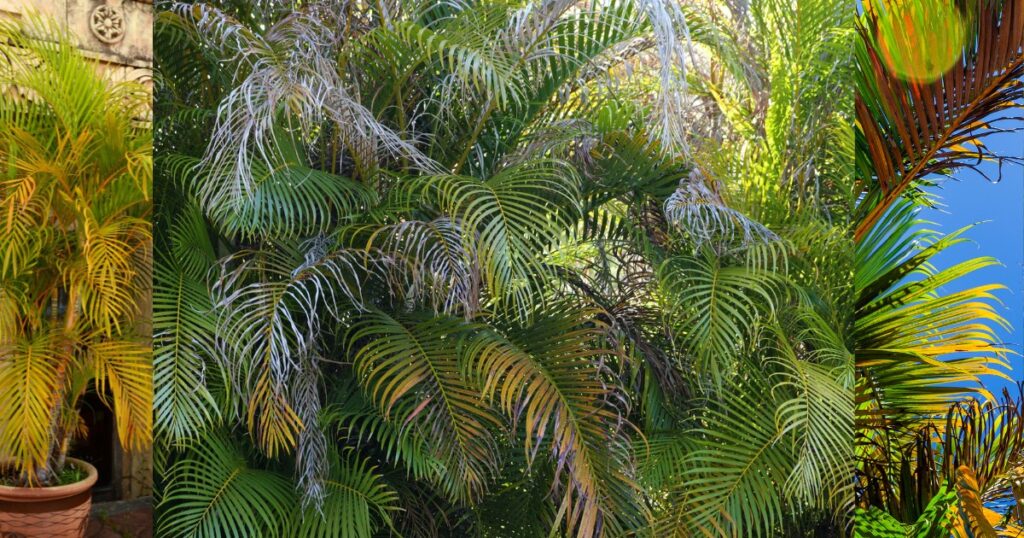
Brown tips don’t mean death — they mean stress.
Common Causes in Australia
- Hot dry winds (Adelaide, Perth)
- Underwatering in summer
- Hard water (Perth, QLD regional areas)
- Indoor AC heating
- Salt build-up in soil
How to Fix Brown Tips
Deep Watering
In summer:
- Outdoor palms: 2–3 deep waterings per week
- Indoor palms: every 5–7 days
Mist the Leaves
Helps indoor and balcony palms.
Flush Salt Build-Up
Every 2–3 months:
- Water heavily until water drains through
- Repeat twice
✔ Trim Only the Brown Edges
Do NOT cut into the green area, it stresses the palm.
3. Pale or Light Green Leaves (Nutrient Deficiency)
This is a sign the palm is missing:
- magnesium
- iron
- trace elements
Fix
Use a fertiliser with:
- Magnesium Sulphate (Epsom Salt)
- Chelated Iron
- Seaweed extracts
🛒 Safe Recommendation
Amgrow Trace Elements
https://www.bunnings.com.au/amgrow-500ml-trace-elements-liquid_p2960562
4. Stunted Growth
Golden Cane Palms problems is also slow down when their environment is not ideal.
Causes
- Cold weather (Melbourne, Adelaide)
- Low light
- Rootbound pot
- Poor soil
- Underwatering
Fix
- Move to the warmest, brightest spot
- Repot into a bigger pot every 2–3 years
- Use premium palm potting mix
- Add compost + manure
5. Pests on Golden Cane Palm (Australia)
| Pest | How to Identify | Quick Signs |
|---|---|---|
| Mealybugs | White, cotton-like clusters on stems and leaves | Sticky residue and weak plant growth |
| Scale | Small brown bumps attached to stems | Sticky leaves and yellowing foliage |
| Spider Mites | Tiny insects, often hard to see | Fine webbing and dry or speckled leaves (common indoors) |
6. Root Rot (Very Common in Australia)
Root rot happens due to:
- Overwatering
- Clay soil
- Pots without Drainage
- Shaded wet corners
Fix Step-by-Step
- Remove the palm from soil
- Cut brown mushy roots
- Keep only firm white roots
- Replant in fast-draining mix
- Add sand + perlite
- Water less frequently
🛒 Fast Draining Mix
https://www.bunnings.com.au/brunnings-25l-cactus-succulent-potting-mix_p3001296
7. Indoor vs Outdoor Problems (Australia Comparison)
Issue Indoors Outdoors
Yellow leaves Low light Overwatering is one of the major Golden cane palm problems
Brown tips AC dryness Hot winds
Pale leaves Nutrient deficiency Sunburn
Pests Spider mites Scale, mealybugs
Slow growth Shade Winter cold
8. Sunburn (Very Common in NSW & WA)
Symptoms
- Bleached patches
- Crispy edges
- Pale yellow fronds
Fix
- Use shade cloth
- Move away from harsh afternoon sun
- Mulch base to keep roots cool
Australian Watering Schedule
Region Summer Winter
QLD Every 2–3 days Every 10–14 days
NSW Every 3–4 days Every 14 days
WA Every 2–3 days Every 10–12 days
SA Every 3–4 days Every 10–12 days
VIC Every 3–4 days Every 14–21 days
NT Every 2 days Every 7–10 days
10. Australian Soil Recipe for Golden Cane Palm
Mix:
- 40% Premium Potting Mix
- 30% Coarse Sand
- 20% Compost
- 10% Perlite
Add on top:
- 5 cm Sugarcane Mulch
Common Mistakes Australians Make
- Planting palms in clay soil
- Watering every day
- Growing indoors in low light
- Using unfiltered bore water
- Planting too close together
- Forgetting to flush salt build-up
References (Real Sources for Google Trust)
- Queensland Government — DAF Horticulture Notes
- NSW DPI Garden Management
- Royal Botanic Gardens Victoria — Palm Care Notes
- CSIRO Soil & Water Guidelines
- Western Australia Gardening Advice 2025–2026
- Yates Horticultural Palm Care Guides
- Golden Cane Palms grow fastest in QLD and WA
- They love morning sun
- They hate wet feet
- Yellow leaves are usually overwatering, not underwatering
- They are safe for pets
- They prefer deep watering, not daily sprinkles
Climate Resilience Checklist
To keep your Dypsis lutescens thriving through Australia’s extreme weather shifts—from scorching January heatwaves to chilly July mornings—you must adjust your care routine seasonally. Here is our tested annual maintenance protocol
| Season | Key Action for Golden Canes | The Botanical Reason |
|---|---|---|
| Spring | Apply high-nitrogen slow-release fertiliser | Boosts new cane growth and restores lush green foliage after winter dormancy |
| Summer | Apply a 75mm layer of organic bark mulch | Protects roots from heat and helps retain soil moisture in hot conditions |
| Autumn | Provide a potassium boost (e.g., seaweed extract) | Strengthens plant cells and improves resistance to cold, wind, and frost |
| Winter | Reduce watering frequency by at least 50% | Prevents root rot caused by cold and waterlogged soil |
Expert FAQ for Australian Gardeners
Conclusion</strong>
Most Golden Cane Palm problems in Australia come from simple issues: watering, Drainage, sunlight, and pests. The good news is that almost all problems are easy to fix—and once you correct them, this palm recovers quickly.
By following this Australian guide, your Golden Cane Palm will grow lush, green, and vibrant again—perfect for your poolside, balcony, or front yard.