
 Huma Naveed
Is Hakea Laurina Safe for Pets? Are you worried about your dog digging up plants or whether bees will thrive in your garden?
Hakea Laurina, Australia’s iconic pincushion hakea, is a top pick for native gardens—but is Hakea Laurina Safe for Pets & Bees?
Answer is yes! but with a few smart tips.
Here Gardengreen.au spills the secrets to creating a pet-friendly, bee-loving garden with Hakea Laurina. Let’s dive in!
Banksia and Grevillea Pests: How to Spot and Stop Them Naturally + Pet Safety Guide 2026
Is Hakea Laurina Toxic to Dogs or Cats?
Major pet safety databases, such as the RSPCA or ASPCA, do not list Hakea laurina as toxic to dogs or cats. It’s considered a pet-safe plant in most Australian gardens.
While it’s always best to prevent pets from chewing on garden plants, Hakea isn’t listed among the common poisonous plants like azaleas or lilies.
Large seeds or woody stems could pose a choking hazard, especially for curious puppies. If your dog cheats on branches, keep an eye on it around your Hakea.
According to the RSPCA, many Australian native plants like Hakea are not listed as toxic for dogs or cats, but supervision is still advised.
Wherever possible, this blog links to credible sources like:
- RSPCA Australia
- ASPCA Plant Toxicity Database
- CSIRO and native plant societies
These links help you double-check safety information and boost confidence in your gardening decisions. You’ll know what’s safe and what’s not from expert-backed references.
Small Banksia for a tiny Garden: learn easy care tips and tricks Guide
Are Hakea Laurina Leaves or Flowers Dangerous?
There’s no scientific evidence suggesting that the leaves or flowers of are Safe for Pets When touched or accidentally ingested in small amounts. They don’t contain the harmful alkaloids or glycosides in many toxic garden plants.
However, as with any garden plant, pets should be monitored for unusual symptoms after chewing foliage—vomiting or drooling can signal irritation.
Why Bees Need Hakea laurina?
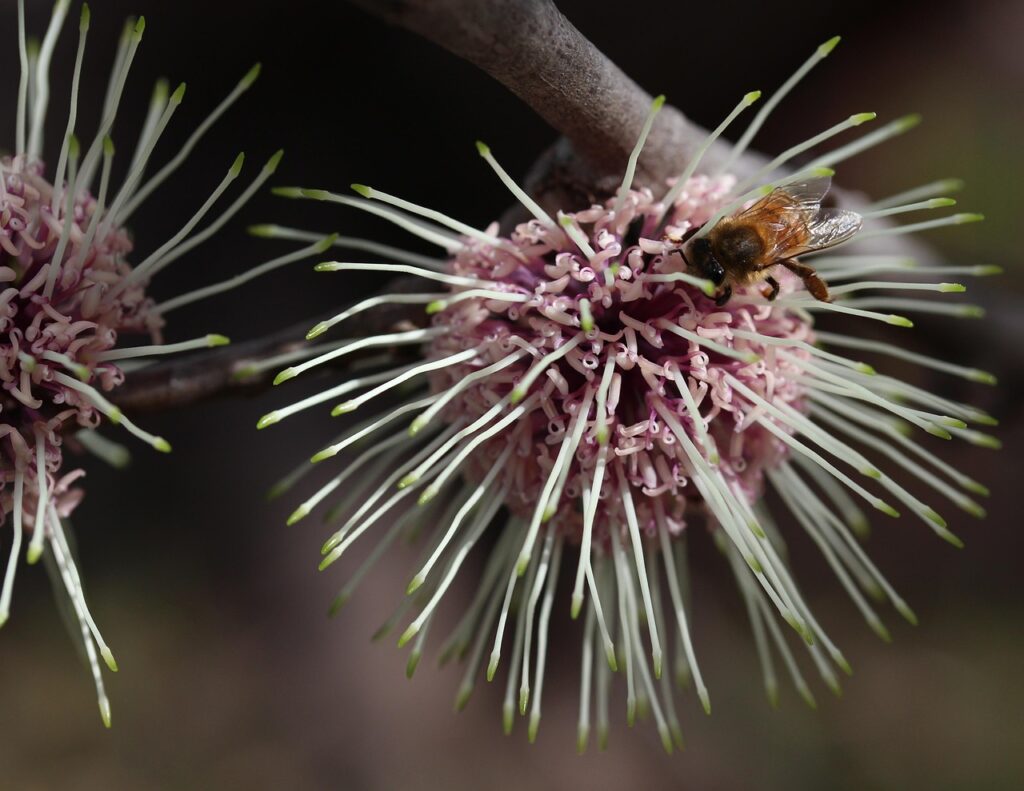
Hakea laurina is highly attractive to native bees. Its brush-like flowers are rich in nectar and bloom from late autumn to early spring, providing a valuable food source when other flowers are scarce.
| Pollinator | Why they visit Hakea laurina | Benefit to your Garden |
| Honeybees | High nectar volume during cold months. | Cross-pollination for your winter veggies. |
| Native Bees | Accessible “pincushion” structure. | Supports biodiversity in suburban areas. |
| Honeyeaters | The bright red color is a visual beacon. | Natural pest control (they eat small insects too). |
Click here to more about Why are my Grevilleas not flowering in Australia?
While many Australian natives sleep in winter, the Pincushion Hakea is a 24/7 “super-cafeteria” for pollinators. Because it flowers from late Autumn through to Spring, it provides vital nectar when other food sources are scarce.
By growing this plant, you’re actively supporting Australian pollinators.
Hakea Laurina Vs Other Native Plants
While many Australian natives are beautiful, they aren’t all created equal when it comes to a high-energy dog or a sensitive cat.
- Banksia: These are generally chemically safe but come with a physical warning. Many species have rigid, serrated leaves that can cause scratches during “zoomies.”
- Grevillea: A bee-favorite, but gardeners should be cautious. Specific hybrids (like Grevillea ‘Robyn Gordon’) can cause contact dermatitis (skin rashes) in both humans and pets due to specific resins in the foliage.
- Bottlebrush (Callistemon): The “Gold Standard” for safety. They are soft to the touch and entirely non-toxic.
Note: Avoid the unrelated “Bottlebrush Buckeye” from the US, which is toxic.
- Hakea laurina: The perfect balance. It provides the high nectar of a Grevillea without the skin-irritating sap, though its woody seed pods should be monitored.
| Native Plant | Pet Safety Rank | Bee Attraction |
|---|---|---|
| Hakea laurina | EXCELLENT Non-toxic; Woody pods are the only minor hazard. | ELITE Vital winter nectar source. |
| Bottlebrush | PERFECT Soft flowers and leaves. 100% safe. | HIGH Attracts bees and birds. |
| Banksia | GOOD Chemically safe, but watch for sharp/serrated leaves. | HIGH Massive nectar producers. |
| Grevillea | CAUTION Certain species cause skin/mouth irritation. | ELITE Top-tier for all pollinators. |
Hakea laurina ranks high as a balanced, safe, and attractive option for pets and pollinators.
Location-Specific Details
Australia has diverse climates and strict rules on native plants. We’ve included:
- Climate tips (e.g., Hakea laurina thrives in temperate zones like SA, WA, VIC)
- Regional guidance (e.g., WA gardeners should check biosecurity laws before planting)
- State-specific warnings or planting advice
This ensures that your gardening efforts suit your local conditions, whether in Perth, Adelaide, Sydney, or regional areas.
Quick Comparison: Hakea vs Other Native Plants
| Plant | Pet Safe? | Bee Friendly? | Notes |
|---|---|---|---|
| Hakea laurina | Yes | Yes | Hardy, non-toxic, autumn blooms |
| Grevillea spp. | Caution | Yes | Some varieties may irritate dogs |
| Banksia spp. | Yes | Yes | Safe but may attract possums |
| Bottlebrush (Callistemon) | Yes | Yes | Popular bee plant, safe for pets |
Tips to Keep Your Garden Pet-Safe
Is Hakea Laurina safe for pets? It’s a common question among Aussie pet owners.

- Place Hakea laurina in areas where pets don’t dig or chew.
- Avoid using chemical pesticides on or near your native plants.
- Mulch with natural materials that are non-toxic.
- Train pets to stay away from garden beds using gentle reinforcement.
Hakea supports biodiversity!
Hakea laurina is a fantastic plant for native bees, butterflies, and birds. Its pincushion flowers are rich in nectar and bloom in autumn and winter when food is scarce for pollinators.
Unlike non-native ornamentals, Hakea supports biodiversity and won’t harm visiting bees.
Bonus: The dense shrub also provides shelter for small birds like honeyeaters.
Which Aussie Pets Might Interact with Hakea?
Australian homes often include more than just cats and dogs. If you keep:
- Budgies or parrots may nibble leaves, but usually ignore woody shrubs like Hakea.
- Backyard chickens: Hakea isn’t known to harm chickens. Plus, it’s too woody and tough for them to eat much.
- Outdoor rabbits or guinea pigs: Rarely show interest, but monitor nibbling if they’re nearby
Interesting Facts
- Due to its low toxicity, Hakea laurina is often planted in bushland restoration projects.
- The plant’s rigid structure deters most animals from chewing.
- It’s a magnet for birds, bees, and butterflies, turning your yard into a pollinator haven.
Click here to visit another page: “Why Is My Banksia Dying? A Comprehensive Guide 2026”
Final Thoughts
Creating a beautiful, wildlife-friendly garden doesn’t mean risking your pets’ safety!
Hakea laurina stands out as one of the most reliable Australian natives—combining winter nectar for pollinators with a low-risk profile for dogs and cats.
Smart placement and simple care make all the difference. Prune lower branches and allow space around pathways to keep both your plants and pets safe, while its drought tolerance suits low-maintenance Australian gardens.
If you want a garden that supports biodiversity, handles tough conditions, and stays pet-safe, Hakea laurina is a reliable, long-term choice you can plant with confidence.
FAQs About Hakea Laurina & Pet Safety in Australia
Is Hakea laurina toxic to dogs or cats?
No – it is not listed as toxic in Australia. Occasional nibbling is generally harmless.
Are Hakea laurina flowers safe for pets and children?
Yes – the soft pincushion flowers are non-toxic and safe to touch.
Why is Hakea laurina important for winter pollinators?
It flowers from late autumn to winter, providing vital nectar when most plants are not blooming.
Are Hakea laurina seed pods dangerous for dogs?
They are not toxic but very hard, which may pose a choking risk for strong chewers.
Does Hakea laurina attract aggressive bees?
No – it attracts calm, nectar-feeding pollinators that are typically non-aggressive.
Can Hakea laurina be planted near a pool?
Yes – plant at least 2 metres away to avoid falling pods and maintain safe access.
Does Hakea laurina need special fertiliser?
Yes – use a low-phosphorus native fertiliser, as it is sensitive to high phosphorus levels.