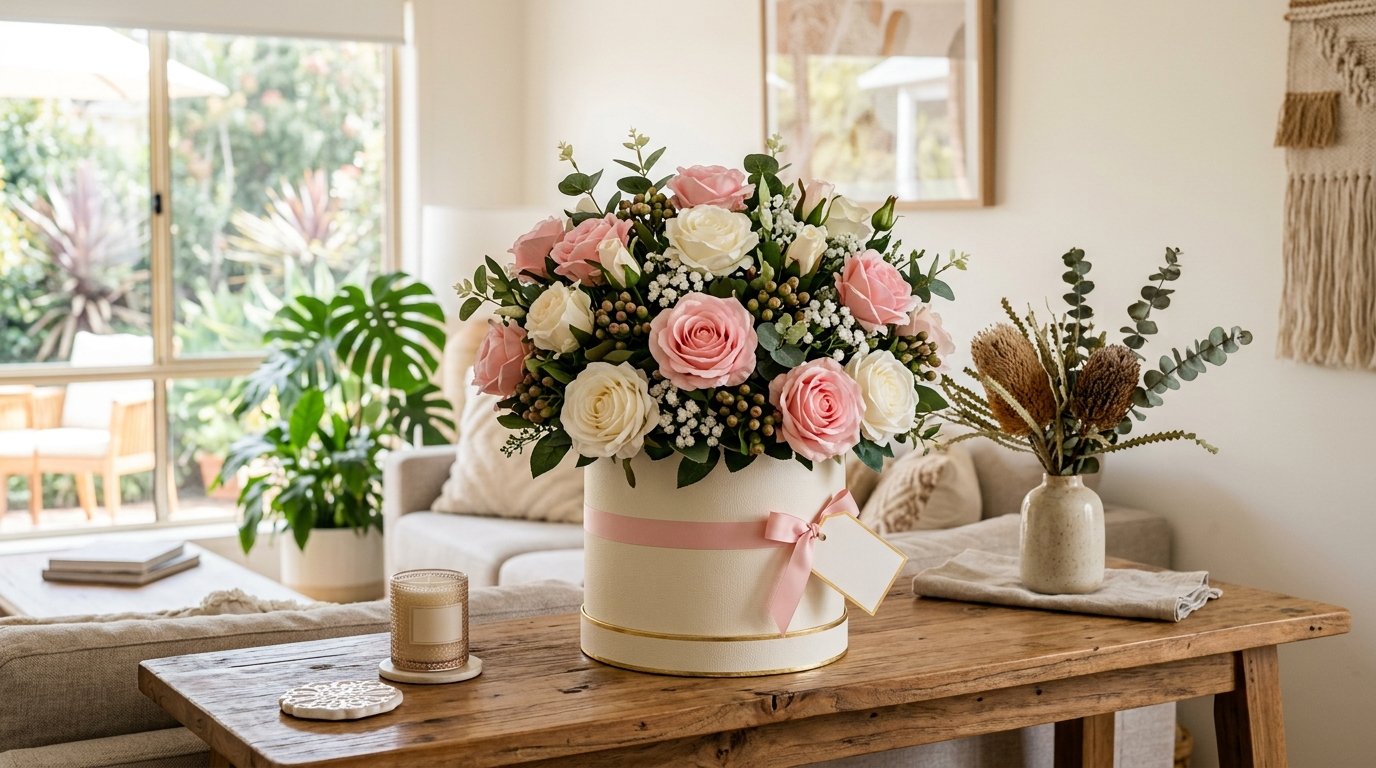

Artificial roses are everywhere, which is exactly why you have to be fussy. A good bunch of artificial roses can look soft, romantic and surprisingly natural. A bad bunch can look like it came free with a teddy bear at a petrol station. There is not much middle ground.
I like artificial roses when they are chosen for the room, not just grabbed because roses are pretty. Colour matters. Petal finish matters. Stem shape matters. The vase matters more than people admit. And in Australia, where bright sunlight finds every plastic shine and dusty corner, quality shows quickly.
Artificial roses can be useful for weddings, Mother’s Day, bedroom styling, dining tables, memorial flowers, rental homes and office arrangements. They hold shape, do not drop petals, and will not sulk after one hot afternoon. But they still need a good eye.
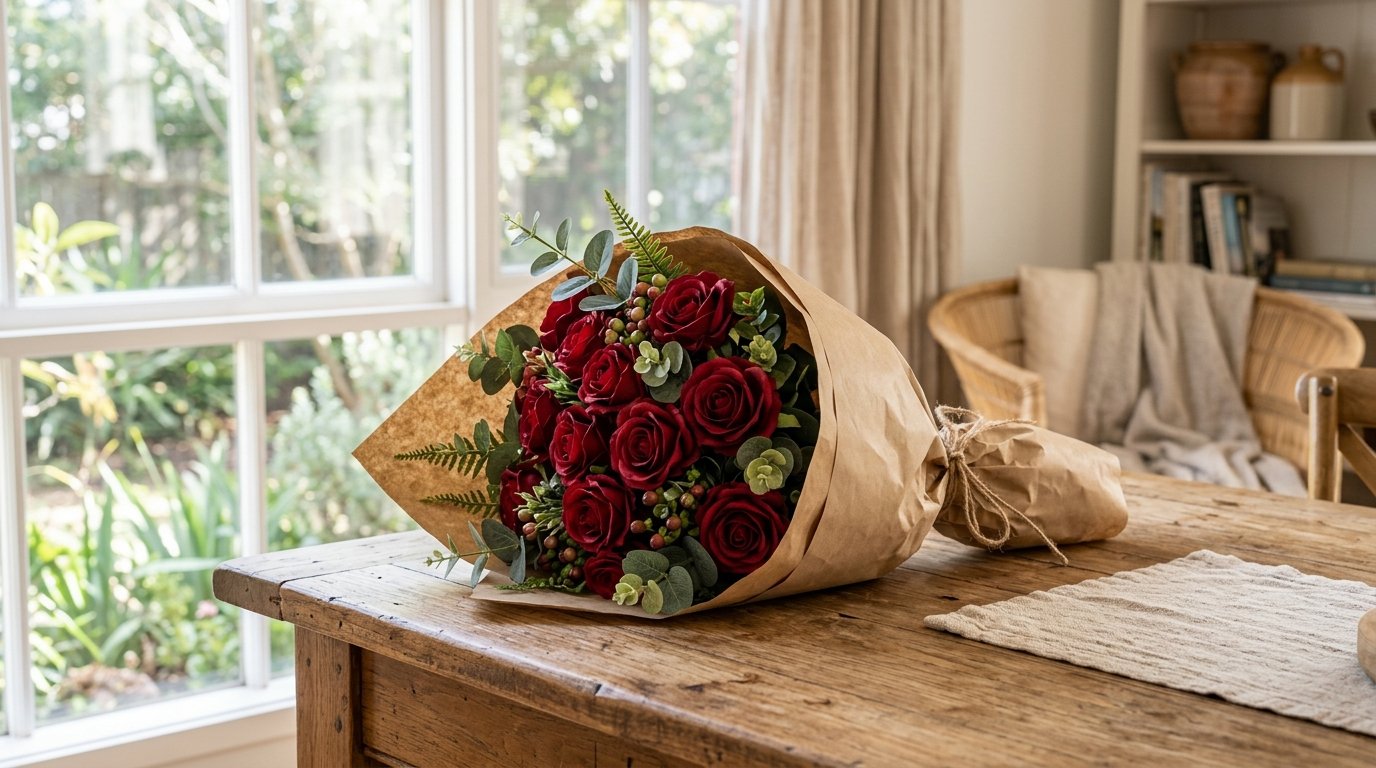
Choose roses for the room, not just because “roses are pretty”. Matte, layered petals in cream, blush or deep red look best; glossy bright-red bunches look cheap. Five good stems beat twenty cheap ones.
| Material | Best use | Watch out for |
|---|---|---|
| Real-touch | Weddings, close-up tables | Can look rubbery if cheap |
| Silk-style | Larger displays, volume | Fraying edges, shine |
| Plastic-heavy | Durable / outdoor (UV) | Usually least realistic |
Why artificial roses are so popular in Australia
Roses have a strong emotional pull. They feel familiar. Red roses feel romantic. White roses feel calm and formal. Pink roses feel soft and warm. Cream roses work almost anywhere. That makes artificial roses useful for wedding bouquets and table styling, bedroom and dressing-table arrangements, dining tables, entry consoles, Mother’s Day gifts, memorial arrangements, office reception styling and long-lasting vase arrangements.
Real roses are beautiful, but they are also dramatic little things. One hot day, one missed water change, and suddenly they look like they have given up on life. Faux roses avoid that problem, especially in warmer parts of Australia. The trick is making sure they look like roses, not rose-shaped decorations.
Real-touch vs silk artificial roses
This is one of the first choices to make.
Real-touch artificial roses are usually made from latex, polyurethane or similar soft materials. They feel more like real petals and often have better shape. Good real-touch roses have soft petal texture, better petal thickness, natural curling, flexible stems and a more realistic weight. But they are not automatically better. Some are too thick, too waxy or too rubbery. Real-touch roses are best when people see them up close, such as bridal bouquets, bedside vases, dining tables and reception counters.
Most silk artificial roses today are not actual silk. They are usually polyester or fabric petals. Some look very good. Some look like craft supplies. Good silk-style roses should have soft, layered petals and no rough, fraying edges. They are often lighter and can be better for large arrangements where weight matters, and they are often cheaper if you need volume. Just be careful with shine and flat petal shape.
Which artificial rose colours look most natural?
- Matte, layered petals
- Cream, blush or deep-red tones
- Muted, veined leaves
- Bendable stems, mixed buds
- Glossy, plastic petals
- Neon green leaves
- Identical, flat blooms
- Fire-engine red at home
Colour can make or break artificial roses. A cheap red rose can look cheap from across the room. A muted cream rose can forgive a lot.
White roses are clean, calm and flexible. They suit weddings, bedrooms, bathrooms, offices and memorial arrangements. They also show dust, so they need cleaning every few weeks. They work well with greenery, cream flowers and soft pink flowers. For more ideas, see our white artificial flowers guide.
Pink roses are softer and easier to live with than red. Pale pink, blush, dusty pink and mauve-pink usually look more realistic than bright bubblegum pink. They suit Mother’s Day, bedrooms, baby showers, soft wedding styling and Hamptons-style interiors. If you are building a warmer arrangement, the pink artificial flowers guide has useful pairing ideas.
Red roses are the hardest to get right. They are bold, romantic and very easy to make tacky. The safest red roses are usually deep red, burgundy, ruby or wine-toned. Good red artificial roses need layered petals, a soft finish and darker shading near the centre. If the petals are shiny and the leaves are neon green, put them down and walk away slowly. For red styling, our red artificial flowers guide covers colour pairings and room use in more detail.
Cream and ivory roses are probably the easiest artificial roses to style. They look softer than stark white and are more forgiving under warm indoor lighting. They suit weddings, dining tables, living rooms, entry arrangements, offices and memorial flowers, and they mix well with almost every other flower colour.
Mauve, lavender and dusty rose are good for more modern styling. They work with beige, grey, sage green, stone, timber and soft pink. Avoid purple roses that are too bright unless you are styling for a very specific event.
What to look for before buying artificial roses
Real roses have layered petals with depth. Cheap faux roses often have petals that sit too flat or too evenly. Look for slightly varied petal shapes, natural curling, layered centres, uneven outer petals and no obvious glue marks. Perfectly identical roses in a bunch can look fake.
Shine is the enemy. A little natural sheen is fine, especially on real-touch petals, but glossy fabric or plastic petals usually look wrong. Australian light is bright and will expose shiny petals faster than a polite indoor showroom photo.
Leaves matter. Look for leaves that are muted green, lightly veined, not too shiny, attached neatly and of different sizes. Bright plastic leaves make roses look cheap, especially in clear vases.
Good stems let you shape the arrangement. Stiff stems make every rose stand like a soldier. Real roses lean and move. And most home arrangements look better with medium-sized roses and a few smaller buds. A mix of open roses and rosebuds usually looks more natural than a bunch where every flower is fully open.
Styling artificial roses by room
Bedrooms suit softer roses. Think blush, cream, white, dusty pink or mauve. A small vase on a bedside table or dressing table is enough. Huge rose displays in bedrooms can look staged.
For living rooms, choose roses that match the tone of the space: white and cream for calm rooms, pink and blush for warm rooms, burgundy or deep red for darker interiors, mauve and dusty rose for modern neutral spaces. Use greenery to make the arrangement feel less formal.
Keep dining-table roses low enough that people can see each other. I have no interest in having a conversation through a rose bush. Use short vases, low bowls, mixed greenery and medium flower heads. For weddings or dinner events, real-touch roses are worth considering because people see them close up.
White, cream or soft pink artificial roses can work in bathrooms, especially if the room lacks natural light. Avoid fabric roses too close to steam or splash zones.
An entry table can handle a slightly larger arrangement. Cream roses with greenery, white roses in a tall vase, or deep red roses with darker foliage can work well. The entry is where artificial flowers get judged quickly, so avoid anything too shiny.
For professional spaces, keep roses tidy and restrained. White, cream, blush or soft pink usually work better than bright red.
Artificial roses for weddings in Australia
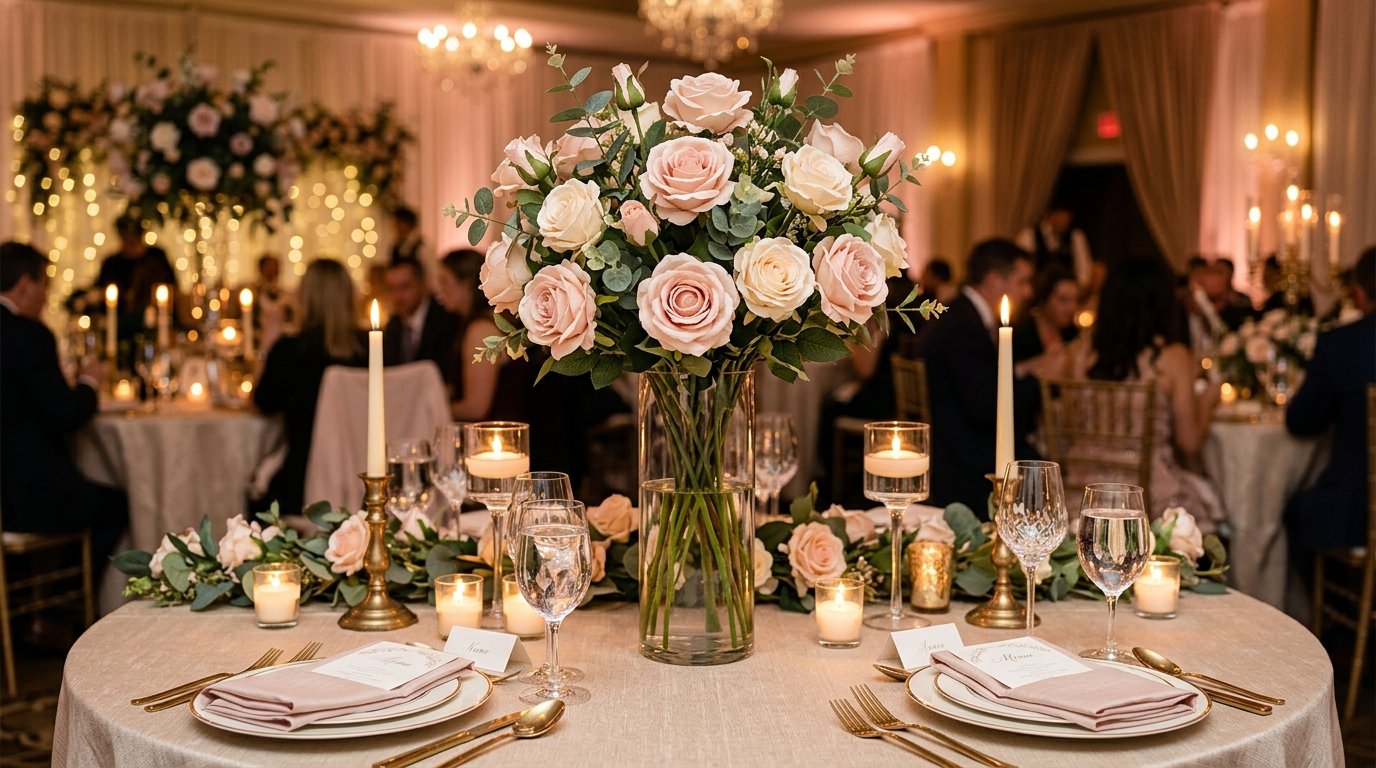
Artificial roses can be very practical for weddings. They do not wilt in heat, they can be arranged early, and they are easier to transport than fresh flowers. This matters in Australia, especially for summer weddings, outdoor ceremonies, regional weddings, long setup days and venues with limited cool storage.
Good artificial roses can be used in bridal bouquets, bridesmaid bouquets, buttonholes, arbour flowers, table centrepieces and aisle arrangements. For close-up items like bouquets and buttonholes, choose better-quality real-touch roses if the budget allows. For larger installations, silk-style roses can be fine if mixed with greenery. Do not use only roses everywhere unless that is the deliberate theme. Mixing roses with greenery, baby’s breath, peonies, orchids or soft filler flowers usually looks more natural.
How to arrange artificial roses in a vase
Add greenery first, place the main roses at different heights, then a few buds or filler. Turn some heads sideways and remove a stem if it looks crowded. Most people add too much.
Start with the vase, not the roses. A poor vase choice can make expensive stems look awkward. Good choices include a clear glass cylinder, white ceramic vase, stone-look vase, low bowl, narrow-neck vase for small bunches or a wider vase for mixed arrangements. For tall roses, the vase should usually be about one-third to half the total arrangement height, which stops the flowers looking top-heavy.
A simple approach: add greenery first, place the main roses at different heights, add smaller buds or filler flowers, turn some heads slightly sideways, then step back and remove one stem if it looks too crowded. Most people add too much. Artificial flowers do not need to prove anything. For more help with proportions, use our guide on choosing a vase with artificial flowers.
Caring for artificial roses
Artificial roses still need cleaning. Dust sits on petals, leaves and stems, especially near a window, fan, kitchen or open door. Take the roses outside, shake gently, dust petals with a soft brush, wipe leaves and stems, and use a cool low hairdryer for fine dust. Avoid soaking unless the label says it is safe. White and pale roses show dust fastest. Red and dark roses hide dust for longer, then suddenly look dull. Sneaky things. For deeper cleaning, read our guide on how to clean artificial flowers.
Indoor vs outdoor artificial roses
Most artificial roses are made for indoor use. If you want them outdoors, especially on a balcony, patio, grave site or porch, check whether they are UV-treated or outdoor-suitable. Australia’s sun can fade petals, stiffen materials and make cheap plastic leaves brittle. Red, pink and purple roses often show fading faster than cream or white. Covered areas are better than exposed full sun.
Common mistakes with artificial roses
Shiny petals are the biggest problem; they make roses look fake straight away. A vase packed full of rose heads can look heavy, so leave space and add greenery. Red has its place, but it is not always the answer; cream, white, blush and dusty pink often look more refined in Australian homes. Bad leaves ruin the whole bunch, so always check foliage. And artificial flowers do not die, but they do get dusty. Dusty roses are not romantic. They are just dusty.
My honest take
Artificial roses can be beautiful, but I would rather have five good stems than twenty cheap ones. Choose the colour carefully, avoid shine, use a simple vase and do not overcrowd the arrangement. For everyday Australian homes, cream, white, blush and dusty pink are the safest. Red is lovely when done properly. A rose should look soft and natural, not like it is trying to sell you a Valentine’s Day hamper.