 Huma Naveed
<strong>Micro-Climate Engineering: Mastering the Australian Sun & Wind</strong>
Are you wondering exactly where to plant a Golden Cane Palm (Dypsis lutescens) in Australia? the generic advice of “full sun to part shade” is simply not enough. To prevent stunted growth and scorched fronds, you must engineer a micro-climate by analyzing the specific Solar Aspect and Wind Corridors of your property.
Before deciding where to plant your palm, consider how each location around your home uniquely affects growth and care needs:
Consider the Western side, “Fry-Zone.”
The leading cause of Golden Cane mortality in our trials is direct exposure to the harsh 3:00 PM western summer sun. If planting on the western side, canopy shielding is essential.
Use a “protector screen” of fast-growing, heat-tolerant native shrubs—such as a Syzygium (Lilly Pilly) hedge—positioned just west of the palms. This creates filtered, dappled light during peak heat, preventing frond burn.
The Eastern “Goldilocks” Alignment:
For vibrant, lush fronds with minimal maintenance, plant on the eastern side of your house. Palms receive gentle morning sun that dries overnight dew (reducing fungal risk), while afternoon shade protects them from harsh heat.
Many properties also face wind issues. Narrow side-passages in modern estates can act as high-speed wind tunnels. Golden Canes, with their large feather-like fronds, suffer from transpiration stress in constant wind—where moisture is lost faster than roots can absorb it—leading to brown, shredded leaf tips.
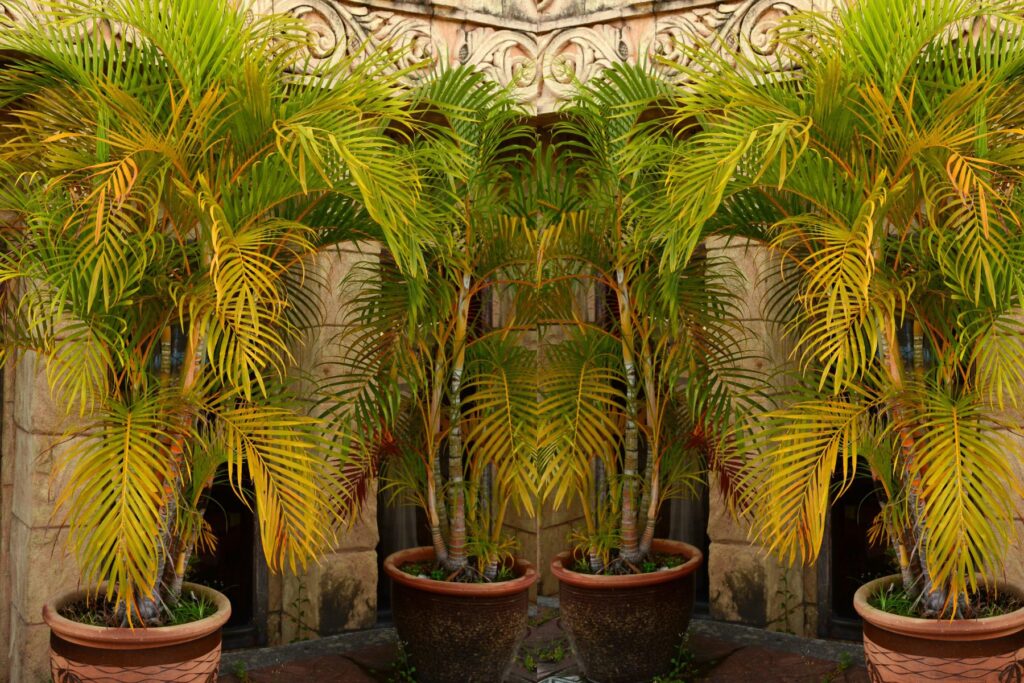
Click here to learn about the Varieties of the Golden Cane palm.
The Structural Fix: Avoid planting palms in a straight line in wind corridors. Use a staggered triangle pattern to break wind flow and preserve humidity for thriving palms.
<strong>Golden cane palm in Australia Success Formula</strong>!
- Best Aspect: East-facing for lush green fronds; North-facing for rapid growth and golden stems.
- Soil Requirement: Target a pH of 6.0–7.0. Use the “Mound Technique” for heavy clay and a “Compost-Heavy Sponge” mix for coastal sand.
- Safe Spacing: Minimum 1.5m clearance from pool fences and retaining walls to prevent structural warping as the base clumps expand.
- Critical Maintenance: Follow a strict 12-week deep-water establishment protocol, followed by seasonal seaweed bio-stimulant applications to prevent heatwave stress.
State-by-State: Regional Variances for Australian Gardeners
A Golden Cane palm planted in tropical Brisbane has vastly different survival requirements than one planted in dry Adelaide. To ensure success, you must adjust your care based on your specific Australian climate zone:
- Queensland & Northern NSW (High Humidity): Your biggest threat is fungal disease and Mealybugs hiding in the dense canes. Space your palms at least 2.0 meters apart to maximize wind airflow, and absolutely avoid evening watering, which encourages Sooty Mold.
- Victoria & South Australia (Cold Winters): These palms suffer from “Dormancy Shock” when night temperatures drop below 10°C. To protect the root ball, apply a thick 75mm layer of dark mulch in late Autumn to trap ground heat, and pause all nitrogen fertilizers during July and August.
- Western Australia (Hydrophobic Sand): Perth’s ancient sands literally repel water during summer. You must apply a professional-grade soil wetting agent every three months, or your irrigation will wash straight past the root zone.
- Sydney & Central Coast (Salt Spray): If you live within 5km of the coast, airborne salt will scorch the leaf tips. Perform a monthly “Foliar Flush”—hosing down the entire canopy with fresh tap water to wash away corrosive salt build-up.
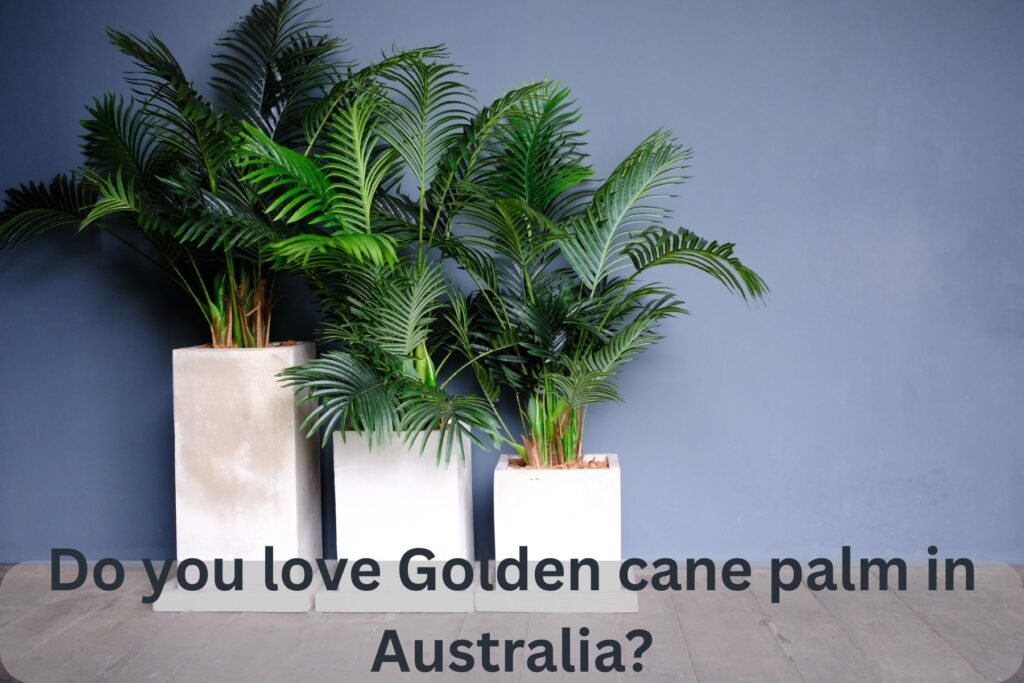
Do you love Golden cane palm in Australia?
The popularity of Golden cane palm in Australia isn’t just about looks:
- Adaptable Performer: Shines equally bright as a tall privacy screen, a poolside showstopper, or a chic indoor air cleaner.
- Speedy Growth (Outdoors): Once settled, expect 30-60 cm of growth per year, fast-tracking your privacy dreams.
- Family & Pet Safe: Non-toxic so that you can worry-free with curious kids or furry friends.
- Tough & Low Maintenance: Give it the right start, and it asks for little beyond basic care.
1. Sunlight: Getting the Glow Just Right
Golden Cane palm in australia adore sunshine… but Aussie sun can be brutal. Finding the sweet spot unlocks their best colour and health.
Outdoor Goldilocks Zone:
- Best Light for Golden Cane Palm (Made Simple):
- Ideal Spot: Morning sun and afternoon shade—like an east-facing area or under taller trees. Perfect for warm parts of Australia (QLD, NT, WA).
- Full Sun: Older palms can cope, especially in cooler areas, but too much sun can burn the leaves. Water the well if it’s in full sun.
- Too Much Shade: Not good. It grows slowly, looks thin, and loses its bright golden color. It survives, but doesn’t look its best.
Indoor Light Needs:
- Bright, Filtered Light is Essential. A spot near a north, east, or lightly shaded west window is perfect. No harsh, direct beams hitting the leaves for hours.
- Beware the Magnifying Glass Effect: Hot afternoon sun blazing through a window can quickly fry indoor palm fronds. Sheer curtains are your friend.
- The Dim Corner Struggle: They tolerate lower light better than many palms, but don’t push it too far. Expect stretched-out, sparse growth (long gaps between leaves), smaller, paler fronds, faded stems, and a higher chance of pests like mealybugs moving in.
Quick Sunlight Guide for Golden cane palm in Australia:
| What You Want (Goal) | How Far Apart? | Why This Works (Detailed Benefit) |
|---|---|---|
| Standalone Star | 2–3m+ from walls, fences, or structures | Prevents root crowding and structural damage while allowing the palm to grow fully and display its natural, symmetrical shape as a focal feature. |
| Lush Green Screen | 1.5m – 2m apart | Creates a dense, overlapping canopy that forms a natural privacy screen, blocks views, and gives a rich, tropical hedge-like appearance. |
| Open Tropical Feel | 2.5m – 3m+ apart | Allows each palm to stand out individually, improves airflow, reduces disease risk, and creates a relaxed, resort-style landscape with visible spacing. |
| Container / Pot Planting | Single plant per large pot (40–60cm+) | Controls overall size and root spread, making it ideal for patios, balconies, or small gardens while still maintaining a neat and decorative look. |
| Wind Protection Layout | Plant in staggered spacing (not straight line) | Breaks strong wind flow, reduces leaf damage, and helps maintain humidity around the palms, improving overall health and appearance. |
2. Soil: Setting Up Roots for Success
Think “Goldilocks” again: soil needs to hold moisture without drowning the roots. Soggy feet spell disaster.
- Perfect Soil Tips (Simple & Easy):
- Must-Haves: Soil should be rich, loose, drain well, and hold some moisture.
- Feed It: Aussie soils need help—add compost, aged manure, or good organic conditioners like Seasol or Dynamic Lifter.
- Fix Poor Soil:
- Clay soil? Add coarse sand, gypsum, and compost.
- Sandy soil? Add compost and manure to hold moisture.
- For Pots: Use a quality palm mix with good drainage (look for perlite or sand). Avoid cheap mixes—they harm roots.
- Soil pH: Slightly acidic to neutral (6.0–7.0) works best.
- Mulch Matters: Add 5–8 cm of mulch (bark or sugarcane), but keep it away from the trunks. It keeps roots cool, saves water, and feeds the soil. Refresh yearly.
3. Spacing & Placement: Giving Your Palm Room to Shine
How and where you plant dramatically affects its health, function, and appearance. Crowding causes problems!
Golden Canes develop a wide-spreading, fibrous root mat relatively close to the surface. They lack a deep taproot and are generally not pipe-seeking troublemakers unless a leak already exists.
But they are strong and extensive. Planting too close to foundations, paths, can cause long-term issues. Roots may lift pavers, crack thin concrete, and compete with nearby plants or turf.Spacing Made Simple of Golden cane palm in Australia:
| Location | Ideal Light | Too Much Sun | Too Little Sun |
|---|---|---|---|
| Outdoor | Morning sun + light afternoon shade | Crispy or bleached leaf tips | Pale leaves, slow growth |
| Outdoor (Full Sun) | Strong sun all day (if adapted) | Leaf burn, yellowing, dry stress | Rare issue |
| Indoor (Near Window) | Bright, indirect light | Brown patches from direct sun | Leggy, stretched, pale growth |
| Indoor (Low Light) | Very low natural light | Not common | Weak growth, yellow leaves |
| Balcony | Filtered light + some sun | Dry edges in harsh sun | Dull leaf color |
4. Choosing the Spot: Matching Purpose to Place
Think about why you want this palm and pick accordingly:
Poolside Perfection:
A classic! Offers lovely filtered shade without constant leaf litter (unlike many trees). Critical: Space at least 3m from pool edges/coping (5m+ is safer if possible). Expect occasional spent flower stalks to skim out. Handles pool splash well.
Privacy Powerhouse:
Ideal along fences or boundaries. Plant 1.5-2m apart in a row. Ensure enough sun/dappled shade. Remember their mature height (6-12m) when screening.
Tropical Garden Focal Point:
Makes a stunning centrepiece. Pair with Cordylines, Frangipani, Bromeliads, or Heliconias. Give it room to spread.
Indoor Jungle Vibes:
Place in bright spots, such as sunrooms, well-lit lounges, or well-lit hallways. Bathrooms with windows are great for humidity. Avoid cold drafts (from AC, doors) and dark corners.
Balcony & Patio Hero:
Large pots thrive in these spaces (especially in milder climates). Protect from severe frost and strong, drying winds.
Inspired to plant? Check out more detailed care tips specifically for Golden Canes in Australia, or explore other stunning tropical plants perfect for your region. Your local nursery is also a goldmine of advice tailored to your exact suburb!
5. Aussie Pitfalls to Dodge
- Exposed Wind Traps: Although reasonably wind-tolerant, constant, strong, and cold winds shred the leaves. Choose sheltered spots or create windbreaks.
- Frost Hollows: Mature palms can withstand very light frosts for a brief period. Young plants are particularly susceptible to prolonged frost damage or death. Avoid low, cold spots in southern states (VIC, TAS, southern SA, highlands). Use pots you can move or protect with frost cloth.
- Boggy Ground: Avoid areas where water pools. Root rot sets in quickly, causing stems to turn yellow and leaves to yellow. Plant on a mound or improve drainage drastically.
- Root Competition: Don’t plant near large, thirsty trees (e.g., gums, figs) whose roots will steal all the water and nutrients.

Spotting & Fixing Location Problems
The Golden Rule: Location is Everything
The Golden Cane Palm in Australia (Dypsis lutescens) is a superstar choice, famed for its graceful, arching fronds and stunning golden-yellow stems.
This stunning plant from Madagascar grows well across Australia—from Perth’s coast to humid Brisbane—but it all depends on one key thing: planting it in the right spot. Decide the location, and you’ll have a surprisingly low-fuss palm for years to come.
An ideal Assuie home by Getting the Golden Cane Palm?
Right mix of sun and shade, nutrient-rich, well-draining soil, and generous space (1.5-3m+ depending on your goal) – is the foundation for decades of easy, vibrant growth.
Whether you’re crafting a private poolside retreat, a lush indoor haven, or a stunning tropical screen, perfect placement is your key to success. Now find that sweet spot!
<strong>Water-Wise Sustainability: Can I use Greywater?</strong>
As Australian summers get hotter, using greywater is a smart and eco-friendly option. Golden Cane Palms in Australia can handle greywater (from laundry and showers), but you must be careful with chemicals.
points should keepin mind
- Only use water with low-sodium, phosphorus-free detergents.
- Avoid bleach and strong fabric softeners, as these chemicals build up in the soil and can burn the leaves.
- For better long-term results, add biochar to the soil.
- It helps hold moisture and works better over time than synthetic water crystals.
Golden cane palm in Australia
Next Steps for Your Tropical Garden:
Exploring other screening options? Compare your choices in our [Lilly Pilly vs. Bamboo Privacy Guide].
Struggling with white fuzzy spots? Read our [Expert Guide to Organic Mealybug Control].
Ready to push new growth? Check out the [Top 5 Palm Fertilizers for Australian Soils].