
 Huma Naveed
The Teddy Bear Magnolia size reaches 3–6 metres tall, is a compact evergreen tree that grows upright. Its dense, rounded shape makes it ideal for small gardens, hedges, or screening. The dark green glossy leaves have a soft bronze underside, and from spring to autumn, it blooms with large white flowers.
This guide explains its growth rate, final size, pruning tips, and planting advice so you can easily decide if it’s the right magnolia for your garden or balcony.
Cultivar note: Teddy Bear is the trade name commonly associated with Magnolia grandiflora ‘Southern Charm’. The original US plant patent describes ‘Southern Charm’ as a compact, upright and freely branching selection, but its observations came from the breeder’s trial conditions rather than Australian home gardens. Nursery dimensions and real garden performance can therefore vary with starting plant size, propagation, climate, soil and maintenance.
🌿 What Makes the Teddy Bear Magnolia Unique
The Teddy Bear Magnolia Tree is a compact form of Magnolia grandiflora, developed for small urban yards. It has:
- Glossy, dark-green leaves with soft bronze undersides
- A tight, upright shape that stays neat with minimal trimming
- Large creamy-white, fragrant blooms during spring and summer
Its slow, steady growth and rounded crown make it a perfect feature tree for driveways, patios, or front gardens.
🌱 How Fast Does a Teddy Bear Magnolia Grow?
Teddy Bear Magnolias grow at a moderate rate. Australian growers commonly report roughly 15–50 cm of height a year, and where your tree sits in that range depends on soil, drainage, watering, climate and how well established it is. A young tree in a pot will sit at the slow end; one in deep, well-drained soil with steady summer water will sit at the fast end.
You can expect it to reach:
- 3–6 metres in height, depending on the grower and conditions
- 2–3 metres in width — set your spacing off fences and paths using the wider figure, not the narrower one
Australian nursery listings differ. Published mature sizes for Teddy Bear Magnolia range from about 3 metres to 6 metres tall, depending on the grower, the growing conditions and how “mature” is defined — see for example Speciality Trees (4 m tall, 3 m wide), Evergreen Trees Direct (4–5 m tall, 2.5–3.5 m wide) and Plants for Spaces (3–4.5 m tall). Treat any single figure as a guide, not a guarantee.
This steady pace makes it easy to maintain its shape — unlike faster-growing trees that quickly get out of hand.
Tip: Regular watering and feeding during spring can boost growth slightly while still keeping it manageable.
Ideal Size for Small Australian Gardens
If you live in a suburban or inner-city area, the Teddy Bear Magnolia’s compact size is a significant advantage.
It won’t overtake your garden or shade your whole yard — making it ideal for:
- Courtyard gardens
- Front yards
- Small backyards
- Driveways and entrance paths
Even mature trees stay neat and sculptural, offering privacy without blocking sunlight.
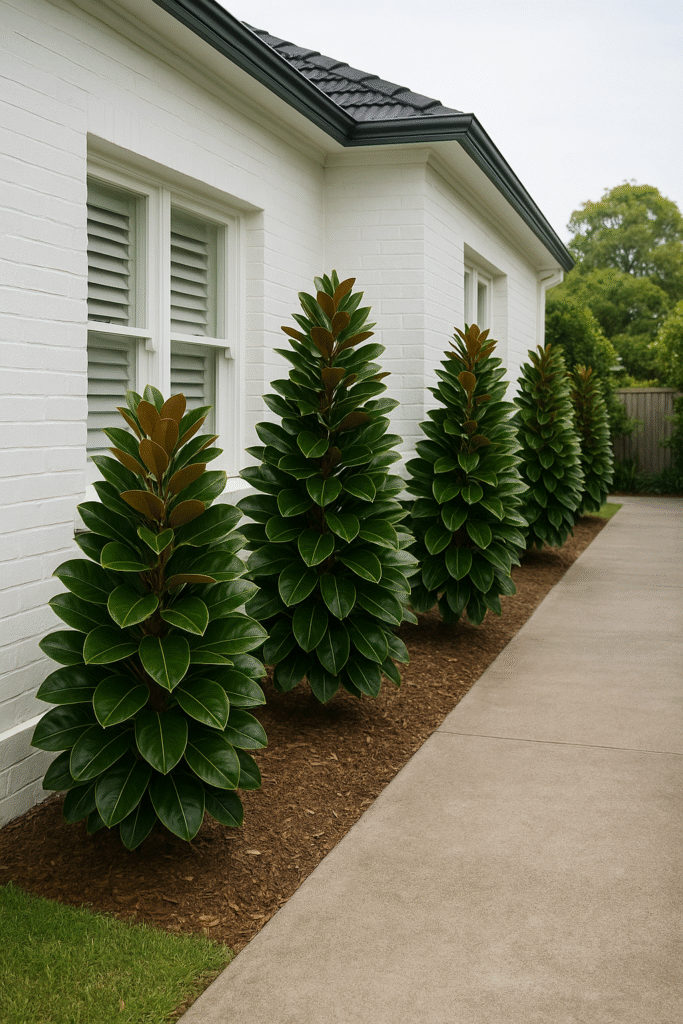
📏 Teddy Bear Magnolia Size vs Other Varieties
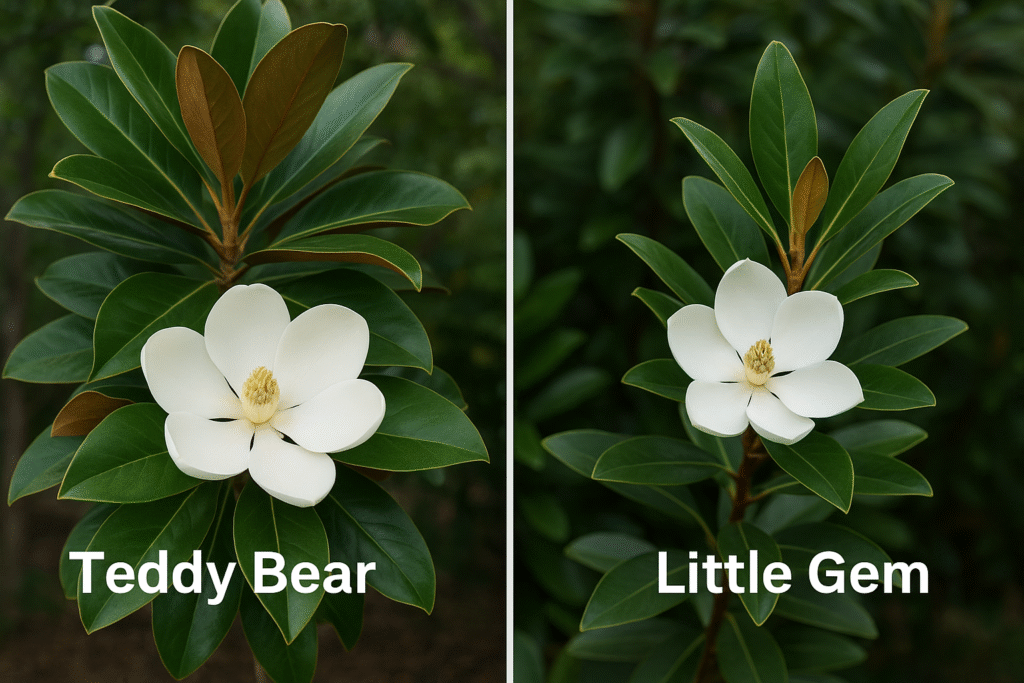
🪴 Verdict: Teddy Bear Magnolia is best for smaller spaces and tidy designs, while Little Gem suits larger yards.
Click here to know more about How to Grow Teddy Bear Magnolia Tree Australia: planting tips 2026-27
Teddy Bear Magnolia vs Little Gem – Which Should You Choose?
| Feature | Teddy Bear Magnolia | Little Gem Magnolia |
|---|---|---|
| Mature Height | 3–6 metres, depending on the grower — still compact enough for most Aussie gardens and courtyards. | 4–6 metres — ideal for taller privacy screens and large spaces. |
| Leaf Shape & Colour | Small, rounded, dark green leaves with a velvety bronze underside. | Narrower, lighter green leaves with a softer texture. |
| Growth Habit | Dense and upright, maintaining a neat form with little trimming. | More open and spreading, creating a fuller look when mature. |
| Maintenance Level | Low — keeps its shape naturally, only needs light annual pruning. | Moderate — occasional trimming required to control size and spread. |
| Flowering | Produces large, fragrant white blooms in spring and summer. | Blooms frequently through the warmer months with smaller flowers. |
| Soil & Sun Needs | Prefers full sun to part shade with well-draining soil. | Tolerates full sun and slightly varied soil conditions. |
| Best For | Small yards, courtyards, patios, or decorative pots. | Large gardens, front fences, or natural hedging. |
✅ Verdict: If you’re short on space or love low-maintenance plants, choose the Teddy Bear Magnolia. For taller screens or statement hedges, the Little Gem Magnolia is your go-to choice.
Quick Takeaway:
If space is tight, or you want a tree that holds a tidy shape without much work, choose the Teddy Bear Magnolia. If you need height and a dense screen sooner, choose the Little Gem. We compare the two side by side in our full Teddy Bear vs Little Gem comparison.
🏡 Will a Teddy Bear Magnolia Fit My Space? Quick Decision Guide
Find your situation for a fast go / think-twice steer, the spacing to use, and the figure that matters most. These are planning ranges, not guarantees — real results depend on starting plant size, soil, drainage, water and climate.
| Your situation | Verdict | What to plan around |
|---|---|---|
| Feature tree in a small courtyard or front yard | ✅ Often suitable | Plan for a mature ~2–3 m width and ~3–6 m height; allow about 1.5 m from a fence and check the mature canopy clearance needed around paths. |
| Narrow side passage under ~2 m wide | ⚠️ Think twice | The 2–3 m mature spread will overhang a narrow strip. Only choose it if you’ll prune the width each year or accept some encroachment. |
| Evergreen privacy screen or hedge row | ✅ May suit well | Space plants ~1.5–2 m apart for a continuous screen and allow ~1.5 m off a fence. Time to a full screen varies with starting size and conditions — advanced stock screens sooner. |
| Large pot on a balcony, patio or courtyard | ✅ May suit | Use a large, well-drained container. Confirm the appropriate container size and ongoing repotting requirements with the supplier. |
| Close to a boundary, wall or pool | ⚠️ Give clearance | Plan off the mature ~2–3 m width, not the nursery-pot size. Magnolias have fleshy surface roots that dislike disturbance, so leave room and avoid digging around them once established. |
| You need a tall screen fast | ➡️ Compare first | Teddy Bear is moderate-growing. If quick early height matters more than a compact form, weigh it against Little Gem before deciding. |
Sizes, spacing and growth compiled from Australian nursery guidance — Nursery Near Me care guide and privacy & screening guide, plus the Speciality Trees, Evergreen Trees Direct and Plants for Spaces listings referenced in this guide. Treat any single figure as a planning guide, not a guaranteed limit.
Pruning & Maintenance Tips
The good news: Teddy Bear Magnolias need very little pruning.
To keep them healthy and symmetrical:
- Trim lightly in late summer or early autumn after flowering.
- Remove any crossing or damaged branches.
- Apply mulch each year to retain soil moisture.
- Feed only when growth, leaf condition or the soil suggests the tree needs it. Avoid treating a twice-yearly calendar as a rule; establishment, soil condition and growing conditions matter more than the month.
If you’re shaping it as a hedge or feature tree, light trimming once a year will keep it looking picture-perfect.
Growing Teddy Bear Magnolia in Pots
This magnolia performs surprisingly well in large containers or planters, making it ideal for patios or balconies.
Use:
- Premium-quality potting mix (Australian Standards Red Tick)
- A well-draining pot with holes
- Regular watering during hot weather
A seaweed tonic can be used during active growth, but it is not a monthly obligation and it will not compensate for poor drainage or an unsuitable planting position.
Shop Potting Mix & Fertilizer:
Buy Premium Potting Mix on Bunnings
Check Magnolia Fertilizers on eBay AU
Click here to know more about Teddy Bear Magnolia Problems & Fixes Australia
Best Spots to Plant Teddy Bear Magnolia in Australia
Choose a bright location with full sun to partial shade.
It needs at least 6 hours of sunlight daily for the best flowering.
While it tolerates mild frost, it prefers sheltered positions protected from strong winds — especially in coastal or open areas.
Tip: Near the coast, protect from salty winds using a hedge barrier or screen.
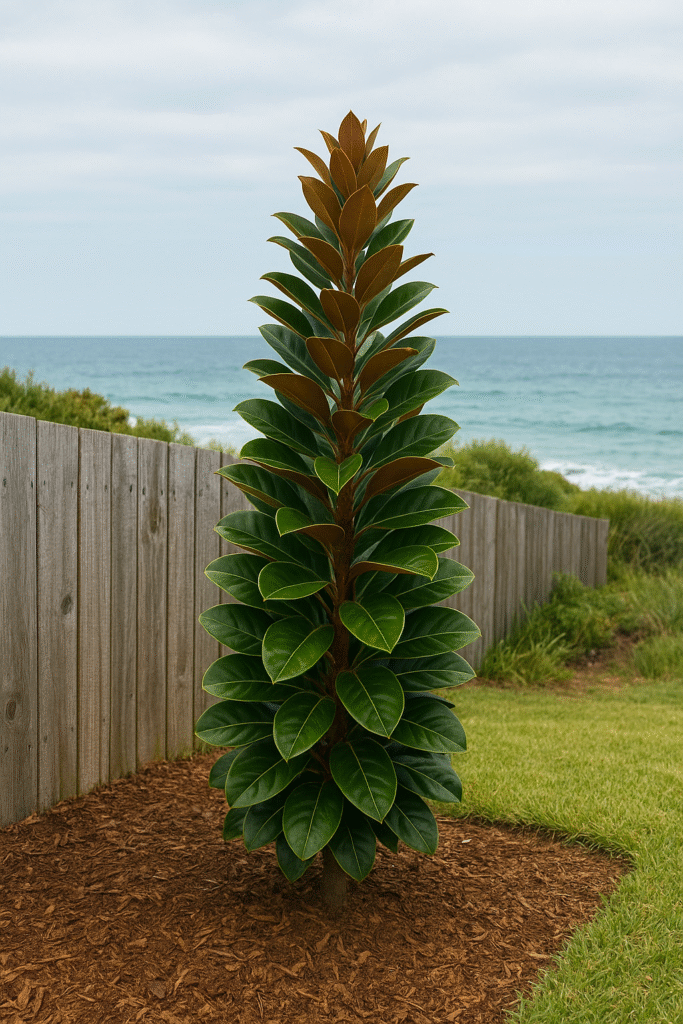
Pros & Cons of Teddy Bear Magnolia Trees
Teddy Bear Magnolia size makes it a top choice for small Australian gardens and urban courtyards
- Compact size – perfect for small Aussie yards.
- Evergreen foliage keeps your garden lush all year round.
- Beautifully fragrant white blooms.
- Easy to prune and maintain its natural shape.
- Thrives in pots and courtyard spaces.
- Fast growth: Quickly establishes a tall, dense privacy screen.
- Frequent blooms: Produces creamy white, fragrant flowers more regularly.
- Budget-friendly: Widely available in Australian nurseries at a lower price point.
- Classic structure: Grows into a beautiful, traditional upright tree shape.
- Requires pruning: Can become “leggy” or sparse at the base if left untrimmed.
- Not for pots: Aggressive root system will outgrow containers quickly.
- High humidity issues: Prone to sooty mould in hot, humid climates like Brisbane. The mould itself grows on honeydew left by scale and aphids, so the pests are the thing to treat.
- Leaf drop: Can drop large, leathery leaves which may clutter pool areas.
🪲 Common Teddy Bear Magnolia Problems (and Fixes)
Yellow Leaves: Usually caused by overwatering or poor drainage. Let the soil dry out slightly before watering again to avoid overwatering.
Leaf drop often occurs due to seasonal changes or when the plant is adjusting after being moved. Keep watering consistently and avoid sudden changes in light or temperature.
Root rot can occur if the soil stays too wet or heavy. To fix it, replant your Teddy Bear Magnolia in a raised bed or improve the soil with compost for better drainage.
Pests like scale insects and aphids may appear on the leaves. Light infestations can be wiped off by hand or dislodged with a strong jet of water. If you need to spray, choose a product registered for that pest in Australia and follow the label — horticultural oils and soap sprays are the usual choices. Do not assume a generic neem oil or a homemade mixture is approved for insect control — registration is product-specific. Some neem-derived insecticides are registered in Australia (Eco-Neem, for example, is an APVMA-registered azadirachtin product), so check that the product you buy is registered for the pest and plant you are treating.

Prefer the Magnolia Look Without Maintaining a Live Tree
For indoor spaces or sites where a living Magnolia is impractical, an artificial tree can provide a similar decorative effect without the growing requirements discussed above.
The Teddy Bear Magnolia’s glossy green leaves and neat shape make it perfect for any space.
- Indoors: Place a potted plant near a bright window. You can also use artificial light if natural sunlight is limited.
- Outdoors: It looks beautiful along fences, patios, or near pool areas for a soft, tropical touch.
- Offices: Artificial Teddy Bear Magnolias add a touch of greenery and freshness without watering or sunlight.
🛒 Shop Artificial Teddy Bear Magnolia Trees – Amazon AU
Artificial vs Natural Teddy Bear Magnolia: Quick Comparison
Natural Teddy Bear Magnolia VS Artificial Teddy Bear Magnolia
Maintenance needs watering & feeding. No care needed
Lifespan 20 + years Long-lasting décor
Cost Moderate (depends on size) One-time purchase
Best for Outdoor gardens, Indoor décor, and events
🛒 Buy Artificial Teddy Bear Magnolia – GardenGreenAU
The Teddy Bear Magnolia Tree is a dream for Australian homeowners who love low-maintenance greenery.
Its slow growth, compact height, and glossy leaves make it one of the best small evergreen trees for modern Aussie yards.
Whether planted in the ground or kept in a pot, this magnolia stays tidy, fragrant, and stylish year-round — a true showpiece for Australian gardens.
🛒 Buy Teddy Bear Magnolia Trees – Gardengreen.au
References & Trusted Resources
This guide is written and fact-checked by the Garden Green editorial team. Mature sizes and growth rates are cross-checked against the published specifications of Australian growers who actually sell the tree, because those figures vary between suppliers:
- Speciality Trees — Magnolia grandiflora ‘Teddy Bear’ grower specification
- Evergreen Trees Direct — size and growth-rate listing
- Plants for Spaces — size listing
- For pesticide use, check the APVMA PubCRIS register to confirm a product is registered for your pest in Australia.
Conclusion
✍️ Author & Expert Note
Written by Huma Sharif, MPhil in English Literature and garden writer for Gardengreen.au Passionate about native and ornamental plants for Aussie homes. Updated May 2026.