 Huma Naveed
If your Elephant Ear plant in Australia (Alocasia brisbanensis) is drooping, turning yellow, or developing brown edges, you’re not alone. Many gardeners buy it for that bold, tropical look—only to struggle when the leaves suddenly start failing.
While it’s often labelled as an “easy-care” plant, most problems come down to three key mistakes: poor drainage, incorrect humidity, or misunderstanding its natural winter dormancy.
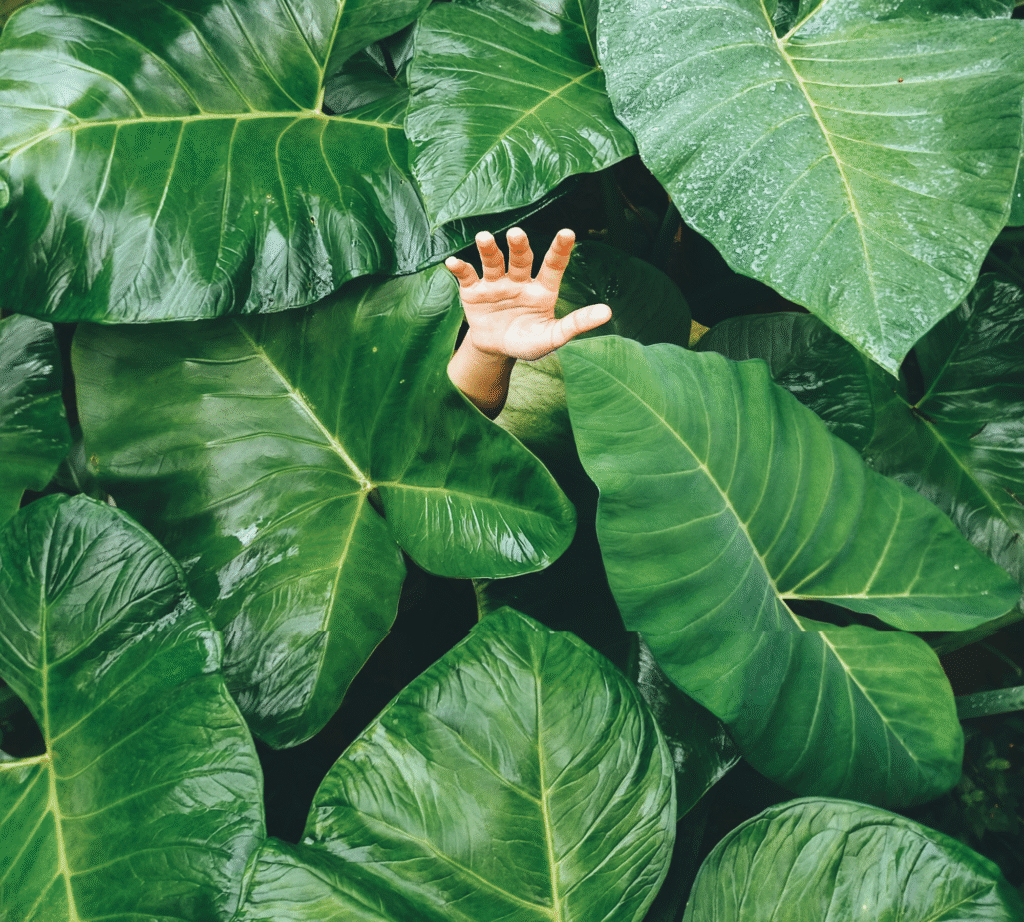
Overwatering in poorly drained soil combined with low humidity
This creates a deadly combination:
- Wet roots will lead root rot
- Dry air results leaf damage
Healthy plant = moist soil + airflow + humidity balance
How to Grow and Care for Alocasia Brisbanensis
🇦🇺 Best Climate & Growing Zones in Australia
Elephant Ear behaves differently depending on location:
- QLD & Coastal NSW → thrives outdoors year-round
- Sydney & Perth → grows well with partial shade + humidity support
- Melbourne & Adelaide → better in pots or sheltered spots
- Inland regions → need extra watering + humidity
📋 The Ultimate Care Cheat Sheet
Light
Bright indirect light indoors. Dappled or filtered shade outdoors. Avoid harsh afternoon sun or the leaves will scorch.
Watering
Keep soil consistently moist, but not soggy. Water when the top 2–3 cm feels dry. Drooping or yellow leaves often mean over/underwatering.
Temp & Humidity
Needs 18°C – 27°C and is not frost-tolerant. Loves high humidity—use a pebble tray or mist leaves if your indoor air is dry.
Soil
Needs a rich, loamy, well-draining mix. Add compost for nutrients and perlite or bark to ensure the roots never sit in water.
Fertilising
Feed with a balanced liquid fertiliser every 4–6 weeks during spring and summer. Stop entirely during autumn and winter dormancy.
Pruning
Trim dead or yellowing outer leaves at the base. Always wear gloves—the sap is toxic and can cause severe skin irritation.
Growing Methods (Propagation)
Easily propagated via division or stem cuttings in spring. Divide large root clumps, ensuring each section has at least one healthy root, or root cuttings in water before planting.
✂️ Method 1: The Rhizome (Stem) Chop
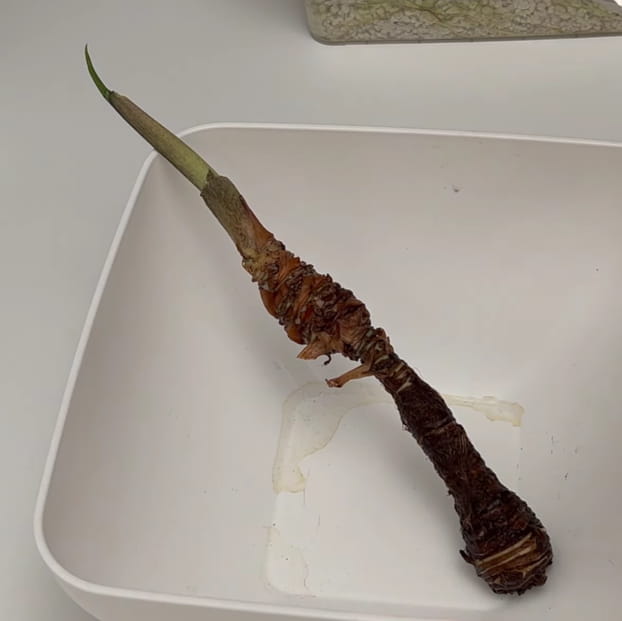
Expose & Clean the Rhizome
Remove the mature plant from its pot and wash away the soil. Identify the thick, woody stem (the rhizome) at the base of the plant.
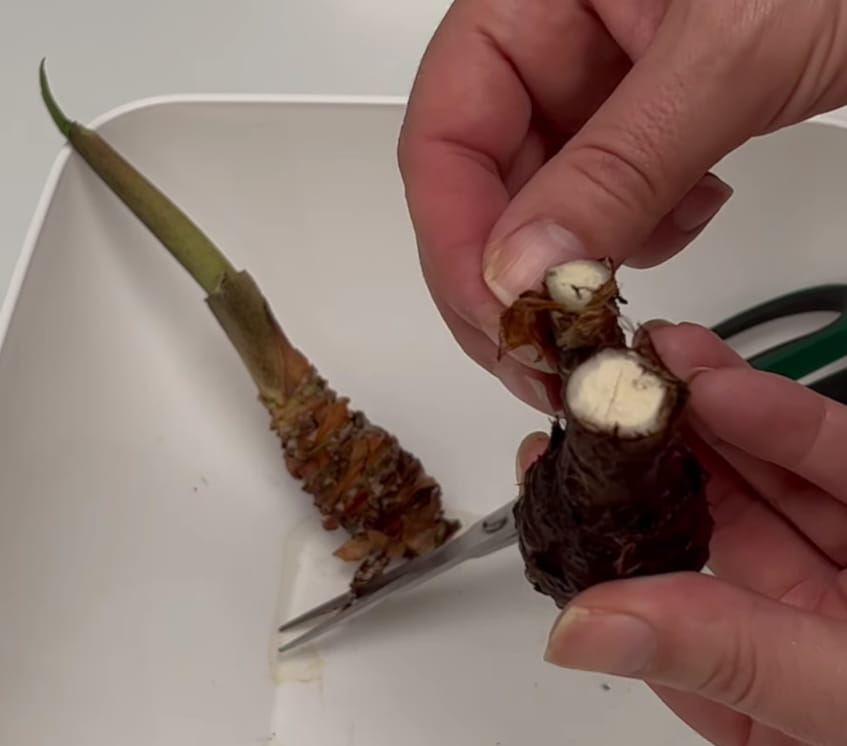
Make the Cut
Using sterilized scissors or a sharp knife, slice the rhizome cleanly. Ensure each cut section has at least one node or growth point.
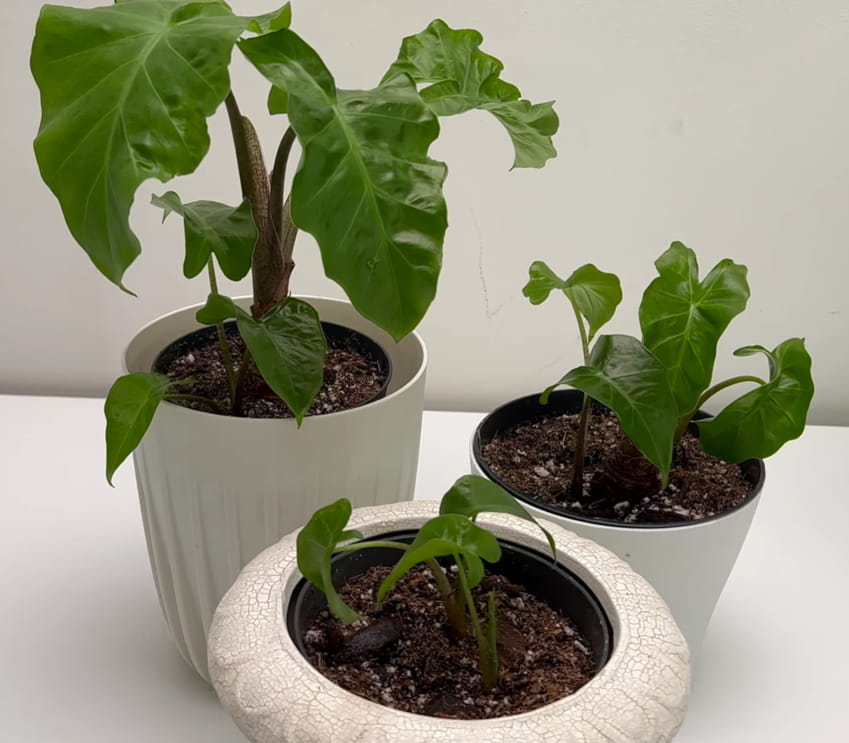
Callus & Replant
Let the cut ends dry (callus) for a few hours to prevent rot, then bury the section upright in moist, chunky aroid mix.
🌰 Method 2: Harvesting Corms (Bulbs)
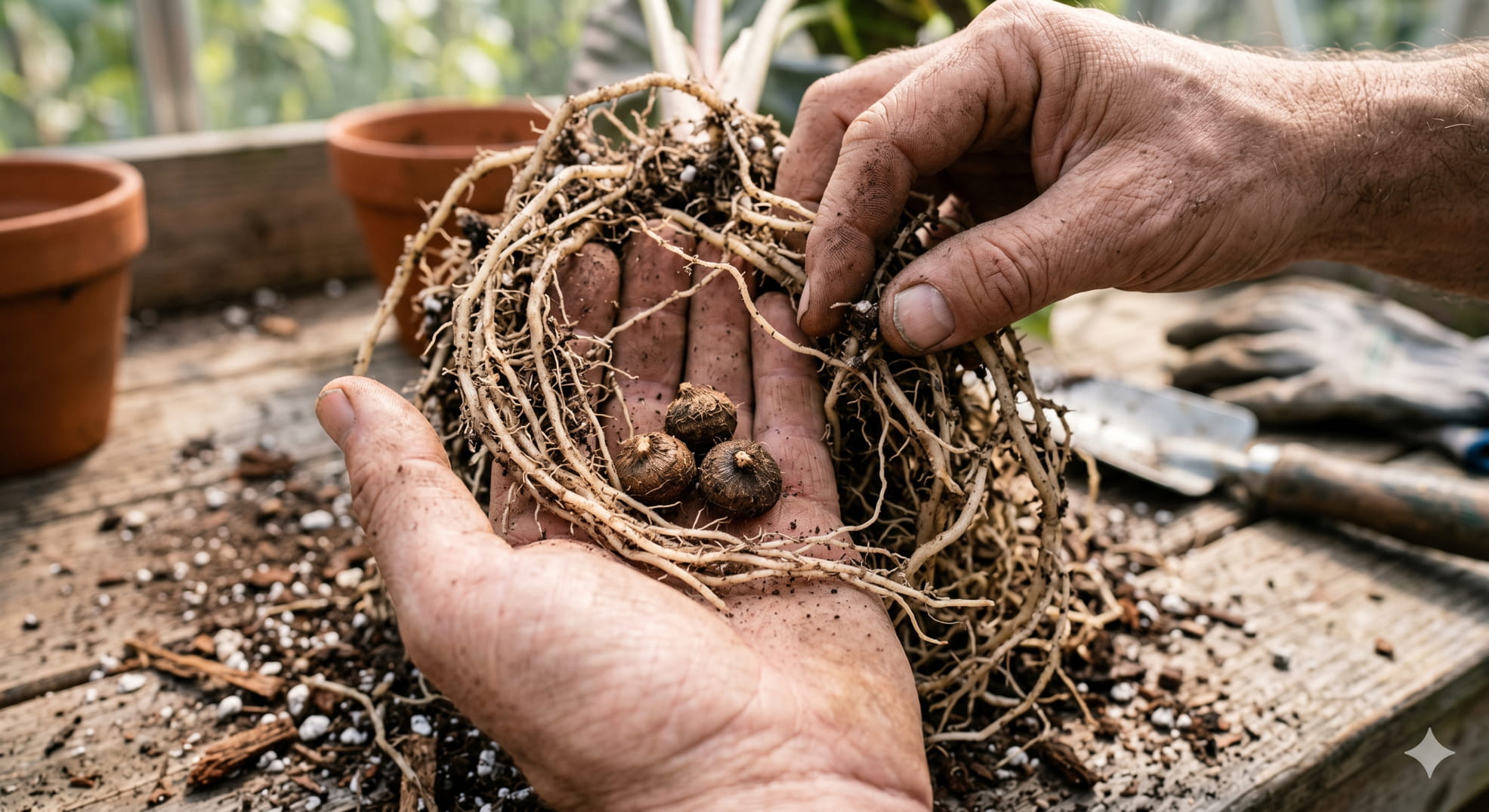
Forage for Corms
Gently dig through the mother plant’s root system. You will find tiny, hard bulbs called corms attached to the roots. Snap them off.
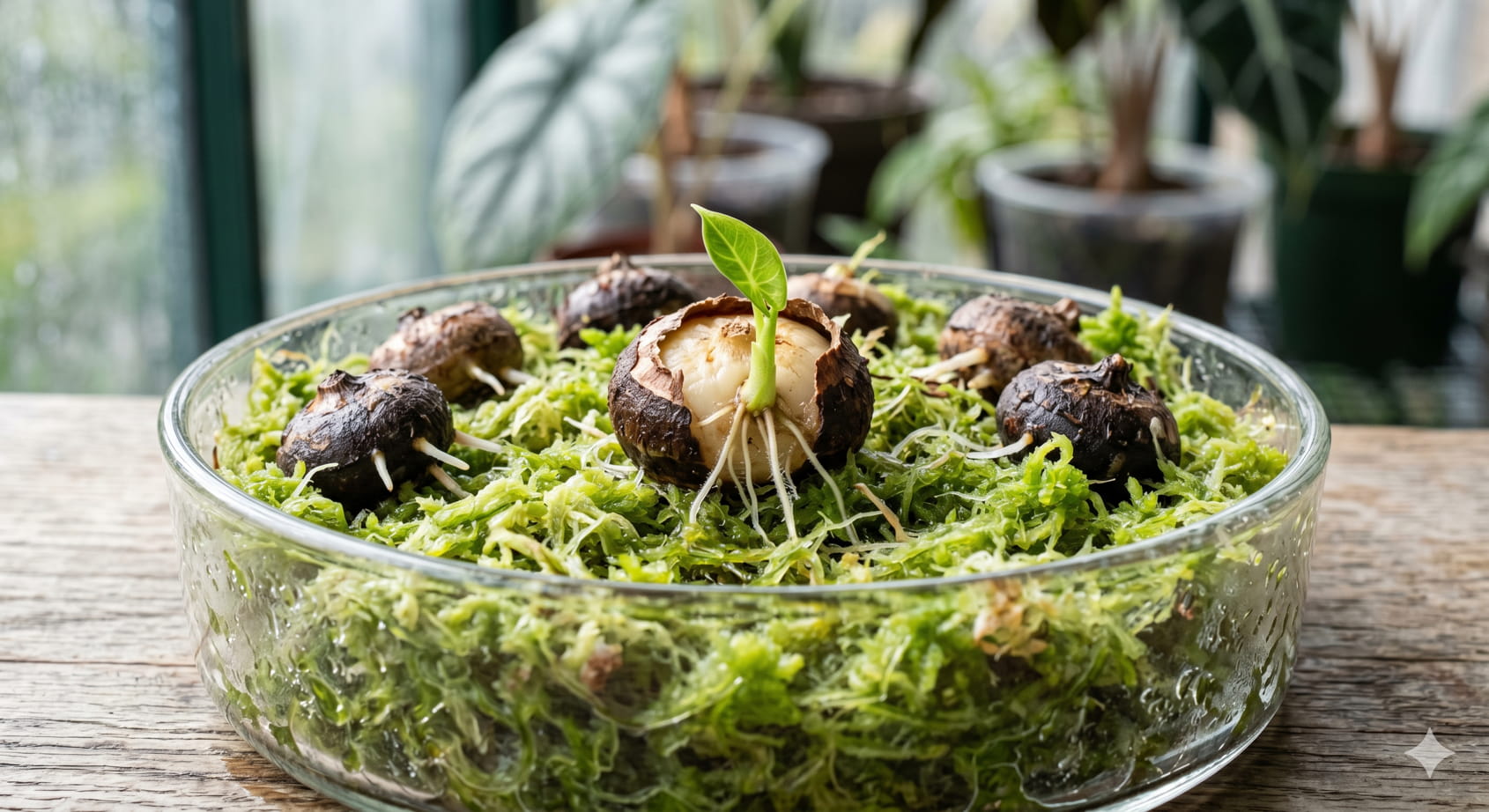
Peel & Sprout
Peel the dark outer skin off to expose the light center. Place them facing up in a shallow puddle of water or moist sphagnum moss.
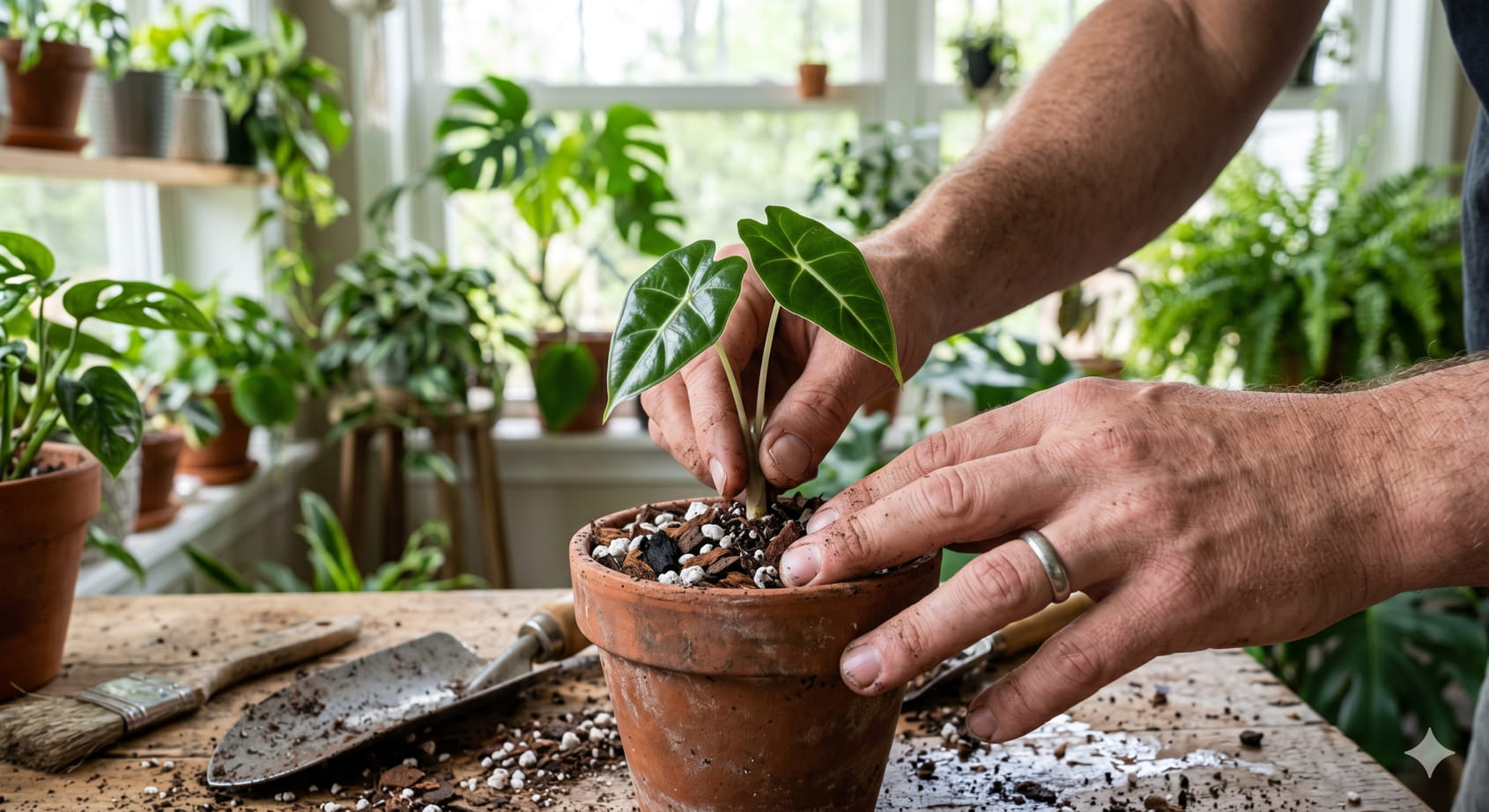
Pot the Baby Plants
Once the corms establish roots and push out their first true leaves, transfer them into small pots. Keep them in high humidity to thrive!
Important Safety Warning: Alocasia brisbanensis is highly toxic to dogs, cats, and humans if ingested, and its sap can cause skin irritation. Always wear gloves when pruning, and if you have curious pets or toddlers, consider styling your space with high-quality artificial Elephant Ears instead to get the look without the risk.
While the Brisbaneensis thrives outdoors, if you are looking to grow other popular indoor varieties, read our Ultimate Guide to Growing Alocasia in Australia.
Why Choose the Elephant Ear Plant?
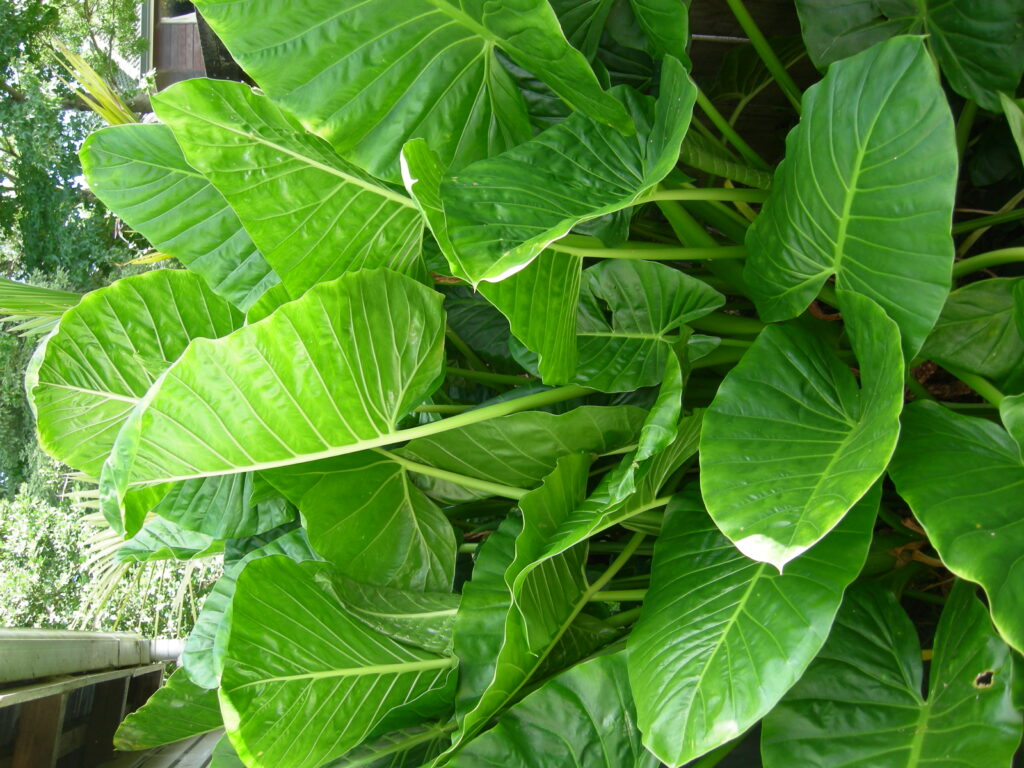
Elephant Ear Plant (Alocasia Brisbaneensis) is a tropical plant native to Southeast Asia, known for its large, glossy green leaves that resemble elephant ears. A relative of the Philodendron and Anthurium, it belongs to the Araceae family.
In Australia, it’s a popular ornamental plant, thriving in gardens and homes. With a height of up to 2 meters, it creates a tropical vibe, perfect for both indoor and outdoor spaces.
Features of Elephant plant:
The Elephant Ear plant is favoured for several reasons:
- Aesthetic Appeal: The plant’s large, showy leaves instantly become the focal point of any garden or room.
- Tropical Vibe: It adds a touch of the tropics to your landscape, making it an excellent choice for Australians looking to bring a bit of nature indoors.
- Low Maintenance: Despite its bold appearance, the Elephant Ear is relatively low-maintenance and doesn’t require complex care routines.
Planting the Elephant Ear Plant in Australia
Best Soil Conditions
- The Elephant Ear plant thrives in well-draining, slightly acidic soil. A loamy mix enriched with organic matter, such as compost, works best for these plants.
- If you’re planting in containers, ensure your pot has proper drainage to prevent waterlogging, which can lead to root rot.
Ideal Planting Location
- Outdoor Planting: Choose a spot with partial to full shade. Since the plant is accustomed to growing under the canopy of taller trees, it doesn’t thrive in full sunlight. Too much sun can scorch its leaves, causing brown patches.
- Indoor Planting: Place your plant near a window that receives bright, indirect light. It can also thrive under grow lights if natural sunlight is limited.
Best Time to Plant in Australia
- The ideal time to plant your Alocasia Brisbaneensis is during the spring or early summer months (September to December), when the temperature is warm and the plant has ample time to establish its roots before the colder months.
Common Problems and How to Solve Them
Pest Infestation
While the Elephant Ear plant is relatively pest-resistant, it can occasionally be affected by pests such as spider mites and aphids. To control these pests, you can spray the plant with insecticidal soap or wipe the leaves with a damp cloth.
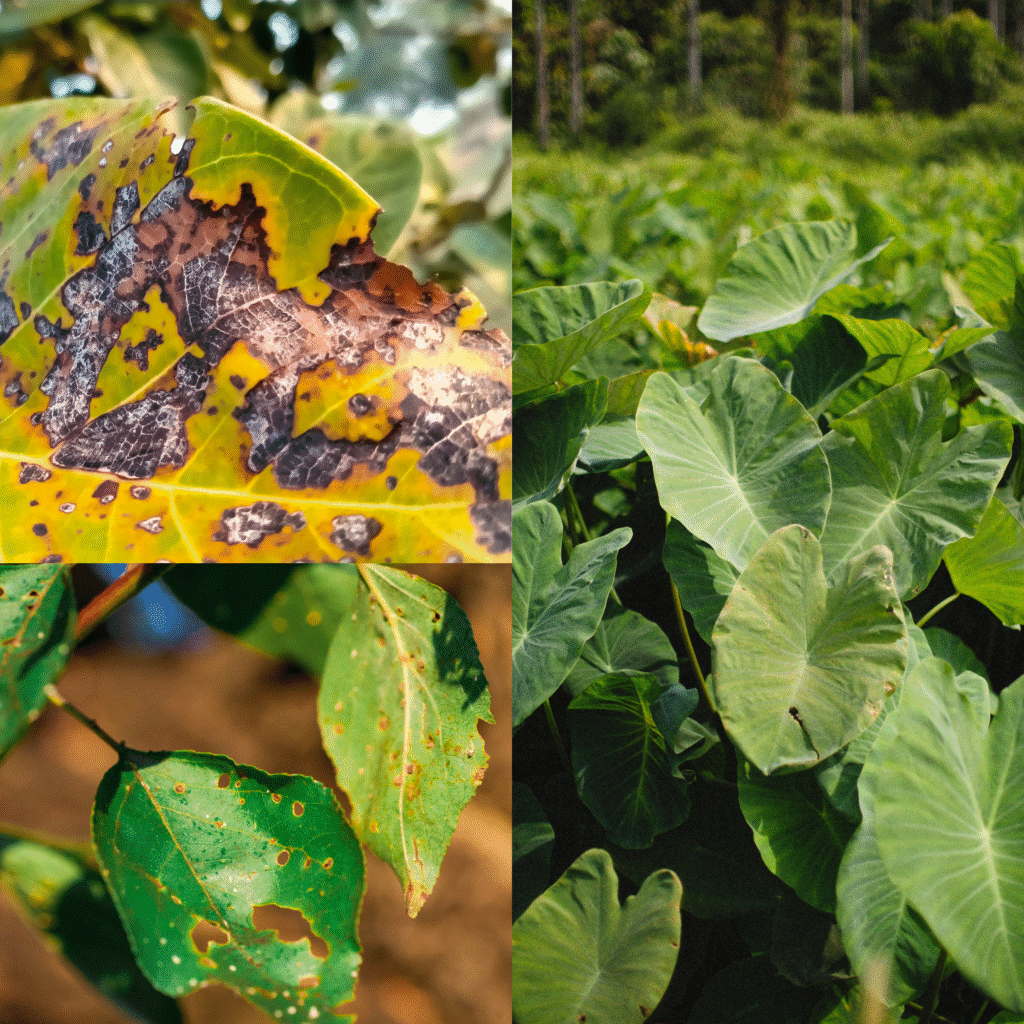
Leaf Yellowing
If the leaves of your plant start turning yellow, it could be due to several factors:
- Overwatering or underwatering: Adjust your watering schedule.
- Lack of sunlight: Move the plant to a brighter spot with indirect light.

Root Rot
Root rot is common when the plant’s roots sit in water for too long. Ensure the plant is in a well-draining pot and avoid overwatering it to prevent root rot. If you suspect root rot, remove the plant from its pot and trim any affected roots.
How to Propagate the Elephant Ear Plant
Methods of Propagation
The Elephant Ear plant can be propagated via stem cuttings or division.
- Stem Cuttings: Cut a healthy stem just below a node and place it in a glass of water or directly in moist soil. Roots should start to form within a few weeks.
- Division: If your plant has become too large for its pot, you can divide it into smaller sections, making sure each section has at least one healthy root.
Step-by-Step Guide for Growing New Plants
- Cutting: Use a sharp, clean knife to cut a healthy stem.
- Rooting: Place the cutting in a jar of water or a small pot with moist soil. After a few weeks, you should see roots forming. Once the roots are about 2 inches long, transplant the cutting into a larger pot or garden bed.
Alocasia Brisbaneensis: Native Habitat and Characteristics
The Alocasia Brisbaneensis is native to tropical and subtropical areas, thriving in humid environments with regular rainfall. It naturally grows in shaded spots under tall trees, where it gets filtered light.
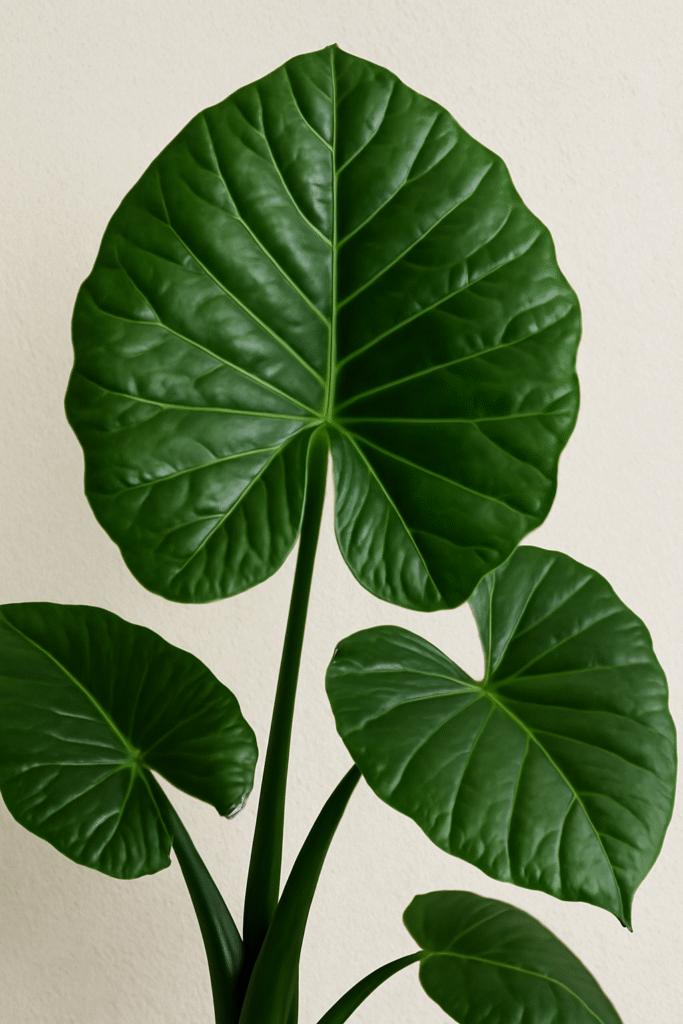
Its heart-shaped, deep green leaves have distinct veins that give the plant a unique texture. As it matures, the Alocasia Brisbaneensis can reach heights of up to 2 meters, with leaves that can grow as large as 60 cm.

Indoor Decoration Ideas
1. Statement Floor Plant
Place your Elephant Ear in a decorative pot and position it in a corner of your living room or entryway. Its large leaves will create a focal point and add a touch of nature to your interiors.
2. Pair with Complementary Plants
Combine the elephant ear plant with ferns or peace lilies to create a tropical ambience. Their contrasting textures and colours will complement the bold foliage of the Elephant Ear.
3. Use Decorative Planters
Opt for planters in materials like ceramic, terracotta, or woven baskets. Select colours that complement your home’s decor to achieve a cohesive look.
4. Elevate with Plant Stands
Using plant stands can add height and dimension to your space, making the plant more prominent and visually appealing.
Outdoor Decoration Ideas
1. Create a Tropical Garden Bed
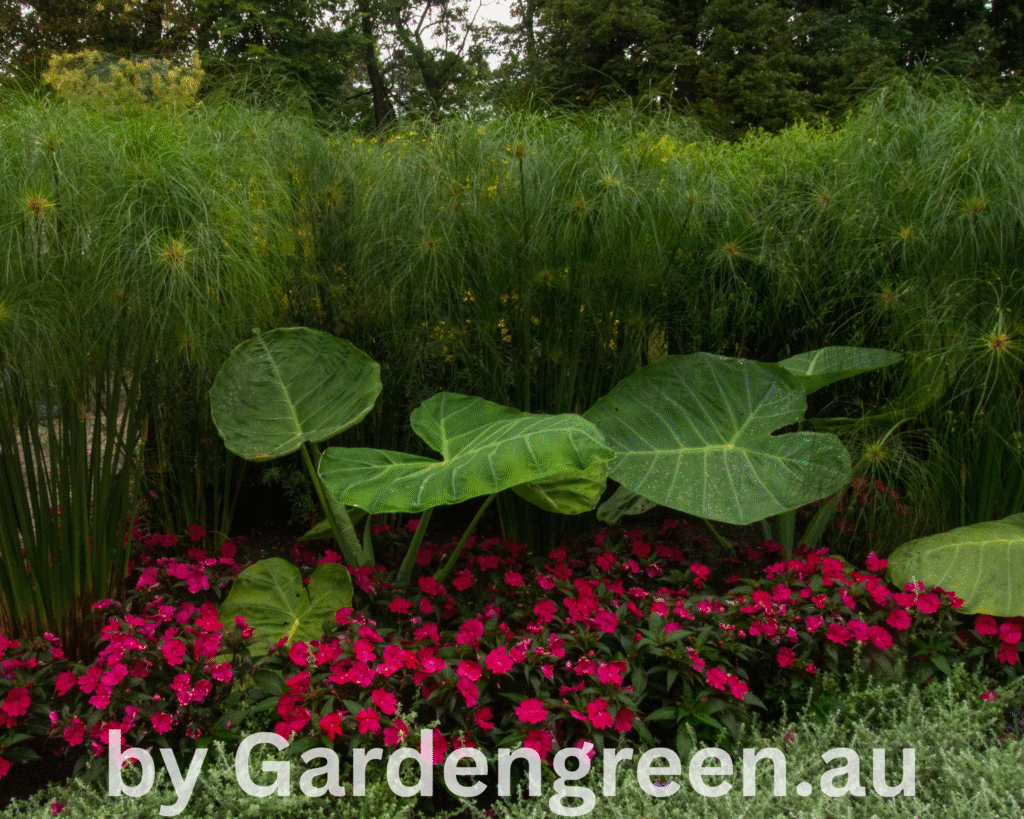
Elephant Ears plants can be paired alongside other tropical plants, such as cannas or gingers. Their large leaves will add drama and a lush feel to your garden.
2. Accent Water Features
Position near ponds or fountains. The plant’s foliage reflects beautifully in water, enhancing the serene atmosphere.
3. Use as a Backdrop
Place at the rear of garden beds to create a layered effect. Their height and bold leaves provide a striking backdrop for smaller plants.
4. Container Planting
For patios or balconies, plant in large containers. This allows for flexibility in relocating the plant as needed and adds greenery to hardscaped areas.
Incorporating Artificial Elephant Ear Plants in Your Décor
The "Zero-Light" Solution:
Real Alocasias will die in dark hallways or windowless bathrooms. Place a premium artificial Elephant Ear in these dead zones, and reserve your live plants for bright, sunlit living rooms.
The Pet-Safe Alternative:
If your dog loves to chew, swap your floor-level live Alocasia for an artificial one, keeping the toxic real plants elevated on high shelves.
Don’t have the time or right climate to keep a real plant alive? If you love the look of the native Alocasia brisbanensis but want a zero-effort, 100% pet-safe option, a high-quality artificial Elephant Ear is the perfect choice..
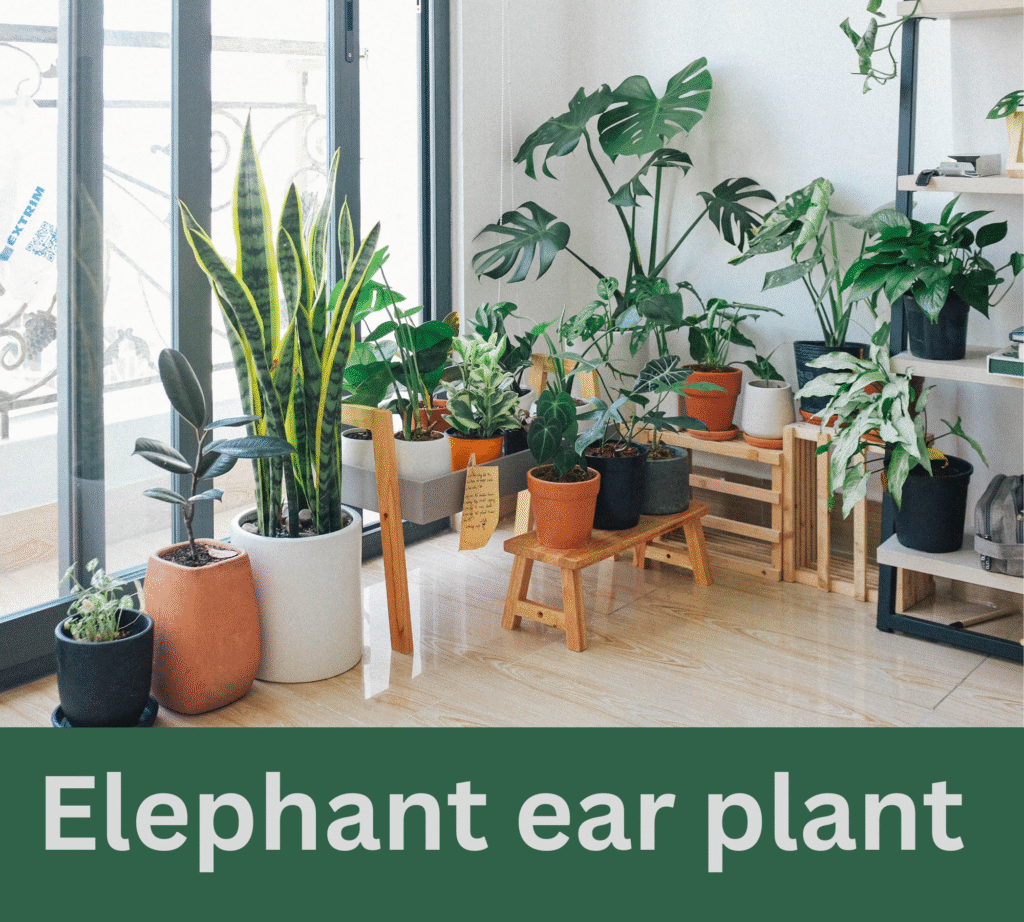
Indoor Use of Artificial Elephant Ear Plants
- Low Maintenance: Ideal for those with little time or experience. No need for sunlight, water, or pruning.
- Long-lasting Appeal: These plants stay vibrant and beautiful year-round.
- Perfect for Hard-to-Reach Spaces: Ideal for dark corners or areas where real plants struggle to thrive.
- Decorative Display: Place in stylish pots or planters to add a realistic touch to your décor.
Outdoor Use of Artificial Elephant Ear Plants
- Weather Resistance: Artificial plants are designed to withstand harsh weather conditions, remaining unaffected by wind, rain, or sun, making them ideal for use on patios, balconies, or in gardens.
- Filler Plants for Gaps: Use them to fill empty spots in your garden, adding greenery where real plants may struggle.
Mixing Real and Artificial Elephant Ear Plants for an Appealing Look
If you love the lush beauty of real plants but want to balance maintenance with ease, consider blending natural and synthetic Elephant Ear plants. Here’s how you can achieve an appealing, balanced look:
1. Create a Natural-Looking Focal Point
Use real Elephant Ear plants as the primary feature in your décor, but fill in surrounding spaces with artificial plants. The real plant will provide authenticity and life, while the artificial ones will offer complementary greenery without the need for upkeep.
2. Strategically Position Artificial Plants
Position the artificial plants in areas that are more difficult to maintain, such as high shelves, under furniture, or in spots with minimal light. Place your real Elephant Ear plants in areas where they can thrive, such as near windows or in shaded outdoor areas.
3. Combine Different Types of Plants
Incorporate a mix of real tropical plants (like ferns, palms, and peace lilies) alongside artificial Elephant Ear plants. By mixing different textures, heights, and types of greenery, you’ll create a rich, layered look that’s visually appealing and easy to maintain.
4. Use Artificial Plants for Large Spaces
In larger areas, such as your garden or living room, use artificial Elephant Ear plants to fill in the gaps, while still incorporating a healthy mix of real plants to keep the atmosphere vibrant.
Frequently Asked Questions
Why is my Elephant Ear plant drooping suddenly?
This is usually caused by underwatering or transplant shock. Water deeply and keep conditions stable to help it recover.
Why are the leaves turning yellow in Australian conditions?
Yellow leaves are often due to overwatering or poor drainage. Ensure excess water drains freely.
Can I grow Elephant Ear indoors in Melbourne or colder regions?
Yes, but it needs bright indirect light, warmth, and added humidity. Bring it indoors during winter.
How often should I water my Elephant Ear plant?
Water when the top 2–3 cm of soil feels dry. Keep soil moist but not soggy.
Why are the edges of my leaves turning brown and crispy?
This is usually due to low humidity. Increase moisture using misting or a humidity tray.
Can Elephant Ear plants handle full sun in Australia?
No, strong sun can burn leaves. They perform best in filtered light or partial shade.
Why is my plant not growing or producing new leaves?
Slow growth may be caused by low light, cold weather, or natural winter dormancy.
Is Elephant Ear plant safe for pets and children?
No, it is toxic if ingested. Keep it out of reach of pets and children.
Can I grow Elephant Ear in pots or containers?
Yes, use a large pot with excellent drainage and free-draining soil mix.
Why are my Elephant Ear leaves curling?
This is usually caused by heat stress, dry air, or inconsistent watering.
How do I prevent root rot in Elephant Ear plants?
Use well-draining soil and avoid overwatering. Never let the plant sit in water.
Does Elephant Ear go dormant in winter in Australia?
Yes, growth slows in cooler months. Reduce watering and resume care in spring.
Conclusion
The Elephant Ear Plant is more than just a plant; it’s a statement piece that can transform your living space. Whether indoors or outdoors, and if you’re unable to care for a real plant, don’t worry—artificial Elephant Ear plants offer low maintenance.
By blending real and artificial plants, you can create a stunning, dynamic environment.