
Yellow artificial flowers can go two ways. Done well, they look cheerful, warm and fresh. Done badly, they look like a plastic bunch from the servo that has been sitting near the window since 2014.
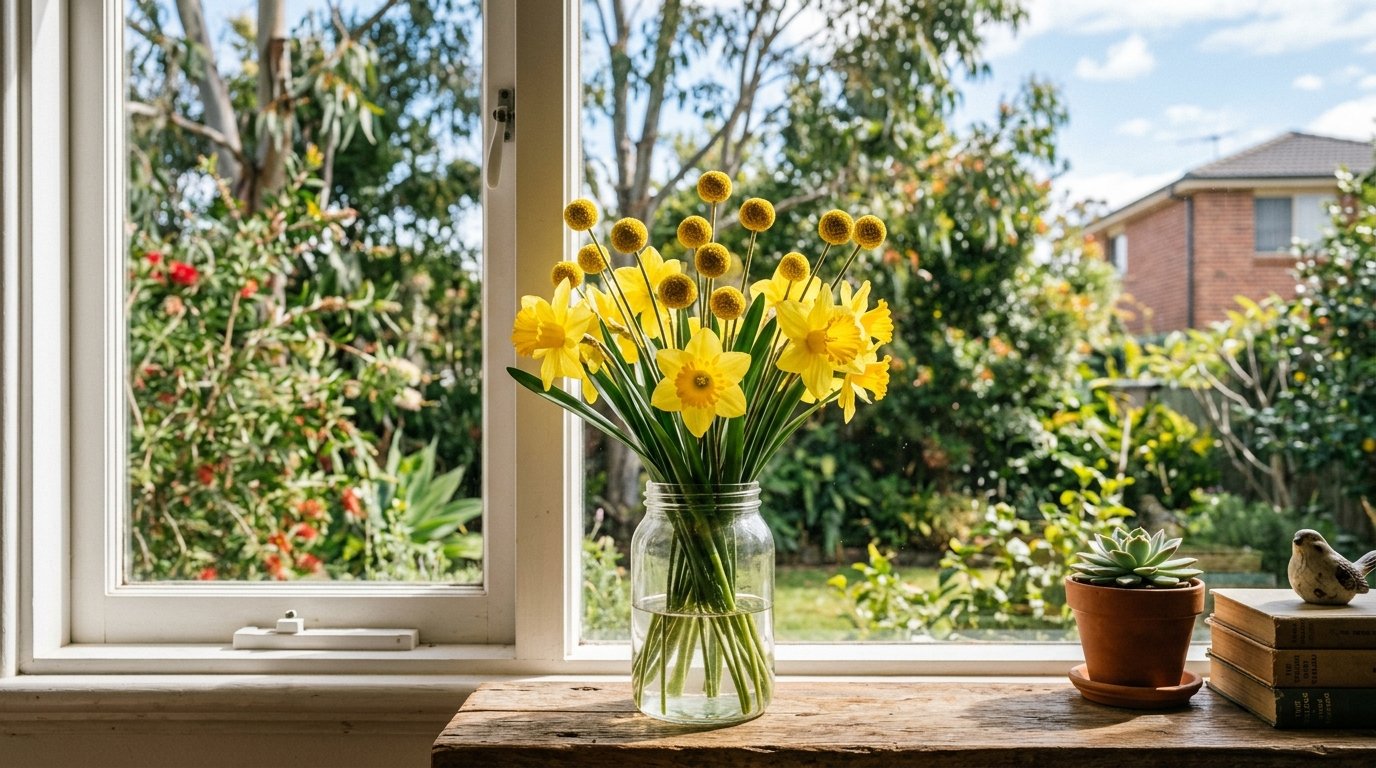
I like yellow flowers when they are used with a bit of restraint. A few soft yellow stems in a white ceramic vase. Wattle-style sprays near the entry in late winter. Sunflower heads in a kitchen jug. Cream and yellow roses for Mother’s Day. A small yellow arrangement on a desk that needs waking up.
Yellow is not a shy colour. It catches light, pulls attention and can lift a dull corner quickly. The trick is choosing yellow artificial flowers that suit Australian homes, our bright sun, and the style of the room rather than fighting everything around them.
Yellow is not shy. Used with restraint — soft, golden or wattle tones — it lifts a dull corner. Avoid hard lemon yellow and glossy petals, which look cheap in bright Australian light.
| Yellow tone | Best use | Avoid |
|---|---|---|
| Soft yellow | Kitchens, spring, Mother’s Day | Too much pale yellow in white rooms |
| Golden / mustard | Timber, natives, offices | Pairing with harsh neon green |
| Lemon yellow | Easter, events, modern rooms | Cheap shiny petals |
| Wattle yellow | Native styling, entry tables | Oversized pom-pom clusters |
Why yellow artificial flowers work in Australian homes
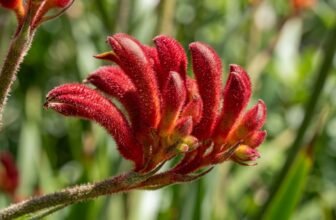
Yellow feels natural in Australia. We see it in wattle, kangaroo paw, billy buttons, daisies, banksia tones, dry grasses, summer light and garden beds that refuse to behave.
That makes yellow artificial flowers useful for:
- kitchens and breakfast nooks
- entry tables
- patios and covered balconies
- home offices
- spring arrangements
- Easter displays
- Mother’s Day bunches
- summer Christmas table styling
- café counters
- rental-friendly décor
Yellow is especially good in rooms that feel a bit flat. If a space has white walls, pale timber, stone, grey tiles or neutral furniture, yellow brings warmth without needing a full room makeover.
It also works well with greenery. A yellow flower tucked into eucalyptus-style foliage often looks more natural than a bright red or purple stem doing all the talking.
Choose the right yellow, not just any yellow
Not all yellows behave the same.
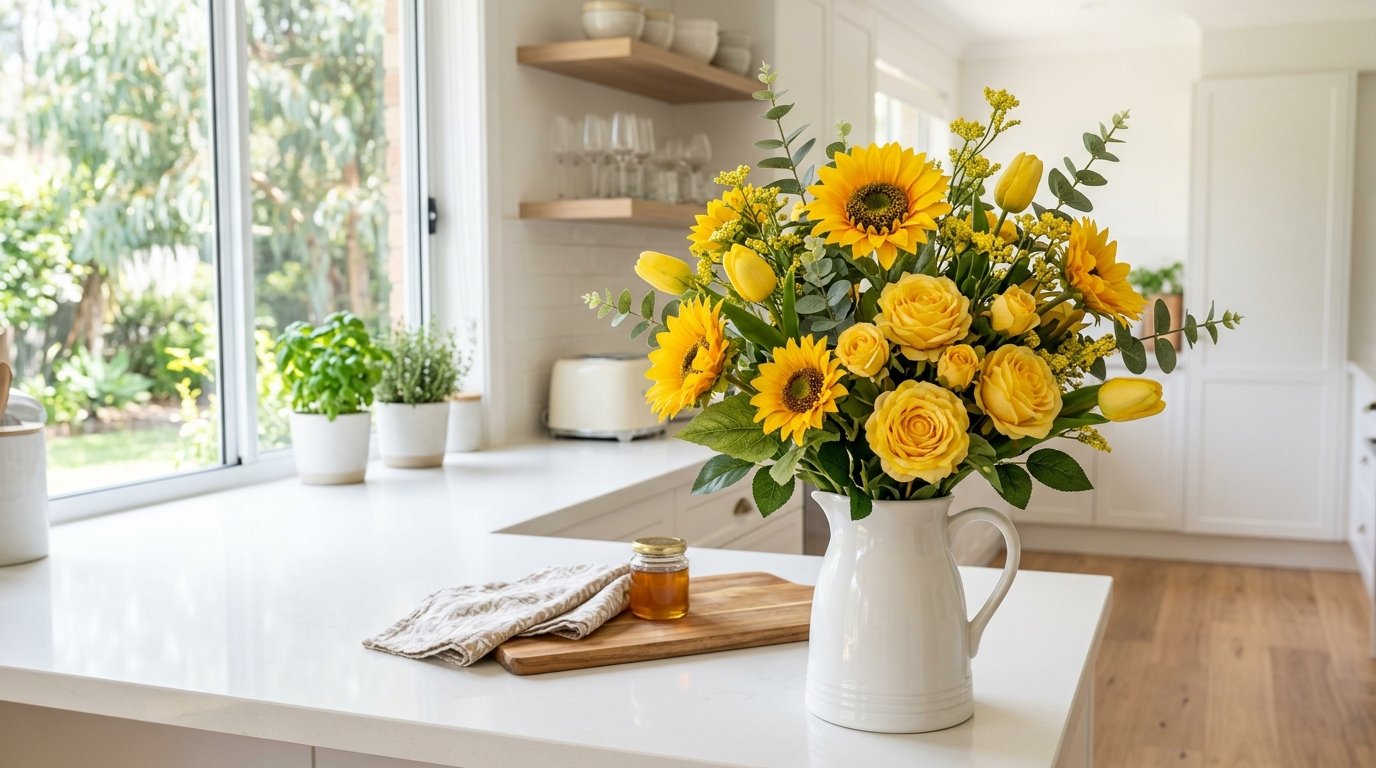
Soft yellow is the easiest to live with. It works in bedrooms, kitchens, bathrooms and casual spaces. It feels sunny without shouting. Good for daisies, tulips, roses, small mixed bunches and Mother’s Day arrangements.
Mustard, ochre and golden yellow suit Australian interiors beautifully. They work with timber, rattan, linen, terracotta, olive green and native-style arrangements. These tones are often better than bright lemon yellow if you want the flowers to look more grown-up.
Lemon yellow can look fresh, but it is less forgiving. It suits clean white kitchens, spring displays, event styling and modern interiors. Use it carefully. Too much lemon yellow can look cheap unless the petals and leaves are good quality.
Wattle yellow is warm and slightly golden. It is one of the most Australian-feeling yellows, especially for native-style arrangements. Artificial wattle can look lovely if the flower clusters are fine and soft. If the balls are too large and perfectly round, it starts looking like craft pom-poms. Not ideal.
Yellow artificial flowers that usually look good
- Matte, soft petals
- Golden or wattle tones
- Textured centres
- Muted, grey-green leaves
- Glossy lemon petals
- Neon green leaves
- Flat printed centres
- Oversized pom-pom wattle
Some yellow flowers work better in faux form than others.
Sunflowers are bold, friendly and very easy to overdo. One or three stems can look lovely in a kitchen or hallway. A huge bunch can quickly look like a children’s party table. Look for sunflowers with textured centres, slightly uneven petals, matte leaves, flexible stems and warm yellow rather than neon petals. They suit rustic jugs and farmhouse-style kitchens. They are not subtle, and that is fine. They just need space.
Yellow roses can look elegant if the petals are layered and not too shiny. Soft butter-yellow roses are easier to style than bright yellow ones. They pair well with white flowers, cream flowers and light greenery.
Wattle-style stems are excellent for Australian homes, especially in native-inspired arrangements. They suit entryways, dining tables and seasonal displays around late winter and early spring. The best ones have smaller flower clusters, natural-looking branching and grey-green foliage.
Billy buttons are one of the safest yellow artificial flowers because the real flower already looks sculptural and dry. Faux billy buttons can look convincing in simple vases. They work well with natives, dried-look arrangements, office desks, rustic homes and memorial arrangements.
Yellow tulips are fresh and clean, especially in glass vases. They suit kitchens, spring tables and Mother’s Day. Real-touch tulips usually look better than stiff fabric ones. Perfectly straight tulips look a bit suspicious.
Yellow orchids can work in offices, bathrooms and reception spaces, but I would be picky. Cheap faux orchids often look too glossy. Use them in simple pots and let the shape do the work.
What to look for before buying yellow artificial flowers
Yellow shows poor quality quickly, especially in harsh daylight.
Glossy yellow petals can look very fake. Matte, silk-style fabric, soft-touch or real-touch materials usually look better. If the flower reflects light like plastic packaging, keep walking.
With yellow flowers, the centre often makes or breaks realism. Sunflowers need textured brown centres. Daisies need a decent middle. Roses need layered petals. A flat printed centre will look cheap up close.
Yellow petals next to neon-green leaves can look dreadful. Look for leaves that are muted, veined or slightly grey-green. This matters even more in Australian homes, where bright sunlight makes fake foliage very obvious.
Yellow can fade outdoors, though it often fades differently from red or purple. It may go pale, chalky or uneven. If you want yellow artificial flowers outside, choose outdoor-suitable or UV-treated stems. Even then, be realistic. The Australian sun is not a polite guest.
Styling yellow artificial flowers in Australian rooms
Yellow flowers suit kitchens because they feel fresh and casual. Sunflowers, tulips, daisies and billy buttons all work. Use a medium vase or jug and avoid arrangements that are too tall near cooking areas.
A few yellow stems near the entry can make a home feel brighter straight away. Wattle, billy buttons or yellow roses with greenery are good choices.
For living rooms, I prefer muted yellow, mustard or golden tones. Bright yellow can clash with cushions, rugs and artwork. Try yellow with white, cream, eucalyptus green, dusty pink, soft blue, terracotta, beige and natural timber. Yellow and pink can be surprisingly nice when both colours are soft.
Yellow flowers can make an office feel less sterile. Use them sparingly. Deep golden yellow with greenery looks more professional than bright lemon yellow.
Covered patios and balconies can handle yellow well, especially with timber furniture, pots and greenery. Use outdoor-suitable stems where possible.
Yellow flowers for Australian occasions
Yellow is a natural spring colour. Daisies, tulips, wattle and mixed yellow arrangements all make sense. Mix yellow with white and pale green for a clean spring look.
Yellow works beautifully for Easter displays, especially with white, cream, soft blue or pale pink. Keep it simple.
Mother’s Day in May suits soft yellow, cream, blush and muted greenery. Yellow roses, tulips or mixed arrangements feel warm without being too dramatic.
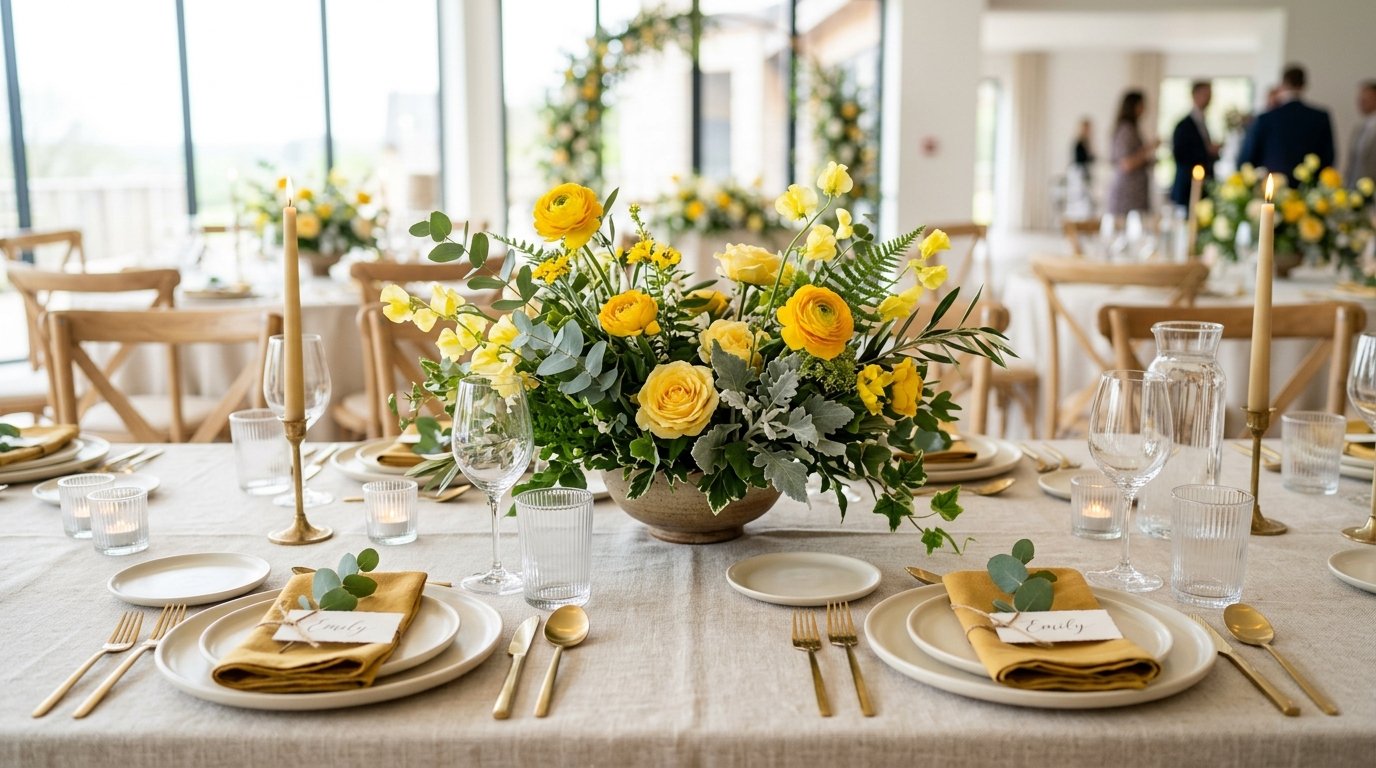
Yellow can be lovely for a modern Australian Christmas table. Pair golden flowers with eucalyptus-style greenery, white flowers, timber and linen. This feels more local than pretending we are decorating a fireplace in Yorkshire.
Yellow flowers can feel hopeful and gentle. Wattle, billy buttons, soft yellow roses and mixed native-style stems can work well for memorial arrangements. If used outdoors, check UV suitability and clean them regularly.
Choosing the right vase
Yellow flowers often look best in simple vases. Good choices include white ceramic, clear glass, soft grey stone, terracotta, pale timber, simple metal jugs and neutral textured pots. Bright yellow flowers in a bright yellow vase is usually too much. Give the flowers a calm base.
Cleaning yellow artificial flowers
Yellow flowers show dust, especially on petals and centres. Kitchen flowers also pick up grease. Take the flowers outside, shake them gently, dust petals and centres with a soft brush, wipe leaves and stems, and use a cool low hairdryer for fine dust if needed. Let everything dry before restyling. Do not soak yellow flowers unless the product says it is safe.
My honest take
Yellow artificial flowers are worth using, but I would avoid the brightest bunch unless you have a clear reason for it. Soft yellow, golden yellow, wattle tones and billy buttons are easier to style in Australian homes than hard lemon yellow. Sunflowers can be great, but they need space. Yellow is cheerful. Just don’t let it take over the room and start giving orders.