 Huma Naveed
Syzygium australe, or Lilly Pilly, is a hardy native of eastern Australia. Loved for its glossy leaves, colourful new growth, flowers, and edible berries, it’s fast-growing and easy to prune.
Perfect for hedges, borders, and pots, thriving in sun or part shade.plus my Gardengreen’s top artificial alternatives if you want the look without the maintenance.
Quick Diagnostic Table: What is wrong with my Lilly Pilly?
| What You See on the Leaf | The Likely Culprit | Immediate Action |
| Bubbly, distorted “pimples” on new red growth. | Lilly Pilly Psyllid | Prune off damage; spray undersides with Eco-oil/Neem oil. |
| Black, powdery ash covering the leaves. | Sooty Mould (caused by Scale insects) | Treat the scale insects with White Oil; the mould will wash away. |
| Yellow spots on top, with fuzzy yellow/purple pustules underneath. | Myrtle Rust (Fungal Pathogen) | Highly infectious! Do not move the plant. Bag infected clippings and spray with a copper fungicide. |
Click here to know more about Artificial Syzygium Australe Hedges Australia, Privacy Screen 2026
<strong>The Lilly Pilly Spacing Guide</strong>
Getting Your Measurements Exactly Right
It is incredibly tempting to cram small plants close together to get an “instant” privacy screen. I completely understand the impulse, but I can tell you from experience: planting too tightly is a disaster.
It causes brutal root competition, stunted growth, and eventually leads to dead, leafless patches at the base of your hedge where no sunlight can reach.
To get that perfect, dense wall of green without suffocating the plants, you need exact measurements.
Click here to learn about: Syzygium Australe Varieties & Artificial Hedges in Australia 2026
Why Australians Love Syzygium Australe
There’s a reason Syzygium Australe, also known as the Brush Cherry or Lilly Pilly, has stood the test of time in Aussie gardens:
- Evergreen foliage – glossy leaves stay lush all year.
- Fast-growing – perfect for hedges and privacy screens.
- Low-maintenance – thrives in most Aussie soils and climates.
- Attractive flowers & berries – creamy blossoms in spring, followed by pink-red edible fruit.
- Adaptable style – can be clipped neat or left natural.
For city dwellers in Melbourne apartments or homeowners in Queensland’s subtropical suburbs, Syzygium Australe is as versatile as it gets.
Quick Snapshot – Syzygium Australe (Lilly Pilly)
Syzygium australe — Lilly Pilly
Quick reference: growth, flowers, uses (Australia-focused).
| Feature | Details |
|---|---|
| Botanical Name | Syzygium australe |
| Common Names | Lilly Pilly, Brush Cherry |
| Plant Type | Evergreen tree / shrub |
| Mature Size | 3 m – 6 m (can be pruned lower) |
| Growth Rate | Fast |
| Climate | Tropical, subtropical, temperate |
| Uses | Hedges, screens, topiary, pots |
| Flowers | Creamy-white (spring) |
| Fruit | Pink–red berries (summer) |
Tip: change the font-size root variable (--base-font-size) if you need larger/smaller text.
How to Grow Syzygium Australe in Australia
Choosing the Right Spot
- Sunlight: Full sun to part shade. For dense hedges, at least 6 hours of sun is ideal.
- Soil: Prefers well-drained soil enriched with organic matter. Avoid heavy clay unless improved with compost.
- Space: Leave 50–100cm between plants for hedging, depending on how dense you want the screen.
Planting Steps
- Dig a hole twice the width of the root ball.
- Mix compost or well-rotted manure into the backfill soil.
- Place plant level with ground height and backfill gently.
- Water deeply and mulch around the base (but keep away from the trunk).
Watering & Feeding Schedule
- Watering:
- New plants: water 2–3 times per week for the first 2 months.
- Established hedges: weekly deep watering in dry spells.
- Fertiliser:
- Apply a slow-release native fertiliser twice a year (spring and late summer).
- Liquid seaweed tonic every 4–6 weeks encourages lush growth.
Pro Tip: Over-fertilising can burn roots. Stick with low-phosphorus native blends.
Why Is Syzygium Australe Dying? Fix Yellow Leaves Australia Click on the link to if you are worried
<strong>The "Pimple Leaf" Cure: My 3-Step Psyllid Protocol</strong>
If you grow a Syzygium australe hedge, you’ve probably seen it: ugly, bubbly “pimples” ruining your beautiful new red growth.
Before you grab a chainsaw or toxic chemicals, let me share what actually works in my garden.
The Real Culprit
Old guides blame Trioza eugeniae, but modern entomologists confirm the real pest is Trioza adventicia. These tiny insects lay eggs on tender shoots. When the nymphs hatch, they hide on the underside of the leaf to feed, causing the top to blister into a “pimple.”
What NOT to Do
Do not use systemic, heavy-duty bug killers (like Confidor). They linger in the plant and kill beneficial insects like bees and predatory wasps. Once the good bugs are gone, the psyllids will return twice as bad.
My Battle-Tested, 3-Step Fix Here is how I clear up a stressed, infested hedge using an eco-friendly approach:
- Prune and Bin: Cut off the worst-affected new growth. Crucial rule: Never compost these clippings, or the bugs will multiply. Bag them tight and put them straight in the rubbish bin.
- The “Under-Leaf” Spray: I use a mix of Neem Oil and Horticultural Oil (like Eco-oil) to suffocate the pests. The secret: You must spray the undersides of the leaves where the nymphs hide. Misting the top does nothing. Repeat this every two weeks for three cycles to break their breeding cycle.
- Feed for Resilience: Mature, healthy plants can fight off pests naturally. I keep my hedges strong with deep watering, a thick layer of mulch to prevent heat stress, and a slow-release organic fertilizer in spring.
Common Lilly Pilly Problems (and Fixes)
Even hardy natives have their weak spots. Here’s what most Aussie gardeners face:
1. Psyllid Damage (Bumpy Leaves)
- Cause: Tiny sap-sucking insects.
- Fix: Choose psyllid-resistant varieties like Syzygium Australe ‘Resilience’. Spray with eco-oil if needed.
2. Root Rot (Poor Drainage)
- Cause: Overwatering or heavy clay soil.
- Fix: Improve drainage, water less often, and treat with fungicide if caught early.
3. Yellow Leaves
- Cause: Nutrient deficiency.
- Fix: Apply a native slow-release fertiliser. Add trace elements if severe.
4. Sparse Growth
- Cause: Not enough sunlight or pruning.
- Fix: Relocate to sunnier spot or prune more often to stimulate branching.
Hedging Syzygium Australe
Australians plant Syzygium Australe for one main reason – privacy. A well-maintained Lilly Pilly hedge can grow from 1.5m to 6m tall, giving you the perfect green wall.
Tips for a perfect hedge:
- Plant at 80cm spacing for fast coverage.
- Mulch well to conserve moisture.
- Trim 2–3 times a year for thickness.
- Choose compact varieties if you want less pruning.
Indoor & Balcony Styling Trends
With more Aussies living in apartments, Syzygium Australe is even making its way indoors and onto balconies.
- Potted Style: Keep in a large decorative pot. Perfect for patios, courtyards, or balconies.
- Office Greenery: A compact Lilly Pilly in a pot adds a natural vibe to modern workspaces.
- Artificial Alternative: For low-light homes or offices, artificial Lilly Pilly trees and hedge panels from Gardengreen are stunning, zero-maintenance options.
<strong>Solving the "Bare Legs" Syndrome: </strong>
The Pruning Secret Nobody Tells You
One of the most common and heartbreaking issues I see with mature Syzygium australe hedges is what landscapers call “bare legs.”
This is when the top of the hedge is thick, green, and lush, but the bottom meter has dropped all its leaves, leaving you with a wall of ugly, exposed woody trunks and zero privacy at eye level.
Most gardeners think this is a disease. It isn’t. It is a light-starvation problem caused by poor pruning. When you prune a hedge perfectly straight up and down (like a rectangular box), the vigorous top growth naturally leans outward toward the sun.
Within a year or two, this creates an umbrella effect, completely casting the bottom half of the hedge in deep shade. Starved of sunlight, the plant simply sheds its lower leaves to conserve energy.
The “Right vs. Wrong” Comparison Table
Box vs. A-Frame
| Feature | The “Box” Cut (The Mistake) | The “A-Frame” Cut (The Pro Fix) |
| The Shape | Perfectly vertical sides (straight up and down). | Top is pruned slightly narrower than the base (a 10-degree taper). |
| Sun Exposure | Top growth blocks light; the bottom half is cast in deep shade. | Midday sun washes down the entire angled face of the plant. |
| The Result | “Bare legs” – dropped leaves and exposed woody trunks at the base. | Dense, leafy, green foliage right down to the soil line. |
The Yellow Leaf Diagnostic: Fixing Nutrient Lockout
Lilly Pillys are hungry plants, especially when they are pushing out those massive flushes of new red growth.
If your hedge suddenly starts dropping older leaves, or the foliage turns a sickly, pale yellow, you are dealing with a nutrient deficiency. But before you dump standard fertilizer on it, you need to diagnose the specific deficiency.
1. The Nitrogen Drain (All-over pale yellowing): Because we prune hedges frequently, the plant burns through nitrogen rapidly to replace the lost leaves. If the entire plant looks pale and is growing slowly, it needs nitrogen. (Broschat, n.d.)
My Fix: Apply a heavily composted poultry manure (like Dynamic Lifter) or a specialized native slow-release fertilizer in early Spring and again in late Summer. Water it in deeply.
2. The Magnesium Lockout (Yellowing between green veins): If the leaf turns yellow but the veins remain distinctly dark green, your Syzygium is crying out for magnesium. This happens frequently in sandy coastal soils or after periods of heavy, leaching rains.
My Fix: Dissolve 2 tablespoons of Epsom Salts (Magnesium Sulfate) in a 9-liter watering can, then apply it around the root zone. You will see the deep, rich green color return to the leaves within a fortnight.
Gardengreen’s Best Picks
At Gardengreen, we’ve tested both real and artificial Lilly Pilly options. Here are our favourites for 2025:
Artificial Syzygium Australe Hedge Panel (100x50cm)
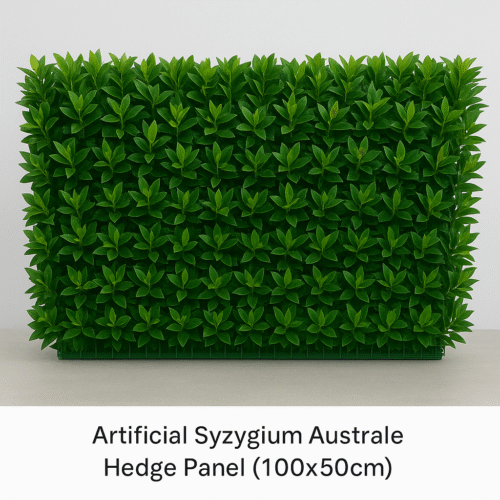
Artificial Syzygium Australe Hedge Panel (100x50cm)
Lush, realistic foliage.
Easy to install – no watering, no pests.
Ideal for balconies, garden walls, or offices needing a green backdrop.
2. <strong>Potted Artificial Lilly Pilly Tree (1.5m)</strong>
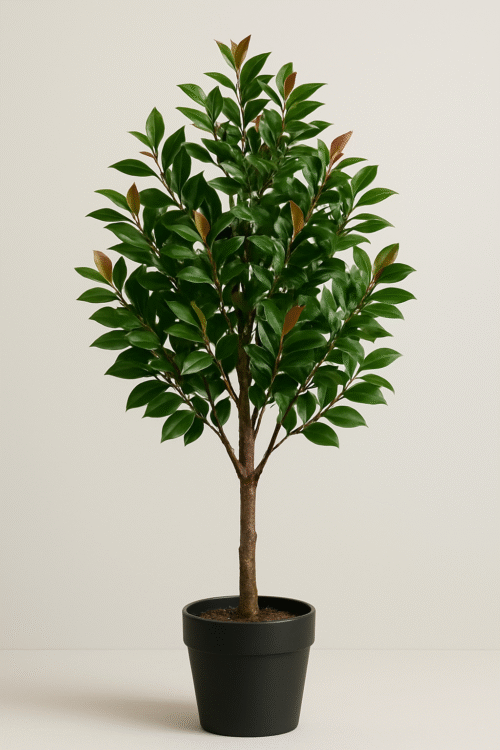
Potted Artificial Lilly Pilly Tree (1.5m)
> Fits beautifully in narrow entryways,
hallways, or beside bookshelves.
> Soft green tones suit both modern and coastal interiors.
Where to place: Perfect for indoor styling or shaded verandahs.
3. <strong>Real Syzygium Australe ‘Resilience’ (Live Plant)</strong>
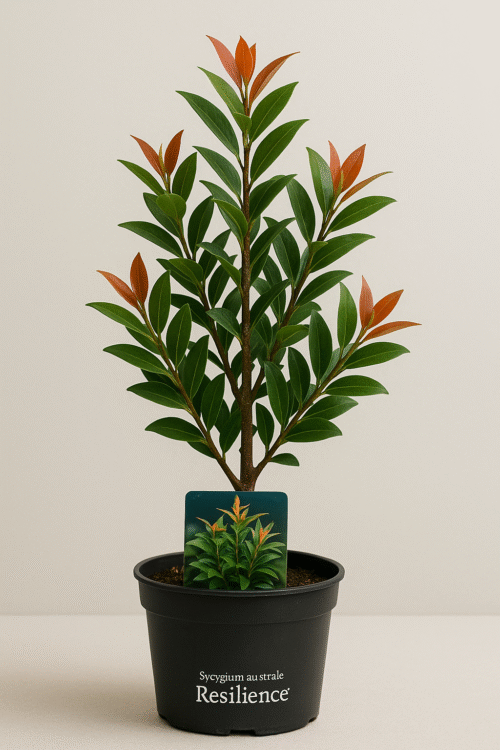
Real Syzygium Australe ‘Resilience’ (Live Plant)
Best for privacy hedges.
Sold in 200mm and 300mm pots.
Where to place: In the ground for lush hedges or large decorative pots outdoors.
<strong>Spacing Table</strong>
Lilly Pilly (Syzygium australe) Spacing Calculator
The Spacing “Calculator” The golden rule I use for Syzygium australe is to space the plants at roughly one-third to one-half of your final desired height.
| Desired Hedge Height | Ideal Planting Distance | Best Use Case | Estimated Time to Create a Solid Screen |
|---|---|---|---|
| Up to 1 Metre | 50 cm apart | Low garden borders, pathway edging | 12 – 18 months |
| 1.5 to 2 Metres | 75 cm to 1 m apart | Standard boundary fence privacy | 18 – 24 months |
| 3+ Metres | 1.2 to 1.5 m apart | Blocking two-story windows, windbreaks | 2 – 3 years |
Note: Growth rates depend heavily on soil quality, watering, and feeding schedules.
My Pro-Tips for a Flawless Hedge
- Dig a Trench, Not Holes: Instead of digging individual holes, dig one long, continuous trench. This loosens the soil evenly, helps water drain uniformly, and makes it incredibly easy to use a string line to get your trunks perfectly straight.
- The Zig-Zag Method: If you have a wide garden bed and want a super-thick, noise-reducing barrier, plant a double row in a zig-zag (staggered) pattern. Space the rows 50 cm apart, and space the plants 1 metre apart within their rows.
- Prune Early for Width: If you plant them 75cm apart, there will be gaps for the first 12 to 18 months. Resist the urge to plant them closer. Instead, lightly trim the top tips of the plants every few months. This forces the plant’s energy outward, making it bush out and close those gaps rapidly.
Quick Diagnostic Table: What is wrong with my Lilly Pilly?
| What You See on the Leaf | The Likely Culprit | Immediate Action |
| Bubbly, distorted “pimples” on new red growth. | Lilly Pilly Psyllid | Prune off damage; spray undersides with Eco-oil/Neem oil. |
| Black, powdery ash covering the leaves. | Sooty Mould (caused by Scale insects) | Treat the scale insects with White Oil; the mould will wash away. |
| Yellow spots on top, with fuzzy yellow/purple pustules underneath. | Myrtle Rust (Fungal Pathogen) | Highly infectious! Do not move the plant. Bag infected clippings and spray with a copper fungicide. |
How We Chose and Tested
The price of both real and artificial Syzygium Australe varies across Australia. For example:
- A live 200mm pot at Bunnings costs around $25–30.
- A 3m tall advanced hedge from a nursery can cost $200–300 each.
- Artificial hedge panels at Gardengreen start around $80–100 each, depending on size.
We compared prices at Bunnings, Amazon, Target, West Elm, CB2, and Gardengreen. After reading reviews and testing products, our verdict was clear:
- Artificial Lilly Pilly works best for offices, balconies, and shaded courtyards.
- Real Syzygium Australe is unbeatable for living hedges and large-scale landscaping.
Conclusion
Syzygium Australe (Lilly Pilly) is a true Aussie garden hero. Whether you want a fast-growing hedge, a statement tree, or just a lush indoor vibe, it delivers beauty with minimal fuss.
But if you live in a unit, office, or struggle with plant care, Gardengreen’s artificial Lilly Pilly options give you the same lush look with zero maintenance.
Either way, this versatile native deserves a spot in every Australian home.
FAQs – Syzygium Australe Lilly Pilly
How tall does Syzygium Australe grow in Australia?
It can reach 6m tall, but regular pruning keeps it neat as a 2–3m hedge.
Which is the best Lilly Pilly variety for hedging?
Syzygium Australe ‘Resilience’ is the top pick – fast-growing and psyllid-resistant.
Can Lilly Pilly grow indoors?
Yes – in large pots with bright indirect light. For low-light areas, artificial Lilly Pilly trees are a stylish option.
How often should I prune my hedge?
Trim 2–3 times a year for a dense, neat screen.
Is Syzygium Australe safe for pets?
Yes – non-toxic to dogs and cats, though the berries may cause mild stomach upset if eaten in large amounts.